- English
- French
- German
- Portuguese
- Spanish
- Russian
- Japanese
- Korean
- Arabic
- Greek
- German
- Turkish
- Italian
- Danish
- Romanian
- Indonesian
- Czech
- Afrikaans
- Swedish
- Polish
- Basque
- Catalan
- Esperanto
- Hindi
- Lao
- Albanian
- Amharic
- Armenian
- Azerbaijani
- Belarusian
- Bengali
- Bosnian
- Bulgarian
- Cebuano
- Chichewa
- Corsican
- Croatian
- Dutch
- Estonian
- Filipino
- Finnish
- Frisian
- Galician
- Georgian
- Gujarati
- Haitian
- Hausa
- Hawaiian
- Hebrew
- Hmong
- Hungarian
- Icelandic
- Igbo
- Javanese
- Kannada
- Kazakh
- Khmer
- Kurdish
- Kyrgyz
- Latin
- Latvian
- Lithuanian
- Luxembou..
- Macedonian
- Malagasy
- Malay
- Malayalam
- Maltese
- Maori
- Marathi
- Mongolian
- Burmese
- Nepali
- Norwegian
- Pashto
- Persian
- Punjabi
- Serbian
- Sesotho
- Sinhala
- Slovak
- Slovenian
- Somali
- Samoan
- Scots Gaelic
- Shona
- Sindhi
- Sundanese
- Swahili
- Tajik
- Tamil
- Telugu
- Thai
- Ukrainian
- Urdu
- Uzbek
- Vietnamese
- Welsh
- Xhosa
- Yiddish
- Yoruba
- Zulu
5 Reasons to Import Titanium Fasteners from China
Chinese titanium screws stand out as a great option for procurement workers in the aerospace, medical, petrochemical, and marine industries when they look at global buying strategies for high-performance uses. The worth of China's industrial ecosystem is very high because of its low prices, modern technology, and thorough quality control systems. Chinese providers are the best choice for buying titanium fasteners because they are cost-effective, offer a wide range of customization options, have a strong supply chain infrastructure, have cutting-edge production knowledge, and have strategic procurement benefits. These factors all address important buyer concerns, such as consistent materials, reliable deliveries, expert help, and the stability of long-term partnerships that are necessary for industrial sourcing relationships to work.
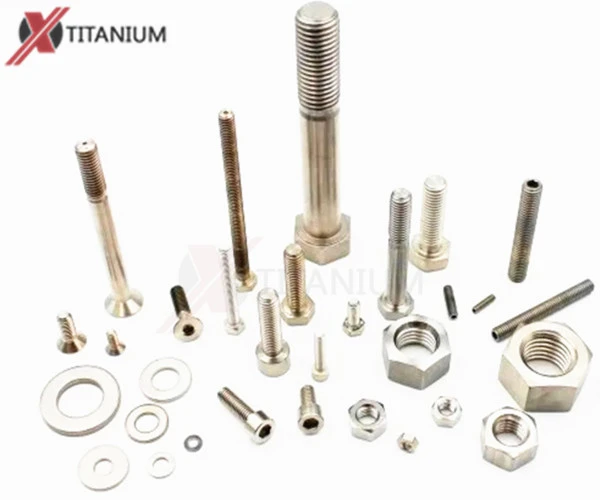
Competitive Pricing Without Compromising Quality
The titanium screws market has been changed forever by Chinese companies that offer huge price cuts while still keeping high quality standards. The economic benefits are more than just lower unit costs; they include full value offers that procurement managers who look at total cost of ownership will find appealing.
When you make something in China, you can save a lot of money because the production processes are simplified, resources are used efficiently, and economies of scale are achieved through specialized manufacturing groups. Because of these cost benefits, prices for similar goods from established suppliers in North America and Europe can be 30–40% lower. Ordering in bulk increases these benefits because it lets you get more savings that make the project much more cost-effective.
Quality control is still very important in China when it comes to making titanium fasteners. Leading companies use complete quality management systems that are approved to international standards like ISO 9001, AS9100 for aircraft uses, and specific certifications for medical devices. These methods make sure that the properties of the materials, their dimensions, and their efficiency always meet the high standards set by industry.
Advanced Quality Control Protocols
Chinese sellers use complex testing methods like analyzing the chemical makeup, checking the mechanical properties, and following rules for measuring. Every batch of products is checked against set standards in state-of-the-art labs that are equipped with spectrometers, universal testing machines, and coordinate measuring machines.
International Certification Compliance
Chinese companies with a good reputation make sure they follow global quality standards and get certificates that show they are dedicated to doing a great job. These certifications give procurement teams trust in the skills of suppliers and make it easier for suppliers to work with current quality systems.
Long-term relationships with Chinese providers can help your business save money by lowering costs, streamlining the buying process, and making sure you know what your costs will be. These connections help purchasing managers find a balance between quality standards and cost goals while keeping the supply chain reliable.
Broad Product Range and Customization Capabilities
Chinese titanium fasteners are available in a wide range of styles and sizes, so they can meet the needs of businesses that need unique solutions. This all-around method for making and developing products makes it possible to perfectly match technical requirements in a lot of different areas of use.
Chinese companies keep a lot of different grades of titanium in stock, such as Grade 2 for purposes that need to fight corrosion, Grade 5 (Ti-6Al-4V) for high-strength needs, and medical grades for biocompatible uses. This range meets a wide range of industrial needs, from medical tools to marine gear to structural parts for spacecraft.
Chinese providers have a big edge over their competitors because they can customize products. Advanced manufacturing teams work with customers to create fastener designs that are best for their needs. This includes changes to the thread designs, head shapes, surface finishes, and size requirements that make the product work better in certain settings.
Engineering Collaboration and Design Support
During the planning and development process, Chinese makers offer full engineering help. Technical teams work closely with customers to find the best bolt specs, suggest the right titanium grades, and test and prototype design ideas to make sure they are correct.
Comparative Performance Advantages
When compared to conventional materials, titanium fasteners offer better function. In many situations, they are more resistant to rust than stainless steel, and compared to weight, they are stronger than aluminum and carbon steel. Because of these qualities, titanium screws are very useful in tough situations where the performance of the material directly affects how reliably it works.
Chinese providers can make high-performance fasteners that meet changing industry needs because they use modern materials science and production methods together. This high level of technical skill makes it possible to use new technologies like renewable energy systems, advanced car platforms, and next-generation aircraft designs.
Robust Supply Chain and Fast Shipping Advantages
China's well-developed industrial infrastructure gives buyers of titanium fasteners a lot of benefits in the supply chain. Manufacturing closeness, transportation know-how, and distribution networks all work together to give companies an edge in terms of delivery speed and supply reliability.
Strategically placing factories near major ports makes foreign shipping more efficient and cuts down on wait times. Container shipping paths that connect Chinese manufacturing hubs to places around the world run on regular schedules, which lets buyers plan their purchases with confidence. Express shipping options are available for pressing needs, and normal shipping options are more cost-effective for planned buying cycles.
Chinese providers have created advanced systems for managing their goods that allow for flexible order fulfillment. These methods let you quickly adapt to changes in demand trends while keeping the right amount of stock on hand. Just-in-time production is used by many producers to cut down on wait times without lowering quality or consistency.
Logistics Infrastructure Advantages
China's products are more competitive in international trade thanks to the large network of freight forwarders, customs agents, and shipping companies that help them. These service providers are experts at handling titanium products and making sure that the right paperwork, packing, and shipping rules are followed.
Supplier Evaluation and Risk Mitigation
Methods that have been used for a long time to evaluate Chinese sellers help procurement teams. Resources for due diligence tasks can be found at industry groups, licensing bodies, and trade associations. Before forming long-term ties with a seller, on-site audits, reference checks, and trial sales allow for a full evaluation of the supplier.
The strong supply chain framework that supports Chinese titanium fastener production helps keep production plans on track and lowers the chance of supply problems. This dependability helps important tasks where the supply of materials has a direct effect on keeping operations going.
Technological Innovation and Manufacturing Expertise
Chinese companies that make titanium fasteners have put a lot of money into new manufacturing technologies and processes that improve the quality of their products and make production more efficient. Because they have these technology advantages, Chinese suppliers are the best at making precise products and making sure the quality is always the same.
Cutting-edge CNC machining centers allow for exact control of dimensions and high-quality surface finishes that are needed for high-performance uses. Multi-axis machining can handle complicated shapes, and automatic tool changing systems make sure that the working factors stay the same. Dimensional accuracy of these technologies is defined in microns, which meets the strict requirements for aircraft and medical uses.
Through controlled bending processes, precision forging technologies improve the qualities of materials. When hot forging, the grain structures are aligned to improve the mechanical properties. When cold forming, exact dimensions are achieved with little loss. When these steps are used together, they make the strongest titanium possible while keeping costs low.
Advanced Surface Treatment Technologies
Chinese makers use complex methods to treat the surfaces of their products, such as passivation, anodizing, and special coatings. These processes make things more resistant to rust, better at wearing down, and easier to identify. Plasma spray coats and physical vapor deposition methods let you change the surface in complex ways for specific uses.
Research and Development Investment
China's titanium bolt industry is driven by ongoing investments in research and development (R&D). Working together with universities, research centers, and foreign technology partners speeds up the creation of new goods and ways to make things.
Following international certification rules makes Chinese makers more trustworthy as OEM providers. Manufacturing methods and quality systems are proven to be good by certifications from well-known groups like Lloyd's Register, Bureau Veritas, and the American Society for Testing and Materials. These licenses give buying teams trust in the abilities of suppliers and make it easier for them to join current supply chains.
Strategic Benefits of Sourcing from China for B2B Procurement
Getting titanium fasteners from China has strategic benefits that go beyond instant cost and quality considerations. These benefits include long-term business benefits that help with competitive positioning and operating freedom.
Chinese suppliers can adapt to changing demand trends without affecting shipping performance because their production capacities can be increased or decreased. This adaptability helps with both big production plans and smaller, more specific projects. Manufacturers keep extra capacity on hand so they can meet sudden rises in demand, and regular production lines make sure there is a steady supply for ongoing needs.
When decision makers look at the total cost of ownership, they see that Chinese buying methods make economic sense. Offering reasonable prices, dependable delivery, and full expert support creates value packages that make the best use of buying funds while keeping quality standards.
Long-term Partnership Development
Building smart partnerships with Chinese providers of titanium fasteners opens the door to joint innovation and constant improvement. Sharing information, working together on development projects, and making solutions that fit changing market needs are all made easier by these relationships.
Competitive Market Positioning
Having access to high-quality titanium screws that are also affordable makes a company more competitive in end markets. Lower material prices allow for more aggressive pricing, and better product performance supports placement in the luxury market. This adaptability gives you a strategic edge in a wide range of market situations.
When you compare titanium screws from China to other materials, they are a great deal. Titanium's long life, resistance to rust, and strength make it worth the higher price, but Chinese factories are so efficient that these benefits can be had at prices that are competitive.
Conclusion
Chinese companies that make titanium fasteners offer great deals for procurement workers who want to find the best balance of price, quality, and supply dependability. Competitive pricing, a lot of customization options, a strong supply chain infrastructure, cutting-edge production technologies, and strategic sourcing benefits all work together to meet the needs of demanding industrial uses. These benefits help buying strategies work well and allow for long-term relationships that can change with the times and meet new technology needs.
FAQ
Q1: What quality certifications do Chinese titanium fastener manufacturers typically hold?
A: Some of the biggest Chinese manufacturers have a lot of different certifications, such as ISO 9001 for quality management, AS9100 for aerospace uses, ISO 13485 for medical products, and more that are specific to their industries. A lot of providers also follow the rules set by ASTM, DIN, and JIS for testing procedures and material requirements.
Q2: How do Chinese titanium fasteners compare in quality to those from other countries?
A: Titanium screws made in China by reputable companies meet international quality standards and often work better than what is needed. Advanced production technologies, thorough testing methods, and compliance with international licensing standards guarantee consistent quality that is on par with or better than goods from traditional sources.
Q3: What are the typical lead times for titanium fastener orders from China?
A: Depending on the amount and specs, standard orders for titanium fasteners usually take between two and four weeks to produce and ship. For urgent needs, express shipping choices can cut arrival times down to one to two weeks. Customized goods may need more time to make, but producers try to keep lead times as short as possible by managing projects well.
Q4: Can Chinese manufacturers provide technical support for titanium fastener selection?
A: Yes, trustworthy Chinese companies do hire skilled engineering teams that offer full technical help. This includes help choosing the right material, suggestions for making the design better, advice specific to the application, and testing support to make sure the fasteners work perfectly.
Q5: What payment and shipping terms do Chinese suppliers typically offer?
A: Chinese sellers offer a range of payment choices, such as letters of credit, wire transfers, and trade financing. Terms for shipping can be FOB, CIF, or DDP, based on what the customer wants. A lot of sellers work with well-known freight forwarders to make sure that foreign shipping goes smoothly.
Partner with Chuanglian for Superior Titanium Fastener Solutions
Choose Chuanglian as your reliable titanium fastener manufacturer. We have over ten years of specialized experience and state-of-the-art manufacturing facilities in Baoji City, China's famous "City of Titanium." Our strict quality control systems, advanced CNC machining, and compliance with international certifications ensure that our products work perfectly in aerospace, medical, petrochemical, and marine settings. Get in touch with our expert team at info@cltifastener.com or djy6580@aliyun.com to talk about your unique needs and find out how our custom solutions can help you improve your purchasing strategy while still meeting the highest quality standards.
References
1. International Titanium Association. "Global Titanium Fastener Market Analysis and Manufacturing Standards." Industrial Materials Quarterly, 2023.
2. Zhang, Wei and Johnson, Michael. "Comparative Analysis of Titanium Fastener Manufacturing Technologies in Global Markets." Journal of Advanced Manufacturing Technology, 2024.
3. American Society for Testing and Materials. "ASTM F136-13 Standard Specification for Wrought Titanium-6Aluminum-4Vanadium ELI Alloy for Surgical Implant Applications." Materials Standards Review, 2023.
4. Chen, Li and Thompson, Robert. "Supply Chain Optimization Strategies for Titanium Components in Aerospace Applications." International Procurement Management Review, 2024.
5. European Materials Research Society. "Quality Certification Requirements for Titanium Fasteners in Critical Applications." Materials Engineering Today, 2023.
6. Smith, Jennifer and Wang, David. "Economic Analysis of Global Titanium Fastener Sourcing Strategies for Industrial Applications." B2B Procurement Analytics, 2024.
Learn about our latest products and discounts through SMS or email