- English
- French
- German
- Portuguese
- Spanish
- Russian
- Japanese
- Korean
- Arabic
- Greek
- German
- Turkish
- Italian
- Danish
- Romanian
- Indonesian
- Czech
- Afrikaans
- Swedish
- Polish
- Basque
- Catalan
- Esperanto
- Hindi
- Lao
- Albanian
- Amharic
- Armenian
- Azerbaijani
- Belarusian
- Bengali
- Bosnian
- Bulgarian
- Cebuano
- Chichewa
- Corsican
- Croatian
- Dutch
- Estonian
- Filipino
- Finnish
- Frisian
- Galician
- Georgian
- Gujarati
- Haitian
- Hausa
- Hawaiian
- Hebrew
- Hmong
- Hungarian
- Icelandic
- Igbo
- Javanese
- Kannada
- Kazakh
- Khmer
- Kurdish
- Kyrgyz
- Latin
- Latvian
- Lithuanian
- Luxembou..
- Macedonian
- Malagasy
- Malay
- Malayalam
- Maltese
- Maori
- Marathi
- Mongolian
- Burmese
- Nepali
- Norwegian
- Pashto
- Persian
- Punjabi
- Serbian
- Sesotho
- Sinhala
- Slovak
- Slovenian
- Somali
- Samoan
- Scots Gaelic
- Shona
- Sindhi
- Sundanese
- Swahili
- Tajik
- Tamil
- Telugu
- Thai
- Ukrainian
- Urdu
- Uzbek
- Vietnamese
- Welsh
- Xhosa
- Yiddish
- Yoruba
- Zulu
What Makes Titanium Torx Screws Superior to Steel?
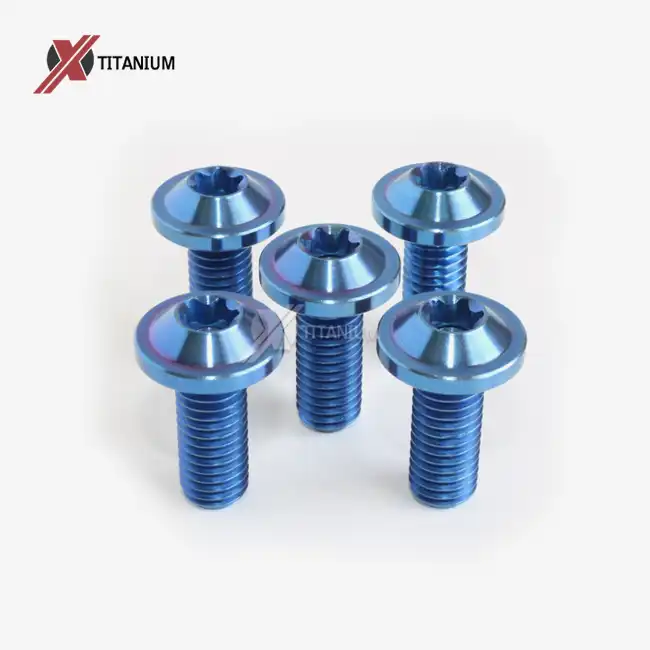
Titanium torx screws represent the pinnacle of fastener engineering, combining the superior metallurgical properties of titanium alloy with the mechanical efficiency of the Torx drive system. Unlike conventional steel alternatives, these precision fasteners deliver exceptional performance through their unique star-shaped drive design that eliminates cam-out while providing 45% weight reduction compared to steel equivalents. The inherent corrosion resistance and biocompatibility of titanium make these fasteners indispensable in aerospace, medical, and marine applications where performance cannot be compromised.
Introduction
This piece goes into great depth about Torx screws, especially the important decision of whether to use titanium or steel as the material. It is written for global B2B procurement professionals. Many businesses use Torx screws because they transmit torque better and have a lower chance of cam-out. Choosing the right material has a big effect on how well a product works, how long it lasts, and how much it costs, which affects buying choices.
Our goal is to make a complete guide that helps engineers, buying managers, and original equipment manufacturers (OEMs) decide whether to use titanium or steel Torx screws. By knowing their unique features, advantages, and uses, decision-makers can make the best choices for greater dependability and long-term value in complicated industrial projects. The technical community knows that the choice of material for fasteners has a direct effect on how reliable the system is, how often it needs to be maintained, and the total cost of ownership over the duration of the product.
Understanding Titanium Torx Screws: Properties and Benefits
Titanium Torx screws stand out because they are very strong for their weight, don't rust, and last a long time. This makes them perfect for high-performance uses. Titanium alloy Ti-6Al-4V Grade 5 is often used in these precise fasteners. This metal has a tensile strength of 895 to 1000 MPa and a density of only 4.43 g/cm³.
Advanced Material Composition and Mechanical Properties
Titanium screws have special properties that come from their chemical make-up and mechanical properties. The alpha-beta composition of grade 5 titanium, which is made up of 6% aluminum and 4% vanadium, gives it better mechanical qualities. Because of this makeup, the material can survive huge changes in temperature, from very cold to 400°C, without losing its shape.
The 15-degree drive angle in the Torx drive system changes radial force into tangential force. This makes the tool last much longer and makes it easier to apply preload consistently. This geometry advantage is especially useful when working with titanium, whose surface is relatively soft, because the larger contact area spreads stress more evenly than with regular hex screws.
Industry Applications and Performance Benefits
We talk about how common they are in the aircraft, automotive, and medical industries and how they have benefits like being lighter, resistant to rust and corrosion in harsh conditions, and lasting longer than steel peers. In the aircraft industry, these fasteners are especially useful for mounting electronics and panels on the airframe, where they need to be stable at high and low temperatures and not vibrate.
Titanium's ability to fuse with bone and the Torx drive system's ability to be cleaned are both used in medical uses. Because they don't have any cracks like Phillips drives do, these screws are commonly used in external fixation devices and MRI-compatible surgery tables where they need to be able to withstand multiple sterilization processes. Also given are industry-standard screw sizes and exact torque specs, which allow procurement professionals to match screw sizes and performance to exact engineering needs.
Titanium Torx Screws vs Steel Torx Screws: A Comparative Analysis
Titanium and steel Torx screws are compared side by side based on their mechanical power, resistance to rust, weight, and total cost of ownership. When procurement professionals understand these basic differences, they can make choices based on facts that meet the needs of the application and stay within the budget. For example, Titanium torx screws offer superior corrosion resistance and strength-to-weight ratio, which can make them the ideal choice for demanding environments, even if they come at a higher initial cost.
Mechanical Strength and Performance Characteristics
Titanium usually has better tensile strength and doesn't wear out easily when loaded and unloaded many times, which makes it perfect for high-stress situations. Under the same stress conditions, grade 5 titanium has a failure strength that is about 50% higher than stainless steel. The 114 GPa elastic stiffness of the material makes it very flexible without permanently deforming, which is important for uses that will be heated and cooled or shaken.
Steel screws, especially high-tensile types like Class 12.9, can have higher final tensile strengths than titanium, but titanium is more resistant to fatigue and lasts longer in harsh environments. When the load is changing, the trade-off becomes clear because titanium has a longer fatigue life, which means that repair times are much longer.
Environmental Resistance and Durability Advantages
It's better than steel at preventing rust and damage from the environment, so it lasts longer and costs less to maintain. Titanium makes an inactive oxide film (TiO2) when it comes into contact with oxygen. This film protects the metal from galvanic corrosion, saltwater, and acids. Unlike protective coatings on steel bolts, which can break down over time, this natural defense system stays stable even when put under mechanical stress.
Economic Impact and Total Cost Analysis
Titanium screws save a lot of weight, which can lower the cost of shipping and speed up the building process in situations where weight is important. Titanium costs more up front, but given how long it lasts and how durable it is, it is often a better deal for bulk buyers and OEMs looking for environmentally friendly ways to buy things. Life cycle cost analysis usually recommends titanium when the cost of new work is higher than the cost of the material itself.
Practical Applications and Industry Use Cases for Titanium Torx Screws
Titanium Torx screws work very well in industries that need high performance and dependability, like aircraft, automobiles, bicycles, marine, and chemical processing. You can see how versatile the material is in these uses, and how choosing the right fasteners can really pay off.
High-Performance Motorsport and Aerospace Applications
A lot of high-performance racing and riding uses these fasteners to reduce the weight of parts like brake calipers, disc rotors, and stems that don't move. When heads need to be serviced often, like in race situations, the Torx contact becomes very important for keeping them from getting stripped. Cutting down on the weight of moving parts improves speed by a huge amount, since unsprung weight changes how the suspension moves and how it handles.
In aerospace and unmanned aerial vehicle (UAV) systems, titanium fasteners are used in electronics mounting and aircraft panels because they must be able to withstand high temperatures and vibrations. Its non-magnetic trait is very important for keeping navigational tools and sensitive electronics from being harmed, and the material's stability at high and low temperatures guarantees that the joints will always be strong.
Medical and Marine Industry Applications
Titanium's biocompatibility and ability to fuse with bone are important properties for medical and surgery tools. Because the Torx drive system is easy to clean and can withstand multiple sterilization processes in an autoclave, these screws are commonly used in important medical devices. Titanium is stable in harsh chemical conditions and doesn't react with chloride, which makes it useful in chemical processing and marine uses.
This part shows real-life examples of how titanium fasteners can be used to support designs that are sensitive to weight, endure difficult weather conditions, and keep structures strong in places where there is a lot of vibration or corrosion. The story also talks about custom production options that let original equipment manufacturers (OEMs) find titanium fasteners that are made just for them and meet strict technical standards. This makes sure that quality and compatibility are maintained throughout the world's complex supply lines.
How to Procure the Best Titanium Torx Screws for Your Business Needs?
To get titanium Torx screws that work, you need to look closely at the qualifications of the seller, the quality of the product, and the different ways you can buy them that fit the needs of your business or project. Because working titanium is so specialized, it needs careful evaluation of suppliers that goes beyond normal purchasing criteria.
Supplier Qualification and Quality Assurance
Some of the most important factors are checking certifications like ISO 9001, AS9100 for aircraft uses, and, if necessary, medical device certifications. Traceability of materials, batch testing methods, and dimensional verification steps should all be part of quality assurance processes. A supplier's technical depth and production uniformity can be seen by how transparent their OEM manufacturing skills are.
Professionals in charge of buying things should check to see what kinds of tests their providers can do, such as tensile testing, chemical analysis using XRF spectroscopy, and surface finish proof. These technical skills are directly linked to the regularity and dependability of the goods in important situations.
Strategic Procurement Approaches
This part talks about different ways to buy, from wholesale wholesalers to direct custom sales, as well as logistics plans that can handle delivery needs all over the world. When you need non-standard sizes or specific surface treatments like PVD coating or anodization for a specific purpose, custom production becomes very important.
Practical tips focus on getting bulk price structures that take into account the fact that titanium fasteners are expensive and don't come in large quantities. Looking at guarantee terms and using technical support after the sale is the best way to protect investments and make supplier partnerships work more efficiently. This gives procurement workers the information they need to make smart buying choices that support long-term business goals.
Conclusion
To sum up, titanium Torx screws are better than steel ones in terms of performance, longevity, and resistance to rust. This makes them worth considering for high-stakes industrial uses. Its high strength-to-weight ratio, resistance to environmental damage, and ability to fight fatigue make it very valuable in high-performance automobile, aircraft, medical, and marine uses. Procurement workers and engineering managers should think about titanium fasteners as a smart investment that improves product quality and lowers lifecycle costs by making products last longer and needing less upkeep.
FAQ
Q1: Why do titanium Torx screws sometimes seize during installation?
A: Titanium is easy to cold-weld because its chemicals stick together when it is under pressure. We suggest using good anti-seize paste or asking for screws with PVD or DLC (Diamond-Like Carbon) coats to lower the friction coefficients. To avoid galling and make sure there is enough preload, the fitting force specs should be followed.
Q2: Can titanium Torx screws replace high-tensile steel bolts?
A: In terms of final tensile strength, Grade 5 titanium is about the same as Class 8.8 or 10.9 steel. If you need Class 12.9 steel strength, titanium might not be a good choice for the job unless it is specially designed with rolled threads and larger shank sizes. In many situations, the benefits of fatigue protection and corrosion may make up for the lower final strength.
Q3: What advantages does the Torx drive offer for titanium applications?
A: The surface of titanium is pretty soft, so standard hex keys, which focus their force at six sharp points, can hurt it. The Torx method spreads force across wider lobes, which lets more torque be applied without changing the shape of the screw head. This geometry edge is very useful in situations where precise preload control is needed.
Partner with Chuanglian for Premium Titanium Torx Screw Solutions
If you need titanium torx screws, you can trust Chuanglian to make them. Their fasteners are carefully designed to meet the strictest industry standards. Our Baoji City plant uses cutting-edge CNC machines and strict quality control systems to make sure that the standard of our products is always the best. We have more than ten years of experience handling and machining titanium. Custom titanium screws made to meet the standards of the aircraft, medical, and marine industries are part of our wide range of products. Get in touch with our expert team at info@cltifastener.com or djy6580@aliyun.com to talk about your unique needs and get accurate quotes for the titanium fasteners you need.
References
1. Boyer, R.R. "An Overview on the Use of Titanium in the Aerospace Industry." Materials Science and Engineering A, Vol. 213, 1996.
2. Donachie, Matthew J. "Titanium: A Technical Guide, 2nd Edition." ASM International Materials Park, 2000.
3. Peters, M. and Leyens, C. "Titanium and Titanium Alloys: Fundamentals and Applications." Wiley-VCH Verlag, 2003.
4. Lütjering, G. and Williams, J.C. "Titanium Engineering Properties and Applications." Springer-Verlag Berlin Heidelberg, 2007.
5. ISO 14579:2013 "Hexalobular Socket Head Cap Screws - Specifications and Dimensional Requirements." International Organization for Standardization, 2013.
6. ASTM F136-13 "Standard Specification for Wrought Titanium-6Aluminum-4Vanadium ELI Alloy for Surgical Implant Applications." ASTM International, 2013.
Learn about our latest products and discounts through SMS or email