- English
- French
- German
- Portuguese
- Spanish
- Russian
- Japanese
- Korean
- Arabic
- Greek
- German
- Turkish
- Italian
- Danish
- Romanian
- Indonesian
- Czech
- Afrikaans
- Swedish
- Polish
- Basque
- Catalan
- Esperanto
- Hindi
- Lao
- Albanian
- Amharic
- Armenian
- Azerbaijani
- Belarusian
- Bengali
- Bosnian
- Bulgarian
- Cebuano
- Chichewa
- Corsican
- Croatian
- Dutch
- Estonian
- Filipino
- Finnish
- Frisian
- Galician
- Georgian
- Gujarati
- Haitian
- Hausa
- Hawaiian
- Hebrew
- Hmong
- Hungarian
- Icelandic
- Igbo
- Javanese
- Kannada
- Kazakh
- Khmer
- Kurdish
- Kyrgyz
- Latin
- Latvian
- Lithuanian
- Luxembou..
- Macedonian
- Malagasy
- Malay
- Malayalam
- Maltese
- Maori
- Marathi
- Mongolian
- Burmese
- Nepali
- Norwegian
- Pashto
- Persian
- Punjabi
- Serbian
- Sesotho
- Sinhala
- Slovak
- Slovenian
- Somali
- Samoan
- Scots Gaelic
- Shona
- Sindhi
- Sundanese
- Swahili
- Tajik
- Tamil
- Telugu
- Thai
- Ukrainian
- Urdu
- Uzbek
- Vietnamese
- Welsh
- Xhosa
- Yiddish
- Yoruba
- Zulu
A Complete Guide to Choosing Titanium Wheel Lug Nuts
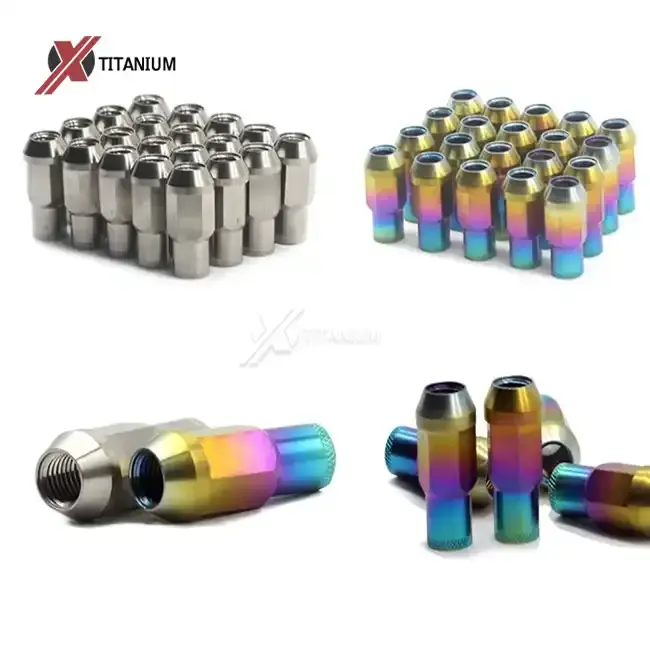
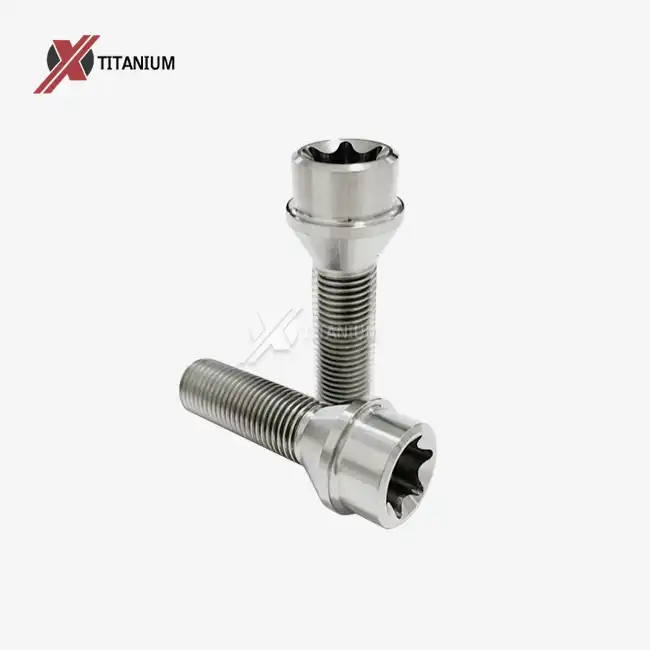
Titanium Wheel Lug Nuts are more of an investment than a simple part change when engineering teams look at fastening options for high-performance cars or fleet upgrades. These aerospace-grade fasteners make the car more reliable, less likely to rust, and more dynamic. These are three important factors that have a direct effect on operational costs and performance results. Instead of steel alternatives that rust when exposed to road salt or aluminum alternatives that aren't structurally sound, titanium lug nuts strike the perfect balance between being light and strong. This guide looks at the technical specs, material differences, and buying factors that technical engineers and procurement managers need to know when they need to choose titanium fastening systems for tough jobs.
Understanding Titanium Wheel Lug Nuts
Titanium Wheel Lug Nuts are precision-machined bolts that are usually made from Grade 5 titanium metal (Ti-6Al-4V). This is the same material that is used to make parts for airplane landing gear and jet engines. This alloy is made up of 6% aluminum and 4% vanadium, which improve the mechanical qualities of the titanium while keeping its great resistance to corrosion. The fasteners that were made have a tensile strength of over 900 MPa and a mass that is about 45% lower than steel. This makes them stronger than all other standard wheel fastener materials.
Material Composition and Mechanical Properties
The first step in making something is getting approved titanium billet stock that meets ASTM B348 standards. CNC precision cutting makes thread shapes with accuracy of ±0.05mm, which means that the force stays the same after thousands of installation cycles. According to its crystalline structure, Grade 5 metal naturally lowers vibrations, which are the tiny movements that cause fasteners to come loose under dynamic loads. Surface processes like anodizing or PVD coating can make a material even more resistant to wear without affecting its ability to fight corrosion.
Performance Advantages in Critical Applications
Professional racing teams measure improvements in performance in hundredths of seconds. Less unsprung weight directly leads to faster lap times. Changing four standard steel lug nuts, which weigh about 60 grams each, for titanium ones, which weigh 32 grams each, saves 112 grams per wheel, or almost half a kilogram on all four sides. This weight loss lowers spinning inertia, which lets suspension parts react more quickly to changes in the road surface. Titanium doesn't react with chloride, which can cause steel fasteners to seize up in wheel hubs after being exposed to saltwater or magnesium chloride de-icing products over and over again. This makes titanium perfect for use in vehicles that operate in seaside areas or cold temperatures.
Safety Considerations and Compatibility Requirements
Sensors for the Tire Pressure Monitoring System (TPMS) need to be carefully checked for clearance before aftermarket lug nuts can be installed. The hexagonal shape sizes can't get in the way of sensor housings that are placed inside wheel barrels. Reliable makers give detailed fitting data that includes the minimum clearance needs, which are usually between 3 and 5 mm for each type of sensor.
For off-road and rock-climbing uses, the thread contact length needs to be a certain amount, usually 1.5 times the bolt width, so the thread doesn't strip when it hits something from the side. Many racing organizations have strict rules about the fasteners that can be used. Teams should check that the FIA Technical Regulations or the SCCA General Competition Rules are followed before choosing titanium hardware for competing cars.
Titanium Lug Nuts vs. Other Materials: Comparative Analysis
Instead of marketing generalizations, choices about purchases need quantitative success data. The next section compares Titanium Wheel Lug Nuts to steel, aluminum, and chrome-plated options based on factors that have a direct effect on total cost of ownership and operating efficiency. Each type of material is best for a certain job, but titanium is the only one that can be used in situations where weight, power, and resistance to the environment all need to work together.
Strength-to-Weight Performance Metrics
OEMs mostly use steel lug nuts because they are cheap and have a well-established manufacturing infrastructure. Grade 8 steel screws have a high tensile strength of about 1035 MPa, but they are less dense by 7.85 g/cm³. Aluminum metals are very light (2.70 g/cm³), but they aren't as strong. For example, most aluminum lug nuts need to be bigger to meet minimum load standards, which takes away some of their weight savings. Titanium's tensile strength of 900+ MPa and density of 4.43 g/cm³ give it a clear advantage: buying teams can ask for smaller, lighter fasteners that are safe to use even when the load standards are exceeded. This means that the binding force stays the same across a wide range of temperatures, unlike with softer metals, which change size.
Corrosion Resistance and Environmental Durability
Because steel is easily oxidized, it requires more upkeep over the course of a vehicle's life. Even steel bolts that are zinc-plated or chrome-finished will eventually rust on the outside, making them hard or impossible to remove without damaging the surfaces that hold the wheels in place. Aluminum creates a safe oxide layer, but when mixed with metals that are not the same, it experiences galvanic rust.
Chrome plate looks nice, but it cracks when it gets hit, letting water in and speeding up the rusting of the steel underneath. Titanium's inactive oxide layer grows back right away after being scratched, protecting it from rust in the air, chemicals on the road, and saltwater. When figuring out whether titanium is worth the extra cost compared to steel options, fleet managers whose cars are used in saltwater or cold areas should add up the costs of avoiding seized fasteners, damaged wheels, and roadside assistance calls.
Lifecycle Cost Analysis and Investment Justification
Titanium lug nuts usually cost 300 to 500 percent more than steel bolts when they are first bought. Lifecycle study, on the other hand, shows a different view of the economy. In corrosive settings, steel screws need to be replaced every two to three years. They also cost more to remove and risk damaging the wheel during the process. Titanium screws can be used for more than 10 years with little upkeep.
They don't need to be replaced as often because of corrosion, and they protect the areas where the wheels are attached. For fleet owners with 50 or more cars, the savings on repairs and downtime will pay for the initial investment in three to four years. Racing teams benefit from steady performance over multiple seasons without having to worry about steel bolts losing their strength after being torqued over and over again.
How to Choose the Right Titanium Wheel Lug Nuts for Your Needs?
To choose the right Titanium Wheel Lug Nuts, you have to match their technical specs to your working needs and the limitations of your budget. As part of the selection process, thread specs, torque ratings, head geometry, and seller qualifications are all looked at. Each choice has an impact on how the part is installed, how reliable it will be in the long term, and how much money is spent. This should be done as a cross-functional review by the procurement team, with technical engineering input, quality assurance validation, and a risk estimate of the supply chain.
Critical Selection Parameters
Load spread across the fastener-to-wheel contact is based on the thread pitch and engagement length. European and Asian car platforms use metric threads (M12×1.5 and M14×1.5), while US makers usually ask for 7/16-20 or 1/2-20 UNF threads. The type of seat—conical (60° taper), circular (radius seat), or flat (mag seat)—must exactly match the wheel's lug hole shape to keep stress from building up and the wheel from breaking. Different types of fasteners and alloys have different torque values.
For example, most M14×1.5 titanium lug nuts call for 85–95 ft-lbs of fitting torque, while steel fasteners need 100–110 ft-lbs. This is because titanium has a different friction coefficient. Head shape affects how well tools work with heads. For example, normal hex profiles (17mm and 19mm) work with regular lug wrenches, but splined or tuner-style heads need special sockets that can't be changed.
Procurement Volume Considerations
When you buy in bulk, you need to use different evaluation factors than when you make a few unique orders. When fleet owners buy 500 or more sets, they should talk to the seller about volume price that includes deals to handle the inventory and delivery windows that work with repair cycles. When racing teams buy 10 to 20 sets of competition-specific fasteners, they can get expert help from the maker for things like thread specs that aren't common or coatings that aren't standard. Aftermarket wholesalers work with buyers who buy in bulk, but they might not have a lot of odd thread sizes in stock, which could make lead times longer for urgent needs. Setting up agreements with two different sources of supply lowers the chance of delivery while keeping prices fair.
Supplier Qualification and Quality Verification
Titanium fastener suppliers should have detailed quality management systems. ISO 9001 certification is the minimum standard, and experience in the aerospace industry (AS9100 compliance) shows that they should have more advanced process controls and tracking systems. For each production batch, material certificates must include mill test results that confirm the chemical make-up, mechanical properties, and heat treatment settings. X-ray fluorescence testing proves the makeup of the alloy, and hardness testing shows that the heat treatment worked.
Optical comparators or coordinate measuring tools should be used to show thread form correctness in dimensional inspection reports. When looking at new sources, purchasing managers should ask for sample parts to be destroyed and tested for things like tensile strength and metallurgy analysis to make sure the grain structure is consistent.
Installation, Maintenance, and Usage Best Practices
The Titanium Wheel Lug Nuts and the wheel assembly are both protected from damage by the right installation steps. These steps also ensure a uniform clamping force that keeps the wheel secure under working loads. Titanium has special qualities that make it different from steel fasteners. For example, it tends to gall when put against similar metals, so it needs to be handled and installed in a certain way. As part of maintenance, thread quality is kept up and wear signs that show the end of service limits are being reached are watched for.
Installation Protocol and Torque Specifications
Before installing, make sure all fixing surfaces are clean. This includes wheel hubs and lug holes, where you should remove brake dust, rust scale, and other debris. Put a small layer of an anti-seize solution with copper or nickel particles on the first three thread engagements. This stops galling without changing the torque-to-preload ratios too much. Screw titanium screws into place by hand for at least four full turns to make sure the threads are engaged correctly before using tools.
Impact guns can make setup that isn't consistent because the friction and inertia in the socket can change. Instead, use a measured torque wrench with ±3% accuracy. Follow a two-step star pattern tightening sequence: the first pass should be to 50% of the specified torque, and the last pass should be to full torque. Let the wheels settle for 50 to 100 miles, and then re-torque the nuts to the recommended level. This process evens out any small surface irregularities that get squashed when the wheels are first loaded.
Preventive Maintenance and Inspection Schedules
Every time you take off a wheel, use a 10x magnification to look at the fastener threads for early signs of galling, cross-threading, or stress cracks. Burnished lines or material smearing on the thread sides are signs of thread wear. Fasteners that show these signs should be thrown away before the thread damage gets to the mating wheel studs. It's better to use isopropyl alcohol and cotton brushes to clean screws than wire wheels, which can damage the protective metal layers. Apply anti-seize powder again after each fitting to keep the torque properties the same. Any bolt that has been over-torqued beyond 120% of its recommended torque should be replaced because the plastic deformation that happens causes it to lose its gripping force capacity forever.
Troubleshooting Common Installation Challenges
Interference with TPMS sensors usually shows up as signal loss or sensor damage when the wheel is being put on. With feeler gauges, check the space between the sensor bodies and the seats of the lug nuts. There should be at least 3 mm of space between them so that they don't touch when force is applied. Extreme temperature cycling can affect fastener preload in racing uses that use carbon-ceramic brake systems.
These conditions may need re-torque times as little as every event weekend. Off-road cars that go through sand or mud should use sealed lug nuts with built-in dust covers to keep rough particles from getting into the threads. If galling happens during installation, stop applying torque right away, take out the bolt, use a magnifying glass to look at the threads, clean both parts well, apply new anti-seize compound, and try installing them again at a slower spin speed with less initial torque.
Where and How to Procure Titanium Wheel Lug Nuts?
Cost optimization, supply chain dependability, and product quality guarantee are all important parts of good buying strategies for Titanium Wheel Lug Nuts. There are well-known aircraft providers, specialized car repair makers, and new direct-from-factory outlets in the titanium fastener market. Each has its own benefits for different buying situations. Procurement teams can lower total costs and avoid supply disruptions by understanding how prices are set, what customization options are available, and how much technical help each seller offers.
B2B Procurement Channels and Platform Selection
Large industrial procurement platforms may bring together a lot of sellers, but they might not have the expert help needed for unique needs. When requirements call for non-standard thread pitches, special coatings, or material certifications beyond standard mill test reports, having a direct relationship with the maker gives you better access to technical tools and customization options. Aerospace fastener wholesalers keep a large stock of approved titanium hardware, but their main focus is on parts that are used on airplanes rather than in cars. Regional trade shows like SEMA (Specialty Equipment Market Association) and PRI (Performance Racing Industry) let you see what suppliers can do, check the quality of samples, and talk about big deals in person.
Pricing Benchmarks and Value Engineering
Standard M12×1.5 titanium lug nut sets (20 pieces) usually cost between $180 and $320, based on the finish choices and where the seller is located. If you buy more than 100 sets at once, you can save 25 to 40 percent on each one compared to the regular price. It is more cost-effective to buy a package that includes installation tools, torque specs, and anti-seize products than to buy each component separately. So, buying teams should look at the total package costs instead of just looking at the prices of the fasteners. Custom manufacturing runs for thread specs that aren't common need a minimum order quantity of 200 to 500 pieces and wait times of 8 to 12 weeks. However, when enough units are ordered, unit costs get close to standard part prices.
OEM Partnership Advantages for Custom Requirements
Direct OEM cooperation is helpful for businesses that need titanium screws with custom head profiles, built-in locking features, or certain surface treatments. Manufacturers who have their own CNC machines can make prototypes of unique designs in two to three weeks, which lets the designers test how well the prototypes work before they commit to making production tools.
Technical support services, such as finite element analysis for odd load cases, help choosing materials for uses that will be exposed to high temperatures, and installation training for assembly workers, add a lot of value and make it worth paying more than commodity providers. Long-term supply deals with yearly volume promises usually guarantee priority allocation during times when the titanium market is short on supplies. They also lock in good prices that don't change with the spot market.
Conclusion
Titanium Wheel Lug Nuts improve performance and lower costs over their lifetime if they are properly selected and put according to the manufacturer's instructions. The material's high strength-to-weight ratio, total resistance to corrosion, and ability to dampen vibration are all very useful in racing, fleet operations, and high-end aftermarket uses. To do a good job of procurement, you need to compare technical specs to practical needs, choose suppliers based on their quality systems and the ability to track materials, and set up installation processes that keep fasteners' integrity over many service cycles. Teams that choose titanium fasteners as a strategic component rather than just a replacement material will see big benefits in the form of lower upkeep costs, better car performance, and no more failures caused by corrosion.
FAQ
Can titanium lug nuts be used on all vehicle types?
Titanium lug nuts work with most passenger cars, SUVs, and race cars as long as the thread specs match those on the OEM wheel studs. If a commercial truck needs screws that are SAE Grade 8 or higher, an engineer may need to check that the hardness of the titanium alloy meets safety standards. Before choosing titanium for any job, make sure you know the thread size, seat type, and TPMS sensor clearance.
What tools are required for proper installation?
The bare minimum is a torque wrench that has been measured. It can be a beam-type wrench or an electric one with an accuracy of ±3%. Do not use impact wrenches that produce uneven loading. Damage to the wheel finish can't happen with thin-wall impact joints. The necessary toolkit is finished off with a thread anti-seize substance and isopropyl alcohol for cleaning.
How long do titanium lug nuts typically last?
Titanium screws that are well taken care of can last for 10 years or more in normal drive conditions. When you take off the wheel for maintenance, checking the threads for wear finds it before it becomes a problem. Depending on how often they are used and how much they are torqued, racing uses that are subject to heavy loads may need to be replaced after three to five seasons.
Partner with Chuanglian for Premium Titanium Wheel Lug Nuts
Baoji Chuanglian New Metal Material Co., Ltd. blends experience in processing aerospace-grade titanium with the ability to make products that can be used for both mass production and specific racing needs. Our production plant is ISO 9001-certified and is located in Baoji, which is known as China's titanium manufacturing hub. From the certification of the billet material to the final dimensional check, everything can be tracked. We make Titanium Wheel Lug Nuts from checked Ti-6Al-4V stock using Swiss-style CNC machines that keep thread specs to ±0.03mm. This makes sure that the torque stays the same after thousands of installation cycles.
Our engineering team can help you with technical issues like FEA analysis, coating suggestions, and creating installation protocols. This is true whether you need standard M14×1.5 sets for the aftermarket or special thread specs for OEM integration. As a well-known company that supplies titanium fasteners to automakers and racing teams in North America and Europe, we know what's important when it comes to buying: on-time delivery, consistent batches, and quick technical contact. Get in touch with our specification team at info@cltifastener.com or djy6580@aliyun.com to talk about your project needs and get full quotes with material approvals.
References
1. Boyer, R., Welsch, G., & Collings, E.W. (1994). Materials Properties Handbook: Titanium Alloys. ASM International, Materials Park, Ohio.
2. Budinski, K.G. (2007). Tribological Properties of Titanium Alloys. Wear, Volume 151, Issue 2, pp. 203-217.
3. Donachie, M.J. (2000). Titanium: A Technical Guide, 2nd Edition. ASM International, Materials Park, Ohio.
4. SAE International (2019). SAE J1701: Wheel Mounting Elements for Road Vehicles. Society of Automotive Engineers Surface Vehicle Standard.
5. Veiga, C., Davim, J.P., & Loureiro, A.J.R. (2012). Properties and Applications of Titanium Alloys: A Brief Review. Reviews on Advanced Materials Science, Volume 32, pp. 133-148.
6. Zwicker, U. & Bunk, W. (1985). Titanium and Titanium Alloys: Structure, Properties, and Applications. VDI-Verlag GmbH, Düsseldorf, Germany.
Learn about our latest products and discounts through SMS or email