- English
- French
- German
- Portuguese
- Spanish
- Russian
- Japanese
- Korean
- Arabic
- Greek
- German
- Turkish
- Italian
- Danish
- Romanian
- Indonesian
- Czech
- Afrikaans
- Swedish
- Polish
- Basque
- Catalan
- Esperanto
- Hindi
- Lao
- Albanian
- Amharic
- Armenian
- Azerbaijani
- Belarusian
- Bengali
- Bosnian
- Bulgarian
- Cebuano
- Chichewa
- Corsican
- Croatian
- Dutch
- Estonian
- Filipino
- Finnish
- Frisian
- Galician
- Georgian
- Gujarati
- Haitian
- Hausa
- Hawaiian
- Hebrew
- Hmong
- Hungarian
- Icelandic
- Igbo
- Javanese
- Kannada
- Kazakh
- Khmer
- Kurdish
- Kyrgyz
- Latin
- Latvian
- Lithuanian
- Luxembou..
- Macedonian
- Malagasy
- Malay
- Malayalam
- Maltese
- Maori
- Marathi
- Mongolian
- Burmese
- Nepali
- Norwegian
- Pashto
- Persian
- Punjabi
- Serbian
- Sesotho
- Sinhala
- Slovak
- Slovenian
- Somali
- Samoan
- Scots Gaelic
- Shona
- Sindhi
- Sundanese
- Swahili
- Tajik
- Tamil
- Telugu
- Thai
- Ukrainian
- Urdu
- Uzbek
- Vietnamese
- Welsh
- Xhosa
- Yiddish
- Yoruba
- Zulu
Why Use a Titanium Countersunk Washer on Carbon Fiber Parts
Choosing the right fixing gear is an important engineering decision when putting together carbon fiber parts for high-performance uses. A Titanium Countersunk Washer solves several technical problems at the same time: it stops galvanic rust between different types of materials, spreads localized stress across delicate composite surfaces, and keeps aerodynamic or aesthetic flush profiles without adding extra weight. This precisely designed part works as a buffer between the fastener and the carbon fiber substrate, keeping the structural integrity that advanced composites need and stopping delamination. These screws are used in many fields, from aerospace engineering to marine engineering, to make strong, light structures that can handle harsh environments and repeated mechanical stress cycles.
Understanding Titanium Countersunk Washers and Their Properties
What Makes Titanium Countersunk Washers Unique?
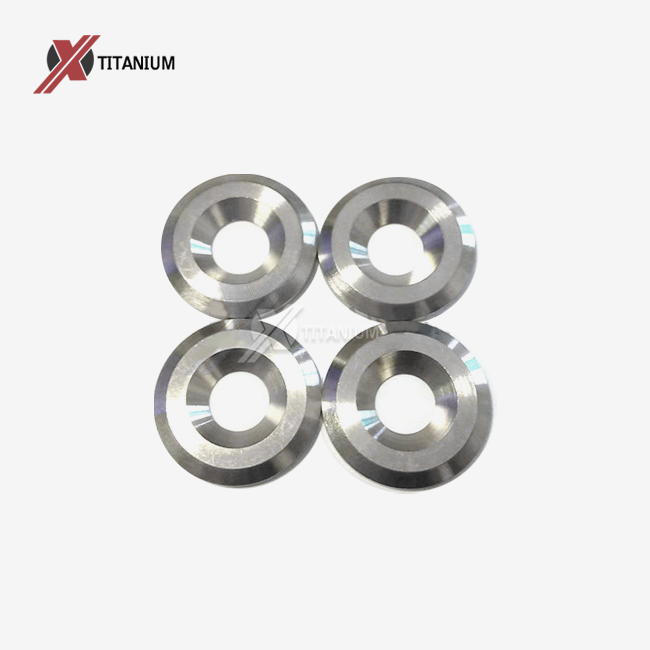
Titanium Countersunk Washers are different from regular flat washers because they have a conical bearing surface that can sit flush with countersunk bolt heads. This surface is usually polished to 90° or 100° angles to meet flight standards. This design gets rid of any surface protrusions that could get in the way of airflow in aircraft panels or make marine deck gear more likely to get caught. The density of the material is about 4.43 g/cm³, which is about 45% lighter than 316 stainless steel versions. When made from Grade 5 titanium metal (Ti-6Al-4V), the material's tensile strength stays between 895 and 1000 MPa.
Material Properties That Matter
Because titanium is a special metal, these titanium countersunk washers work really well with carbon fiber structures. Thermal stability means that the material can be used at temperatures ranging from very cold (cryogenic) to very hot (400°C–500°C) without changing shape or creeping. In sensitive electrical instruments and medical imaging equipment that can't handle ferrous contamination, the non-magnetic signal is very important. Some surface processes, like PVD finishing or Type III anodizing, can make the material harder to stop fretting wear, but the base material is already strong enough for most structural uses. When you put these characteristics together, you get a fastening option that meets the high performance needs of current composite structures.
Comparing Titanium to Alternative Materials
When titanium washers are put next to stainless steel and aluminum washers, their benefits are quickly clear. Even though stainless steel screws are strong, they add extra weight and don't work well with carbon fiber because they are galvanically incompatible, which speeds up rusting in wet places. Aluminum is lighter than steel, but it doesn't have the strength-to-weight ratio needed for high-stress joints, and it doesn't hold up well against wear when loaded and unloaded many times. Titanium is the best metal for a mix of being lighter than steel, harder than aluminum, and able to work with carbon composites electrochemically. This choice of material has a direct effect on how long an assembly lasts and how often it needs to be maintained in tough working circumstances.
The Challenges of Using Washers on Carbon Fiber Parts
Why Standard Washers Fail on Composites?
Carbon fiber parts have special needs that are hard to meet with regular fixing gear. Because composite laminates are not uniform, compression loads must be carefully spread out so that fiber layers don't get crushed or separate. Traditional steel washers put most of the stress at the points where they touch, which creates failure starting places that spread through the laminate structure over time. When moisture in the air turns into an electrolyte, galvanic cells form between metals that are not the same, speeding up the breakdown of materials around bolt holes.
Galvanic Corrosion and Carbon Fiber
Carbon fiber works as a cathode in the galvanic series, which means that when metals that are anodic come into touch with it and are wet, they will rust. Steel and aluminum washers both sit anodically compared to carbon composites. This means that they can rust quickly, which weakens the joints and leaves marks on the surface. The position of titanium in the galvanic series makes it much closer to carbon fiber. This makes the voltage potential difference that causes rusting much smaller. This electrical compatibility makes the parts last longer in naval settings, chemical processing plants, and outdoor settings where they are regularly exposed to water.
Load Distribution Concerns
Because carbon fiber laminates are fragile, they need binding gear that spreads loads over a large enough surface area. When you don't use the right screws with countersunk fasteners, the hole edge is under a lot of stress, especially where the fastener head hits the composite surface. Over time, vibrations and changes in temperature cause this concentrated stress to start microcracks that turn into delamination that can be seen. When Titanium Countersunk Washers are the right size, they greatly increase the bearing area. This spreads loads more evenly and protects the laminate's integrity throughout the service life of the component. This is especially important in aircraft fuselage panels and car body sections, where the ability to fight fatigue is a key factor in determining operational safety.
Real-World Application Examples
Aerospace companies have found that switching from steel washers to titanium washers in carbon fiber wing parts makes the joints last a lot longer. When titanium washers are used instead of stainless steel in flush-mounted fittings that are exposed to saltwater spray, racing boat builders say that rust no longer leaks around deck gear. Performance automobile teams have found that titanium countersunk washers that keep the preload distributed properly reduce the amount of fastener loosening in carbon fiber body panels that are exposed to high-frequency vibration. These data from the field show that choosing the right materials for composite parts is a good idea from an engineering point of view.
Comparing Titanium Countersunk Washers with Other Washer Materials
Titanium vs. Stainless Steel
When you compare titanium and stainless steel washers, you can see that they perform very differently in ways that go beyond just being lighter. While 316 stainless steel is pretty good at resisting corrosion in general, Titanium Countersunk Washers are much better at protecting against crevice corrosion and pitting in chloride conditions that are common in naval and chemical processing settings.
The magnetic qualities of stainless steel also make it hard to make MRI machines and military mine-sweeping ships, which need hardware that is not magnetic. Titanium has a very high strength-to-weight ratio. For example, a Grade 5 titanium washer has the same load capacity but weighs less than half as much. This directly leads to better fuel economy in aircraft uses and less unsprung mass in car suspension systems.
Titanium vs. Aluminum
Cost-conscious buying teams that want to cut weight like aluminum washers, but this material choice doesn't always work well with carbon fiber parts. Due to its lower hardness, aluminum easily embeds under extended compressive loads. This causes joint preload to gradually open, which weakens the assembly's integrity. The material's low wear strength is a problem in places where there is a lot of shaking because carbon fiber structures make the oscillating forces stronger.
When the temperature of aluminum and carbon fiber is changed, the thermal expansion ratios between them cause differences in size that speed up wear at the contact points. Titanium gets rid of these worries while adding very little weight—it is usually 60% lighter than steel and only 65% heavier than aluminum—yet it has strength properties that keep joints stable over time.
Understanding Titanium Grades
To choose between Grade 2 and Grade 5 titanium washers, you need to know what the purpose needs. Grade 2 titanium, which is commercially pure, is the best when it comes to resistance to rust and shapeability. This makes it perfect for chemical processing equipment and medical devices that need to be biocompatible. However, Grade 5 (Ti-6Al-4V) metal makeup is better for structural uses because it has a much higher tensile strength (about 130 ksi vs. 50 ksi for Grade 2). Grade 5 is usually specified for aerospace assemblies, racing chassis parts, and high-stress marine gear to make sure there are enough safety gaps during peak loading conditions. The difference in material costs is still small when compared to the performance gains in tough work settings.
Procurement Considerations for Titanium Countersunk Washers
Evaluating Supplier Capabilities
It takes more than just checking prices to find Titanium Countersunk Washers. Because processing titanium is so specialized, the qualification of the seller has a direct effect on the quality of the parts and the trustworthiness of delivery. Companies that have established aerospace standards, like AS9100 or NADCAP accreditation, show that they have the process controls and tracking systems that are needed to make sure that the qualities of the materials are always the same. It doesn't matter what kind of production equipment is used; CNC machining machines with titanium-specific tools make sure that the dimensions are accurate within the tight limits that countersunk geometry requires. They usually hold concentricity to ISO 7090 standards, which keeps fastener heads from side-loading.
Technical help is what sets experienced titanium providers apart from marketers of common goods. Suppliers who can suggest the right grades and surface treatments for a job, give test reports on the material's chemical make-up and mechanical properties, and give advice on torque requirements that keep the installation from galling are valued by engineering teams. These links are especially helpful when making a new product, because the choice of materials has long-lasting effects on the cost of production and the performance of the process.
Quality Certifications and Traceability
In businesses that are regulated, procurement managers know that quality paperwork is just as important as the washers themselves. Material certifications that can be traced back to specific mill heats give you peace of mind that the chemical makeup meets the standards. This is especially important for aerospace uses where even small changes in the amount of aluminum or vanadium in the alloy can affect how well it works. Dimensional inspection reports that prove the accuracy of the countersunk angle and measurements of the surface finish show that the production method can be used. Maintaining ISO 9001 quality systems by suppliers is what makes sure that stability from batch to batch, which is one of the main problems engineers have in high-consequence applications.
Cost Analysis and Long-Term Value
Titanium countersunk washers cost more to buy than steel or aluminum options, but a full cost study shows that they are more cost-effective over their entire life. Lower maintenance intervals and longer service life more than make up for the initial cost of the materials. This is especially true in situations where taking something apart for inspection or repair requires a lot of work. Getting rid of extra weight directly leads to less fuel use on aircraft platforms and better performance in race situations where every gram counts. By getting rid of corrosion-related problems, you can avoid expensive downtime and keep expensive carbon fiber parts that would have to be replaced too soon because of fastener joint wear.
Supply Chain Management
Titanium components usually have longer procurement processes than common fasteners because the materials are harder to work with and they need to be made to order. Lead times of 6 to 12 weeks are normal for first orders, but they get longer when special forms or surface treatments are asked for. Having sources who keep standard configurations in stock cuts down on shipping times for production needs, and the ability to build-to-order allows for unique geometries for specialized carbon fiber assemblies. Effective supply chain partners make production schedules clear, let you know ahead of time when materials are available, and allow you to change the amount you order to fit the project-based buying patterns that are popular in the aircraft and marine sectors.
Best Practices for Using Titanium Countersunk Washers on Carbon Fiber Parts
Installation Techniques That Prevent Damage
The protective effects that Titanium Countersunk Washers offer to carbon fiber systems are at their best when they are installed correctly. Before you start to prepare the surface, make sure that the countersunk holes are perfectly cut and that no fiber delamination or matrix is cracking around the edges. These are flaws that weaken the joint no matter what kind of washer material is used. Using anti-seize products with molybdenum disulfide stops galling between titanium screws and washers, which happens when two metals that are the same press together. This easy step keeps the composite structure from cold-welding, which can make it nearly impossible to take apart again without hurting it.
Torque specifications require careful attention to balance adequate preload against composite breaking. When you overtighten, the bearing stress can crush the resin-rich layers on the surface, and when you don't tighten enough, the joint can move, which speeds up wear. Tightening methods are written down and torque wrenches are calibrated to make sure that all production units use the same setup. A lot of aircraft makers use torque-turn methods because they are more reliable at meeting goal clamp load requirements than pure torque standards. This is especially important when combining different materials that have different stiffness characteristics.
Inspection and Maintenance Protocols
Regular inspections find early warning signs of problems before they get worse and cause building failures. When you look closely at the places where the washer touches the material, you can see worrying wear patterns or surface discoloration that show too much movement or water getting in. Using thermal imaging during practical tests can show hot spots that are caused by fasteners coming loose or stress building up. Ultrasonic screening methods can go through composite laminates and find delaminations below the surface that can't be seen from the outside. This lets you take action before the damage gets too bad to fix.
Documentation systems that keep track of bolt pressure values and inspection results create trend data that helps with planning maintenance and making designs better for future setups. This data-driven method works especially well in aerospace applications where service life statements need to be backed up by evidence. Field performance data helps manufacturers make decisions about what materials to use for next-generation goods and confirms what engineers thought they knew.
Emerging Technologies and Future Trends
New surface treatments and alloy formulas made possible by improvements in material science keep making titanium washers more useful. Diamond-like carbon (DLC) coats change the way surfaces rub against each other, which makes them less likely to galle and more resistant to wear in high-cycle situations. With additive manufacturing, you can make shapes that are too complicated to be possible with standard cutting. For example, you could add load-distributing features that make composites safer. Hybrid metal-composite washers are being worked on to make sure that their thermal expansion properties are perfect across the whole temperature range. This will get rid of the last source of mismatching dimensions in precision parts.
Digital integration is a new area of research. Smart washers have sensors built in that check the clamp load in real time and find loosened joints before they become less stable. These technologies are in line with Industry 4.0 efforts to improve planned and unexpected downtime by allowing for predictive repair. Keeping procurement teams up to date on these changes puts their companies in a better position to adopt new ideas that give them a competitive edge in product performance and business efficiency.
Conclusion
Using Titanium Countersunk Washers on carbon fiber parts was chosen because they meet several engineering needs: they stop galvanic rust, spread loads across delicate composite surfaces, get rid of aerodynamic interference, and keep assembly weight as low as possible. These specialized parts solve technical problems that standard hardware can't, making them reliable over time in demanding industrial, marine, aircraft, and automobile settings.
Material features like high strength-to-weight ratio, resistance to corrosion, and electrochemical compatibility with carbon fiber create performance benefits that explain the higher original cost through longer service life and less upkeep needs. Picking qualified suppliers with a track record of technical knowledge guarantees consistent quality and on-time delivery, which are the procurement goals that engineering teams in high-consequence industries value the most.
FAQ
Should I Choose Grade 2 or Grade 5 Titanium for My Countersunk Washers?
Grade 5 titanium (Ti-6Al-4V) has a higher tensile strength of 895 to 1000 MPa, which means it can be used for load-bearing structural uses in airplane fuselages and car chassis parts. Grade 2 (commercially pure) has the best corrosion protection and shapeability. It is better for chemical processing equipment and marine gear where the climate is more stressful than the metal itself. The best grade to use depends on what your product needs most: strength or corrosion protection.
How Do I Prevent Galling Between Titanium Washers and Titanium Fasteners?
Titanium can cold-weld to itself when it is compressed, which makes it hard to take apart. Galling can be avoided by applying anti-seize products based on molybdenum disulfide to threads and bearing surfaces before installation. Instead, choosing washers with DLC coats or Type II/III anodizing changes the surface tribology to get rid of the metal-on-metal contact that causes seizure.
Can Titanium Countersunk Washers Be Used with Stainless Steel Fasteners?
Even though these two materials are physically suitable, they can cause galvanic rusting in wet places. Titanium is negatively charged compared to stainless steel, which could speed up the rusting of the steel bolt. Titanium screws and washers are the best way to make sure that there are no galvanic potential differences and that the whole system has the same level of corrosion resistance.
How Are Titanium Countersunk Washer Dimensions Specified?
Important measurements include the inner diameter (to match the bolt thread), the outer diameter (to provide enough bearing area), the width, the countersunk angle (usually 90° or 100°), and the countersunk depth. These specs make sure that both the bolt head and the hole that has been made in the carbon fiber part will fit correctly. Making sure the dimensions are compatible before buying something keeps installation problems from happening and makes sure the load is distributed as planned.
Partner with Chuanglian for Superior Titanium Countersunk Washers
Baoji Chuanglian New Metal Material Co., Ltd. has been making Titanium Countersunk Washers for over ten years and works with high-performance, aircraft, and marine businesses all over the world. AS9100-level quality systems are maintained at our site, along with full material tracking and measurement inspection documents that procurement professionals need. Because we have in-house metallurgical experts and can do a lot of CNC machining, we can make unique countersunk screws out of Grade 2 and Grade 5 titanium that fit the exact needs of your carbon fiber system.
During the buying process, our technical team provides application engineering help to make sure that the best materials are chosen and that the best surface treatments are suggested. Our buying experts can be reached at info@cltifastener.com or djy6580@aliyun.com to talk about your unique needs and get detailed quotes. We are committed to quality, on-time delivery, and helpful customer service.
References
1. Peters, M., Kumpfert, J., Ward, C.H., and Leyens, C. (2003). "Titanium Alloys for Aerospace Applications." Advanced Engineering Materials, Vol. 5, No. 6, pp. 419-427.
2. Campbell, F.C. (2010). Structural Composite Materials. Materials Park, OH: ASM International, Chapter 12: Joining and Fastening of Composite Structures.
3. Revie, R.W., and Uhlig, H.H. (2008). Corrosion and Corrosion Control: An Introduction to Corrosion Science and Engineering, 4th Edition. Hoboken, NJ: John Wiley & Sons, pp. 341-356.
4. Starke, E.A., and Staley, J.T. (1996). "Application of Modern Aluminum Alloys to Aircraft." Progress in Aerospace Sciences, Vol. 32, No. 2-3, pp. 131-172.
5. Donachie, M.J. (2000). Titanium: A Technical Guide, 2nd Edition. Materials Park, OH: ASM International, Chapter 8: Fasteners and Joining Methods.
6. Mallick, P.K. (2007). Fiber-Reinforced Composites: Materials, Manufacturing, and Design, 3rd Edition. Boca Raton, FL: CRC Press, Chapter 9: Joining and Machining of Composite Materials.
Learn about our latest products and discounts through SMS or email