- English
- French
- German
- Portuguese
- Spanish
- Russian
- Japanese
- Korean
- Arabic
- Greek
- German
- Turkish
- Italian
- Danish
- Romanian
- Indonesian
- Czech
- Afrikaans
- Swedish
- Polish
- Basque
- Catalan
- Esperanto
- Hindi
- Lao
- Albanian
- Amharic
- Armenian
- Azerbaijani
- Belarusian
- Bengali
- Bosnian
- Bulgarian
- Cebuano
- Chichewa
- Corsican
- Croatian
- Dutch
- Estonian
- Filipino
- Finnish
- Frisian
- Galician
- Georgian
- Gujarati
- Haitian
- Hausa
- Hawaiian
- Hebrew
- Hmong
- Hungarian
- Icelandic
- Igbo
- Javanese
- Kannada
- Kazakh
- Khmer
- Kurdish
- Kyrgyz
- Latin
- Latvian
- Lithuanian
- Luxembou..
- Macedonian
- Malagasy
- Malay
- Malayalam
- Maltese
- Maori
- Marathi
- Mongolian
- Burmese
- Nepali
- Norwegian
- Pashto
- Persian
- Punjabi
- Serbian
- Sesotho
- Sinhala
- Slovak
- Slovenian
- Somali
- Samoan
- Scots Gaelic
- Shona
- Sindhi
- Sundanese
- Swahili
- Tajik
- Tamil
- Telugu
- Thai
- Ukrainian
- Urdu
- Uzbek
- Vietnamese
- Welsh
- Xhosa
- Yiddish
- Yoruba
- Zulu
Advantages of titanium electrode in titanium anode mesh produced in China
More and more, procurement teams are buying titanium anode mesh made in China to get electrochemical parts for mission-critical industry uses. This change happened because Chinese manufacturers are now regularly good at technology, good at making things, and good at keeping costs down. Incorporating a titanium electrode into these mesh structures gives them great performance qualities that meet the toughest needs in electroplating, water treatment, and cathodic protection systems. As a result of improving their production methods, Chinese companies can now make anodes that are reliable in terms of size and shape, can work successfully in acidic or basic chemical environments, and can handle temperatures up to 80°C.
Understanding Titanium Anode Mesh and Titanium Electrodes
The Fundamental Structure of Dimensionally Stable Anodes
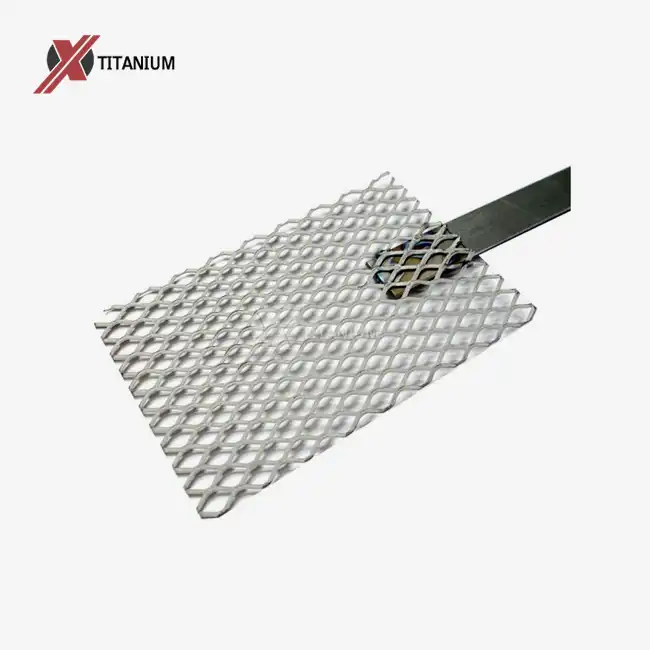
The titanium anode mesh is a new and advanced development in electrochemical engineering. It is formally known as a Dimensionally Stable Anode (DSA). The base structure is made of high-purity titanium foundation material that meets ASTM B265 standards. This is usually Grade 1 or Grade 2 titanium. These grades make sure that the best purity levels are higher than 99.6%, which is very important when the material is constantly exposed to tough chemical conditions.
The mesh shape itself comes in two main forms: sheets with holes in them and metal that has been stretched out. Expanded mesh provides uninterrupted electrical paths with no intersection resistance, while perforated mesh gives regular hole designs that can meet specific needs for current distribution.
How Titanium Electrodes Function Within the Mesh Framework?
A catalytic layer on the base surface affects how the titanium electrode works inside the mesh. The electrochemically active layer is made up of mixed metal oxide (MMO) compounds that have ruthenium, iridium, tantalum, or platinum in them. The thickness of this layer is usually between 2 and 15 microns, and it is perfectly set for the job. The covered titanium electrode helps electron transfer events happen at the anode surface during electrochemical processes.
The mesh pattern makes the most of the surface area that can be used for these processes while reducing the effect of gas protection that happens when oxygen or chlorine bubbles form during electrolysis. Compared to standard graphite or lead-alloy designs, this one guarantees a stable power output and uses less energy.
Extended Lifespan and Operational Efficiency Benefits
The dimensions of traditional electrode materials change when they are used, which makes the lengths between electrodes less stable and less even. Titanium electrodes keep their shape throughout their service life, which in well-designed systems can be longer than 10 years. The titanium core doesn't break down, so it doesn't pollute the solution like older lead-based systems did.
Testing for hardness, bending, and hydraulic strength are some of the quality control steps that are used to make sure that every batch meets strict performance standards. When you combine the stable dimensions with high catalytic efficiency, you can save 10 to 20 percent of the energy used by traditional anode technologies. This is a big benefit when running large electrochemical systems all the time.
Key Advantages of Titanium Electrodes in Chinese-Made Titanium Anode Mesh
Superior Corrosion Resistance Compared to Alternative Materials
Chinese makers have learned the art of making titanium electrodes that can work in places where graphite would wear away and platinum would be too expensive. The material is very resistant to rust in a wide range of pH conditions, from very acidic ones in electroplating pools to very basic ones when chlor-alkali is being made.
It's resistant because of the chemical stability of the MMO layer and the passive titanium dioxide film that forms naturally on the surface of the material. We've been providing parts to petrochemical plants for ten years and have seen how Chinese-made titanium anodes keep working well in saturated brine solutions and wet chlorine gas exposure for months on end, while other materials fail within months.
Manufacturing Scale and Customization Capabilities
In Baoji, China, being known as the "City of Titanium" has helped create a full supply chain environment. This area has a lot of specialized tools, technical know-how, and raw materials. This lets manufacturers give both standard goods and highly customized solutions. To get exact material qualities, factories use methods like hot rolling, cold rolling, annealing, and pickling.
To finish the surface, you can use bright sanding, acid cleaning, or sandblasting, depending on the needs of the product. The manufacturing scale lets you choose from a range of order amounts, so you can use it for both developing prototypes and making full-scale production runs. This works for industries like aerospace and medical devices that use project-based buying cycles.
Quality Assurance Through Advanced Control Systems
Chinese companies that make titanium electrodes have put in place full quality management systems that are in line with ISO 9001 standards and certifications specific to the industry. Every lot of products goes through strict checking procedures that check for electrical conductivity, measure coating thickness, and test for increased corrosion.
Heat treatment steps make sure that the catalytic coating sticks well to the titanium base, which stops them from coming apart during thermal cycles. The production steps that can be tracked make a chain of paperwork that quality control departments need to check the suppliers. When buying teams look at possible sources for long-term partnerships, material performance consistency is the main problem that they want to solve. These systematic controls do just that.
Application Scenarios and Performance Validation
Electroplating Operations Requiring Uniform Deposition
When making printed circuit boards and chrome plating for decoration, titanium electrodes inside mesh anodes keep the current fixed, which makes sure that the metal coating thickness is the same all over. The mesh shape lets the electrolyte flow through the anode structure, which keeps the quantity of ions on the surface of the workpiece constant. We've sold systems to companies that make parts for cars.
The dimensional stability of the titanium anodes meant that the makers didn't have to make the regular changes that were needed with consumable anodes. This cut down on production downtime by about 15% per year. The low maintenance needs are especially helpful for high-volume businesses where the availability of tools directly affects the amount that can be produced.
Industrial Wastewater Treatment and Chlorine Production
For the electrochemical oxidation of difficult organic pollution and the removal of ammonia and nitrogen, water treatment plants use titanium anode mesh. The electrodes make hydroxyl radicals and other reactive species that break down pollutants that can't be removed by living things. The titanium electrode is resistant to passivation, which is good for municipal wastewater treatment plants that deal with high-salinity medicinal or textile sewage.
When making chlorine to disinfect water, the mesh configuration gives the reactor a lot of surface area in a small place, making the best use of room in retrofits. Chemical oxygen demand (COD) reduction rates of more than 80% have been seen in uses cleaning industrial discharge streams based on performance standards from sites we've helped.
Cathodic Protection for Marine and Infrastructure Applications
Exposure to seawater speeds up the corrosion of offshore sites and marine boats. Titanium anode mesh devices protect against forced current cathodic damage, which greatly increases the service life of structures. Titanium is lighter than ferrous options, which makes it easier to place on existing structures without the need for a lot of extra support.
Because the material is strong for its weight, it can be moved and handled with normal tools. When it comes to maintenance, these setups only need regular voltage checks and eye inspections, not anode replacement. This is very different from sacrificial anode systems, which need to be renewed all the time. Because these electrodes can work in a wide pH range, they can be used in both brackish water and fully salty marine settings without losing their effectiveness.
How to Choose the Right Titanium Anode Mesh for Your Business?
Critical Specification Parameters for Procurement Decisions
When technical experts look at titanium electrodes, they should pay attention to a few important details. Whether you choose an expanded or perforated mesh type relies on whether you want ongoing electrical paths or certain open area percentages. The electrochemical performance is based on the coating's makeup. For example, ruthenium-iridium mixtures work well for chlorine evolution reactions, while iridium-tantalum mixtures work well for oxygen evolution reactions.
When choosing between Grade 1 and Grade 2 titanium as a material grade, you have to make trade-offs between the need for best corrosion protection and mechanical strength. When building systems for certain production rates, current density tolerance is very important. Good electrodes can handle up to 10,000 A/m² in the right situations. By understanding these factors, procurement teams can be very clear about what they need when they hire a supplier.
Comparative Assessment of Alternative Anode Technologies
Instead of just looking at the buying price, decision models should look at the total cost of ownership. Graphite anodes are cheaper up front, but they need to be replaced more often and add carbon bits to the solutions. Lead metal anodes work well enough in some situations, but they are bad for the environment and can become unstable in their shape. Although platinum-coated titanium works very well, it is very expensive and can't be used in most projects because of this. Titanium electrodes with MMO coats are in the best place for efficiency, durability, and cost-effectiveness. The longer service life spreads out the initial investment over many years of use, which usually leads to lower ongoing costs even though the initial cost was higher.
Supplier Evaluation Criteria for Risk Mitigation
Procurement managers should set up thorough ways to evaluate suppliers. Verification of certification should start with ISO 9001 compliance and then move on to sector-specific standards like AS9100 for aircraft uses or medical device licenses for biomedical uses. Because project-based businesses usually have long buying cycles, lead time dependability is very important.
Ask for proof of similar projects that have been done before and recommendations from customers in similar businesses. After-sales expert support should be carefully looked at, especially how well the provider can help with choosing the right materials and making the process run more smoothly. We keep professional teams with electrochemical engineering knowledge on hand to help customers make these kinds of choices, because we know that shipping parts isn't enough for a successful implementation.
Purchasing Guidance and Best Practices for Global B2B Clients
Effective Sourcing Strategies for International Procurement
When buying titanium electrodes from Chinese makers, global procurement teams can use a number of different avenues. There are industry exhibitions, like those for surface finishing, water treatment, or materials engineering, where you can talk to sellers in person and get a feel for their professional skills. Professional group directories and government buying catalogs have names of suppliers that have already been checked out, but it's still a good idea to do your own research.
Online business-to-business (B2B) sites let you do a preliminary check based on qualifications, product lines, and customer feedback. When you're talking to possible suppliers, you should ask for thorough technical data sheets, certifications of materials, and records of the manufacturing process. Long-term partnerships that work well are built on clear communication about program needs, working conditions, and quality goals.
Negotiation Tactics and Pricing Considerations
Understanding how prices work helps buying managers deal better. Base material costs change with the price of titanium on the market, but they only make up a small part of the cost of the final product. The final price depends a lot on how the coating is applied, how it is heated, and how well it works. When you commit to a bulk order, you can usually get big savings, but the minimum order numbers varies from manufacturer to manufacturer. Terms of payment, shipping dates, and warranty terms are all things that can be negotiated.
We've found that customers who are clear about how much they want to buy and how they want to work together in the long term get better terms than customers who treat each order as a separate deal. The value proposition includes more than just the unit price. It also includes the supplier's financial stability, the reliability of delivery, and expert help. These are all things that can explain small price increases when they lower supply chain risks.
Building Sustainable Supplier Relationships
Industrial buying that is based on logic and institutions works best when relationships stay the same. Initial orders should include a thorough check upon arrival and confirmation of performance, with providers being regularly informed of the results. Setting up feedback loops where application results and any problems are shared allows for ongoing growth.
Suppliers can better plan their production schedules and allocate capacity when they are kept up to date on future projects and changing needs. We constantly ask customers for feedback on how to improve our products because we know that end-user feedback leads to more innovation than solitary study. When purchasing teams spend time managing their relationships with suppliers, they regularly report better responsiveness in pressing situations, preferential treatment when capacity is limited, and access to new technologies during the development stages.
Conclusion
The benefits of titanium electrodes in titanium anode mesh systems made in China are the result of decades of investing in technology and production to make them better. High-end industrial supply chains need parts that work consistently, don't rust, and last a long time. These parts meet those needs. China has a large production size, strong technical skills, and low costs that make it a great option for buying teams in the aircraft, petrochemical, medical, and marine engineering industries. To do good sourcing, you need to know both the technical requirements and the factors used to evaluate suppliers. You should also move beyond just buying things and build long-term partnerships with suppliers that support business excellence and supply chain resilience.
FAQ
Q1: What makes titanium electrodes superior to traditional graphite anodes?
A: As titanium electrodes are used, their dimensions stay the same, so they don't change shape like graphite anodes do as they wear away. Because it can't be eaten, it keeps carbon bits from getting into the electrolyte and lowering the quality of the result during electroplating. Because of smaller overpotentials and better current distribution, energy economy goes up by 10 to 20 percent. Graphite only lasts a few months in harsh settings, but this material lasts over 10 years. Because of these things, the total cost of ownership is much cheaper, even though the original investment is higher.
Q2: How can I be sure that the titanium anode mesh made in China is of good quality?
A: How can I be sure that the titanium anode mesh made in China is of good quality? Ask for material approvals that say the titanium base meets ASTM B265 standards. Check the thickness and make-up of the layer by having it tested by a separate lab if you need to for important uses. Check the quality control records, which might have hardness test results, electrical conductivity readings, and data from rapid corrosion tests. Make sure the company has ISO 9001 certification and meets industry standards that are important to your application. Get references from customers in the same or a related industry and ask about their long-term success history.
Q3: What coating type should I select for wastewater treatment applications?
A: Iridium-tantalum oxide layers work best for oxygen evolution processes that happen a lot in wastewater treatment. These mixtures don't passivate in salty settings and keep their catalytic activity across a wide pH range. For city and industrial treatment plants, a coating thickness of 8 to 12 microns strikes a good mix between long-term performance and cost. Talk to your provider about specific water chemistry factors to get the best coating choice for your purpose.
Partner with Chuanglian for Premium Titanium Anode Mesh Solutions
This company, Baoji Chuanglian New Metal Material Co., Ltd., has been making titanium anode mesh and electrochemical parts for tough industrial uses for more than ten years. Our company, which makes titanium anode mesh and is based in China's "City of Titanium," has advanced production tools and strict quality control systems that meet worldwide standards. Our engineering team gives you full technical support throughout the whole buying process, from choosing the materials at the beginning to helping with installation and ongoing improvement.
We want flight engineers, chemical plant managers, and sourcing experts to learn more about how our custom titanium electrode solutions can help your business run more efficiently and save you money over time. Get in touch with our expert sales team at info@cltifastener.com or djy6580@aliyun.com to talk about your needs. You can look at our full product specs, certificates, and case studies at cl-titanium.com. These show how well our products have worked in a variety of situations.
References
1. Chen, G. "Electrochemical Technologies in Wastewater Treatment." Environmental Science & Technology, Vol. 38, No. 5, 2004.
2. Trasatti, S. "Electrocatalysis: Understanding the Success of DSA®." Electrochimica Acta, Vol. 45, No. 15-16, 2000.
3. Comninellis, C. and Chen, G. "Electrochemistry for the Environment." Springer Science & Business Media, 2010.
4. Kraft, A. "Electrochemical Water Disinfection: A Short Review." Platinum Metals Review, Vol. 52, No. 3, 2008.
5. Karlsson, R.K.B. and Cornell, A. "Selectivity between Oxygen and Chlorine Evolution in the Chlor-Alkali and Chlorate Processes." Chemical Reviews, Vol. 116, No. 5, 2016.
6. Martelli, G.N., Ornelas, R., and Faita, G. "Deactivation Mechanisms of Oxygen Evolving Anodes at High Current Densities." Electrochimica Acta, Vol. 39, No. 11-12, 1994.
_1747380359244.webp)
Learn about our latest products and discounts through SMS or email