- English
- French
- German
- Portuguese
- Spanish
- Russian
- Japanese
- Korean
- Arabic
- Greek
- German
- Turkish
- Italian
- Danish
- Romanian
- Indonesian
- Czech
- Afrikaans
- Swedish
- Polish
- Basque
- Catalan
- Esperanto
- Hindi
- Lao
- Albanian
- Amharic
- Armenian
- Azerbaijani
- Belarusian
- Bengali
- Bosnian
- Bulgarian
- Cebuano
- Chichewa
- Corsican
- Croatian
- Dutch
- Estonian
- Filipino
- Finnish
- Frisian
- Galician
- Georgian
- Gujarati
- Haitian
- Hausa
- Hawaiian
- Hebrew
- Hmong
- Hungarian
- Icelandic
- Igbo
- Javanese
- Kannada
- Kazakh
- Khmer
- Kurdish
- Kyrgyz
- Latin
- Latvian
- Lithuanian
- Luxembou..
- Macedonian
- Malagasy
- Malay
- Malayalam
- Maltese
- Maori
- Marathi
- Mongolian
- Burmese
- Nepali
- Norwegian
- Pashto
- Persian
- Punjabi
- Serbian
- Sesotho
- Sinhala
- Slovak
- Slovenian
- Somali
- Samoan
- Scots Gaelic
- Shona
- Sindhi
- Sundanese
- Swahili
- Tajik
- Tamil
- Telugu
- Thai
- Ukrainian
- Urdu
- Uzbek
- Vietnamese
- Welsh
- Xhosa
- Yiddish
- Yoruba
- Zulu
An Introduction to Clevis Pins: What You Should Know
The operating reliability of important parts in aerospace, marine, or heavy industrial settings depends on the fastening method you choose. Titanium clevis pins have become necessary parts for engineers and sourcing specialists who need to get the job done without any problems in harsh circumstances. These precision-machined screws are very strong mechanically and also very resistant to rust. They can be used in places where steel or aluminum pins usually fail. Knowing how they were designed, what materials are best, and how to buy them can help expert decision-makers make equipment that lasts as long as possible while keeping costs low over its lifetime. Choosing the right clevis pin has a direct effect on the structure's stability and the amount of time between repair visits, whether you're selecting parts for offshore platforms, airplane control systems, or chemical processing equipment.
Understanding Titanium Clevis Pins – Key Basics
Design and Structural Characteristics
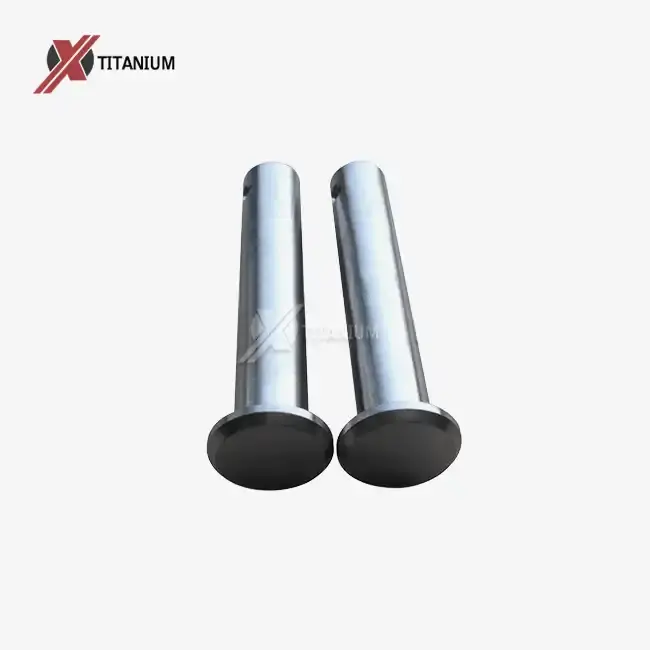
Titanium clevis pins have a round shaft with a head on one end and a cross-hole on the other end that can hold a cotter pin or holding clip. This design is simple but works well; it's easy to put together and take apart, and the links stay safe even in changing situations. The width, length, and shape of the pin's head can be changed to fit different load-bearing needs and fitting limitations. Manufacturing methods like CNC cutting make sure that measurements are accurate within very small ranges, which is very important for keeping precision parts fitting correctly.
Common Industrial Applications
Clevis pins are used by procurement workers in a variety of industries to make reliable links that pivot or slide. They are used by aerospace engineers in control links, landing gear parts, and hydraulic actuator systems where reducing weight and resistance to wear are very important. These bolts are used in marine operations in rudder systems, anchor systems, and deck equipment that is exposed to saltwater. For valve actuators and pressure tank links in chemical processing plants, titanium pins must be able to handle corrosive media. Heavy equipment makers put them in digger linkages and crane systems that are loaded and unloaded many times.
Key Mechanical Properties
Because titanium metals are naturally strong, these pins are better for harsh settings. It is about 40% stronger than high-strength steel and weighs almost half as much. This is because grade 5 titanium (Ti-6Al-4V) is made of. This advantage in weight directly turns into better fuel economy for aerospace uses and easier handling during maintenance tasks. Titanium's natural oxide layer makes it very resistant to rusting in places like ocean, chloride-rich environments, and acidic ones, where stainless steel rusts in pits and cracks. The material keeps its mechanical qualities at temperatures ranging from very cold to 400°C, which means it can be used for both engine parts and tools for processing LNG.
Benefits and Uses of Titanium Clevis Pins in Industrial Applications
Performance Enhancement Through Weight Reduction
Aerospace engineers are always looking for ways to cut weight so that planes use less fuel and can carry more cargo. Using titanium instead of steel clevis pins can cut the weight of a fastener by 45% without affecting its ability to hold weight. This small amount of weight loss adds up over hundreds of link places in an airplane's structure. In the same way, race teams and companies that make high-performance cars use titanium screws to get a competitive edge by making their vehicles lighter and more powerful. Less rotating mass in the suspension links makes the car more nimble and dynamic.
Extended Service Life and Maintenance Intervals
Titanium is very resistant to wear and rust, which means that parts don't need to be replaced as often. This benefit is very clear in marine applications, where corrosion means that stainless steel screws need to be replaced every 3 to 5 years, while titanium pins usually last longer than 15 years in the same circumstances. Chemical plants have had similar experiences, with titanium screws staying strong and stable even after being exposed to aggressive process fluids for a long time. These longer times cut down on maintenance downtime and the work costs that come with it, giving the investment a return within the first replacement cycle that isn't needed.
Versatility Across Demanding Sectors
Titanium clevis pins can be used in a wide range of industry situations because they are flexible. Offshore drilling sites that work in the rough North Sea depend on these clamps for connecting risers and BOP (blowout preventer) systems. If they fail, the results are disastrous. Manufacturers of medical devices use pure titanium pins for surgery tools and external fixation devices because the metal is biocompatible and not magnetic. Anodized titanium pins are used by Formula 1 and endurance racing teams because they meet both practical performance and weight certification standards. Titanium's special mix of properties that are suited to different operating stresses helps each industry.
Titanium Clevis Pins vs. Other Materials: A Comparative Analysis
Performance Comparison Matrix
Engineers have to weigh a lot of things when choosing materials for fasteners, like how strong they are, how well they fight environment damage, how heavy they are, and how much they cost to buy. Stainless steel clevis pins are less expensive to buy and strong enough for many uses, but their mass (about 7.9 g/cm³) makes them heavier in aircraft and performance settings. Galvanic corrosion happens when 316-grade stainless steel is joined to aluminum buildings in marine settings, making it hard for the steel to fight corrosion. At 2.7 g/cm³, aluminum pins are very light, but they don't have enough tensile strength for high-stress situations. They usually only offer 300–400 MPa, while titanium has 900–1100 MPa in Grade 5 metal.
Cost-Benefit Analysis for Procurement Teams
When choosing materials, it's important to think about the total cost of ownership over their entire life cycle, not just the buying price. Titanium clevis pins usually cost three to five times more than stainless steel parts of the same size when they are first bought. When replacement frequency, repair work, and operational downtime are taken into account, this price difference gets a lot smaller. Chemical makers say that using titanium fasteners in corrosive environments cuts down on upkeep by 70%. Within 18 to 24 months, the saves in labor costs cover the costs of the materials. Titanium is used in aerospace because it saves fuel and makes the plane lighter over its entire life, which more than makes up for the higher material costs by a factor of 10 or more.
Lead Time and Supply Chain Considerations
When making orders for titanium parts, procurement managers have to think about how complicated the manufacturing process is and how the supply chain works. CNC machining titanium needs special tools and cuts more slowly than CNC machining steel, which makes production times longer. Custom titanium clevis pins usually take between 6 and 10 weeks to make, based on the number of pins ordered and how complicated the specifications are. Standard steel pins, on the other hand, only take 2 to 4 weeks. Having smart ties with suppliers and keeping the right amount of inventory on hand can help shorten these longer lead times. Reliable makers with ISO 9001 and AS9100 certifications make sure that the quality is always the same and that materials can be tracked back to their source, which is important for medical and aircraft uses.
How to Select and Maintain Titanium Clevis Pins for Your Application?
Specification Requirements and Standards
To make the right choice, you must first understand the load conditions and external factors that are unique to your application. Based on ASTM F1137 or similar guidelines, engineers should figure out shear loads, bearing pressures, and safety factors. The pin's width needs to be big enough to provide enough shear strength, and the head and holding method need to keep the pin from pulling through at the highest design loads. When working with different metals, operating temperature ranges, chemical contact, and the chance of galvanic rusting are all things that need to be thought about in terms of the environment. For titanium grades, material requirements should refer to ASTM B348 and for aircraft uses, they should refer to AMS 4928. This is to make sure that sources provide the right material certifications and test results.
Surface Treatment Selection
Surface processes make titanium clevis pins work better and be easier to find over their entire service life. Polishing makes surfaces smooth, which lowers friction in moving uses and makes it easier to see if there are any flaws on the surface. Anodizing produces colored oxide layers (gold, blue, green, purple, black, or rainbow) that serve multiple functions including wear resistance, improved corrosion protection, and component identification through color coding. Nitriding raises the surface hardness to HV 800-900, which makes high-cycle uses much less likely to wear out. When choosing the right surface treatment, you have to weigh the needs of functionality against the costs, since specialized treatments take longer to make and cost more per unit.
Maintenance Best Practices
To get the most out of a component's working life, it needs to be handled, stored, and inspected correctly at all times. Titanium is prone to galling during installation, so it's important to use the right anti-seize chemicals, especially when using stainless steel tools. Surface pollution that could start rusting in service can be avoided by storing things in clean, dry places. Visual checks should be done on pins on a regular basis to look for damage, deformation, or wear patterns that show they aren't lined up right or are under too much load. Using calibrated tools to check the dimensions shows that the wear is still within accepted limits. Setting review times based on working hours or cycles makes sure that possible problems are found early, before they get so bad that they become unsafe.
Procurement Guide for Titanium Clevis Pins
Identifying Qualified Suppliers
To find high-performance fasteners, you need to work with makers that can show they have the technical know-how, quality systems, and supply chain stability you need. As a minimum, certified suppliers should keep their quality control systems in line with ISO 9001 norms. Aerospace suppliers should also have AS9100 certification. Documentation for material traceability must connect the heat numbers, mechanical test results, and chemical makeup analyses of produced goods to the materials that they came from. You can get a better idea of CNC machining capacity, inspection tools, and process controls by visiting maker sites or reading specific capability statements. Referrals from current customers in similar fields are a great way to find out about the quality of delivery and expert help.
Customization and Production Scalability
In many industrial settings, titanium clevis pins need to be made with specific sizes or features that aren't offered in normal catalogs. Baoji Chuanglian New Metal Material Co., Ltd. has more than ten years of experience in titanium engineering and cutting, which they use to make unique titanium parts. When we do CNC machining, we can meet specific diameter needs, make custom head designs, and keep precise tolerances of up to ±0.02mm. Scalability in production runs from small quantities of prototypes for development projects to large quantities of series production to support ongoing manufacturing operations. Engineering support services help clients make pin designs that are easier to make while still meeting useful standards. This could lower the cost per unit by improving the design.
Order Process and Logistics Planning
To make buying work, technical needs must be communicated clearly, and deadlines must be viewed as realistically. Usually, the process starts with technical drawings or specs that spell out the size, grade of the material, surface treatment, and needs for quality documentation. Quotes should include unit prices for different quantities, the cost of tools if needed, the wait time for production, and the terms for shipping. When buying from international sellers, purchase orders need to include delivery dates that are in sync with project goals. This gives extra time for customs clearance and shipping within the country. Payment terms depend on the seller and the value of the order. Usually, a deposit is required when the order is confirmed, and the balance is due before the shipment. Setting up clear lines of communication and assigning people to handle questions speeds up the solving of any technology issues that come up during production.
Conclusion
Titanium clevis pins are a smart investment for fields where the dependability of parts affects worker safety, the life of equipment, and the cost of upkeep. Their higher strength-to-weight ratio, excellent resistance to rust, and stress performance make their higher price worth it over the course of their useful life. For implementation to go well, you need to know about the properties of the materials, be clear about the size and surface treatment needs, and work with skilled makers who offer professional support along with high-quality goods. As businesses put more emphasis on being efficient and environmentally friendly, titanium fasteners offer real benefits that go beyond their instant useful performance and include lowering the total cost of ownership.
FAQ
How does the strength of titanium clevis pins compare to steel alternatives?
Grade 5 titanium alloy (Ti-6Al-4V) has a compressive strength of 900–1100 MPa, which is about the same as high-strength steel alloys but 45% lighter. Titanium clevis pins are about 40% better than steel for uses that need to be light because of its high strength-to-weight ratio. Titanium keeps these qualities over a wider range of temperatures than steel does, even at very low temperatures where steel becomes weak.
Can titanium clevis pins withstand marine and corrosive environments?
Titanium is very resistant to corrosion in places where stainless steel fails, like saltwater that is high in chloride, acidic conditions, and chemical working areas. The naturally occurring titanium dioxide layer on the skin heals itself right away if it gets broken. In marine uses, aluminum usually lasts 15 years or more, while stainless steel only lasts 3 to 5 years in the same settings.
What lead times should procurement teams expect for bulk titanium pin orders?
Custom titanium clevis pins are usually made 6 to 10 weeks after the order is confirmed, but this depends on the number of pins, how complicated they are, and what surface treatment options are chosen. Standard setups that use current tools may be able to ship in 4 to 6 weeks. When planning purchase plans with enough time for error, project timelines can be adjusted to account for manufacturing facts and foreign shipping when buying from specialized makers.
Partner with Chuanglian for Precision Titanium Clevis Pin Solutions
Baoji Chuanglian New Metal Material Co., Ltd. makes titanium clevis pin solutions that meet the strict requirements of the heavy equipment, aircraft, marine, and chemical processing industries. Our factory in China's "City of Titanium" uses advanced CNC machining and strict quality control procedures to make sure that every titanium clevis pin source produces pins that are the right size and made of solid material, as proven by non-destructive testing. Pure titanium and Grade 5 (Ti-6Al-4V) metal are used to make our parts. The surfaces can be polished, anodized in different colors, or nitrided to make them more resistant to wear. Whether you need a few prototypes for a research program or a lot of them for ongoing series production, our technical team can help you choose the right materials and make the best designs. You can email our tech experts at info@cltifastener.com or djy6580@aliyun.com to talk about your unique needs and get quotes for your next project.
References
1. American Society for Testing and Materials. (2022). "Standard Specification for Titanium and Titanium Alloy Bars and Billets" (ASTM B348-13).
2. Boyer, R., Welsch, G., & Collings, E.W. (2021). "Materials Properties Handbook: Titanium Alloys," ASM International.
3. Lutjering, G. & Williams, J.C. (2020). "Engineering Materials and Processes: Titanium," Springer-Verlag Berlin Heidelberg.
4. Donachie, M.J. (2019). "Titanium: A Technical Guide, 2nd Edition," ASM International Publications.
5. Schutz, R.W. & Watkins, H.B. (2018). "Recent developments in titanium alloy application in the energy industry," Materials Science and Engineering Reports.
6. Peters, M., Kumpfert, J., Ward, C.H., & Leyens, C. (2020). "Titanium alloys for aerospace applications," Advanced Engineering Materials Journal.

Learn about our latest products and discounts through SMS or email