- English
- French
- German
- Portuguese
- Spanish
- Russian
- Japanese
- Korean
- Arabic
- Greek
- German
- Turkish
- Italian
- Danish
- Romanian
- Indonesian
- Czech
- Afrikaans
- Swedish
- Polish
- Basque
- Catalan
- Esperanto
- Hindi
- Lao
- Albanian
- Amharic
- Armenian
- Azerbaijani
- Belarusian
- Bengali
- Bosnian
- Bulgarian
- Cebuano
- Chichewa
- Corsican
- Croatian
- Dutch
- Estonian
- Filipino
- Finnish
- Frisian
- Galician
- Georgian
- Gujarati
- Haitian
- Hausa
- Hawaiian
- Hebrew
- Hmong
- Hungarian
- Icelandic
- Igbo
- Javanese
- Kannada
- Kazakh
- Khmer
- Kurdish
- Kyrgyz
- Latin
- Latvian
- Lithuanian
- Luxembou..
- Macedonian
- Malagasy
- Malay
- Malayalam
- Maltese
- Maori
- Marathi
- Mongolian
- Burmese
- Nepali
- Norwegian
- Pashto
- Persian
- Punjabi
- Serbian
- Sesotho
- Sinhala
- Slovak
- Slovenian
- Somali
- Samoan
- Scots Gaelic
- Shona
- Sindhi
- Sundanese
- Swahili
- Tajik
- Tamil
- Telugu
- Thai
- Ukrainian
- Urdu
- Uzbek
- Vietnamese
- Welsh
- Xhosa
- Yiddish
- Yoruba
- Zulu
Socket Head Screws Explained – Strength, Uses & Materials
In precision engineering, socket head screws are an important type of fastener because they are easy to use, strong, and flexible enough to be used in a wide range of harsh industrial settings. When it comes to more advanced types, titanium socket head screws have become the best choice for uses that need to reduce weight without sacrificing strength or resistance to rust. These fasteners are made from pure titanium or titanium alloys like Grade 2 and Grade 5 (Ti-6Al-4V). They have a tensile strength of up to 1,200 MPa and are about 45% lighter than steel equivalents. This makes them essential in the aerospace, marine, medical device, and high-performance automotive industries.
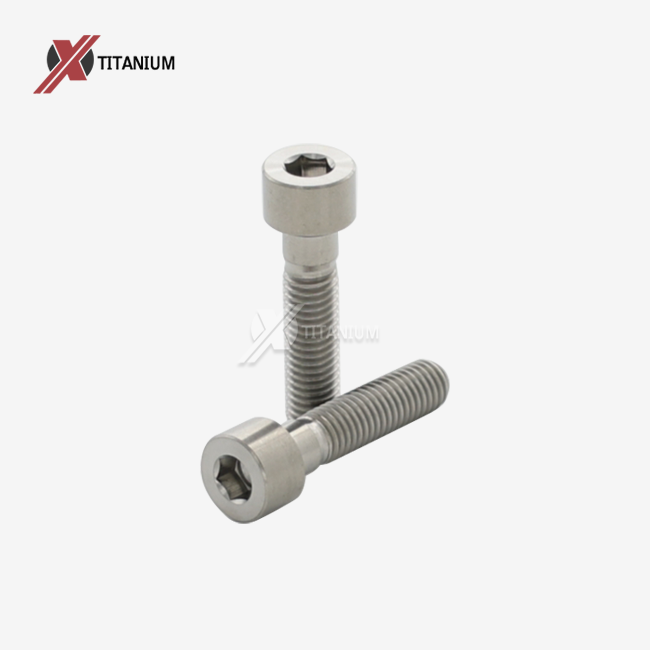
Understanding Titanium Socket Head Screws: Grades, Strength & Corrosion Resistance
Material Composition and Alloy Grades
Titanium fasteners are not all the same thing. The performance qualities depend a lot on the makeup of the metal. With a tensile strength of about 340 MPa, Grade 2 titanium, which is also known as commercially pure titanium, is very resistant to rust and easy to shape. This grade is good for non-load-bearing uses where weather exposure is the main problem, like chemical processing equipment and buildings for offshore platforms.
Grade 5 titanium alloy, which is also written as Ti-6Al-4V in metals, has about 6% aluminum and 4% vanadium in it. The tensile strength goes up to between 900 and 1,000 MPa with this mix, and the yield strength is close to 828 MPa. The metal stays structurally sound from very low temps up to about 400°C. This means that it can hold as much weight as Class 10.9 steel fasteners while still being able to hold the same amount of weight. Ti-6Al-4V has a density of only 4.43 g/cm³, while 316 stainless steel has a density of 8.0 g/cm³. This means that it can carry more weight and use less fuel in transportation uses.
The Science Behind Corrosion Resistance
Titanium screws are unique because when they are exposed to oxygen, a self-healing passive oxide layer (TiO₂) forms on their own. If this very thin film gets broken, it grows back right away. This makes the material almost resistant to chlorides, sulfides, nitric acid, and alkaline solutions. In the more than ten years that we've been working with marine engineering clients, we've seen titanium socket head screws stay strong after being exposed to saltwater for long periods of time, where stainless steel would have pitted and corroded within months.
Titanium's non-magnetic qualities are also important to note. Because these screws have a magnetic permeability of only about 1.00005, magnetic fields can't affect them. This makes them very important for MRI machines, precise electronic systems, and sensitive navigation tools where magnetic interference could cause problems.
Strength-to-Weight Performance Metrics
When buying teams look at different fastener choices, the ratio of strength to weight is often what makes the difference. Grade 5 titanium has a specific strength that is about 30% higher than high-strength steel alloys. Specific strength is calculated by dividing strength by density. This benefit grows when hundreds of screws are needed for an assembly. By switching from steel socket head cap screws to titanium ones in a single part of the fuselage, an airplane maker can save more than 200 kilograms of weight, which directly improves fuel economy and increases operational range.
Applications and Benefits of Titanium Socket Head Screws in B2B Industries
Aerospace and Defense Systems
Titanium screws are now commonly used in building airplane frames, engine parts, and landing gear systems. When high fatigue resistance and low thermal expansion rate work together, they keep the parts from coming loose under the repeated thermal stresses that happen during flight operations. Manufacturers of engine parts like Grade 5 titanium socket head screws for turbine casing assemblies because each fastener has to be able to handle shaking rates higher than 10,000 Hz while being exposed to heat gradients and combustion byproducts.
Marine Engineering and Offshore Structures
For screws, saltwater settings are one of the roughest places to work. When traditional types of stainless steel are loaded and exposed to salt for a long time, they crack from stress corrosion and crevice corrosion. We gave titanium fasteners to owners of offshore platforms, and they reported no corrosion-related fastener problems over five-year inspection cycles. This is in contrast to marine-grade stainless steel, which used to need to be replaced every year.
Medical Device Manufacturing
Biocompatibility standards for medical uses require materials that don't cause tissue damage. Titanium Grades 2 and 5 meet the standards set by ISO 10993 and ASTM F136. This means they can be used to make implantable devices, surgical tool kits, and housings for diagnostic equipment. The radiolucency of the material makes it possible to get clear images during CT and X-ray processes, which is very helpful for hip implant fixation systems.
Verifying Authenticity and Material Compliance
It is very dangerous for the supply chain to have fake screws in fields where a broken part can have terrible results. Verification procedures should be put in place by procurement teams. These should include spectrographic analysis, density testing (real Grade 5 titanium weighs between 4.42 and 4.45 g/cm³), and a review of the certification. Reliable providers keep full records of all the materials they send by using mill test reports that are in line with ASTM B348 for bar stock and ASTM F467 for fastener-grade material. Before being sent out, each batch at Chuanglian goes through spectrographic proof and tensile testing, and there are papers that can be used to track each heat lot.
Size, Installation, and Standards: Practical Guide for Procurement & Engineers
Standard Dimensions and Customization Options
Socket head cap screws have standard shapes set by DIN 912 and ISO 4762. This makes sure that they can be used in all global supply lines. We can make threads with sizes from M3 to M24 in metric, and we also have choices with UNC threading for North American needs. Standard lengths range from 5 mm to 150 mm, but special sizes can be made to fit specific assembly needs without having to pay for casting if you buy more than 500 pieces.
The hexagonal socket's depth and width are carefully set to keep the cam from coming out during fitting. Because Grade 5 titanium has a lower elastic stiffness than steel, torque requirements need to be carefully followed. Too much torque can break the bolt or pull the threads, and not enough preload can damage the joint. We suggest using torque wrenches that have been properly calibrated and come with proof of that. When using these wrenches, we suggest adding about 60 to 70% of the torque value that is recommended for steel bolts of the same grade.
Surface Treatment Options and Functional Coatings
In addition to the choice of material, surface processes have a big effect on efficiency. Polishing a surface to a Ra 0.4 level gets rid of tiny cracks that could be home to germs in hospital settings or start corrosion in chemical processing settings. Anodizing makes the oxide layer thicker and more durable, and it also lets you use color code to make sure the assembly is correct. You can get finishes in natural titanium gray, gold, blue, green, purple, black, and rainbow through controlled voltage and electrolyte chemistry.
Nitriding processes spread nitrogen into the surface, making a titanium nitride layer that raises the hardness of the surface to 70 HRC while keeping the flexibility of the base. This method works especially well in places where there is a lot of wear and tear, like robotic joint assemblies and precision positioning equipment, where galling resistance keeps the thread from seizing up during repeated assembly cycles.
Compliance Certification and Quality Assurance
For aerospace uses, you need AS9100 quality management systems with detailed process controls at every stage of production. Medical gadget sellers need to have ISO 13485 approval that shows they can control contamination and keep track of their products. At Chuanglian, we keep both licenses along with ISO 9001:2015, and we get audited every year to make sure we're still following the rules. Every day, we check the settings of our CNC machining centers, and statistical process control keeps an eye on measurement errors of up to ±0.02mm during production runs.
As required by ASME B1.2, thread checking uses a GO/NO-GO gauge, and tension testing checks the mechanical properties against ASTM F468 standards. Each shipment comes with a material certificate that lists the chemicals used, the settings for the heat treatment, and the results of mechanical tests that can be linked to particular production batches. We ensure every batch of titanium socket head screws meets these rigorous industrial benchmarks.
Titanium vs Competing Materials: Making the Informed Choice
Comparative Performance Analysis
When expert teams look at fastener materials, they should look at a number of different choices. Grades of stainless steel like 316 and 304 are good at resisting rust and cost 30 to 40 percent less than titanium versions. But they aren't good for harsh settings because they are heavy and easily crack from stress rust caused by chloride.
Aluminum alloys, such as 7075-T6, are lighter and easier to work with, but their highest tensile strength is only about 570 MPa, which is only half of that of Grade 5 titanium. The lower melting point of the material makes it less useful in high-temperature situations, and galvanic rusting can happen when aluminum comes into touch with different metals in wet places.
Carbon steel screws are very strong and don't cost much, so they can be used in indoor uses that are protected from corrosion. Because the material is prone to rusting and has a density of 7.85 g/cm³, it can't be used for projects that need to be light or outside.
Total Cost of Ownership Considerations
Titanium socket head screws are more expensive when first bought, but lifetime cost analysis frequently shows that they are cheaper in the long run. The higher unit cost is usually more than made up for within 24 to 36 months of operation, thanks to less frequent inspections, corrosion-related replacement cycles, and weight-related fuel saves in transportation uses. A chemical processing plant that switched to titanium fasteners in pump assemblies saw a 73% drop in unplanned repair events over a three-year review period. This saved the company a lot of money on running costs, even though the fasteners cost more to buy.
Material Selection Decision Framework
When choosing bolt materials, procurement teams should look at a number of factors. Grade 5 titanium is best for projects that need the highest strength-to-weight ratios in harsh settings. Grade 2 titanium may be the best choice for applications that need to be easily shaped and can handle modest loads in chemically exposed situations. If you don't mind the extra weight and shorter life span, stainless steel or carbon steel might be a better choice for projects that need to stay within a strict budget and are kept inside.
Buying Guide: How to Source High-Quality Titanium Socket Head Screws?
Supplier Qualification and Manufacturing Capabilities
In the titanium fastener market, there are a wide range of makers, from aircraft suppliers to general industry wholesalers. Vertical integration skills, such as finding raw materials, CNC machining, heat treatment, surface finishing, and quality testing, should be shown by qualified providers. Our Baoji plant has more than ten CNC machining centers, which lets us keep full control of the whole production process for titanium socket head screws, from the bar stock to the finished fastener, without having to rely on middlemen who might make it harder to track.
In the titanium business, where the products are made is very important. Baoji City in China is known as the "City of Titanium" because it has a lot of experts, easy access to raw materials, and a network of specialized equipment that has been built up over many years. This regional clustering makes it possible for manufacturers to work together on technology and save money in ways that separate manufacturers can't.
Strategic Procurement Approaches
The smallest amount you can buy is usually between 100 and 500 pieces, but it depends on the size and the level of customization you need. When you buy more than 1,000 pieces, you can save money with volume prices. For orders over 5,000 pieces, you can usually save 15 to 25 percent. For initial approval, we suggest sample orders of 10 to 50 pieces. This way, you can test the fit and accuracy in the lab before committing to production amounts.
Lead times change based on how complicated the specifications are. It takes 15 to 20 business days to ship standard DIN 912 setups in typical sizes. It takes 35 to 45 days longer if you need custom sizes, special surface processes, or metals that aren't common. Schedules can be cut by 30–40% for rush production, which usually costs an extra 20% on top of the base price.
Logistics and After-Sales Support
For international shipping, the boxes need to be carefully packed so that the surfaces don't get damaged during transport. Individual plastic sleeves are put inside partitioned boxes, and desiccant packets keep the humidity levels in check. There are business invoices, packing lists, certificates of origin, and material test results that meet the needs of North American and European customs.
After the sale, technical help should continue. When sellers offer installation help, torque specification advice, and compatibility testing for difficult assembly tasks, procurement teams gain. Our engineering staff gives advice based on specific applications, material performance data, and case studies from similar projects in different industries.
Conclusion
Titanium socket head screws are a high-tech way to fix things, and their performance is good enough to justify the extra cost. The high strength-to-weight ratio, resistance to rust, biocompatibility, and temperature stability make these materials ideal for situations where regular materials can't work. Titanium in Grade 2 and Grade 5 have different performance profiles that make them good for a range of uses, from chemical processing to building structures for spacecraft. When total lifetime costs are taken into account instead of just the original purchase price, titanium fasteners are often the most cost-effective choice. When choosing a supplier, you should look at their manufacturing skills, quality certifications, ability to track materials, and level of expert support before comparing unit prices. Because fasteners are so important to the integrity of an assembly, they need to be sourced from makers that can show steady quality, technical skill, and long-term dependability.
FAQ
How does the lifespan of titanium fasteners compare to stainless steel in marine environments?
Titanium socket head screws can be used continuously in saltwater for more than 20 years without any measurable degradation. 316 stainless steel screws, on the other hand, only last 3 to 7 years before pitting rust makes them need to be replaced. The self-healing oxide layer stops the stress corrosion cracks and crevice corrosion that make stainless steel less durable in chloride-rich settings.
Can titanium socket head cap screws withstand high-temperature applications?
Up to about 400°C (750°F), Grade 5 titanium keeps its structural qualities. This means it can be used in moderately high-temperature situations. After this point, creep warping starts to become a problem. Nickel-based superalloys are needed for aerospace engine parts that work above this range, but titanium is still the best material for many aircraft and auxiliary uses with lower thermal loads.
What affects the price of titanium socket head screw pricing in bulk purchases?
The main thing that affects price is the grade of the material. Grade 5 (Ti-6Al-4V) costs 40–60% more than Grade 2 because it has more alloying elements and is harder to work with. Order number has a big effect on unit price, and savings start to show up after 1,000 pieces. Depending on how complicated the specifications are, custom sizes, special surface treatments, and faster shipping can add 15 to 35 percent to the base price.
Source Premium Titanium Socket Head Screws from Chuanglian
Baoji Chuanglian New Metal Material Co., Ltd. specializes in manufacturing precision titanium fasteners tailored to the most demanding industrial applications. As a titanium socket head screws manufacturer with over ten years of metallurgical expertise, we deliver CNC-machined components meeting aerospace AS9100, medical ISO 13485, and industrial ISO 9001 quality standards. Our vertically integrated facility in Baoji—recognized globally as the "City of Titanium"—ensures full material tracking from approved raw materials to finished goods. We offer customized specifications including metric and UNC threading from M3 to M24, lengths spanning 5mm to 150mm, and surface treatments including polishing, anodizing, and nitriding in multiple colors. Technical consultation supports material selection, installation best practices, and application optimization. Contact our engineering team at info@cltifastener.com or djy6580@aliyun.com to discuss your project requirements, request material certificates, or arrange sample shipments that demonstrate the performance advantages of genuine titanium fasteners.
References
1. American Society for Testing and Materials. (2021). ASTM F468: Standard Specification for Nonferrous Bolts, Hex Cap Screws, and Studs for General Use. ASTM International.
2. Donachie, M.J. (2000). Titanium: A Technical Guide, 2nd Edition. ASM International.
3. International Organization for Standardization. (2019). ISO 4762: Hexagon Socket Head Cap Screws. ISO Standards Collection.
4. Lutjering, G., & Williams, J.C. (2007). Titanium: Engineering Materials and Processes. Springer-Verlag Berlin Heidelberg.
5. SAE International. (2018). Aerospace Material Specification AMS 4967: Titanium Alloy Bars, Wire, Forgings, Rings. Society of Automotive Engineers.
6. Schutz, R.W., & Watkins, H.B. (1998). "Recent Developments in Titanium Alloy Application in the Energy Industry." Materials Science and Engineering: A, 243(1-2), 305-315.
Learn about our latest products and discounts through SMS or email