- English
- French
- German
- Portuguese
- Spanish
- Russian
- Japanese
- Korean
- Arabic
- Greek
- German
- Turkish
- Italian
- Danish
- Romanian
- Indonesian
- Czech
- Afrikaans
- Swedish
- Polish
- Basque
- Catalan
- Esperanto
- Hindi
- Lao
- Albanian
- Amharic
- Armenian
- Azerbaijani
- Belarusian
- Bengali
- Bosnian
- Bulgarian
- Cebuano
- Chichewa
- Corsican
- Croatian
- Dutch
- Estonian
- Filipino
- Finnish
- Frisian
- Galician
- Georgian
- Gujarati
- Haitian
- Hausa
- Hawaiian
- Hebrew
- Hmong
- Hungarian
- Icelandic
- Igbo
- Javanese
- Kannada
- Kazakh
- Khmer
- Kurdish
- Kyrgyz
- Latin
- Latvian
- Lithuanian
- Luxembou..
- Macedonian
- Malagasy
- Malay
- Malayalam
- Maltese
- Maori
- Marathi
- Mongolian
- Burmese
- Nepali
- Norwegian
- Pashto
- Persian
- Punjabi
- Serbian
- Sesotho
- Sinhala
- Slovak
- Slovenian
- Somali
- Samoan
- Scots Gaelic
- Shona
- Sindhi
- Sundanese
- Swahili
- Tajik
- Tamil
- Telugu
- Thai
- Ukrainian
- Urdu
- Uzbek
- Vietnamese
- Welsh
- Xhosa
- Yiddish
- Yoruba
- Zulu
Are titanium bike bolts worth it?
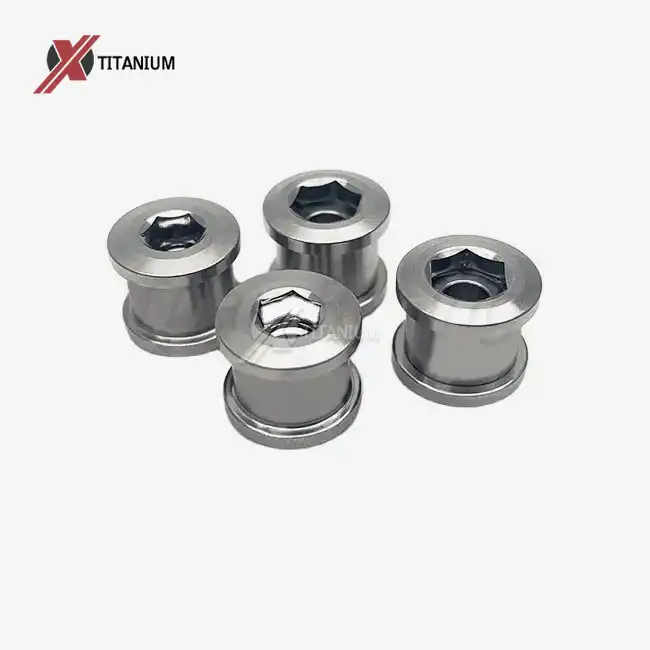
Yes, titanium bike nuts, especially Gr5 titanium bicycle screws, are worth much more than what they cost. Made from the Ti-6Al-4V alloy, these fasteners are strong enough for aircraft use but only 40% as heavy as steel. They also don't rust in salty or chemically harsh conditions. Their high resistance to wear under cyclical load keeps important brake and engine parts from breaking. This makes them necessary in situations where dependability is more important than price. In this study, we look at how well the materials work, how to buy them, and how much they cost over their whole time to see if titanium screws meet your needs.
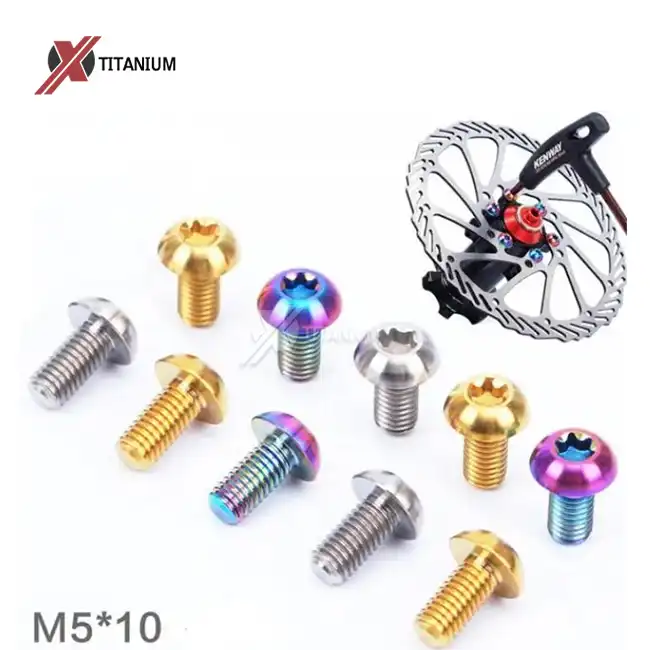
Understanding Gr5 Titanium Bicycle Screws
Gr5 titanium bicycle screws are a special kind of fastener made from Ti-6Al-4V metal, which is 90% titanium, 6% aluminum, and 4% vanadium. This alpha-beta alloy structure has tensile strengths close to 950 MPa, which is much higher than commercially pure Grade 2 titanium. It also has a mass of only 4.43 g/cm³. Manufacturers use CNC cutting to get the exact dimensions needed for threaded connections. This makes sure that the binding force stays the same from batch to batch.
Composition and Manufacturing Standards
The mix of alloys makes a material that is both flexible and tough, which lets rolled thread production methods keep the purity of the grain structure. Because the process of making rolled threads pinches the surface fibers instead of cutting them, they have a longer wear life than cut threads. Following the rules in ASTM B348 and AMS 4928 makes sure that the mechanical qualities are the same across production lots. This is very important when using screws to hold brake calipers or stem faceplates in place, as failure could be dangerous.
Key Mechanical Properties
Gr5 titanium's high elastic modulus makes it very good at damping vibrations, which lowers stress levels that can cause cracks to start. Its low thermal conductivity (about 7 W/m·K compared to 50 W/m·K for steel) keeps heat from moving from disc brake blades to hub sections when the vehicle is going downhill for a long time. It naturally creates a layer of stable titanium dioxide on the surface, which prevents the electrochemical processes that lead to galvanic corrosion when steel bolts touch aluminum or carbon fiber structures.
Verification and Quality Markers
Professionals in purchasing should check the approval of materials by looking at mill test reports that list the materials' chemical makeup and mechanical testing results. When you look closely, you can see that genuine Gr5 screws have a smooth, even surface roughness and exact thread geometry. Manufacturers who follow ISO 9001 set up batch tracking systems that connect finished goods to source ingot certifications. This creates the documentation chain needed in aircraft and medical device applications where the source of materials must be able to withstand regulatory audit.
Comparing Gr5 Titanium Screws with Other Materials
Instead of brand opinions, choices about which materials to use are based on differences in performance that can be measured. Fasteners made of stainless steel (usually types 304 or 316) don't rust in dry places, but they rust in chloride-rich coastal areas, leaving holes in the metal. While aluminum alloy bolts (7075-T6) do a good job of reducing weight, they have lower shear strength and a tendency to thread galling, which makes it harder to take things apart for upkeep. The comparison is more than just comparing strength to weight; it also looks at practical limits and durability over time.
Strength-to-Weight and Fatigue Resistance
A Grade 5 titanium M5×16mm bolt weighs about 1.2 grams, while the same-sized steel bolt weighs 2.1 grams. This is a 43% weight decrease without any loss in tightening preload capacity. More importantly, titanium's higher fatigue endurance limit—about 510 MPa compared to 310 MPa for 304 stainless steel—allows for longer service times in uses that are subject to a lot of vibration, such as handlebar stem assemblies. This wear resistance stops the slow tightening that happens when steel fasteners are installed and needs to be retorqued often.
Corrosion Behavior and Environmental Stability
Titanium's passive oxide layer instantly heals itself when scratched, giving it better rust protection than stainless steel in harsh settings. Laboratory tests with salt spray show that Gr5 titanium bicycle screws keep their structural integrity after being exposed to it continuously for more than 1,000 hours, while steel that isn't covered starts to rust within 48 hours. This resistance is very important in marine settings and winter riding situations where road salts speed up the wear and tear on fasteners.
Cost Analysis and Lifecycle Economics
The difference in the cost of the raw materials—titanium bolts usually cost 300–500% more than steel bolts of the same size—must be weighed against how often they need to be replaced and how much that costs in work. A bicycle company that buys 50,000 fastener units a year has to weigh the costs of buying them up front against guarantee claims caused by rust failures. Titanium fasteners are economically viable within 24-36 month product lifecycles when field repair costs are taken into account. This is especially true for finished goods that are sent to humid climates.
Are Gr5 Titanium Bike Bolts the Right Choice for Your Bicycle?
Instead of general suggestions, decision frameworks should focus on needs that are specific to the application. Titanium fasteners have clear benefits in racing where weight is important, in corrosive conditions, and in systems that need to stay the same size over time. On the other hand, properly defined steel alternatives may work well for projects that are limited by price and don't pose any environmental risks.
Performance Benefits in Critical Applications
Manufacturers of racing bikes say that using titanium instead of steel for stem bolts, rotor bolts, and cage fixing gear makes the bikes go faster. The total weight savings—usually 30 to 40 grams for the whole set of fasteners—happens in places away from the bottom bracket axis, which lowers rotary drag more effectively than similar mass reductions in the frame tubes. Professional teams that play in conditions that change often appreciate not having to replace fasteners in the middle of the season because of corrosion-related seizure.
Compatibility and Installation Considerations
When putting titanium screws into metal parts, the thread engagement depth is very important. Due to the similar hardness values of the materials, an anti-seize substance must be used to keep them from galling during assembly. Because titanium has a lower friction coefficient and can stretch more than steel, torque requirements usually call for a 10-15% decrease compared to steel fasteners. When installed correctly with measured torque tools, both undertightening (which lets the bolt move) and overtightening (which damages the thread) are avoided.
Real-World Implementation Data
A European wholesaler of bicycle parts said that OEM clients had no guarantee claims for fastener corrosion after moving to Gr5 titanium bicycle screws for coastal market goods. This is in contrast to the 3.2% claim rate for products made with 316 stainless steel before. Manufacturers of mountain bikes said that titanium pivot bolts kept the exact bearing preload during suspension service intervals, while aluminum bolts needed to be retorqued in the middle of the season to account for thread loosening and surface embedment.
Procurement Guide: How to Buy High-Quality Gr5 Titanium Bicycle Screws?
Technical validation needs and supply chain reliability measures must both be taken into account in sourcing strategies. The titanium fastener market includes both aerospace-certified manufacturers who can provide full material tracking and commodity providers who offer low prices with little paperwork. B2B buyers weigh lowering costs against reducing danger by looking at a supplier's skills in a number of different areas.
Supplier Evaluation Criteria
Manufacturers who are qualified keep licenses that show they can control the production process. For example, ISO 9001 sets the standard for quality management systems, and AS9100 certification shows that the company follows strict procedures at the aircraft level. Ask for proof of how often tensile tests are done (reliable sources test every output lot), how measurements are checked, and how nonconformances are handled. Supplier facilities should have CNC equipment that can keep thread sizes within ±0.05mm of accuracy, since differences above this level make it harder to predict the tightening force.
Customization and Order Parameters
Different providers have very different minimum order numbers. For normal ISO metric sizes, they range from 500 pieces to more than 5,000 units for custom head styles or coatings. Lead times are usually between 4 and 6 weeks for stock configurations and 10 to 12 weeks for orders that need more than standard mill test results for material approval. When you commit to buying 10,000 pieces, the unit cost is often 18–25% less than when you make multiple deliveries. This is because volume price systems reward consolidated orders.
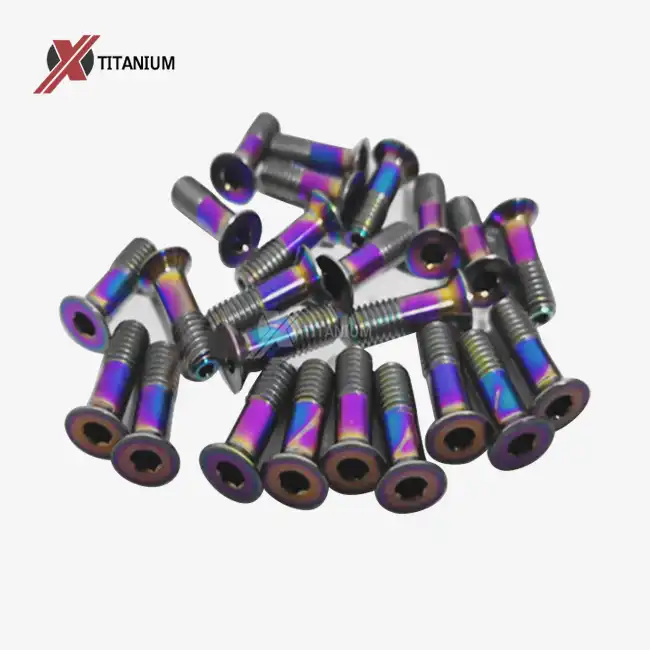
Chuanglian makes titanium fasteners that fully comply with ASTM B348 using precise CNC machining in Baoji, which is known as China's "Titanium City." We can do custom threading, anodized color finishing in gold, blue, rainbow, purple, green, and black, and specialized surface treatments like nitriding to make the metal more resistant to wear. When you place a bulk order, the MOQ is open, and production can start faster to meet project deadlines.
Pricing Dynamics and Value Optimization
Prices for standard M5–M8-sized Gr5 titanium bicycle screws range from $0.85 to $2.40 per unit right now, depending on the supply of raw materials, the size of the order, and the level of finishing needed. Anodized color treatments cost an extra $0.15 to $0.30 per unit, but they help brands stand out in consumer-facing settings. To protect yourself from the unpredictable price of titanium sponge, which has been known to change 12 to 18% a year due to changes in aircraft demand, talk about framework deals that set fixed prices for 6 to 12 months.
Maintaining and Using Gr5 Titanium Screws for Maximum Performance
The service life of fasteners and the functionality of their parts are directly affected by how they are installed and maintained. Titanium has special qualities that make it need to be handled in a way that is different from how steel fasteners are usually handled. Engineering teams should write down instructions on how to apply pressure, choose the right anti-seize product, and schedule regular inspections.
Installation Best Practices
Follow the manufacturer's instructions for applying torque, which is usually found using the formula T = K × D × P. Here, K is the friction coefficient of the fastener (0.18–0.22 for titanium with anti-seize), D is the standard diameter, and P is the desired preload. To keep preload changes from going over 10%, use torque wrenches that have been measured and are accurate to within ±4%. Thread engagement should go at least 1.5 times the width of the bolt into tapped holes. Threads that are engaged too briefly could strip under operational loads, while threads that are engaged too fully waste material without making the joint stronger.
Maintenance and Inspection Protocols
Titanium doesn't rust, so it doesn't need to be replaced on a regular basis because of weather damage. At regular inspection times, you should make sure that the preload is still there by looking for moving parts and retorquing them every so often at service points stated by the maker. When the right anti-seize chemicals are present, the material's galling resistance lets it be put together and taken apart many times without damaging the threads. Before reinstalling, clean the threads with rubbing alcohol to get rid of any dirt or dust that might mess up the estimates for the friction coefficient.
Environmental Performance Optimization
Anodized surface processes make things look better and last longer, but they don't change how resistant they are to corrosion in a big way. The titanium oxide layer underneath provides the main defense. During regular maintenance, don't use harsh alkaline cleaners (pH > 12), as long-term contact can damage the passive layer. The substance works consistently at temperatures ranging from -200°C to +400°C. However, threaded joints may experience some preload release above 250°C because Gr5 titanium bicycle screws and aluminum parts expand and contract at different rates.
Conclusion
Titanium bike nuts are worth the extra cost when their weight reduction, resistance to corrosion, and resistance to wear make them more useful than the difference in price. Gr5 titanium bicycle screws improve performance in measured ways in competitive riding, coastal areas, and high-reliability assemblies where fastener failure could affect safety or the guarantee. When buying something, people shouldn't just look at the price at first. They should also look at how the material will react to different environments and how much it will cost over its whole life. Titanium fastener standards, along with proper source approval and installation procedures that maximize material performance capabilities, help manufacturers and wholesalers serving challenging markets stand out from the competition.
FAQ
Q1: How do titanium bolts compare to steel in shear strength?
A: Gr5 titanium bicycle screws have shear strengths of about 550 to 580 MPa, which is about 70 to 75% of Grade 8.8 steel nuts. When it comes to bicycles, this difference doesn't really matter because properly built joints put fasteners in tension instead of shear. In riding situations, the benefits of saving weight and protecting against rust usually outweigh the small drop in shear strength.
Q2: What methods verify authentic Gr5 material?
A: There are 5.5 to 6.75% aluminum and 3.5 to 4.5% vanadium contents in the demand mill test results that show chemical makeup through spectroscopy analysis. The hardness test should give you numbers between 30 and 36 HRC. Reliable sellers offer batch tracking that connects finished fasteners to source ingot certifications. This lets an independent lab check the authenticity of the fasteners if there are any doubts.
Q3: What are typical bulk order lead times?
A: For orders less than 5,000 pieces, standard configurations ship in 4 to 6 weeks. Custom specs that need specific threading, head styles, or approved material paperwork add 8 to 12 weeks to the delivery time. With higher prices, expedited production may cut wait times by 30 to 40 percent, which is helpful when there are tight deadlines for launching a product.
Partner with Chuanglian for Your Titanium Fastener Requirements
Precision-engineered Gr5 titanium bicycle screws made to ASTM B348 and AMS 4928 standards by Baoji Chuanglian New Metal Material Co., Ltd. are supplied by this company using ISO 9001-certified methods. Custom bolt setups, anodized color finishes, and specialized surface treatments like polishing and nitriding can all be made with CNC cutting. We use vertical integration to make sure that our B2B clients get stable quality and low prices. We are located in Baoji, which is China's most important titanium production hub, and we do everything from sourcing raw materials to inspecting finished products.
Technical consulting services help engineering teams make the best bolt standards for each job by taking into account things like torque needs, weather conditions, and connection issues. As part of our quality control procedures, we check all of the dimensions and do batch tensile tests. We also provide full material approval paperwork that meets the needs of the aircraft and medical device industries. Get in touch with our buying experts at info@cltifastener.com or djy6580@aliyun.com to talk about your needs for a Gr5 titanium bicycle screws supplier, the freedom of your MOQ, and your customization choices.
References
1. Boyer, R., Welsch, G., & Collings, E.W. (1994). Materials Properties Handbook: Titanium Alloys. ASM International, Materials Park, Ohio.
2. Donachie, M.J. (2000). Titanium: A Technical Guide, 2nd Edition. ASM International, Materials Park, Ohio.
3. Lütjering, G., & Williams, J.C. (2007). Titanium: Engineering Materials and Processes, 2nd Edition. Springer-Verlag, Berlin.
4. Schutz, R.W., & Thomas, D.E. (1987). Corrosion of Titanium and Titanium Alloys. Metals Handbook, 9th Edition, Volume 13: Corrosion. ASM International, pp. 669-706.
5. Veiga, C., Davim, J.P., & Loureiro, A.J.R. (2012). Properties and Applications of Titanium Alloys: A Brief Review. Reviews on Advanced Materials Science, 32(2), 133-148.
6. Zwicker, U. (1974). Titan und Titanlegierungen (Titanium and Titanium Alloys). Springer-Verlag, Berlin.
Learn about our latest products and discounts through SMS or email