- English
- French
- German
- Portuguese
- Spanish
- Russian
- Japanese
- Korean
- Arabic
- Greek
- German
- Turkish
- Italian
- Danish
- Romanian
- Indonesian
- Czech
- Afrikaans
- Swedish
- Polish
- Basque
- Catalan
- Esperanto
- Hindi
- Lao
- Albanian
- Amharic
- Armenian
- Azerbaijani
- Belarusian
- Bengali
- Bosnian
- Bulgarian
- Cebuano
- Chichewa
- Corsican
- Croatian
- Dutch
- Estonian
- Filipino
- Finnish
- Frisian
- Galician
- Georgian
- Gujarati
- Haitian
- Hausa
- Hawaiian
- Hebrew
- Hmong
- Hungarian
- Icelandic
- Igbo
- Javanese
- Kannada
- Kazakh
- Khmer
- Kurdish
- Kyrgyz
- Latin
- Latvian
- Lithuanian
- Luxembou..
- Macedonian
- Malagasy
- Malay
- Malayalam
- Maltese
- Maori
- Marathi
- Mongolian
- Burmese
- Nepali
- Norwegian
- Pashto
- Persian
- Punjabi
- Serbian
- Sesotho
- Sinhala
- Slovak
- Slovenian
- Somali
- Samoan
- Scots Gaelic
- Shona
- Sindhi
- Sundanese
- Swahili
- Tajik
- Tamil
- Telugu
- Thai
- Ukrainian
- Urdu
- Uzbek
- Vietnamese
- Welsh
- Xhosa
- Yiddish
- Yoruba
- Zulu
Best titanium M10 front caliper bolts for SV650
To get the best titanium m10 front caliper bolts sv650, you need parts that are very safe, don't weigh much, and don't rust. Titanium m10 front caliper bolts sv650 made from aerospace-grade Ti-6Al-4V (Grade 5) are 20% lighter than steel OEM bolts but can still pull apart over 900 MPa. Three major issues that race teams, custom shops, and performance fans have are thread seizure due to rust, too much unsprung weight that changes how the suspension moves, and premature failure due to thermal cycling. These perfectly designed bolts solve all three of these issues. You can be sure that you can find the products you need, that ASTM B348 standards are met, and that the quality of each batch is the same if you choose the right service.
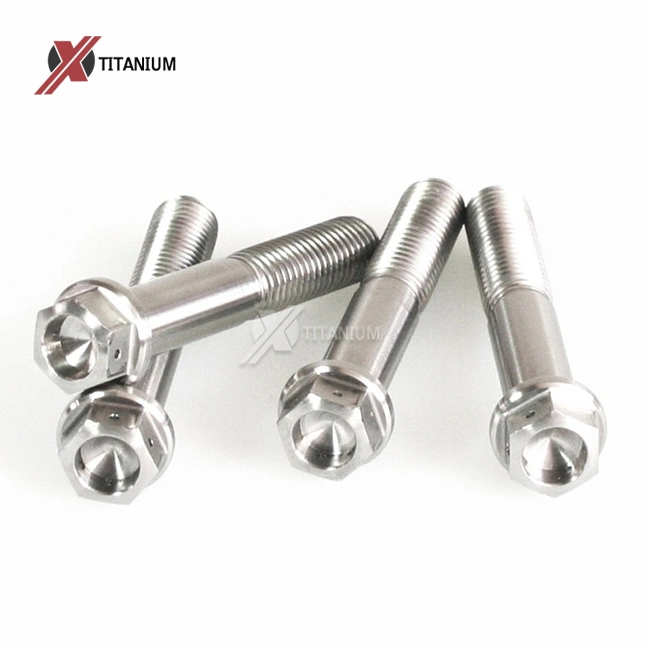
Understanding Titanium M10 Front Caliper Bolts for SV650
The front brake calipers on the Suzuki SV650 are held in place by M10 bolts that go through the holes in the forks. If you know exactly what you need, you can avoid making mistakes that cost a lot of money when you're shopping. The standard thread size is M10x1.25, which is a fine-thread design that works better and is less likely to come loose from shaking than coarse-thread designs. It is important to check the thread size because using M10x1.50 bolts on an aluminum bike will break the threads right away.
Material Composition and Grade Requirements
Grade 5 titanium alloy (Ti-6Al-4V) is the only thing that can be used to make brake calipers. Titanium makes up about 90% of this alloy, aluminum 6%, and vanadium 4%. It's strong, flexible, and doesn't rust, which makes it stand out. The aluminum part makes it stronger and less dense, and the vanadium part keeps the beta phase stable and makes it more resistant to heat. Commercially pure titanium of Grade 2 costs less, but it is not strong enough to handle stopping force loads and should never be used instead.
Dimensional Specifications and Tolerances
Different bolt lengths may be needed for different applications on an SV650 depending on the spacers or aftermarket caliper brackets that are used. The normal bolt length for connecting the front brakes is 30 mm. The clamp loads are spread out based on the thread contact depth. When companies follow ISO rules, they always make sure the measurements are within 0.05 mm. This stops cross-threading and makes sure the force is sent in the right direction. The hexagonal flange head style, which is often used in performance settings, has a larger bearing surface. This spreads the pressing force across the mounting ear of the caliper, which makes it less likely that the material will bend.
Compatibility Across SV650 Generations
Since Suzuki never changed the shape of the front brake caliper fitting, these bolts will work with Gen 1 (1999–2002), Gen 2 (2003–2012), and Gen 3 (2017–present) SV650 bikes. But it's very important to make sure it works with aftermarket brake systems. This is especially true if you add radial-mount calipers or adapter plates, which could change the length of the bolts.
Benefits and Performance of Titanium Front Caliper Bolts for SV650
Titanium m10 front caliper bolts SV650 work better than other bolts, not just because they are lighter. When buying teams know about these benefits, they can show why the investment is worth it compared to other steel choices.
Superior Strength-to-Weight Ratio
Grade 5 titanium bolts are just as strong when pulled apart as Class 10.9 steel bolts, but they weigh 43% less because titanium is lighter than steel (4.43 g/cm³ vs. 7.85 g/cm³). When weight goes down, unsprung mass goes down too. This lets suspension parts respond more quickly to changes in the road. When the amount of unsprung weight is kept to a minimum, lap times are often faster. This is because high-frequency signals, such as rumble strips or stop bumps, make wheel control better.
Corrosion Resistance and Environmental Durability
There is a layer of inactive titanium dioxide that forms on titanium surfaces that makes them very resistant to weathering, salt spray, and chemical contact. OEM steel bolts can rust faster in coastal riders and winter commuters because of road salt and sea air. Titanium bolts get rid of this way of breaking down for good. After 1,000 hours of tests with ASTM B117 fast salt spray, Grade 5 titanium still has no surface pitting, while bare steel threads rust in just 72 hours.
Thermal Stability Under Braking Loads
A lot of temperature changes happen to brake pads. They often get hotter than 200°C when they are hard riding or on the track. It is much more stable at high temperatures than steel bolts, which start to lose their power above 300°C. Titanium keeps its mechanical traits from -150°C to +400°C. Because of this, the clamp load stays the same through many heat cycles without the bolts moving.
Long-Term Maintenance Advantages
Stainless steel bolts often break because of thread galling. It takes place when friction and pressure move material from the bolt threads to the metal mounting holes. Titanium is less likely to gall when it is properly cleaned with chemicals that stop seizing because it has a lower coefficient of friction. Plus, titanium bolts don't need to be changed as often during standard maintenance. This means that even though they cost more at first, they are worth it in the long run.
How to Choose the Best Titanium M10 Front Caliper Bolts for SV650?
When you buy titanium m10 front caliper bolts sv650, you should think about how to get certified materials, high-quality products, and a reliable source. These things will help you choose where to source in a smart way.
Material Certification and Traceability
Mill test records (MTRs) from reputable manufacturers show how the chemical make-up and mechanical qualities of each batch of product were checked. These papers prove that the item meets the standards set by ASTM B348 and AMS 4928. Material tracking stops fake goods from being made from aluminum alloys or titanium that isn't very good quality but has been cleaned to look like titanium. Being able to see proof of where the raw materials came from and how they were heat treated makes you more likely to trust the shop.
Manufacturing Process and Quality Control
The thread quality is better when CNC is used to cut from bar stock instead of forging or casting. Things are moved around instead of cut when you roll threads instead of cutting them. This saves the structure of the grain and makes them 20–30% more durable than threads that have been cut. Things can look different and work better after being polished, anodized, or nitrided on the surface. You can get anodized finishes in bright colors like blue, purple, gold, and black. Because they don't rust, they make the surface harder instead.
Comparing OEM Versus Performance Aftermarket Options
OEM replacement bolts try to be as cheap and compatible as possible, while performance aftermarket bolts try to be lighter and have better surface treatments. A lot of performance bolts have holes in the heads that let safety wire fit. This meets the race group's standards for mechanical locking. If you are not changing the way the brake system is set up on purpose, make sure that the thread pitch and length of any aftermarket parts you choose exactly match the OEM specs.
Evaluating Supplier Technical Support Capabilities
When suppliers offer engineering advice services along with their goods, they add value. Professional-grade providers are different from regular suppliers because they can help with things like torque requirements, anti-seize compound ideas, and problems with installation. Companies that have ISO 9001:2015 certification have quality management systems that have been in place for a long time. A company that is approved with aerospace AS9100 has more process controls that are important for making fasteners that are reliable.
Installation and Torque Specifications for Titanium M10 Front Caliper Bolts SV650
When you use the right fitting method, titanium m10 front caliper bolts sv650 will either work better or break too soon. The next step will make sure that the feature works well for a long time.
Pre-Installation Preparation Steps
First, clean the caliper mounting surfaces and fork lug threads really well with a solvent and a brass brush. Get rid of any rust, brake dust, or threadlocker that is still on the parts from when they were first put together. Check the threads for damage with a thread gauge. Someone should fix the threads before you move on if you find any cross-threading or pulling. Compare the bolt's length to the OEM specs to make sure it fits properly in the threads and doesn't get stuck in blind holes.
Anti-Seize Application Protocol
On the threads of the bolts and the bottom of the bolt head, spread out a thin layer of copper-based or ceramic anti-seize compound. Titanium likes to gall, so it needs to be lubricated, not extra. Too much anti-seize can make the hydraulics lock up and give you the wrong torque readings. When there are no changes and the film width is the same as the thread height, the lubrication works best. Don't use anti-seize items with molybdenum disulfide or graphite because they can make titanium rust when it comes into contact with metals that aren't the same.
Torque Specification and Tightening Sequence
Suzuki says that 36 to 38 Nm (26 to 28 ft-lbs) of torque should be in steel M10 caliper bolts. To account for less friction, lower the goal force by 10 to 15 percent when fitting titanium bolts that have been lubricated to keep them from seizing. The range of 30 to 34 Nm will be useful. You shouldn't use a torque wrench that is more than ±3% off of its set value. You should gradually add torque in two steps. First, tighten the bolts to 50% of the target torque in a cross-pattern sequence. Then, add the final torque to the required level. This step-by-step method makes sure that the load is spread out properly on the caliper mounting interface.
Safety Wire Installation for Racing Applications
For racing groups, mechanical locking is needed to make sure that vibrations don't loosen the bolts. A 0.032-inch safety wire can be held in place by drill-head titanium bolts. The wire is run through both caliper mounting bolts in a way that keeps them from turning counterclockwise. Twist the wire six to eight times every inch with safety wire pliers. Make sure the tag end is tight so it doesn't get in the way of the brakes' moving parts. Some track days, even on the street, use safety wire for more than one thing.
Procurement and Supplier Guide for Titanium M10 Front Caliper Bolts SV650
Strategic buying decisions for titanium m10 front caliper bolts sv650 affect the total cost of ownership, the reliability of the supply chain, and the validity of the product. You can get better deals when you buy things if you know how to buy them.
Direct Manufacturer Sourcing Benefits
When you buy from places like Baoji Chuanglian New Metal Material Co., Ltd., you skip the markups that wholesalers put on the goods and get items that are made just the way you want them. Due to direct connections, each batch of high-quality paperwork can have its own unique surface treatments, and there are different minimum order amounts that can be met. When a company does a lot of CNC machining, they don't have to buy expensive tools to change the lengths or types of bolt heads for different uses. This can slow down small-batch sales.
Evaluating Geographic Supply Chain Considerations
The city of Baoji in China's Shaanxi Province is a world center for making titanium. It's linked to the process of making finished parts by supply lines that help melt down raw materials. The quality of the alloy stays the same and the costs of supplies go down when they are close to titanium smelters. When you look at foreign companies, you should know how long it takes for ocean freight, what paperwork is needed for customs, and how the exchange rate changes the total cost of things that are brought into the country. People who have been selling for a long time will keep quality certificates like ISO 9001:2015 and RoHS compliance.
Volume Pricing and Customization Options
The price per unit goes down a lot when you buy a lot of them. When you buy 50 to 100 pieces at once, the price per unit goes down by 30 to 40 percent. Most of the time, you need to buy at least 200 to 500 pieces to get options like custom lengths, special surface treatments, and private labels. When procurement managers set reorder points, they should think about how much it costs to store things and how much it saves to buy them in bulk.
Quality Verification and Testing Protocols
When something is received, it should be looked at to see if it has any flaws on the surface, the thread size should be checked, and the sizes should be measured accurately with micrometers. To show the grade of an object, portable Rockwell tests are used. Grade 5 titanium, for instance, has a Rockwell B rating of 36–40. X-ray fluorescence spectrometry is needed to check the chemicals that are in things that are thought to be fakes for positive material identification (PMI). Sellers you can trust let others test their goods and give you samples to make sure they're right before you buy a lot of them.
Conclusion
When looking for titanium m10 front caliper bolts sv650 for your SV650, you need to think about the technical details, the quality of the build, and how reliable the seller is. Grade 5 titanium makes things work better by making them lighter, stopping rust, and staying in shape at high temperatures. This means that the purchase is a good one for racing, custom builds, and long-term ownership. By using anti-seize grease and lower torque specs during fitting, you can be sure that the service life will be stable. You can avoid buying fake goods and make changes to fit your needs if you buy from qualified makers with good papers and the ability to find materials.
FAQ
Q1: Can I reuse titanium caliper bolts during brake service?
A: Titanium bolts can be used again if the threads don't have any galling, deformation, or rusty spots on them. To put it back together, clean it well, use anti-seize again, and make sure it's straight. Change the bolts right away if any damage is seen.
Q2: Do titanium bolts require different torque compared to steel?
A: There should be a 10 to 15 percent drop in the OEM steel torque specs when you use anti-seize compounds on titanium bolts. Because the lubricant reduces friction, the bolt doesn't have to be stressed too much to get the same clamp load.
Q3: Will titanium bolts affect my motorcycle warranty?
A: The majority of the time, aftermarket bolts don't void warranties unless they are proven to cause certain issues. Write down the right torque specs for the fitting and keep the original parts. Talk to your dealer about the warranty in more detail.
Q4: How often should I inspect titanium caliper bolts?
A: When you change the brake pads regularly, which should be every 6,000 to 8,000 miles, you should look over them. Making sure the torque is kept in place is important, and the threads should be checked every year as part of regular maintenance.
Partner With Chuanglian for Certified Titanium M10 Front Caliper Bolts SV650 Supply
Baoji Chuanglian New Metal Material Co., Ltd. makes aerospace-grade titanium m10 front caliper bolts sv650 that are carefully designed and made for tough uses in motorcycles, racing, and industry. Our plant is in Baoji City, which is known all over the world as the "City of Titanium." We do everything in the production process, from getting the raw titanium alloy to cutting it with a CNC machine and finishing the outside. To make sure our titanium m10 front caliper bolts sv650 meet the standards set by ASTM B348 and ISO 5832-2, they are put through a number of quality checks. These include material certification, dimensional inspection, and testing of their mechanical properties.
If you have any technical questions about your application, our engineering team can help. This is true whether you need standard configurations or unique specs like different lengths, anodized color finishes, or safety wire drills. To talk about wholesale prices, material certifications, and shipping times, email our procurement specialists at info@cltifastener.com or djy6580@aliyun.com. We deliver the consistency and technical support that racing teams and performance shops depend on.
References
1. American Society for Testing and Materials. (2020). ASTM B348 Standard Specification for Titanium and Titanium Alloy Bars and Billets. West Conshohocken: ASTM International.
2. Boyer, R., Welsch, G., & Collings, E.W. (2018). Materials Properties Handbook: Titanium Alloys. Materials Park: ASM International.
3. Donachie, M.J. (2019). Titanium: A Technical Guide, 2nd Edition. Materials Park: ASM International.
4. International Organization for Standardization. (2017). ISO 5832-2 Implants for Surgery — Metallic Materials — Part 2: Unalloyed Titanium. Geneva: ISO Standards.
5. Leyens, C., & Peters, M. (2021). Titanium and Titanium Alloys: Fundamentals and Applications. Weinheim: Wiley-VCH Verlag.
6. Society of Automotive Engineers. (2019). AMS 4928 Titanium Alloy Bars, Wire, Forgings, Rings, and Drawn Shapes 6Al-4V Annealed. Warrendale: SAE International.
Learn about our latest products and discounts through SMS or email