- English
- French
- German
- Portuguese
- Spanish
- Russian
- Japanese
- Korean
- Arabic
- Greek
- German
- Turkish
- Italian
- Danish
- Romanian
- Indonesian
- Czech
- Afrikaans
- Swedish
- Polish
- Basque
- Catalan
- Esperanto
- Hindi
- Lao
- Albanian
- Amharic
- Armenian
- Azerbaijani
- Belarusian
- Bengali
- Bosnian
- Bulgarian
- Cebuano
- Chichewa
- Corsican
- Croatian
- Dutch
- Estonian
- Filipino
- Finnish
- Frisian
- Galician
- Georgian
- Gujarati
- Haitian
- Hausa
- Hawaiian
- Hebrew
- Hmong
- Hungarian
- Icelandic
- Igbo
- Javanese
- Kannada
- Kazakh
- Khmer
- Kurdish
- Kyrgyz
- Latin
- Latvian
- Lithuanian
- Luxembou..
- Macedonian
- Malagasy
- Malay
- Malayalam
- Maltese
- Maori
- Marathi
- Mongolian
- Burmese
- Nepali
- Norwegian
- Pashto
- Persian
- Punjabi
- Serbian
- Sesotho
- Sinhala
- Slovak
- Slovenian
- Somali
- Samoan
- Scots Gaelic
- Shona
- Sindhi
- Sundanese
- Swahili
- Tajik
- Tamil
- Telugu
- Thai
- Ukrainian
- Urdu
- Uzbek
- Vietnamese
- Welsh
- Xhosa
- Yiddish
- Yoruba
- Zulu
Are GR5 titanium bolts safe for mountain bike brake rotor mounting?
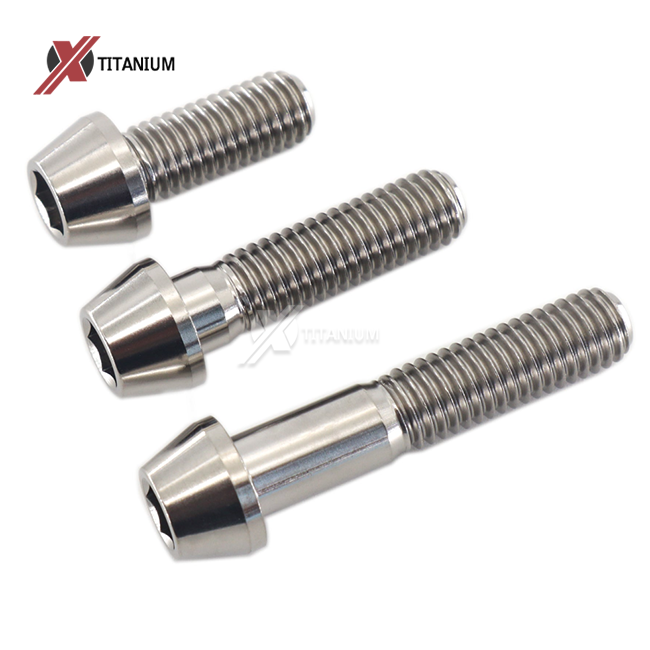
When purchasing managers and technical teams think about replacing or upgrading mountain bike parts, one question always comes up: are Gr5 titanium bolts safe for fixing brake rotors? Yes, the simple answer is yes. When properly defined and put, Gr5 titanium bicycle screws work very well in this important situation. The tensile strength of Gr5 titanium metal (Ti-6Al-4V) is close to 950 MPa, which is the same as high-grade steel bolts but about 40% lighter. Titanium is becoming a more popular choice for safety-critical fastening applications in mountain bike brake systems because it is strong, doesn't rust, and is light. This is especially true among OEM manufacturers and high-performance cycling operations that want reliable, long-term solutions.
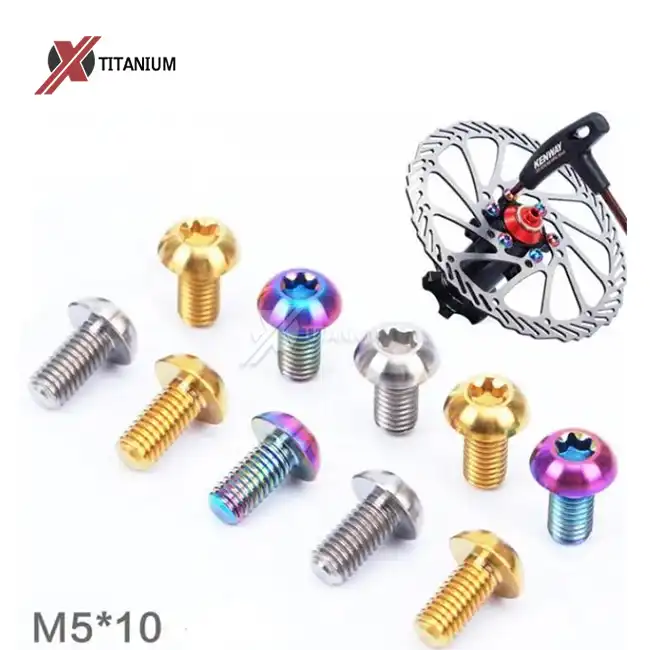
Understanding Gr5 Titanium Bolts and Their Material Properties
Gr5 titanium bicycle screws represent the best titanium fastening technology available. It is unique because it has an alpha-beta lattice that includes about 6% aluminum and 4% vanadium along with the titanium itself. This mix makes mechanical qualities that help with certain problems in cycling uses.
Tensile Strength and Load-Bearing Capacity
The material has a yield strength of about 828 MPa and a tensile strength of between 895 and 1,000 MPa. With these specs, Gr5 titanium is on par with Grade 10.9 steel nuts, which are often used for attaching brakes. The density of 4.43 g/cm³ means that a lot of weight can be saved without affecting the structural integrity. This is helpful not only for competitive riding but also for lowering the unsprung mass in suspension systems, which makes the bike handle better overall.
When the brake rotor is mounted, the nuts go through shear forces when the brakes are applied and tension loads when the right amount of torque is applied. The shear strength of Gr5 titanium is about 550 MPa, which makes sure there are enough safety margins even when emergency braking is used and the rotors bend and pass large forces through the mounting contact.
Fatigue Resistance Under Cyclic Loading
When mountain riding, the brake rotor bolts are constantly vibrating and going through changes in temperature. It is better for quality Gr5 rivets to have rolled threads instead of cut threads because the rolling process matches the grain structure of the material instead of cutting it. This part of the manufacturing process makes the wear resistance over 30% higher than polished threads. This directly lowers the risk of failure during repeated stress cycles like those found on steep descents or in competitive racing.
Corrosion Resistance in Harsh Environments
A inactive titanium dioxide layer forms naturally on Gr5 surfaces, which protects them very well from rust caused by water, mud, road salt, and chemical degreasers. Titanium fasteners don't lose their structural integrity over thousands of exposure cycles like stainless steel fasteners do when they are exposed to salty environments. This feature is especially useful for bikes that are used near the coast or in the winter, when standard steel bolts break down quickly.
When you compare Gr5 titanium to other options, you can see that they are very different. Commercially pure titanium Grade 2 is very good at resisting rust, but it's not strong enough for high-stress uses. Even though aluminum alloy nuts are lighter, they can lose their threads and not have enough bending strength. Even though stainless steel is as strong as carbon fiber or aluminum, it is heavier and can still rust when combined with them. Gr5 titanium is in the best performance range for hard tasks where failure would have serious effects.
Safety and Performance of Gr5 Titanium Bolts in Mountain Bike Brake Rotors
The most important safety feature on any bicycle is its brake system. To understand how Gr5 titanium works in this situation, we need to look at certain stress situations and fitting conditions.
Structural Integrity Under Braking Forces
When you press down hard on the brakes, the disc rotors can get hotter than 200°C and the mounting bolts can pass a lot of force. Gr5 titanium bicycle screws keep their mechanical qualities better than many other materials in this temperature range. The material doesn't carry heat very well (about 7 W/m·K compared to 50 W/m·K for steel), which is good for brake uses because it stops heat from moving from the rotor to the hub assembly, which protects bearing grease and other temperature-sensitive parts.
Testing on brake rotor attachment systems shows that Gr5 titanium bolts that are properly torqued can handle peak stopping forces with safety factors greater than 3:1 when used normally. This margin takes into account differences in the material, problems with the installation, and unexpected load situations. It gives procurement teams the stability they need for applications that are sensitive to risk.
Installation Parameters and Torque Specifications
To get safe results, you have to follow certain startup steps. Depending on the thread size and the manufacturer's instructions, brake rotor nuts usually need torque values between 4 and 6 Nm. The elastic stiffness of Gr5 titanium is different from that of steel. This means that torque tools must be properly calibrated. Too much tightening can damage the threads, while too little tightening lets them come free when the machine shakes.
As a best practice, you should use anti-seize additives made just for titanium to stop galling, which is a cold-welding effect where titanium surfaces can stick together under pressure. When you use the right nuts, the clamping forces are spread out and lighter rotor materials are protected from stress builds up in one place. To make sure the material is properly engaged, the thread engagement depth should be at least 1.5 times the standard bolt width.
Vibration Resistance and Thread Locking
Uneven trails in mountain bike settings cause constant vibrations. When put with the right thread-locking materials rated for the temperature range expected, Gr5 titanium bolts are very resistant to vibration loosening. Because the friction properties of the material are different from those of steel, thread lockers often need to have different cure times and remove pressure requirements. The standards for thread-locking should be made clear in the procurement specs so that field workers use the right products when putting things together or doing upkeep.
Procurement Insights: Choosing and Buying Gr5 Titanium Bicycle Screws
When looking for Gr5 titanium bicycle screws, there's more to it than just comparing prices. When purchasing managers look at different suppliers, they should use a set of criteria that takes into account both their current needs and the needs of the partnership in the long run.
Size Standards and Thread Specifications
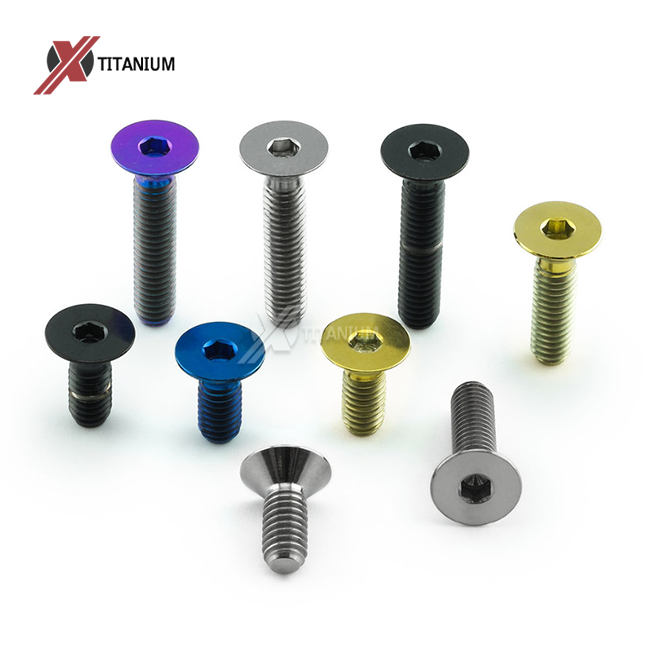
Most brake rotor bolts have thread sizes of M5 or M6, and the pitch numbers are in line with ISO metric norms. Making sure that providers follow the rules for making screws that are DIN 912 (socket head cap screw), ISO 7380 (button head), or DIN 7991 (countersunk) makes sure that the screws will fit into hub connections that are already in place. The characteristics of an assembly are affected by the thread tolerance classes. Instead of letting the seller decide what tolerance grades are needed, procurement requirements should make them clear.
Surface Treatment Options and Their Implications
The natural grey colour of raw titanium surfaces makes them good for most uses because they don't rust. Anodizing, on the other hand, can make a surface look different and make it harder. Type II anodizing, which usually gives things colours like gold, blue, purple, and rainbow, adds artistic oxide layers about 25 microns thick that make things more durable without changing their sizes too much. Type III anodizing makes coats that are stronger and harder, making them good for heavy-duty uses.
Nitriding processes spread nitrogen into the top layers, making titanium nitride compounds that are very hard (almost 70 HRC) and less likely to gall. This surface treatment works especially well in situations where parts need to be put together and taken apart a lot during repair rounds. When choosing a surface finish, procurement teams should weigh the cost of treatment against the expected service life and the number of times it will need to be maintained.
Evaluating Manufacturers and Quality Systems
Reliable providers of titanium fasteners keep documents that show they control the process and can be tracked back to the source. AS9100 certification (aerospace quality standard) means stricter process controls and paperwork, while ISO 9001 certification means basic quality management systems. Suppliers to the medical device industry often have extra licenses that prove the quality and traceability of their materials.
When packages are sent, material test records (MTRs) should say that they meet the requirements of ASTM B348 (titanium bar stock) and AMS 4928 (aerospace titanium alloy). These papers confirm the chemical make-up and mechanical features of a certain batch, which lets quality teams check that new materials meet the requirements. For safety-critical uses, suppliers who can't or won't provide approved MTRs pose too many risks.
When judging a company's ability to make things, you have to look at things like CNC machining precision, thread rolling tools, and inspection procedures. Reports on dimensional inspections using precise measuring tools show that the process can be done. Tensile testing records back up claims of strength, and fatigue testing records, which aren't as common, give even more faith in long-term dependability.
Cost Considerations and Total Ownership Value
Gr5 titanium screws usually cost three to five times more per unit than stainless steel nuts of the same size. This difference in prices often causes buying teams that are focused on costs to be resistant at first. When you look at the total cost of ownership, though, you see a different picture. When something lasts longer, it doesn't need to be replaced as often, which saves money on labour costs. Corrosion protection stops things from breaking down too soon, which can lead to safety problems and guarantee claims. Losing weight makes a car perform better, which is a value that is harder to see but real for uses that focus on performance.
Bulk purchasing arrangements with qualified suppliers typically yield 15-25% discounts compared to small-quantity orders. Establishing framework agreements with annual volume commitments allows suppliers to optimize production scheduling, often resulting in improved pricing and preferential treatment during capacity constraints. Procurement strategies should balance inventory carrying costs against volume discount opportunities based on consumption patterns and supply chain lead times.
Maintenance and Longevity of Gr5 Titanium Brake Rotor Bolts
To get the most out of your investment in Gr5 titanium bicycle screws, you need to follow care procedures that are specifically made for the material.
Cleaning and Inspection Procedures
Because titanium doesn't rust, you only need light soap and water to clean it regularly instead of harsh chemical cleaners. By not using rough cleaning, you can protect anodized finishes and get rid of built-up mud and grime. Visual inspection should be done regularly to find signs of wear like rounded socket holes (which mean the tool wasn't properly engaged during removal), obvious thread damage, or discolouration patterns that show too much heat exposure.
The times between inspections should match up with the general maintenance plans for the brake system. Fasteners might need to be checked every 20 to 30 hours of operation in competitive cycling, but in recreational riding, the intervals could be 100 hours or more, or there could be yearly maintenance rounds. Systems that keep track of installation dates and force values make it possible to repair parts before they break.
Torque Verification and Replacement Guidelines
Using measured tools to check the torque on fasteners on a regular basis makes sure they keep the right charge. When the bike is first used, the torque values naturally drop a little as surface flaws settle. It is a good idea to check the torque after the first few rides after fitting. Setting check times for torque (maybe every three months for heavy-duty uses) helps find trends of weakening before they become dangerous.
Criteria for replacement should take both time-based and condition-based factors into account. Even if there is no obvious damage, screws that are taken off and put back on many times get tired over time. Setting up replacement rules, like replacing bolts every third rotor change or every two years, whichever comes first, gives you extra safety. The relatively low cost of individual fasteners compared to the damage that could happen if they fail makes proactive repair methods a good idea.
Addressing Galling and Thread Damage
The hardest thing about maintaining titanium screws is that the surfaces tend to gall when they are pressed and rubbed together. Some ways to keep this from happening are to use nickel-based anti-seize compounds on the threads before installation, not install things too quickly because they create too much friction heat, and use the right six-point tools that spread the pushing forces out equally.
When galling happens, trying to remove it by force usually makes the damage worse. Using deep oil and letting it soak for a long time can sometimes allow for careful extraction with tools that are perfectly suited. When screws are severely galled, they may need to be drilled out and their threads fixed. This shows how important it is to follow the right installation steps and use anti-seize during the initial assembly.
Technical Comparisons and Decision-Making for Procurement Managers
To choose the best fastener materials, you need to know how to balance performance and cost in different situations and with different operating needs.
Gr5 Titanium versus Stainless Steel
In high-end uses, grade A4 stainless steel (316 stainless) is the most popular alternative material for brake rotor bolts. Stainless steel is easy to find, doesn't rust, and is less expensive—about 20 to 30 percent of the price of titanium. The density cost, on the other hand, means that they weigh 75–85% more than titanium versions.
When you compare Gr5 titanium fasteners to Grade 10.9 steel fasteners, their strength qualities are pretty much the same. However, stainless steel has a higher elastic modulus (about 200 GPa compared to 114 GPa for titanium), which changes how bolts react to pressure and vibration. Stainless steel can still corrode in crevices when it's exposed to chloride, which could cause surprising fails after long periods of time in winter road salts or coastal conditions.
Gr5 versus Gr7 Titanium Alloys
Palladium increases (0.12-0.25%) to Gr7 titanium make it more resistant to corrosion, especially when it comes to lowering acids and crevice corrosion. However, Gr7's tensile strength (about 345 MPa) is much lower than Gr5's. This means it can't be used for structural purposes like fixing brake rotors, where strength is important for safety.
Gr7 is used in chemical processing settings where high resistance to rust is more important than strength. Brake rotor fixing is the exact opposite of what you would expect: it needs to be strong and resistant to rust. Specifications for buying things should specifically name Gr5 instead of "titanium" so that the wrong lower-strength metals are not sent.
Real-World Performance Validation
Professional bicycle teams' use of Gr5 titanium in the field is strong evidence that it can be used for brake uses. Teams that work in a variety of settings, from mountain descents to coastal training camps, say that few problems with fasteners happen when quality Gr5 bolts are put according to the manufacturer's instructions. Even though the original investment in fasteners was higher, the total running costs are cheaper because maintenance plans are known and parts don't need to be replaced too soon because of corrosion.
OEM bicycle makers are choosing titanium screws for their top-of-the-line models more and more, which shows that they are confident in the material's performance and popularity in the market. This pattern of adoption is similar to how titanium replaced steel in weight-critical structural uses in the aircraft and racing industries in the past, once production skills improved and costs lowered.
Conclusion
Gr5 titanium bicycle screws have been shown to be safe and effective for mounting brake rotors on mountain bikes when they are properly described, bought from a qualified maker, and put according to the right steps. The great strength, excellent corrosion resistance, and large weight decrease of the material solve some of the most important problems in cycling uses. When making choices about what to buy, suppliers' quality systems, certified materials, and precise manufacturing should be given more weight than simple price comparisons. Technical teams and procurement managers can safely choose titanium fasteners for safety-critical uses when they know about installation factors, maintenance needs, and performance trade-offs. Gr5 titanium is becoming more popular in professional riding and OEM uses, which proves that it is a good material, even though it costs more than other options.
FAQ
Can Gr5 titanium bolts completely take the place of stainless steel when used on brake rotors?
Gr5 titanium performs better in most ways—it's lighter, less likely to rust, and about as strong as other titaniums. Complete replacement is still possible in some situations where the cash allows it. Stainless steel is still a good choice for uses that need to be cost-effective or where weight reduction doesn't help much.
How can buying teams make sure that the Gr5 titanium they buy from sellers is real?
Need approved material test reports (MTRs) that show the chemical make-up and mechanical qualities that meet ASTM B348 and AMS 4928 standards. Reliable providers give batch-specific paperwork that shows how raw materials were used in production. For high-value projects or when starting a new relationship with a seller, physical testing by independent labs is an extra way to be sure.
When should the bolts on the brake rotor be changed?
Replace nuts that have damage that can be seen, thread wear, or hole deformation. Time-based replacement every two to three years or after three to four rotor changes gives you a safe margin of error. Keep an eye on the past of installations and torque values to find trends that point to fast wear or bad installation methods that need to be fixed.
Partner with Chuanglian for Premium Gr5 Titanium Bicycle Screws
For more than ten years, Baoji Chuanglian New Metal Material Co., Ltd. has been a renowned maker and seller of precision Gr5 titanium bicycle screws to the bicycle business around the world. Our CNC-machined goods go through strict measurement and tensile tests, and each batch is inspected to make sure it meets ASTM B348 and AMS 4928 standards and is delivered without any defects. As an example, we can make brake rotor bolts with threads that are exactly what you need. These bolts can have a natural titanium finish or be anodized in colours like gold, blue, rainbow, and black.
Our ISO 9001-certified factory in Baoji, China's famous "Titanium City," has cutting-edge tools and expert technical knowledge to help with aircraft, medical device, and high-performance bicycle projects. Whether you need OEM relationships, bulk wholesale prices, or custom specs, our expert team can help you with everything, from choosing the right materials to installing them. Get in touch with our purchasing experts at info@cltifastener.com or djy6580@aliyun.com to talk about your unique needs and get quotes for working with suppliers of Gr5 titanium bicycle screws.
References
1. Boyer, R., Welsch, G., and Collings, E.W. (1994). Materials Properties Handbook: Titanium Alloys. ASM International, Materials Park, OH.
2. Donachie, M.J. (2000). Titanium: A Technical Guide, 2nd Edition. ASM International, Materials Park, OH.
3. Schutz, R.W. and Watkins, H.B. (1998). "Recent developments in titanium alloy application in the energy industry." Materials Science and Engineering: A, 243(1-2), pp.305-315.
4. Lutjering, G. and Williams, J.C. (2007). Titanium, 2nd Edition. Springer-Verlag, Berlin Heidelberg.
5. American Society for Testing and Materials (2021). ASTM B348-21: Standard Specification for Titanium and Titanium Alloy Bars and Billets. ASTM International, West Conshohocken, PA.
6. SAE International (2019). AMS 4928Q: Titanium Alloy, Bars, Wire, Forgings, Rings, and Drawn Shapes 6Al-4V Annealed. SAE Aerospace Material Specification, Warrendale, PA.
Learn about our latest products and discounts through SMS or email