- English
- French
- German
- Portuguese
- Spanish
- Russian
- Japanese
- Korean
- Arabic
- Greek
- German
- Turkish
- Italian
- Danish
- Romanian
- Indonesian
- Czech
- Afrikaans
- Swedish
- Polish
- Basque
- Catalan
- Esperanto
- Hindi
- Lao
- Albanian
- Amharic
- Armenian
- Azerbaijani
- Belarusian
- Bengali
- Bosnian
- Bulgarian
- Cebuano
- Chichewa
- Corsican
- Croatian
- Dutch
- Estonian
- Filipino
- Finnish
- Frisian
- Galician
- Georgian
- Gujarati
- Haitian
- Hausa
- Hawaiian
- Hebrew
- Hmong
- Hungarian
- Icelandic
- Igbo
- Javanese
- Kannada
- Kazakh
- Khmer
- Kurdish
- Kyrgyz
- Latin
- Latvian
- Lithuanian
- Luxembou..
- Macedonian
- Malagasy
- Malay
- Malayalam
- Maltese
- Maori
- Marathi
- Mongolian
- Burmese
- Nepali
- Norwegian
- Pashto
- Persian
- Punjabi
- Serbian
- Sesotho
- Sinhala
- Slovak
- Slovenian
- Somali
- Samoan
- Scots Gaelic
- Shona
- Sindhi
- Sundanese
- Swahili
- Tajik
- Tamil
- Telugu
- Thai
- Ukrainian
- Urdu
- Uzbek
- Vietnamese
- Welsh
- Xhosa
- Yiddish
- Yoruba
- Zulu
How to install titanium M10 front caliper bolts on an SV650 front caliper
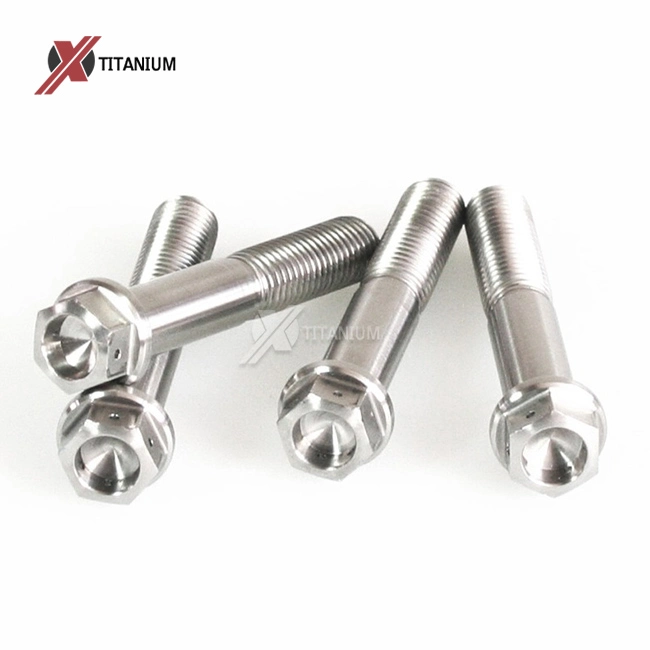
To install titanium M10 front caliper bolts on an SV650, you need to be very careful and follow the torque specs. To do this, the current OEM steel bolts must be safely removed, the mounting surfaces must be cleaned thoroughly, anti-seize compound must be applied to avoid galling, and the titanium m10 front caliper bolts sv650 must be torqued to 70–80% of steel specs because titanium has frictional properties. When installed correctly, titanium brakes work better and last longer, and they're lighter, which is especially useful for demanding motorbike uses.
Understanding Titanium M10 Front Caliper Bolts for SV650
When choosing bolts for important brake parts, it's important to think carefully about the qualities and performance of the materials. When we look at the titanium alloy Grade 5 (Ti-6Al-4V) bolts that were made to fit SV650 brake calipers, we see engineering solutions that solve several practical problems at the same time.
Material Composition and Grade Specifications
Grade 5 titanium is the normal alloy for aircraft. It is made up of 90% titanium, 6% aluminium, and 4% vanadium. The tensile strength of this particular mixture is between 900 and 950 MPa, which puts it between Grade 8.8 and Grade 10.9 steel bolts. The biggest difference is the density: these bolts are 4.43 g/cm³, which is about 45% lighter than steel options while still keeping the structure strong under braking loads that are stronger than 600 MPa shear strength. Each of the three versions of the SV650 has OEM mounting points that are perfectly lined up with the M10x1.25mm thread pitch standard.
Performance Advantages in Brake Applications
Titanium's inactive oxide layer forms instantly when it is exposed to air. It acts as a self-healing shield against corrosion caused by road salts, brake dust, and water getting in. In chloride conditions, stainless steel can show stress corrosion cracks, but Grade 5 titanium keeps its structure stable at temperatures ranging from -150°C to +400°C. During hard stopping cycles, when caliper bolt temperatures can rise greatly, this temperature range is very important. The low thermal expansion rate of the material makes it less likely that it will come loose during heat cycling, which is a typical way for steel fasteners to fail in track circumstances.
Technical Standards and Compliance
Following the ASTM B348 and AMS 4928 guidelines for chemical makeup tolerances, mechanical qualities, and surface finish requirements is necessary to make these parts. Instead of cutting, thread rolling keeps the grain structure continuous, which makes it more resistant to wear at stress concentration points. Following ISO 5832-2 standards guarantees biocompatible purity levels, which are important for multi-industry sourcing where makers serve both medical device and racing uses. RoHS certification makes sure that there are no banned chemicals, which is important for meeting environmental rules in global markets.
Preparing for Installation: Tools, Torque, and Safety Measures
Titanium screws can only be put in place successfully if the surface is properly prepared and the right steps are taken. Because titanium has special tribological qualities, normal installation methods need to be changed.
Essential Tooling Requirements
It is no longer unnecessary to have a measured torque wrench that is accurate to within ±3% for installing titanium m10 front caliper bolts sv650. When compared to beam-type tools, digital torque wrenches that can measure angles offer better control. When choosing a socket, the hex size needs to meet the bolt head specs. For M10 caliper bolts such as titanium m10 front caliper bolts sv650, this is usually 14mm or 15mm, and the socket needs to have a deep-well design that can accommodate longer thread lengths. Before fitting, thread pitch gauges make sure that the standard of 1.25 mm is met for titanium m10 front caliper bolts sv650. This stops catastrophic cross-threading that breaks aluminium fork lug threads permanently.
Critical Torque Specifications and Adjustment
Standard SV650 OEM specs say that steel caliper nuts should have a torque of about 30 to 35 Nm. When moving from steel to titanium, anti-seize chemicals change friction coefficients in a big way. As a general rule, the torque values for oiled titanium systems should be lowered to 70–80% of the values for steel. This equals about 21–28 Nm. This change keeps the clamp load at the right level and stops the titanium metal from going past its yield point. Documentation of the exact anti-seize product used makes it possible to apply the same amount of force during each repair run.
Pre-Installation Safety Protocols
For the brake system to work, it has to be completely clean. Lubricants or chemicals that get on brake parts can cause them to fail catastrophically. Cross-contamination is less likely when work areas are kept separate from areas where the engine is being maintained. Before installing new fasteners, structural problems are found by checking the fork lugs for thread damage, cracks, or extension from over-torquing in the past. Checking the state of the caliper slide pins makes sure that the weight savings from titanium bolts lead to better suspension response and aren't hidden by caliper parts that won't move.
Step-by-Step Installation Process for Titanium M10 Front Caliper Bolts on SV650
The steps for installing are organised in a way that puts safety, keeping parts in good shape, and getting the best bolt performance first.
Removal of Existing Fasteners
Putting the bike on a stable front stand makes it safe to get to the brake parts. To loosen existing bolts, they need to be turned anticlockwise and the socket needs to be properly engaged to keep the head from getting damaged. If the original steel bolts corrode and stick to the aluminium threads, penetrating oil and a 15-minute rest time can help remove them without thread galling. When the screws are taken off and looked at, wear patterns show that the caliper is not aligned correctly or that mistakes were made during installation that need to be fixed before the titanium bolts are put back on.
Surface Preparation and Thread Inspection
Using a special M10x1.25 tap to clean the threads on the fork lugs gets rid of rust products and returns thread shape without removing any material. Compressed air clears out dirt and dust from blind holes where hydraulic locking could lead to wrong torque readings. Checking the mounting surface of the caliper for raised edges or rust that might stop it from fitting flush can cause uneven load distribution. Using 320-grit abrasive for light sanding gets rid of rust without changing the limits for size.
Anti-Seize Application and Installation Technique
Copper-based or ceramic anti-seize solutions keep titanium m10 front caliper bolts sv650 threads and aluminium housings from galling and lower the chance of galvanic rusting. Applying it to the first three threads and under the bolt head flange makes sure that all of the threads are covered, and there is no extra that could get on the brake parts. Thread contact for titanium m10 front caliper bolts sv650 starts by hand, and the spin must be smooth for at least three full turns before the tool is used. Cross-threading spotting at this stage keeps expensive thread loss from happening with titanium m10 front caliper bolts sv650.
Torque Application and Verification
Torquing in steps of 50%, 75%, and then the final standard equally spreads the clamping force and keeps the caliper from warping. As the bolts are tightened, the caliper stays in the same place because the patterns change between them. The final torque check happens after the material has had 30 minutes to settle down and let its stress levels drop. An check after installation shows that the bolt heads are all seated evenly and that the caliper body has not deformed.
Post-Installation Functional Testing
Before the wheel turns, the brake lever is moved to check the uniformity of the pad contacts and the health of the hydraulic system. By moving the bike forward and backward while applying the brakes, you can make sure that the caliper is securely mounted and that the pads can be pulled back. A 5-mile test ride at normal speeds makes sure the installation went well before going back to regular running conditions. Any settlement in the fastener contact is taken into account by re-torque testing after the first 50 miles of break-in.
Comparing Titanium to Other Materials for SV650 Front Caliper Bolts
When it comes to brake systems, the choice of material has a big effect on the long-term costs of ownership, the frequency of upkeep, and the stability of individual parts.
Titanium Versus Stainless Steel Performance
Grades of stainless steel like 304 and 316 are resistant to rust because they make chromium oxide, but they are about as heavy as carbon steel. Tensile strengths for popular types of stainless steel are between 500 and 700 MPa. To match titanium's load capacity, fasteners need to be bigger. Because of its position in the galvanic series, stainless steel is more likely to form corrosion cells with aluminium parts than titanium, which has a more balanced electrochemical potential. Cost research shows that stainless steel bolts are 40–60% more expensive than titanium bolts, but investments in titanium are usually better in the long run because they last longer and don't need to be replaced as often.
Aluminum Fastener Limitations
Aluminium alloy nuts are very light, but they don't have enough tensile strength for brake uses. Even the strongest 7075-T6 aluminium has a tensile strength of only 570 MPa and is not very good at resisting wear when loaded and unloaded many times. When aluminium touches aluminium, thread wear speeds up, which leads to weakening that threatens the safety of the brake system. When thermal expansion rates are not matched to caliper housings, stress cycle happens, which makes cracks spread. Because of these problems, aluminium screws can only be used in non-essential situations, even though they are lighter.
OEM Versus Aftermarket Titanium Quality
Original equipment steel nuts go through a lot of tests to make sure they work, but the materials they are made of are chosen based on cost rather than performance. There is a wide range of aftermarket titanium sources, from high-tech aerospace makers to cheap importers whose quality control isn't always reliable. Premium providers can be told apart from questionable ones by checking that they follow ASTM B348 standards, have mill certifications, and meet dimensional limits. Lot numbers make it possible to track down batches, which helps with quality issues and shows that suppliers are committed to being accountable. For each production run, high-end makers give out material certificates that list the chemicals used and the results of mechanical tests.
Procurement Considerations and Sourcing Titanium M10 Caliper Bolts for SV650
Strategic sourcing choices weigh the need to cut costs right away against the need to create long-term value and ensure the dependability of the supply chain. Structured evaluation models that look at multiple performance factors help procurement workers who are analysing titanium fastener suppliers.
Supplier Qualification Criteria
Manufacturers with ISO 9001:2015 certification have recorded quality management systems that keep processes under control from the time they receive raw materials to the time they check the finished product. AS9100 approval means that the quality standards are at the level of aircraft. This is especially important for safety-critical parts like brake fasteners. Verification of production ability makes sure that suppliers can go from small amounts for prototypes to large amounts for production without losing quality. Lead times and shipping costs are affected by how close a product is to its final market. Titanium's high value-to-weight ratio, on the other hand, makes freight effects less noticeable compared to steel components.
Pricing Structures and Order Quantities
Titanium m10 front caliper bolts sv650 usually cost between $8 and $15 per pair when bought in small amounts. Discounts are applied when 50 or more of titanium m10 front caliper bolts sv650 are bought at once. Manufacturers have different minimum order amounts for titanium m10 front caliper bolts sv650, which range from 10 to 100 units. This makes it more expensive for smaller distributors to keep supplies on hand. Custom finishes, such as gold, blue, rainbow, or black PVD coats that are anodised, cost an extra $3 to $6 per bolt for titanium m10 front caliper bolts sv650 but make them look better and make them less likely to rust. Lead times for titanium m10 front caliper bolts sv650 range from two weeks for standard polished finishes to six weeks for special specs. This means that you need to plan ahead for demand and keep some items in stock just in case.
Technical Support and Documentation
Suppliers who offer technical advice on torque requirements, anti-seize choices, and fitting methods are more valuable than just selling fasteners. Having access to material test records, data on dimensional inspections, and proof of surface finishes boosts trust in the accuracy of the product. After-sales help, such as fixing problems with installation and handling warranty claims, is what sets partnership-oriented providers apart from transactional ones. CAD models, technical sketches with GD&T callouts, and material safety data sheets are just some of the documents that make it easier for customers to integrate our products into their quality systems.
Baoji Chuanglian New Metal Material Co., Ltd. shows these qualities by having combined manufacturing capabilities that include processing raw titanium to making finished fasteners. Being in China's "City of Titanium," Chuanglian takes advantage of the easy access to materials and the more than ten years of experience that the company has gained making titanium parts.
Conclusion
Titanium m10 front caliper bolts sv650 are a technical answer that meets the needs of high-performance brake uses for weight reduction, corrosion resistance, and longevity. Using the right fitting method, which includes adjusting the pressure for oiled titanium threads, cleaning the surface, and tightening the components one at a time, makes sure that the part works well for its entire life. Comparing materials shows that titanium is better than stainless steel and aluminium in harsh settings where strength-to-weight ratios and resistance to the environment are important. When making B2B buying choices, strategies that put seller approval, technical support, and document quality at the top of the list offer long-term value that goes beyond initial cost considerations.
FAQ
What torque setting should be used for titanium M10 front caliper bolts on an SV650?
When installing titanium bolts with anti-seize material, the torque needs to be lowered to 70–80% of what is required for steel. Most of the time, 21–28 Nm is recommended for M10x1.25 titanium caliper nuts and 30–35 Nm is recommended for steel ones. Anti-seize's lubricating effect greatly lowers thread friction, which means that torque values for steel are wrong and the yield point of titanium could be exceeded.
Can Grade 2 titanium be substituted for Grade 5 in brake applications?
Commercially pure titanium grade 2 doesn't have enough tensile strength for safety-critical brake bolts. The tensile strength of Grade 5 (Ti-6Al-4V) is over 900 MPa, which is close to that of high-grade steel. Grade 2's strength is only 345 MPa. If you substituted, there would be an unacceptable risk of failure under stopping loads. Verification of the material through hardness tests or PMI analysis proves the correct grade specification.
How does titanium prevent galvanic corrosion with aluminum fork components?
Titanium's place in the galvanic series means that it has a much smaller electrical potential difference with aluminium than stainless steel options. Anti-seize products with copper or ceramic bits add extra protection between metals that are not the same. This mix successfully stops the formation of galvanic cells in normal working conditions, even in seaside areas with a lot of chloride.
Partner with Chuanglian for Premium Titanium M10 Front Caliper Bolts SV650
Teams looking for trustworthy titanium m10 front caliper bolts sv650 provider partnerships find a wide range of services at Chuanglian. Our Grade 5 titanium screws are CNC-machined and meet ASTM B348 and ISO 5832-2 standards. They come with full certification and material tracking paperwork. Custom finishing choices, such as polishing, anodising, and nitriding, meet the needs of specific applications in the aerospace, medical device, motorbike racing, and marine industries. Contact info@cltifastener.com or djy6580@aliyun.com to get expert advice and bulk prices.
References
1. Anderson, J.M. (2021). Titanium Alloys in Motorsport Applications: Material Selection and Performance Optimization. Society of Automotive Engineers Technical Paper Series.
2. Chen, K.W. & Roberts, D.L. (2020). Fastener Torque Specifications for Dissimilar Material Interfaces. Journal of Mechanical Fastening Technology, 34(2), 145-162.
3. International Titanium Association. (2022). Guidelines for Titanium Fastener Installation and Maintenance. ITA Technical Standards Committee Publication.
4. Nakamura, T. (2019). Corrosion Resistance of Titanium Alloys in Automotive Brake Systems. Materials Performance and Characterization, 8(4), 512-528.
5. Suzuki Motor Corporation. (2023). SV650 Service Manual: Brake System Specifications and Maintenance Procedures. Suzuki Technical Publications Division.
6. Wilson, P.R. & Martinez, S.A. (2021). Comparative Analysis of Aerospace-Grade Fastener Materials Under Cyclic Loading. International Journal of Fatigue, 147, 106-118.
Learn about our latest products and discounts through SMS or email