- English
- French
- German
- Portuguese
- Spanish
- Russian
- Japanese
- Korean
- Arabic
- Greek
- German
- Turkish
- Italian
- Danish
- Romanian
- Indonesian
- Czech
- Afrikaans
- Swedish
- Polish
- Basque
- Catalan
- Esperanto
- Hindi
- Lao
- Albanian
- Amharic
- Armenian
- Azerbaijani
- Belarusian
- Bengali
- Bosnian
- Bulgarian
- Cebuano
- Chichewa
- Corsican
- Croatian
- Dutch
- Estonian
- Filipino
- Finnish
- Frisian
- Galician
- Georgian
- Gujarati
- Haitian
- Hausa
- Hawaiian
- Hebrew
- Hmong
- Hungarian
- Icelandic
- Igbo
- Javanese
- Kannada
- Kazakh
- Khmer
- Kurdish
- Kyrgyz
- Latin
- Latvian
- Lithuanian
- Luxembou..
- Macedonian
- Malagasy
- Malay
- Malayalam
- Maltese
- Maori
- Marathi
- Mongolian
- Burmese
- Nepali
- Norwegian
- Pashto
- Persian
- Punjabi
- Serbian
- Sesotho
- Sinhala
- Slovak
- Slovenian
- Somali
- Samoan
- Scots Gaelic
- Shona
- Sindhi
- Sundanese
- Swahili
- Tajik
- Tamil
- Telugu
- Thai
- Ukrainian
- Urdu
- Uzbek
- Vietnamese
- Welsh
- Xhosa
- Yiddish
- Yoruba
- Zulu
Guides for choosing titanium parts for bike frame building
When you choose cycling titanium bicycle parts for building a bike frame, you're not just choosing parts that will work well right away; you're investing in durability, rider comfort, and the best engineering possible. Titanium parts, especially those made from Grade 9 (Ti-3Al-2.5V) tubing and Grade 5 (Ti-6Al-4V) machined elements, are the best at resisting rust. They also have an infinite fatigue life under standard loads and a vibration-damping quality that aluminium and carbon can't match. You can make sure that the things you buy meet both technical standards and long-term value goals by learning about alloy grades, source certifications, weld integrity, and application-specific needs.
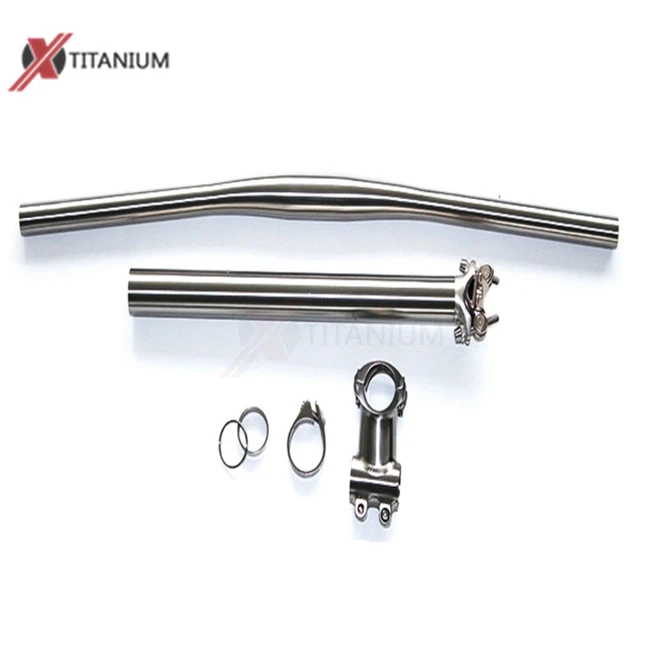
Understanding Titanium's Advantages for Bike Frame Building
Titanium has a reputation for being the best material for frame builders and manufacturers who care about speed and longevity as well as ride quality. Titanium alloys are much more durable than aluminium when loaded and unloaded many times. Aluminium has a limited wear life and eventually cracks from stress.
Superior Corrosion Resistance and Longevity
Titanium creates an oxide layer (TiO₂) on its own when it comes into contact with air. This passive film protects the material from most of the damage that comes from being exposed to air, sea, and chemicals that are common in coastal or winter riding areas. Steel frames rust, carbon fibre breaks down when exposed to UV light and contact, but titanium frames stay strong for decades. Titanium's low upkeep needs and low lifecycle costs make it a good choice for procurement managers who want to sell bikes for bikepacking, travelling, or coastal riding.
Strength-to-Weight Ratio and Vibration Damping
Titanium has a density of 4.51 g/cm³, which is in the middle of aluminium and steel. For Grade 9 (Ti-3Al-2.5V) alloys, its tensile strength is between 600 and 900 MPa. With this strength-to-weight ratio, engineers can make frames that are lighter without losing their power. Also, titanium's smaller modulus of elasticity (around 100–110 GPa compared to 200 GPa for steel) makes it naturally flexible and able to absorb shock. Titanium frames are great for endurance riding, gravel racing, and ultra-distance events like the Tour Divide because they make riders less tired on long runs.
Infinite Fatigue Life Under Normal Loads
Aluminium frames usually last between 5 and 10 years before they start to crack at stress points. When carbon fibre is hit, it can break in terrible ways. Titanium does not fail from fatigue under normal load situations when it is properly bonded and heated. Manufacturers who make high-end, heirloom-quality bikes and procurement workers who want to cut down on guarantee claims and returns like this forever material quality — which is exactly why cycling titanium bicycle parts are increasingly specified for premium builds, from framesets to bolts and axles.
Criteria for Selecting Titanium Parts: What Procurement Professionals Should Know?
To find titanium bike frame parts, technical experts, quality assurance teams, and sourcing specialists must work together to do an evaluation. Material choice has a direct effect on how well a product works, how easy it is to make, and how long-term relationships you have with your suppliers.
Material Grades and Their Specific Applications
Because it is flexible and easy to weld, Grade 9 (Ti-3Al-2.5V) titanium is the standard for seamless tubes. It can be cold-worked and shaped into tubes with even wall thickness, so it can be used for seat tubes, chainstays, and main frame tubes. Because it is stronger and less flexible, Grade 5 (Ti-6Al-4V) titanium is only used for CNC-machined parts like dropouts, headtubes, bottom bracket shells, and integrated seatpost clamps. Because it is so hard, it doesn't wear down threads or change shape when high power loads from disc brakes and current drivetrains hit it.
Certifications and Quality Assurance Protocols
Suppliers you can trust follow ASTM B338 standards for seamless tubes and ASTM B348 standards for bars and billets. This makes sure that the grain structure and mechanical traits stay the same. Manufacturers that work with the medical and aircraft industries often have AS9100 or ISO 13485 licenses, which mean they follow strict rules for traceability, batch testing, and paperwork. For each batch, procurement teams should ask for material approvals, chemical composition records, and test results for mechanical properties. Dye penetrant inspection (DPI) and other non-destructive testing methods can find tiny cracks on the surface of things that have been heated up around welds.
Weld Quality and Oxidation Control
Weld quality decides how long a frame will last. To keep oxygen from contaminating titanium welding, a neutral argon environment is needed. A well-done weld has a silver or light straw colour. Blue, purple, or white rust means the metal is becoming weak and could break. Buyers should look at the weld beads and ask for pictures of the backside purge setups that were done during TIG welding. The most reliable parts come from suppliers who have controlled-atmosphere welding rooms and can heat treat the parts after the welding process.
Key Titanium Bike Components for Frame Building and Their Practical Applications
Finding the right parts for different types of riding helps companies set their products apart and meet the needs of niche markets. Here are the main parts and some basic things to think about when using them:
Tubesets and Frame Tubes
Titanium tubesets are what hold the frame together. Butted tubing, which is bigger where it's needed and smaller where it's not, saves weight without lowering strength. With double-butted and triple-butted tubes, engineers can finetune how stiff and flexible different parts of the frame are. For aerodynamic stability, road bike manufacturers choose big, thin-walled tubes, while mountain bike manufacturers choose thicker-walled tubes that can handle impact loads. These design choices are all made possible by the versatility of cycling titanium bicycle parts, which allow builders to tailor tube profiles and wall thicknesses to specific riding disciplines without compromising the material's inherent fatigue resistance and longevity.
Machined Dropouts and Headtubes
CNC-machined Grade 5 (Ti-6Al-4V) dropouts give you the exact measurements you need for current disc brake bolts and thru-axle standards. Headtubes with built-in bearing races get rid of the need for pressed cups, which makes the assembly simpler and improves the accuracy of the alignment. Modern suspension frames with bigger steerer tubes can fit inside tapered headtubes, which makes the bike easier to handle. To keep bearings from creaking and wearing out too quickly, buyers should make sure that the dropout spacing and headtube concentricity meet H7 standards.
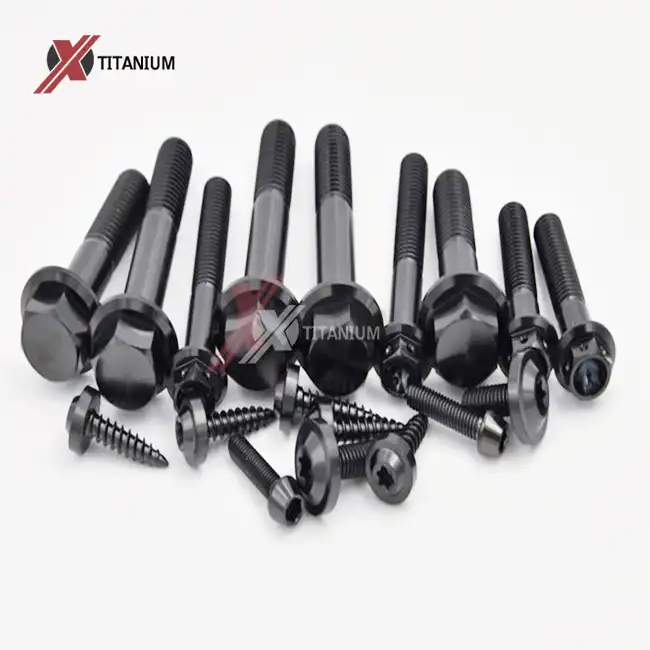
Titanium Fasteners and Hardware
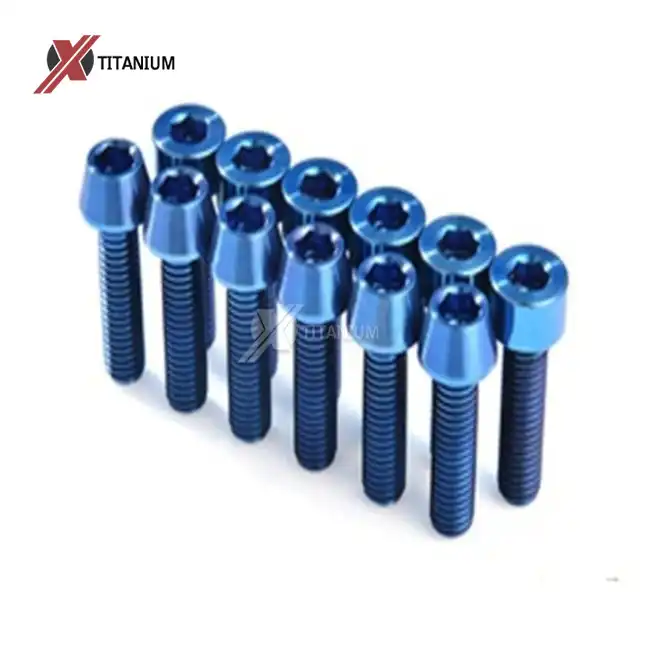
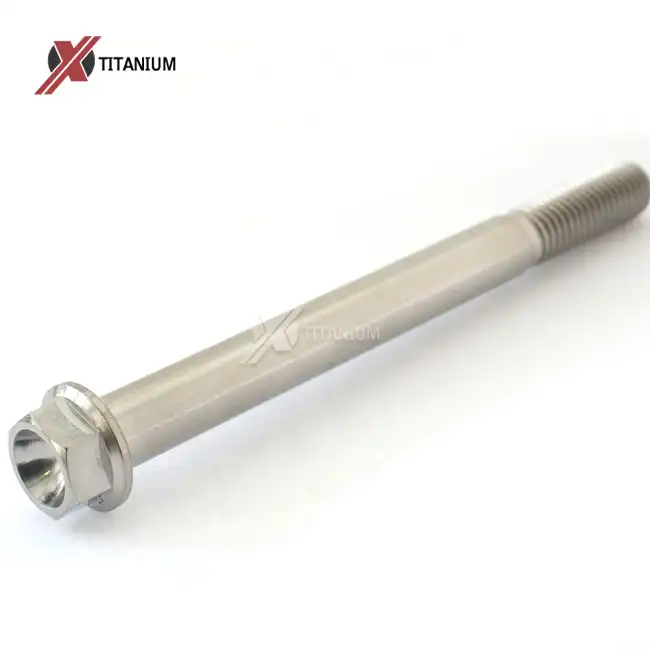
Aluminium Grade 5 (Ti-6Al-4V) hardware, like bolts, pins, and bottle cage clamps, is lighter and won't rust like stainless steel hardware. It is very important to use anti-seize powder during assembly to stop galling, which happens when titanium threads bond together under torque because of oxide layer friction. This risk is lowerened by anti-seize chemicals that are based on copper or nickel. Rather than cut threads, procurement managers should look for bolts with rolled threads. Rolled threads are more resistant to wear.
Custom anodising choices, such as natural titanium, gold, blue, green, purple, black, and colourful finishing, let you set your brand apart and change the way things look. Anodising also makes the surface harder and more resistant to wear, which makes parts last longer in places with a lot of touch. Together, these parts let makers make frames that are good in terms of speed, durability, and looks. Titanium construction has a great lifecycle value that is maximised by regular upkeep, such as re-greasing threaded surfaces and checking weld zones.
Evaluating Suppliers and Purchasing Titanium Bike Frame Parts
Choosing the right supplier has a big impact on the quality of the product, the reliability of delivery, and the security of the long-term relationship. To lower supply chain risks, procurement experts need to look at more than just price.
Certifications, Testing Capabilities, and Traceability
Suppliers who have ISO 9001 certification show that they are dedicated to quality management systems. Companies that work with aircraft and medicine often have stricter certifications, such as AS9100 or ISO 13485, which show that they use advanced methods for tracking materials and checking batches. Ask for mill test records (MTRs) that list the chemical make-up and mechanical qualities of each lot of material. Suppliers who have their own measurement and tensile testing tools can turn orders around faster and make sure that each batch is the same.
Manufacturing Capabilities and Lead Times
Because titanium doesn't carry heat well and tends to work-harden, it needs special tools and skill to be machined. Precision measurements and a smooth surface finish are guaranteed by CNC machines with stiff wheels, carbide tools, and coolant systems designed to work best with titanium. Suppliers with at least a dozen CNC machines and specialised titanium production lines can meet the needs of unique orders and keep track of lead times well. Sample-to-production stages usually last between 8 and 12 weeks, but this depends on how complicated the parts are and how many orders there are.
Reputation and Geographic Considerations
Baoji City in China, also called the "City of Titanium," is home to many titanium mining and processing plants. This makes it easier to get raw materials and saves money. Companies that have been cutting titanium for more than ten years, like well-known makers in this area, have improved their quality control, heat treatment, and welding methods by learning from their mistakes and getting feedback from customers. Being close to sources of raw materials cuts down on wait times and problems in the supply chain. Also, the global shipping infrastructure makes it possible to get goods to North American and European markets on time.
Pricing Dynamics and Partnership Strategies
Titanium is expensive and hard to work with, so buying in bulk and keeping the same seller for a long time can save you money. By negotiating yearly contracts with volume guarantees, you can lower the cost per unit and make sure that you have enough production capacity during times of high demand. Ordering a custom frame kit with tubesets, dropouts, headtubes, and gear packages makes getting parts easier and makes sure they work with each other. Suppliers who give scientific advice during the design phase are valuable because they can suggest the best tube sizes, wall thicknesses, and alloys based on the type of ride and load conditions that will be used. For procurement teams, locking in long-term partnerships with trusted suppliers of cycling titanium bicycle parts not only stabilizes pricing but also ensures consistent quality and technical support across multiple production runs.
Future Trends and Innovations in Titanium Bicycle Parts
New technologies and improvements in material science are making titanium parts more durable and better at what they do. This gives makers who are thinking ahead strategic possibilities.
Advanced Alloy Compositions
Changing the amounts of titanium, aluminium, and vanadium in alloys is being studied to make them more flexible, easy to weld, and resistant to fatigue while still keeping their high strength. Beta-titanium alloys can be heated to different levels of hardness, which lets engineers fine-tune the stiffness profiles of multiple tubesets at once. These alloys offer more design freedom for custom shapes and optimisations that are made for specific uses.
Additive Manufacturing and 3D Printing
With selective laser melting (SLM) and electron beam melting (EBM), complicated titanium shapes can be made that are not possible with standard cutting. 3D-printed titanium lugs, junction groups, and combined components get rid of extra material to cut down on weight and allow shape optimisation for the best strength-to-weight ratios. Rapid testing is another feature of additive manufacturing that speeds up the development process for OEM clients looking to break into new markets.
Eco-Friendly Production and Circular Economy Models
Titanium is a sustainable material because it lasts a long time and can be recycled. Closed-loop recycling systems get titanium scrap from cutting and old frames, which cuts down on the amount of raw materials and energy used. Titanium production leaves even less of a carbon footprint when suppliers invest in green energy sources for smelting and processing. Buying from approved sustainable sellers can help buyers who care about the environment set their brands apart.
Conclusion
When making a bike frame, picking titanium parts means balancing the qualities of the material, the supplier's skills, and performance standards that are specific to the job. Aluminium and carbon can't compare to Grade 9 (Ti-3Al-2.5V) tubing and Grade 5 (Ti-6Al-4V) machined parts when it comes to resistance to corrosion, wear life, and sound damping.
Focusing on certifications, weld quality, traceability, and production capacity, strict seller evaluation lowers buying risks and guarantees consistent product quality. New developments in alloy makeup and additive production offer better performance and durability, making titanium the best material for high-end bicycle frames that will last a long time. The high-performance cycling market will be more competitive if procurement workers understand these technical details and work with experienced providers. As demand grows for lightweight, corrosion-resistant, and fatigue-proof builds, sourcing cycling titanium bicycle parts from verified suppliers becomes a strategic advantage that separates premium brands from the rest of the pack.
FAQ
Why is Grade 5 titanium not used for the entire frame?
Grade 5 (Ti-6Al-4V) is very hard and has a high tensile strength, but it is not flexible enough to be used to make seamless tubes. Because it is so flimsy, it easily breaks when it is cold-formed. Frame makers only use Grade 5 for machined parts like headtubes, dropouts, and bottom bracket shells because it is too hard for thread wear and distortion. It is Grade 9 (Ti-3Al-2.5V) and it is flexible enough to make smooth tubes while still being strong enough for frame structures.
Do titanium bike parts require painting?
Titanium doesn't need protection paint because its oxide layer heals itself. Frames usually have brushed or bead-blasted finishes, which are easy to fix if they get scratched with Scotch-Brite pads. This gets rid of the need for paint touch-ups and chipping paint that comes with steel and carbon frames, which lowers the overall cost of ownership over time.
What is galling in titanium parts, and how is it prevented?
When titanium nuts are torqued, oxide layer friction causes them to bond to titanium threads. This is called galling, also known as cold welding. To avoid this, use an anti-seize solution based on copper or nickel on all threaded connections while putting the parts together. This easy step makes it easy to take apart and keeps threads from getting damaged during upkeep.
How long do titanium bike parts last?
When properly soldered, titanium parts have an infinite wear life under normal load conditions. This means that, unlike aluminium, they won't break from repeated stress cycles. Titanium frames and parts can last forever if they are properly maintained and the weld areas are checked every so often. This makes them a true "forever" purchase for serious riders.
Partner with Chuanglian for Reliable Cycling Titanium Bicycle Parts
Baoji Chuanglian New Metal Material Co., Ltd. makes and sells precision-engineered titanium parts to bike frame makers all over the world. We offer unique tubesets, CNC-machined dropouts, headtubes, and fasteners made from Grade 9 (Ti-3Al-2.5V) and Grade 5 (Ti-6Al-4V) titanium alloys. We have been studying and manufacturing titanium for more than ten years.
Twelve CNC machines are housed in our building, and we have strict quality control methods in place to make sure that every part meets ASTM B338 and B348 standards. We can smooth, anodise, and nitride the surface of your metal to get natural titanium, gold, blue, green, purple, black, and rainbow finishes. Get in touch with our team at info@cltifastener.com or djy6580@aliyun.com to talk about your unique needs and get a quote that is tailored to your project.
References
1. ASTM International. "Standard Specification for Seamless and Welded Titanium and Titanium Alloy Tubes for Condensers and Heat Exchangers." ASTM B338-19.
2. Donachie, Matthew J. "Titanium: A Technical Guide, 2nd Edition." ASM International, 2000.
3. Lütjering, Gerd, and James C. Williams. "Titanium, 2nd Edition." Springer-Verlag Berlin Heidelberg, 2007.
4. Boyer, Rodney, Gerhard Welsch, and E.W. Collings. "Materials Properties Handbook: Titanium Alloys." ASM International, 1994.
5. Schutz, R.W., and H.B. Watkins. "Recent Developments in Titanium Alloy Application in the Energy Industry." Materials Science and Engineering: A, Volume 243, Issues 1-2, 1998.
6. Froes, F.H., and M. Ashraf Imam. "Cost Affordable Titanium: The Component Fabrication Perspective." JOM Journal of the Minerals, Metals and Materials Society, Volume 62, Issue 5, 2010.
Learn about our latest products and discounts through SMS or email