- English
- French
- German
- Portuguese
- Spanish
- Russian
- Japanese
- Korean
- Arabic
- Greek
- German
- Turkish
- Italian
- Danish
- Romanian
- Indonesian
- Czech
- Afrikaans
- Swedish
- Polish
- Basque
- Catalan
- Esperanto
- Hindi
- Lao
- Albanian
- Amharic
- Armenian
- Azerbaijani
- Belarusian
- Bengali
- Bosnian
- Bulgarian
- Cebuano
- Chichewa
- Corsican
- Croatian
- Dutch
- Estonian
- Filipino
- Finnish
- Frisian
- Galician
- Georgian
- Gujarati
- Haitian
- Hausa
- Hawaiian
- Hebrew
- Hmong
- Hungarian
- Icelandic
- Igbo
- Javanese
- Kannada
- Kazakh
- Khmer
- Kurdish
- Kyrgyz
- Latin
- Latvian
- Lithuanian
- Luxembou..
- Macedonian
- Malagasy
- Malay
- Malayalam
- Maltese
- Maori
- Marathi
- Mongolian
- Burmese
- Nepali
- Norwegian
- Pashto
- Persian
- Punjabi
- Serbian
- Sesotho
- Sinhala
- Slovak
- Slovenian
- Somali
- Samoan
- Scots Gaelic
- Shona
- Sindhi
- Sundanese
- Swahili
- Tajik
- Tamil
- Telugu
- Thai
- Ukrainian
- Urdu
- Uzbek
- Vietnamese
- Welsh
- Xhosa
- Yiddish
- Yoruba
- Zulu
How to choose the right length of M8 titanium rotor bolts
Picking the right length for M8 titanium rotor bolts has a direct effect on how well, safely, and long the brake system lasts. The right bolt length—usually at least 1.5 times the thread width for Grade 5 titanium—makes sure that the threads connect properly and allows for differences in rotor thickness, hub design, and necessary clearances. When the wrong length is chosen, the threads can become stripped, there isn't enough tightening force, or brake parts can become damaged. For M8 fasteners used in rotor applications, the standard measurement is the total stack height of the rotor, washer, and hub threading depth. An extra 2 to 3 mm should be added for safety to make sure the fasteners connect securely without bottoming out.
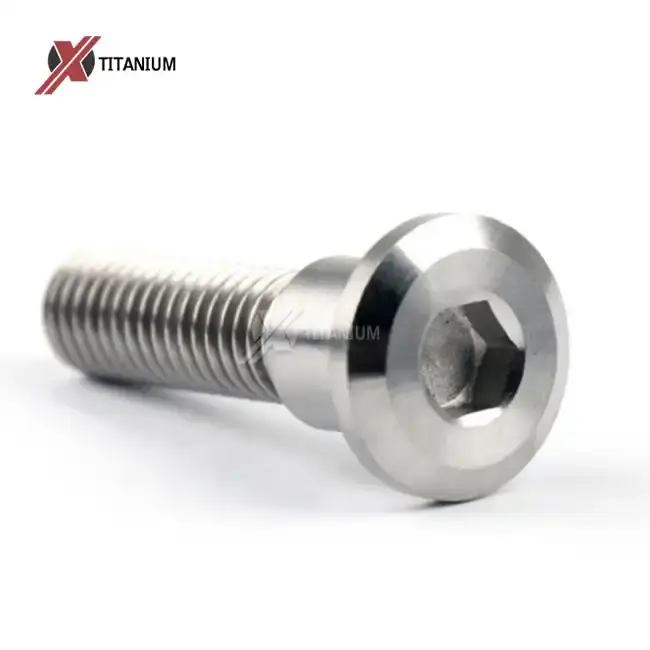
Understanding M8 Titanium Rotor Bolts and Their Importance
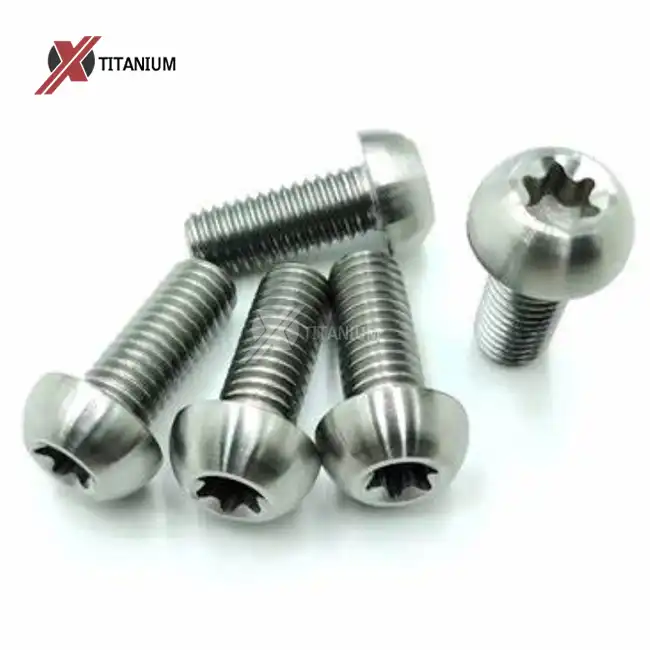
Automobile brake systems, racing bikes, motorcycle brake discs and aircraft parts all use M8 titanium rotor bolts to connect brake discs to wheel hubs. Because they are made from Ti-6Al-4V (Grade 5) titanium metal, these screws work better than steel or aluminium ones that are usually used. The material's density of 4.51 g/cm³ lowers spinning mass by about 45% compared to steel parts of the same size. This means that the suspension responds more quickly and there is less gyroscopic friction when turning.
When exposed to air and saltwater, titanium rotor fasteners are very resistant to corrosion. This means they can keep structures strong in marine and coastal areas where steel bolts quickly break down due to rust-induced thread seizure. The metal has a tensile strength of more than 950 MPa, which means it can reliably hold clamping loads even when exposed to the repeated temperature cycling and vibrational stress that comes with brake systems. In these situations, thread contact quality is very important. If the length is too short, it can make load distribution worse, and if it's too long, it could interfere with bearing kits or ABS sensor housings.
Choosing the right length of bolt affects three main safety factors. The pull-out power and resistance to vibrational loosening are both based on the thread contact depth. To keep stress from building up in one place, the grip length (the unthreaded shank part) needs to be long enough to span the rotor mounting surface. There should be enough space under the bolt head so that it can seat completely without any limits or surface flaws getting in the way. These size ratios change depending on the type of hub, the width of the rotor, and whether a floating or fixed rotor system is used.
Criteria for Selecting the Right Length of M8 Titanium Rotor Bolts
When making a procurement choice, it's important to look at all the application factors and operating environments in a planned way. When an OEM makes something, the dimensions must be very consistent so that automatic assembly processes can work. But when an aftermarket replacement is needed, the dimensions must be flexible so that tolerance stack-ups from different component suppliers can be handled. This difference determines whether normal length increments of 15mm, 20mm, 25mm, and 30mm are enough or whether precise CNC machining to exact specs is needed.
Exposure to the environment has a big effect on the choice of material and the need for surface cleaning. Anodised finishes make titanium even more resistant to rust, which is good for coastal marine applications. Natural mill finishes, on the other hand, are better for racing applications that want to cut weight. When the temperature changes from room temperature to close to 400°C for stopping, M8 titanium rotor bolts expand or contract differently than aluminium or steel hubs. This means that thermal stress loading needs to be calculated.
Key measurement parameters guide length determination:
- Thread engagement depth must be at least 1.5 times the standard width (12 mm for M8 threads) to get full tensile strength without thread stripping
- Rotor thickness ranges from 2.3 mm for light bicycles to 5 mm for motorbike front brake systems, which directly affects the length of the bolts that need to be used
- Hub boss height can be anywhere from 8mm to 15mm, based on whether the hub has bearing spacers or ABS reluctor rings built in
- Washer stack thickness adds 1-2 mm when trapped washers or rotor anti-rattle springs are mentioned in the assembly design
- Clearance requirements require 2-3 mm more length than what was calculated to be engaged to keep the bolt from bottoming out, which would stop the proper development of torque preload
Finding these measurements, either by measuring them directly or looking at OEM technical literature, lets you figure out the best bolt length. To find the needed threaded length, the method adds the thickness of the rotor, the height of the hub boss, the thickness of the washer, and the safety clearance. It then takes away any unthreaded shank length. The right specification can be found by comparing this figure to the common lengths that are available (15mm, 20mm, 25mm, 30mm, 35mm, and 40mm).
Standardising the thread pitch for M8 metric fasteners at 1.25 mm makes compatibility easier, but proof is still needed when buying from more than one hub maker. Choosing a head style from Torx, Allen hex, or external hex setups changes the tools that are needed and how hard it is to mess with in fleet applications. Different types of drives, like T25 Torx or 6mm hex pins, affect how easy it is to put things in tight spaces like brake calliper areas.
Comparing M8 Titanium Rotor Bolts by Length and Material Performance
When choosing a material, you have to weigh its functional features, weight, cost, and ability to work with other materials. Even though steel rotor nuts are more common and cost less per unit, they are also heavier and more likely to rust. Fasteners made of aluminium metal are lighter than M8 titanium rotor bolts but cost less. However, they aren't strong enough for high-torque uses and can get thread galling when put in aluminium hubs.
Grade 5 titanium is the best choice for tough jobs because it hits the right mix. The metal is about 35 HRC hard, which is hard enough to keep threads from galling when anti-seize chemicals are used, but flexible enough to handle stress concentrations without breaking into brittle pieces. The fatigue strength of the material is very important in rotor uses where nuts are loaded and unloaded millions of times over the course of their life.
When installing, you need to pay close attention because different materials have different torque specifications. For M8 threads on rotors, steel bolts usually say that the torque number should be between 25 and 30 Nm. Because titanium has a lower friction coefficient and a lower elastic stiffness, the torque needs to be adjusted. Usually, anti-seize lubricants lower the standard by 10 to 15 percent to stop thread stripping or yielding. The most common installation mistake is over-torquing, which happens when techs use steel bolt specs on titanium fasteners without making the necessary changes.
The length of the bolt affects how the torque behaves by changing the amount of distortion that happens during preload development. Longer bolts have more elastic stretch, which makes it easier to keep the clamp load even when the bolt is vibrating, but it also means that you have to use more precise force to get the goal preload. Because shorter bolts are less bendable, they need tighter torque control to keep them from going over their yield strength. Professional assembly methods use torque wrenches that are measured to within ±3% of their original value and multiple stages of tightening to evenly spread clamping loads across rotor mounting patterns.
The difference in prices between materials shows both how much the raw materials cost and how complicated the production process is. Titanium rotor nuts are more expensive than steel ones—usually 300–400% more—but their performance and long life make up for it. Titanium screws are often used in aerospace uses, even though they cost more because of weight restrictions and corrosion protection requirements. In motorsports, the speed benefits of less unsprung mass are given the most weight. Marine and seaside uses recover costs by extending the time between replacements and getting rid of upkeep that is needed because of corrosion.
Sourcing High-Quality M8 Titanium Rotor Bolts: Where and How to Buy?
To buy M8 titanium rotor bolts, you need to make sure that the material certifications, size requirements, and production process rules are all met. Reliable sellers give material test results that show the chemical makeup according to ASTM B348 standards, as well as mechanical property checks like tensile and hardness tests and dimensional inspection certificates that show the product meets tolerances within ±0.05mm.
Different types of applications have different certification needs. For industry providers, ISO 9001 quality management systems are the minimum standard. For aerospace uses, however, AS9100 approval is needed to show that important fasteners are controlled in a specific way. For medical device uses, biocompatibility paperwork and lot tracking are needed. ROHS compliance approval makes sure that there are no banned chemicals that could stop you from getting into the European market.
When manufacturers use CNC cutting on wrought titanium bar stock, the mechanical qualities are better than with cast or powder metallurgy methods. Through grain flow alignment and work hardening, cold-rolled threads are more resistant to wear than cut threads. Surface processes like polishing, anodising, and nitriding let you change how something looks, how resistant it is to rust, and how hard the surface is. Anodised colour choices, including natural silver, gold, blue, green, purple, black, and rainbow finishes, help identify parts in complicated arrangements and make things look different in consumer-facing settings.
Bulk buying methods get the best unit cost through bulk savings and make sure that each batch is the same. Different sellers have different minimum order amounts. Specialised makers can often handle smaller quantities at slightly higher prices than generic fastener distributors. Custom length specs allow for exact fitment optimisation, which is especially helpful when standardising across different platform applications or dealing with tolerance stack-up issues in the aftermarket.
Lead time factors balance the costs of keeping stockpiles with the need to keep supplies coming in. Standard length versions with a natural mill finish usually ship within two weeks from well-known makers who keep stock on hand. Because of CNC programming, production setup, and surface treatment processing, wait times can be up to four to six weeks for custom specs like non-standard lengths, anodised finishes, or special head configurations. Strategic sellers keep a safety stock of high-volume versions on hand in case they need to meet urgent needs.
Post-purchase support includes expert advice on the best ways to put the product, guarantee coverage for problems with the material or the way it was made, and quick response to claims of dimensional non-conformance. Established providers offer application engineering help to choose the best bolt length for new platform improvements and fix installation problems caused by tolerance interactions.
Installation Best Practices and Maintenance Tips for M8 Titanium Rotor Bolts
A pre-assembly review checks the thread condition, the stability of the head formation, and the lack of surface damage that could affect performance. This is the first step in a proper installation. Hand-threading bolts into hub tappings is a good way to check that the threads are engaged smoothly and there is no cross-threading or locking. Cleaning threaded holes of dirt, rust products, and old thread locker dust makes sure that torque is developed correctly and stops false readings of torque.
Anti-seize coating is an important part of installing M8 titanium rotor bolts. Because the material tends to gall when put into aluminium or steel hubs, anti-seize solutions that are copper-based, nickel-based, or specially designed to work with titanium must be used on the threads and bearing surfaces. Moderate application is recommended, as too much anti-seize can change the friction coefficients in unpredictable ways, which could lead to over-preload at certain torque values. Thread locker compounds, like medium-strength Loctite 243, stop vibrations and let you take things apart later. However, they should be tested to make sure they don't damage anodised finishes.
Applying torque is done in stages so that tightening loads are spread out evenly across bolt patterns. Initial tightening to 30–40% of specification in a star design makes sure that the rotor seats properly without any warping. Stress can relax after secondary tightening to the 70–80% standard. To apply the final torque to full specification, calibrated torque tools with beam, click, or digital display types that work with the 15–30 Nm range that is common for rotor uses are used. Angle-based tightening methods are more accurate for uses that need to set an exact preload, especially when changes in the bolt's elastic behaviour affect the torque-tension relationships.
Some common installation mistakes are choosing the wrong length, which can lead to threads not engaging properly or parts interfering with each other, applying steel bolt torque specs to titanium fasteners without adjusting the friction coefficient, and not using anti-seize, which can cause galling and thread damage. Cross-threading when the threads are first engaged weakens the thread forms, making them less strong and causing stress to build up. When you use damaged or over-torqued bolts again, they lose the safety limits that were built into the fastener specs.
Based on how bad the process is, maintenance rules set check intervals. Every time a racing wheel needs to be taken off, it needs to be inspected for damage to the threads, the heads, and the total length. Plastic deformation can be a sign of over-stress. Inspections should be done once a year during regular brake work on street motorcycles and cars. Cleaning methods that use light detergents and soft brushes get rid of brake dust without hurting anodised finishes or contaminating threads with rough material.
Even though titanium naturally doesn't rust, regular inspections make sure that it stays strong in harsh settings. When moisture crosses aluminium hubs and titanium bolts, galvanic corrosion can happen at different metal surfaces. However, electrolyte formation is usually avoided by using the right anti-seize and keeping the torque at the right level. The inspection mainly looks for cracks that could cause corrosion at the thread roots and under the bolt heads, where water can get stuck in salty areas like the ocean or the winter road salt.
Conclusion
To choose the right M8 titanium rotor bolts length, you need to carefully look at the thread contact requirements, the rotor's size, the hub's shape, and the operation surroundings. When it comes to corrosion protection, weight reduction, and fatigue strength, Grade 5 titanium metal has strong enough benefits to make it worth the extra money for demanding uses. To be successful at procurement, you need to buy from certified manufacturers who use controlled methods and offer full expert help. Precision in installation and servicing are the keys to getting the most out of these specialised fasteners in aircraft, racing, marine, and high-performance cycling uses.
FAQ
To find the right bolt length for my rotor and hub, how do I measure them?
Use callipers to find the thickness of the rotor, then add the hub boss height from the mounting surface to the bottom of the thread, and if necessary, add the thickness of the washer. Finally, leave 2-3 mm of space. The number shows the shortest length of bolt that is needed. Choose the next standard length that is available to make sure that the threads connect properly without bottoming.
Can titanium rotor bolts be used instead of steel nuts without any changes?
When it comes to size and thread requirements, M8 titanium rotor bolts can be used in place of steel nuts. Torque values need to be changed—by about 10–15 percent when anti-seize is used—and thread locker must be used to stop vibrations from opening the threads. Check that the head style works with the tools that are already in use.
How much force do I need to use for M8 titanium rotor bolts?
The torque requirements vary on the hub material and the anti-seize device. Titanium bolts with anti-seize in aluminium wheels usually have ranges between 18 and 25 Nm, while steel bolts usually have ranges between 25 and 30 Nm. To avoid damage from over-tightening, always check the manufacturer's instructions and only use accurate torque tools.
Partner with Chuanglian for Premium M8 Titanium Rotor Bolt Solutions
Baoji Chuanglian New Metal Material Co., Ltd. specializes in manufacturing precision-engineered M8 titanium rotor bolts tailored to demanding aerospace, motorsport, marine, and industrial applications. Our Grade 5 Ti-6Al-4V bolts deliver certified mechanical properties exceeding 950 MPa tensile strength, CNC-machined to ±0.05mm tolerances, with customizable lengths from 15mm to 40mm. Our ISO 9001 certified production processes ensure batch-to-batch consistency critical for your procurement requirements. Contact our technical team at info@cltifastener.com or djy6580@aliyun.com to discuss custom specifications, request material certifications, or obtain competitive quotations. As a leading manufacturer in Baoji—China's Titanium City—we combine advanced metallurgical expertise with responsive customer service to support your supply chain objectives.
References
1. ASM International. (2021). Titanium Alloys: Properties, Processing, and Applications in Aerospace Engineering. Materials Park, OH: ASM International Handbook Committee.
2. Boyer, R., Welsch, G., & Collings, E.W. (2019). Materials Properties Handbook: Titanium Alloys for Fastener Applications. Cleveland, OH: ASM International.
3. Budinski, K.G. (2020). Engineering Materials: Properties and Selection for Mechanical Fasteners. 10th Edition. Upper Saddle River, NJ: Pearson Education.
4. Society of Automotive Engineers. (2022). SAE J429: Mechanical and Material Requirements for Externally Threaded Fasteners. Warrendale, PA: SAE International Standards.
5. Threadform Standards Organization. (2021). ISO 7380 and DIN 912: Dimensional and Mechanical Requirements for M8 Socket Head Cap Screws. Geneva, Switzerland: International Organization for Standardization.
6. Zhang, L., & Chen, Y. (2023). Corrosion Behavior and Installation Practices for Titanium Fasteners in Marine Environments. Journal of Materials Engineering and Performance, 32(4), 1567-1582.
Learn about our latest products and discounts through SMS or email