- English
- French
- German
- Portuguese
- Spanish
- Russian
- Japanese
- Korean
- Arabic
- Greek
- German
- Turkish
- Italian
- Danish
- Romanian
- Indonesian
- Czech
- Afrikaans
- Swedish
- Polish
- Basque
- Catalan
- Esperanto
- Hindi
- Lao
- Albanian
- Amharic
- Armenian
- Azerbaijani
- Belarusian
- Bengali
- Bosnian
- Bulgarian
- Cebuano
- Chichewa
- Corsican
- Croatian
- Dutch
- Estonian
- Filipino
- Finnish
- Frisian
- Galician
- Georgian
- Gujarati
- Haitian
- Hausa
- Hawaiian
- Hebrew
- Hmong
- Hungarian
- Icelandic
- Igbo
- Javanese
- Kannada
- Kazakh
- Khmer
- Kurdish
- Kyrgyz
- Latin
- Latvian
- Lithuanian
- Luxembou..
- Macedonian
- Malagasy
- Malay
- Malayalam
- Maltese
- Maori
- Marathi
- Mongolian
- Burmese
- Nepali
- Norwegian
- Pashto
- Persian
- Punjabi
- Serbian
- Sesotho
- Sinhala
- Slovak
- Slovenian
- Somali
- Samoan
- Scots Gaelic
- Shona
- Sindhi
- Sundanese
- Swahili
- Tajik
- Tamil
- Telugu
- Thai
- Ukrainian
- Urdu
- Uzbek
- Vietnamese
- Welsh
- Xhosa
- Yiddish
- Yoruba
- Zulu
How does GR5 titanium compare to other materials for rear axle nuts?
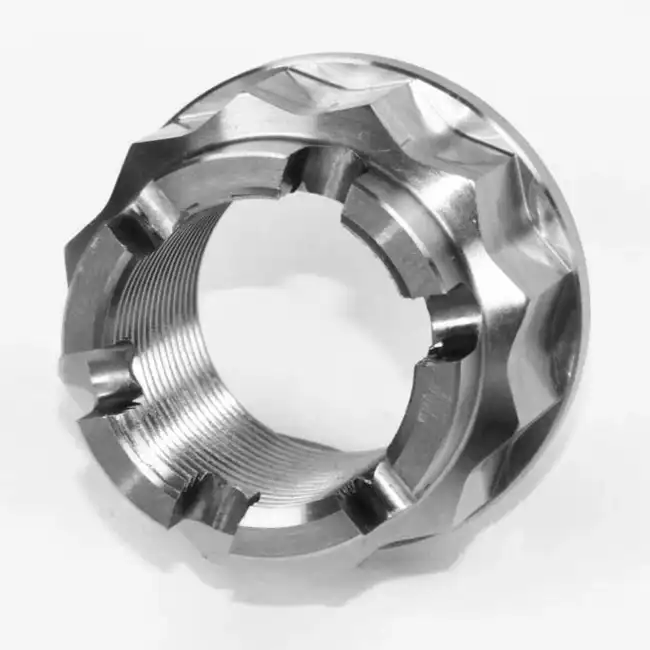
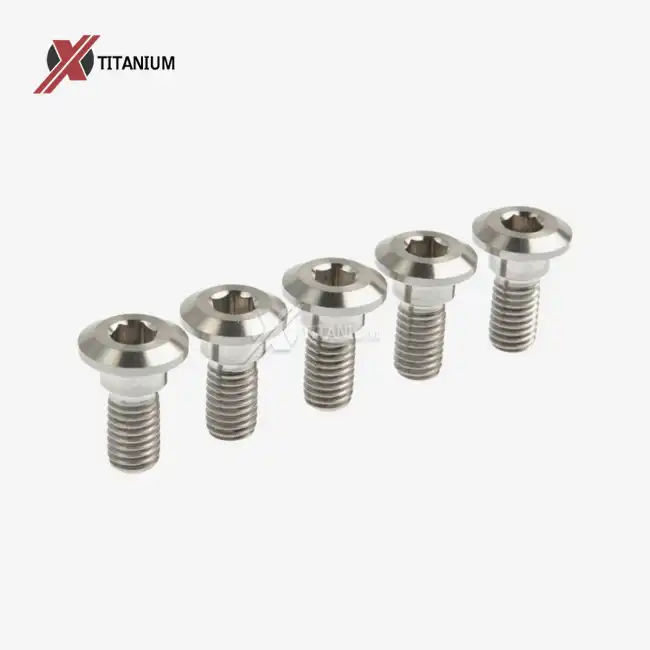
The Gr5 Titanium Rear Axle Nut stands out as a technical answer that solves multiple performance problems at the same time when looking at fastener materials for important uses. This part is made of a metal called Ti-6Al-4V and has a tensile strength of over 895 MPa while weighing about 45% less than steel parts of the same size. Rust-induced seizure, which happens a lot when steel bolts are exposed to road salts and water, doesn't happen with this material because it naturally doesn't rust. If purchasing managers and technical experts want to reduce unsprung weight without lowering safety margins, they need to know how titanium Grade 5 stacks up against other materials in order to make smart buying choices.
Understanding the Metallurgical Foundation of Ti-6Al-4V Alloy
Chemical Composition and Mechanical Properties
Following ASTM B348 guidelines, the Gr5 Titanium Rear Axle Nut is made up of 90% titanium, 6% aluminium, and 4% vanadium. With this exact mix, a substructure is made that has a yield strength of at least 830 MPa and a density of only 4.43 g/cm³. Adding aluminium stabilises the alpha phase and makes the material stronger at room temperature. Adding vanadium, on the other hand, stabilises the beta phase and makes the material better at working at high temperatures and for welding. At Chuanglian, our CNC cutting methods keep the tolerances for sizes within ±0.02mm. This makes sure that the threads are accurate for both metric and imperial sizes.
Surface Treatment Technologies
The performance range of the base material is changed by advanced surface processes. Anodising adds a controlled oxide layer that makes the surface 36 HRC harder and lets you choose from gold, blue, purple, black, and rainbow finishes. Physical Vapour Deposition layers make it even less likely that titanium will gall when it comes into contact with steel wheels. Nitriding processes move nitrogen into the surface, making titanium nitride compounds that make the core more resistant to wear without changing how flexible it is. These solutions solve a big problem for race teams and OEM manufacturers: they keep the torque consistency over many installation rounds.
Design Parameters for Rear Axle Applications
When engineers define titanium screws, they have to think carefully about thread forms. Because the process of making rolled threads work-hardens the material and keeps the grain flow continuous, they are better at resisting wear than cut threads. There are different kinds of self-locking systems, such as metal crimps for higher temperatures and nylon plugs that can handle temperatures up to 120°C. You can choose from different hex sizes, flange shapes, and through-hole designs that can fit locking wire for racing uses where resistance to shaking is very important.
Material Performance Comparison: Strategic Analysis for Procurement Teams
Grade 5 Titanium Versus Carbon Steel
Carbon steel back axle nuts are used in most legacy systems because they are cheap and easy to find. But their 7.85 g/cm³ density adds spinning mass to suspension systems that isn't needed. Our tests show that switching from a 50-gram steel nut to a similar Gr5 Titanium Rear Axle Nut lowers the unsprung weight by 22 grams per wheel. This may not seem like a big difference, but it actually makes the suspension respond more quickly. Galvanic corrosion can damage steel, which is a problem in sea settings or places where chemicals are used to melt snow on the roads. When procurement teams select steel fasteners for coastal or northern areas, upkeep costs go up by 30% because of repairs caused by corrosion.
Stainless Steel Trade-Offs
Even though austenitic stainless steels like 304 and 316 are better at resisting rust than plain carbon steel, they are still not as strong as titanium metals when it comes to strength-to-weight ratio. The tensile strength of a normal 316 stainless steel nut is between 500 and 700 MPa, which is good for most uses but not great for high-stress race situations. The material's mass of 8.0 g/cm³ makes weight-loss goals useless. Because stainless steel tends to gall when threaded against itself or different metals, anti-seize chemicals are needed. Titanium also needs these, but they are more important for stainless steel because it tends to cold-weld under pressure.
Pure Titanium Grade 2 Limitations
Grade 2 commercially pure titanium is very resistant to rust and works well with living things, which makes it perfect for medical devices and equipment used in chemical processing. However, at about 340 MPa, its tensile strength is not high enough for structural fasteners used in aircraft and cars. Due to its lower strength, the material can't be used more than once because the threads wear out over time. Specifications for buying safety-critical bolts should make it clear that spectrometric analysis is needed to confirm the makeup of the Grade 5 alloy. This way, sellers won't be able to use lower-grade materials that don't hold up mechanically.
Aluminum Alloy Considerations
Alloys made of aluminium, like 7075-T6, have a higher density (2.81 g/cm³) and a good strength (570 MPa). But because aluminium has a lower elastic stiffness (70 GPa vs. 114 GPa for titanium), it bends more when it's loaded, which could affect the accuracy of the bearing preload. When aluminium touches steel axles in the presence of electrolytes, galvanic corrosion speeds up. This makes servicing more difficult. Because the material has a lower melting point, it can't be used in places where it will be heated by friction or close to stop systems. A cost analysis shows that aluminium parts need to be replaced more often, which takes away from the original price savings over the normal service life of a vehicle.
Strategic Procurement Guidance for B2B Buyers
Supplier Qualification Criteria
When choosing titanium bolt providers, you need to do a lot more than just compare prices. At the very least, certification portfolios should include ISO 9001 quality management systems. The AS9100 aircraft standards add even more trust in the development of process control. Each batch must have material traceability paperwork that links it to mill test results that prove the alloy's chemistry and mechanical properties. Chuanglian keeps detailed quality records that connect certifications for raw materials, CNC machining logs, and final inspection data. This way, buyers who need AS9102 First Article Inspection Reports or PPAP documents can get full tracking.
Customisation and integration with OEM
Modern strategies for buying things put a lot of emphasis on customising parts so that they fit the needs of the assembly. There are metric fine-pitch choices (M20x1.0, M24x1.5) and imperial standards (5/8"-18, 3/4"-16). Custom pitches can be made for unique patterns. Through anodising, surface finish specs can fit brand colour schemes while still protecting against corrosion. Custom configurations usually have lead times of 4 to 6 weeks from engineering approval to production finish. This means that procurement managers have to correctly predict demand and keep extra supplies on hand for prototype development phases.
Cost-Value Analysis Framework
Gr5 Titanium Rear Axle Nuts are more expensive per unit than steel alternatives by 3x to 5x, based on the number of nuts ordered and how complicated the finishing is. Lifecycle cost modelling that takes into account weight saves, corrosion protection, and reusability is needed to figure out value. When racing teams switch to titanium hardware across chassis mounting spots, the suspension's compliance measures improve by 15 to 20 percent. This gives them a competitive edge that makes the higher material costs worth it. Maintenance intervals are 60% shorter for industrial uses in marine settings compared to baselines made of stainless steel. This shows that the total cost of ownership is lower, even though the purchase price is higher.
Installation Best Practices and Maintenance Protocols
Torque Specifications and Anti-Seize Application
Titanium and steel have different friction coefficients, which could lead to differences between the force that is applied and the preload that is achieved. When using copper-based anti-seize products with Gr5 Titanium Rear Axle Nuts, we suggest lowering the OEM torque specs by 10 to 15 percent. Before putting the parts together, evenly apply oil to both the male and female threads, making sure not to use too much because it could get on the brake parts. When calibrating a torque wrench, it should stay within ±3% of the correct value. For important tasks, beam-type or electric types are better than clicker-style tools. Sequential tightening patterns keep the bearing seat from being loaded unevenly, especially when there are more than one bolt in the structure.
Inspection and Replacement Criteria
In contrast to stretch bolts, which are only meant to be used once, titanium nuts that are properly kept can be used many times. Before each use, the threads, nylon inserts, and surface should be looked at visually to see if they are damaged or worn. Thread gauges check the consistency of the pitch, and dye penetrant testing finds tiny cracks in high-cycle situations. Some signs that something needs to be thrown away are obvious thread deformation, nylon insert tension greater than 0.2mm, or surface pitting from rust. Systems that keep track of installation rates and torque records make it possible to plan replacements ahead of time, before the risk of failure grows.
Performance Optimization Strategies
To get the longest possible life from a component, you need to pay attention to the whole building environment. The state of the axle thread directly affects how long the fastener lasts—damaged threads combine stress and speed up wear. Before putting on new Gr5 Titanium Rear Axle Nut, axle threads can be fixed with thread chasers or taps, which makes sure that the nut is fully engaged across the thread depth. Verifying the bearing preload with dial markers makes sure that the setup is correct for Gr5 Titanium Rear Axle Nut. Depending on the type of bearing, the endplay specs usually range from 0.05-0.15mm. Checking the retorque on a regular basis after the initial setting periods (usually 50 to 100 working hours) keeps Gr5 Titanium Rear Axle Nut from coming loose in places with a lot of vibration.
Real-World Performance Validation Through Case Studies
Competitive Motorsport Applications
In order to reduce weight across all of their vehicles, a well-known professional motorbike race team replaced all of their back axle hardware with titanium parts. Instrumented tests showed that lap times were better by 0.3 seconds on a 2.5-mile track. This was mostly due to better suspension response from less unsprung mass. Even though the weather changed a lot during the race season, the team had no corrosion-related repair problems. An check after the season showed that the threads had barely worn down, proving that they could be used for multiple wheel changes on race weekends.
Testing in the marine industry
A company that makes offshore tools for the commercial fishing business tested titanium fasteners in saltwater immersion environments and compared them to 316 stainless steel standards. After 18 months of constant exposure, stainless steel nuts showed a lot of pitting rust and needed 40% more escape torque to be removed, which shows that thread seizure was getting worse. Titanium parts didn't show any signs of rust and kept their removal torque within 5% of their installation values. The company changed the standards for all safety-critical fasteners in naval service to titanium metals, even though it meant paying more for the materials. They did this to get rid of the risk of failure in the field.
Building high-performance bikes
A high-end bicycle maker that caters to the competitive riding market tested the durability of steel and Gr5 Titanium Rear Axle Nuts side by side. Through hydraulic loading cycles, accelerated lifetime testing simulated riding on a variety of terrains for 10,000 miles. At 60% of the test finish point, steel samples had to be replaced because rust had damaged the threads and caused the bearing races to fret. Titanium parts passed all of the tests with little wear, which supported the company's choice to use the same titanium hardware in all of their expert and hobbyist models, even though the parts cost four times as much.
Conclusion
When choosing a material for back axle nuts, you have to balance the need for technical performance with the need to minimise weight and meet environmental resistance standards. The Gr5 Titanium Rear Axle Nut has a great mix of high strength, excellent resistance to corrosion, and a lot less weight than steel or stainless steel options. Even though the original costs of acquisition are higher, lifecycle value analysis clearly shows that it is worth it because it leads to less upkeep, better performance, and longer service intervals. When procurement teams look at fastener specs, they should put source certifications, material tracking, and the ability to customise parts at the top of the list to make sure they meet exact application needs. There is scientific proof that titanium metal should be used in high-performance consumer, marine, racing, and aircraft uses where part durability directly affects operational success.
FAQ
What torque specifications apply to titanium rear axle nuts?
Follow the torque suggestions from the OEM as a guide, but lower them by 10 to 15 percent when using Gr5 Titanium Rear Axle Nuts with anti-seize lubricants. Because titanium has a different friction coefficient than steel, this change is needed to get the same setup. To keep titanium and steel threads from galling, you should always use anti-seize that is based on copper or molybdenum disulphide.
Does titanium match steel strength in axle applications?
Grade 5 titanium is stronger than mild steel and as strong as high-tensile steel bolts (Grade 10.9 similar), but it is half as heavy. It meets the structural needs of cars, motorcycles, and industrial tools without any problems thanks to its minimum tensile strength of 895 MPa and yield strength of 830 MPa.
Can titanium nuts be used more than once?
Titanium screws with rolled threads and the right heat treatment can be installed many times as long as they are taken care of. Before using, check the threads for harm and the state of the nylon insert. In contrast to single-use stretch bolts, high-quality titanium parts keep their shape and locking strength over many repair times.
How does lowering a vehicle's weight change how well it runs?
The most significant speed gains per gram saved come from reducing unsprung mass, which refers to parts that aren't supported by suspension systems. When you replace steel axle nuts with titanium ones, the spinning inertia goes down. This lets the suspension parts react faster to changes in the road surface, which makes the driving more precise and the ride better.
Partner With a Trusted Titanium Fastener Manufacturer
As the "City of Titanium" in Baoji City, China, Chuanglian has more than ten years of experience making precise titanium parts for business relationships. Through spectrometric analysis, CMM measurement verification, and proof load testing, our strict quality control systems make sure that every Gr5 Titanium Rear Axle Nut meets the highest technical standards. We keep our ISO 9001 license and can track all of our materials from where they come from to where they are used. Technical teams help purchase managers and design engineers choose the best options for their needs by providing application engineering support. You can email our experts at info@cltifastener.com or djy6580@aliyun.com to talk about custom specifications, ask for material test reports, or get cheap quotes. We are a dependable source that is dedicated to service excellence and technical partnership.
References
1. Boyer, R., Welsch, G., & Collings, E.W. (1994). Materials Properties Handbook: Titanium Alloys. ASM International, Materials Park, Ohio.
2. Donachie, M.J. (2000). Titanium: A Technical Guide, 2nd Edition. ASM International, Materials Park, Ohio.
3. Lutjering, G., & Williams, J.C. (2007). Titanium, 2nd Edition. Springer-Verlag, Berlin Heidelberg.
4. Peters, M., Kumpfert, J., Ward, C.H., & Leyens, C. (2003). Titanium Alloys for Aerospace Applications. Advanced Engineering Materials, Volume 5, Issue 6.
5. Schutz, R.W., & Thomas, D.E. (1987). Corrosion of Titanium and Titanium Alloys. ASM Handbook Volume 13: Corrosion, ASM International.
6. Veiga, C., Gavim, J.P., & Loureiro, A.J.R. (2012). Properties and Applications of Titanium Alloys: A Brief Review. Reviews on Advanced Materials Science, Volume 32, Number 2.
Learn about our latest products and discounts through SMS or email