- English
- French
- German
- Portuguese
- Spanish
- Russian
- Japanese
- Korean
- Arabic
- Greek
- German
- Turkish
- Italian
- Danish
- Romanian
- Indonesian
- Czech
- Afrikaans
- Swedish
- Polish
- Basque
- Catalan
- Esperanto
- Hindi
- Lao
- Albanian
- Amharic
- Armenian
- Azerbaijani
- Belarusian
- Bengali
- Bosnian
- Bulgarian
- Cebuano
- Chichewa
- Corsican
- Croatian
- Dutch
- Estonian
- Filipino
- Finnish
- Frisian
- Galician
- Georgian
- Gujarati
- Haitian
- Hausa
- Hawaiian
- Hebrew
- Hmong
- Hungarian
- Icelandic
- Igbo
- Javanese
- Kannada
- Kazakh
- Khmer
- Kurdish
- Kyrgyz
- Latin
- Latvian
- Lithuanian
- Luxembou..
- Macedonian
- Malagasy
- Malay
- Malayalam
- Maltese
- Maori
- Marathi
- Mongolian
- Burmese
- Nepali
- Norwegian
- Pashto
- Persian
- Punjabi
- Serbian
- Sesotho
- Sinhala
- Slovak
- Slovenian
- Somali
- Samoan
- Scots Gaelic
- Shona
- Sindhi
- Sundanese
- Swahili
- Tajik
- Tamil
- Telugu
- Thai
- Ukrainian
- Urdu
- Uzbek
- Vietnamese
- Welsh
- Xhosa
- Yiddish
- Yoruba
- Zulu
Are Gr5 Titanium Motorcycle Bolts Strong Enough for Racing Use?
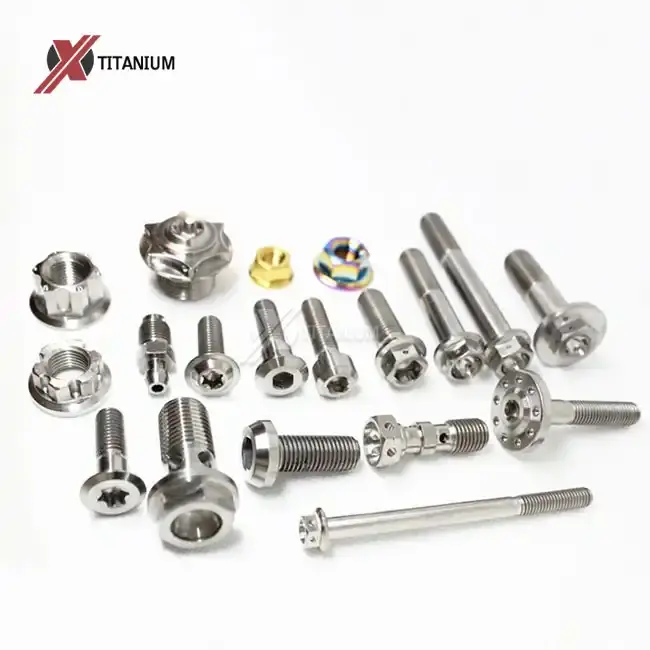
Yes — Gr5 titanium motorcycle bolts are absolutely strong enough for racing use. Made from Ti-6Al-4V alloy, they deliver a tensile strength of up to 1,300 MPa with a density of just 4.43 g/cm³, roughly 45% lighter than comparable steel fasteners. MotoGP and World Superbike teams have used Ti-6Al-4V fasteners as standard hardware for decades, specifically because the material holds torque under vibration, resists heat up to 400°C, and never rusts. For any brand building a high-performance fastener line, the data speaks clearly in favor of this alloy.
What Are Gr5 Titanium Motorcycle Bolts?
The Ti-6Al-4V Composition
Gr5 titanium is an alpha-beta metal that is mostly made up of titanium (about 90%), aluminum (6%), and vanadium (4%). Because of this, it is much stronger and harder than commercially pure grades (Gr1 and Gr2). The aluminum in the material keeps the alpha phase stable, and the vanadium keeps the beta phase stable. Together, they make a microstructure that is much more resistant to stress and bending than single-phase titanium.
How Gr5 Differs from Other Titanium Grades
Gr2 is soft and bendable, so it can be used to make pipes that don't rust, but it's too weak to be used for load-bearing fastening. For medical implants, Gr23 (Ti-6Al-4V ELI) has less interstitial content but is a little weaker. Gr5 is in the middle: it's tough enough (36–38 HRC) to keep from galling when installed correctly, but not so tough that it can't handle the shock loads that race environments create.
Typical Bolt Types and Racing Dimensions
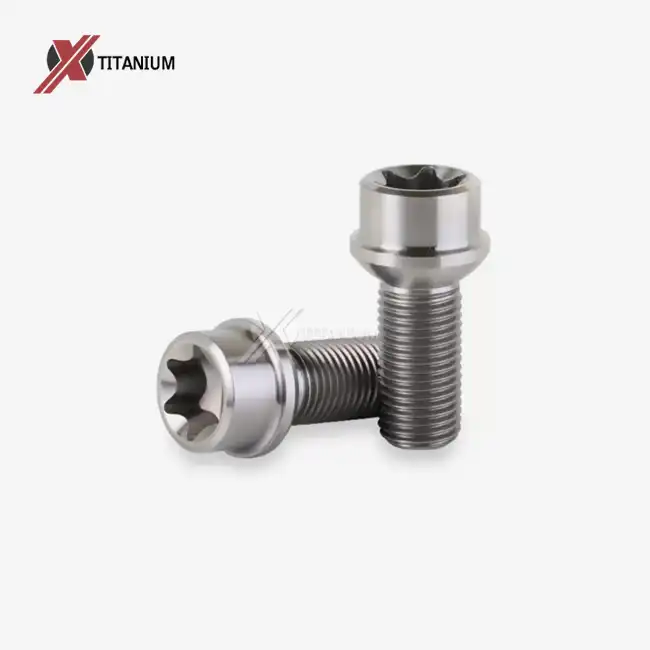
DIN 912 socket cap bolts, DIN 6921 flange bolts, and custom hex-head designs are often used in racing. For motorcycles, the most common size groups are M6 to M12. At Chuanglian, we CNC cut each bolt to a tolerance of ±0.05 mm and a thread class of 6g/6H. This makes sure that all of the brake pads, engine mounts, chassis frames, and suspension parts fit together perfectly.
How Strong Are Gr5 Titanium Motorcycle Bolts for Racing Use?
Tensile Strength and Yield Data
When tested by a third party, Gr5 fasteners always have a tensile strength of 950 MPa to 1,300 MPa and a yield strength of around 880 MPa. The tensile strength of Grade 8.8 steel is about 830 MPa, and that of Grade 10.9 steel is about 1,040 MPa. This means that Gr5 titanium is as strong as or stronger than high-strength alloy steel while weighing less than half as much. This trade-off directly improves lap times and how the car handles. Gr5 titanium motorcycle bolts are the SKU where this strength-to-weight advantage matters most.
Fatigue Resistance Under Race Conditions
Instead of cut threads, rolled threads keep the grain flow continuous through the bolt base. According to a study in the International Journal of wear, rolled threads have a 30% longer wear life than cut threads. This difference can make or break a fastener during a race, especially in places with a lot of shaking, like V-twin engines and inline-four race bikes that run at high speeds for a long time.
Thermal Stability and Corrosion Resistance
Gr5 keeps its mechanical properties up to 400°C (752°F), which means it can be used on hardware that is close to exhaust and is often heated and cooled. The alloy creates an oxide layer that heals itself and is not affected by chlorides, road salts, or mild acids, which are things that make cadmium-plated or stainless steel fasteners rust faster. This passive film can heal itself even after being scratched, so Gr5 can be used for a long time in wet or seaside race conditions.
Gr5 Titanium Motorcycle Bolts vs Alternative Materials: A Comparative Analysis
Gr5 vs Stainless Steel and Grade 8 Steel
Stainless steel 316 doesn't rust, but it has a low tensile strength of 515–620 MPa and a density of 7.9 g/cm³. Grade 8 steel, which is about the same as Grade 10.9 metric, is strong as Gr5, but it weighs almost twice as much and rusts without plating. For race builds that care about weight, the extra weight of steel hardware that clamps just as well as or better than titanium hardware is hard to explain.
Gr5 vs Aluminum 7075
Aluminum 7075 is lighter than titanium, at 2.81 g/cm³ versus 4.43 g/cm³ for Gr5, but its tensile strength is only around 503 MPa — well below the 895 MPa minimum for Grade 5 titanium. That difference is structural, not cosmetic. Aluminum bolts perform acceptably in low-load applications like fairing panels, but they fail quickly under sustained vibration or torsional load. Brake caliper bolts and engine mounting hardware require a level of shear and fatigue resistance that aluminum can't provide. Gr5 titanium closes most of the weight gap to steel while retaining the structural integrity aluminum lacks. Gr5 titanium motorcycle bolts are the SKU where this trade-off matters most, since they sit in exactly the high-load, high-vibration positions where aluminum isn't an option.
Gr5 vs Gr2 and Gr23 Titanium
Here is a direct list of the three grades of titanium that are most useful for motorcycles:
- Gr2 (Commercially Pure): Tensile strength ~345 MPa, density 4.51 g/cm³. Excellent corrosion resistance but insufficient mechanical strength for load-bearing fasteners in racing.
- Gr23 (Ti-6Al-4V ELI): Tensile strength ~860 MPa. Designed for medical implants with tighter interstitial limits; marginally softer than Gr5 and carries a higher material cost without meaningful performance gain in fastener applications.
- Gr5 (Ti-6Al-4V): Tensile strength up to 1,300 MPa, density 4.43 g/cm³, hardness 36–38 HRC. The most practical and cost-effective choice for race-grade motorcycle fasteners.
This test shows that Gr5 is the best choice for high-load race uses when strength, weight, and cost are all taken into account.
How to Select and Purchase Gr5 Titanium Motorcycle Bolts for Racing?
Verify Material Certifications First
Any trustworthy company that makes Gr5 titanium motorcycle bolts should be able to show a mill test certificate that confirms the Ti-6Al-4V composition according to ASTM B348 or AMS 4928. Not just a grade label; ask for the full chemical analysis report. Check the hardness data (36–38 HRC) and make sure you know if the threads are rolled or machined. This directly affects how well they work in fatigue tests under race loads.
Evaluate Machining Precision and Surface Treatment Options
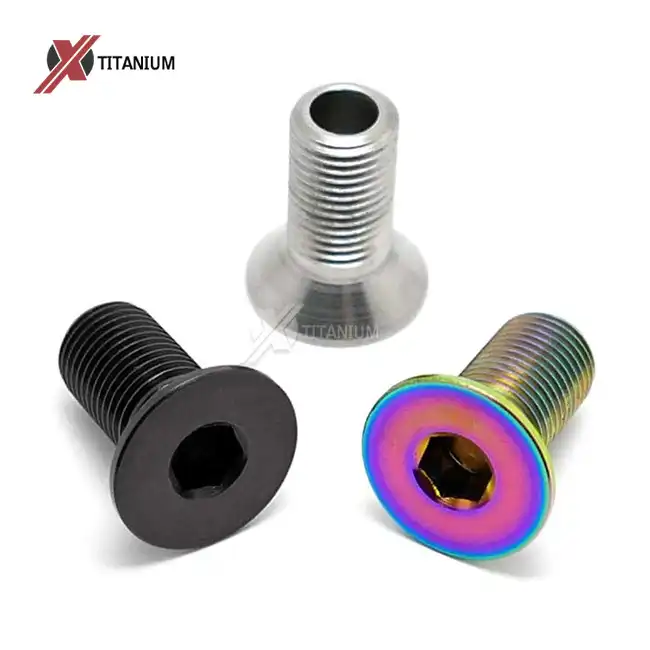
CNC-machined bolts with a 0.05 mm dimensional tolerance and a 6g/6H thread class make sure that the torque behaves consistently and that the bolts seat properly in all chassis positions. The way the surface is treated affects both function and how the company looks. Chuanglian offers cleaning, anodizing (in gold, blue, green, purple, black, and rainbow), and nitriding as finishes. Nitriding makes the thread surface harder, which measurable lowers the risk of galling.
Sampling, MOQ, and OEM Flexibility
Sample speed is important for brands that are adding to or building up their product lines. Chuanglian can send you a sample within 7–15 days and can work with unique models (OEM/ODM). The smallest amount of product that can be ordered is 500 pieces, which is a good starting point for new products. All production runs follow the rules for ISO 9001 quality management, and you can get inspection records from SGS or BV if you ask for them.
Maintaining and Optimizing Gr5 Titanium Bolts in Motorcycle Racing
Torque Specifications and Anti-Seize Protocol
Titanium can galle, which means it can cold-weld under friction, so always use a copper or ceramic anti-seize compound before installing something. If you use anti-seize, lower the standard dry torque by 10–15% so that you don't over-tension the part. To give you an idea, M6 bolts used in fairings usually need 4–6 Nm, and brake caliper bolts need to meet OEM chassis specs. A accurate torque wrench should always be used.
Inspection Schedule and Fatigue Monitoring
After each race, look at each bolt to see if the threads have changed shape, the heads have become round, or the surfaces have cracked. If the hardness drops below 34 HRC on the Rockwell scale, it means that the material may be wearing out and needs to be replaced. Nitrided bolts have a harder surface, which means they don't need to be inspected as often, but they still need to be checked regularly in places with a lot of vibration, like engine mounts and swingarm pivots.
Environmental Storage and Pre-Season Preparation
Keep titanium screws in dry, covered containers to keep the surface from getting dirty before installing them. Before every race season, check all of the important bolts, especially the ones that will be exposed to exhaust heat or brake dust, and replace any that show color changes that aren't caused by normal anodizing. A organized replacement cycle lowers the chance of failure during the race and makes sure that your builds stay the same from one competition round to the next.
Conclusion
Gr5 titanium gives racing applications the mechanical performance, weight advantage, and resistance to corrosion they need. Ti-6Al-4V fasteners can hold up to 1,300 MPa of tension in heat-treated conditions, have a density 45% lower than steel , and can withstand temperatures up to 400°C. This means they can be used in every load-bearing position on a race motorcycle, provided the material grade meets the original fastener's strength requirement.
Installing them correctly with high-pressure grease or Blue Loctite rather than anti-seize , reducing torque by 10–15% from steel specs , and checking them regularly will keep them working for full race rounds. Before deciding to buy OEM-grade titanium screws, brands should make sure they are certified according to ASTM B348 and have rolled threads and precise machining . Gr5 titanium motorcycle bolts are the SKU where this combination of material specification, process control, and installation discipline matters most.
FAQ
Can I torque Gr5 bolts to the same settings as the steel bolts I am replacing?
Generally yes for Grade 8.8 equivalents. However, because titanium is prone to galling, apply copper or ceramic anti-seize paste and reduce dry torque by 10–15% unless the manual specifies a wet torque value.
What is galling, and how do Gr5 bolts manage it?
Galling is a cold-welding phenomenon where thread surfaces seize under friction. Gr5 is harder than pure titanium (Gr2), which reduces susceptibility. Nitriding treatment and anti-seize compound together effectively eliminate galling risk in professional installations.
Are these bolts suitable for brake calipers and suspension hardware?
Yes. With tensile strength reaching 950–1,300 MPa, Gr5 titanium meets or exceeds Grade 10.9 steel specifications. MotoGP and WSBK teams use Ti-6Al-4V fasteners in these exact positions as standard practice.
How can I verify I am receiving Gr5 and not Gr2?
Request the mill test certificate showing Ti-6Al-4V composition per ASTM B348. A hardness test confirming 36–38 HRC (Rockwell C) provides additional confirmation. If a magnet adheres to the bolt, it is not titanium.
What are typical MOQ and lead times for OEM orders?
Chuanglian accepts orders from 500 pieces per specification. Standard production lead time runs 15–25 business days after drawing confirmation, with sample delivery in 7–15 days.
Request a Quote for Gr5 Titanium Motorcycle Bolts — Chuanglian
Precision titanium screws from Chuanglian have been sold to names in North America, Europe, and Japan for more than ten years. We are a reliable company that sells Gr5 titanium motorcycle bolts. We also make CNC-machined Ti-6Al-4V hardware that is fully certified by ASTM. Our minimum order quantity (MOQ) is only 500 pieces, and we can make OEM/ODM modifications. To get samples and prices, email our team at info@cltifastener.com or djy6580@aliyun.com right now.
References
1. ASM International. Titanium: A Technical Guide. 2nd ed. ASM International, 2000.
2. Boyer, R., Welsch, G., & Collings, E. W. Materials Properties Handbook: Titanium Alloys. ASM International, 1994.
3. ASTM International. ASTM B348: Standard Specification for Titanium and Titanium Alloy Strip, Sheet, and Plate. ASTM International, 2021.
4. Wanhill, R. J. H. "Fatigue of Fasteners in Aircraft Structures." International Journal of Fatigue, vol. 25, no. 9–11, 2003.
5. Leyens, C., & Peters, M. (Eds.). Titanium and Titanium Alloys: Fundamentals and Applications. Wiley-VCH, 2003.
6. Froes, F. H. Titanium: Physical Metallurgy, Processing, and Applications. ASM International, 2015.
Learn about our latest products and discounts through SMS or email