- English
- French
- German
- Portuguese
- Spanish
- Russian
- Japanese
- Korean
- Arabic
- Greek
- German
- Turkish
- Italian
- Danish
- Romanian
- Indonesian
- Czech
- Afrikaans
- Swedish
- Polish
- Basque
- Catalan
- Esperanto
- Hindi
- Lao
- Albanian
- Amharic
- Armenian
- Azerbaijani
- Belarusian
- Bengali
- Bosnian
- Bulgarian
- Cebuano
- Chichewa
- Corsican
- Croatian
- Dutch
- Estonian
- Filipino
- Finnish
- Frisian
- Galician
- Georgian
- Gujarati
- Haitian
- Hausa
- Hawaiian
- Hebrew
- Hmong
- Hungarian
- Icelandic
- Igbo
- Javanese
- Kannada
- Kazakh
- Khmer
- Kurdish
- Kyrgyz
- Latin
- Latvian
- Lithuanian
- Luxembou..
- Macedonian
- Malagasy
- Malay
- Malayalam
- Maltese
- Maori
- Marathi
- Mongolian
- Burmese
- Nepali
- Norwegian
- Pashto
- Persian
- Punjabi
- Serbian
- Sesotho
- Sinhala
- Slovak
- Slovenian
- Somali
- Samoan
- Scots Gaelic
- Shona
- Sindhi
- Sundanese
- Swahili
- Tajik
- Tamil
- Telugu
- Thai
- Ukrainian
- Urdu
- Uzbek
- Vietnamese
- Welsh
- Xhosa
- Yiddish
- Yoruba
- Zulu
What sizes are included in Gr5 titanium bolt kits for motorcycles?
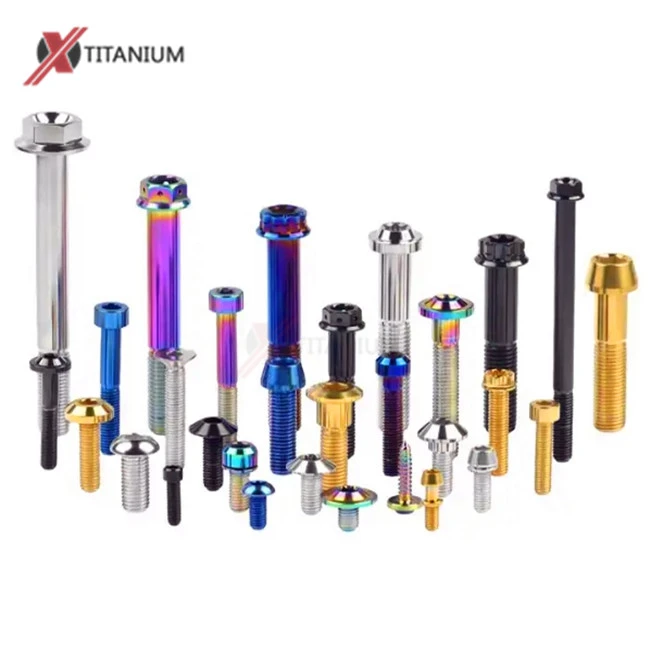
Gr5 titanium bolt kits for motorcycle applications typically include metric thread sizes ranging from M5 to M12, with M6, M8, and M10 being the most common across major motorcycle platforms. Each kit is assembled to match specific bike models—covering brake calipers, engine casings, suspension linkages, frame mounts, and exhaust studs. Thread pitch, shank length, and head type vary by position. A full-bike kit from a quality manufacturer like Chuanglian contains 50 to 200 pieces per set, all CNC machined from Ti-6Al-4V alloy, delivering roughly 45% weight reduction over steel equivalents.
Overview of Gr5 Titanium Bolt Kits for Motorcycles
Ti-6Al-4V—better known as Grade 5 titanium—is an alpha-beta alloy containing 6% aluminum and 4% vanadium. Its density sits at approximately 4.43 g/cm³, compared to steel's 7.85 g/cm³. That physical difference translates directly into lighter motorcycles without sacrificing structural integrity.
Material Properties That Matter
Gr5 titanium delivers an Ultimate Tensile Strength of 950–1,050 MPa and a Yield Strength of roughly 880 MPa. These figures are comparable to 10.9-grade steel while weighing nearly half as much. The alloy also forms a self-repairing passive oxide layer, giving it natural resistance to road salt, chlorides, and harsh weather—conditions that corrode zinc-plated steel within a single riding season.
What a Standard Kit Contains
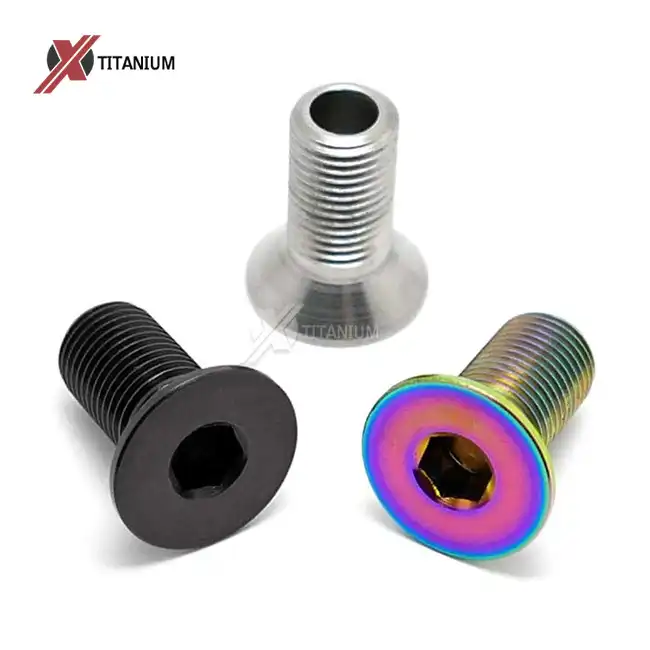
A motorcycle titanium fastener kit typically includes hex socket cap bolts, button-head bolts, flange bolts, hex nuts, and washers. Chuanglian's kits range from 10 to 200 pieces depending on vehicle coverage. Surface treatments include polishing, anodizing, and nitriding, with color options spanning Ti natural, gold, blue, green, purple, black, and rainbow. Each kit is packaged in a divided tray with labeled compartments and an installation guide—details that matter to eCommerce brands building premium product listings.
Why B2B Buyers Specify Gr5?
Procurement professionals in the motorcycle aftermarket specify Gr5 over pure Grade 2 titanium because of its superior fatigue resistance and higher load capacity. When threads are roll-formed rather than cut, the grain structure remains intact, which significantly extends service life in high-vibration environments like engine mounts and exhaust manifold studs. Gr5 titanium bolt kits for motorcycle are the SKU where this combination of material grade and thread process matters most.
Common Sizes Included in Gr5 Titanium Bolt Kits for Motorcycles
Size accuracy is the single most frequent complaint in motorcycle bolt kit reviews. A mismatched thread pitch or a bolt that's 5mm too short creates negative reviews and costly return logistics. Understanding standard sizing conventions prevents those problems before they reach your customer.
Standard Diameter and Thread Pitch
The most prevalent sizes across sportbike, cruiser, and adventure platforms are:
- M5 × 0.8 — instrument panels, fairing sub-brackets, small body covers
- M6 × 1.0 — brake calipers, footpeg brackets, airbox covers, fuel system mounts
- M8 × 1.25 — swingarm pivot bolts, shock linkage, exhaust clamps, engine side covers
- M10 × 1.25 or 1.5 — front fork clamps, axle pinch bolts, sprocket carrier bolts
- M12 × 1.25 or 1.5 — rear axle nuts, steering stem top nuts (model-dependent)
These represent the standard metric fastener sizes used across Honda CBR, Yamaha R1, Ducati Panigale, Kawasaki ZX, and Suzuki GSX-R platforms. Custom kits for specific models will adjust counts and lengths by position.
Length Ranges by Application Zone
Bolt length requirements differ by location on the bike. Engine casing bolts commonly run 20–35mm, while fairing mounts may only need 10–16mm. Suspension-area fasteners often require 40–60mm lengths. Getting these right per vehicle model is what separates a professional kit from a generic assortment.
Model-Specific Customization
Chuanglian supports new-model kit development from technical drawings or OEM bolt lists. Once a bill of materials is confirmed, CNC machining tolerances are held to 6g thread class, verified with Go/No-Go gauges. This level of dimensional precision is what eCommerce sellers need to eliminate fitment complaints on Amazon and eBay listings. Gr5 titanium bolt kits for motorcycle are the SKU where this development support and precision control matter most.
Comparing Gr5 Titanium Bolt Sizes with Other Materials
Check out how titanium stacks up against other materials that your customers might ask about before you decide on one for your kit line.
Gr5 Titanium vs. Stainless Steel
Steel (A2/A4 grade) doesn't rust and is pretty light (7.9 g/cm³), but it's almost twice as dense as Gr5. A titanium set of the same size might weigh between 220 and 330g, while a steel set for a whole bike might weigh between 400 and 600g. If someone wants to buy a track, they need to know the difference between floating mass and spinning mass.
Gr5 Titanium vs. Grade 8 Steel
The tensile strength of Grade 8 steel is about the same as or slightly higher than that of Grade 5. However, it rusts quickly and is much heavier without a coating. It's not expensive enough for the high-end aftermarket kits that your buyers sell for $80 to $300 at stores.
Gr5 Titanium vs. Aluminum Fasteners
Aluminum screws are lighter, but their compressive strengths are only 300 to 500 MPa. This is much less than what is needed for axle gear or brake caliper nuts. They are sometimes used for panels that look nice, but engineers and people who care about safety don't think they should be used in places that hold things together. Gr5 titanium does a great job with both looks and strength.
Procurement Considerations for Gr5 Titanium Bolt Kits
Sourcing titanium fastener kits for eCommerce resale requires more than finding a low unit price. The variables that drive customer satisfaction—and repeat purchases—live in the specification details.
Specifying Orders Correctly
Every bulk order should include a complete bill of materials listing diameter, thread pitch, shank length, head type, drive style (hex socket, Torx, button), and required surface finish per piece. Ambiguous specs are the primary cause of mismatched kits. Providing a reference OEM bolt list or maintenance manual pages eliminates most fitment errors before production begins.
Here are the quality verification steps that should be standard in any responsible supply agreement:
- Chemical analysis via XRF or spectrometry to confirm Ti-6Al-4V composition per ASTM B348 Grade 5
- Dimensional inspection with CMM and Go/No-Go thread gauges to verify 6g tolerance class
- Mechanical batch testing to confirm proof load capacities meet or exceed ISO 898-1 equivalents
- Surface finish review checking for absence of burrs, tool marks, and anodizing color consistency
These steps form the backbone of a reliable QC process. Skipping any one of them increases the risk of kit defects reaching your end customers—an outcome that generates returns, negative reviews, and damaged brand equity. Gr5 titanium bolt kits for motorcycle are the SKU where this QC discipline pays off most directly.
MOQ and Lead Time Planning
Chuanglian accepts single-model kit orders from 50 to 100 sets, making it accessible for smaller eCommerce brands testing a new vehicle fitment. Standard production and delivery runs 3–5 weeks from approved sample. New model development adds 2–3 weeks for sample production and fitment verification, which aligns with the typical 5–8 week sourcing cycle for aftermarket kit launches.
Certifications to Request
Ask suppliers for material certifications traceable to mill test reports, and confirm that manufacturing follows ISO 9001 quality management procedures. For kits sold into the US and European markets, buyers often request RoHS-compliant surface coatings, particularly for anodized finishes.
Installation and Performance Implications of Different Bolt Sizes
Using the right size is only part of the equation. Installing titanium fasteners correctly protects both the bolt and the component it secures.
Torque Specifications by Size
Titanium has a lower modulus of elasticity than steel, which affects torque-to-clamp-load relationships. General guidance for Gr5 titanium without anti-seize:
- M6: 8–10 Nm
- M8: 20–25 Nm
- M10: 40–50 Nm
- M12: 65–80 Nm
Always cross-reference with the specific manufacturer's torque table. Calibrated torque wrenches are non-negotiable.
Anti-Seize Is Mandatory
Titanium is prone to galling—a form of cold welding that occurs when titanium threads contact dissimilar or identical metals under friction and pressure. Applying a copper or nickel-based anti-seize paste to all threads before installation prevents this. Skipping this step can result in seized fasteners that require destructive removal.
Performance Benefits Linked to Correct Sizing
When bolt sizes match the application zone precisely, the weight reduction is distributed across the bike's rotating and unsprung mass in the most efficient way. Replacing caliper bolts, rotor hardware, and axle pinch bolts with correctly sized M6–M10 titanium equivalents lowers rotational inertia, improving braking response and suspension sensitivity—results that riders notice and talk about on forums and review pages.
Conclusion
Gr5 titanium bolt kits for motorcycles come in a core set of metric sizes. These are M5 through M12. For most sportbikes and cruisers, the M6, M8, and M10 cover the vast majority of uses. To make sure a kit lasts or leads to warranty claims, you need to do three things: check the sizes, check the materials, and use the right amount of torque. Business-to-business buyers who are putting together kit product lines should work with a maker that does everything, from CNC machining and anodizing to the Ti-6Al-4V bar stock. This way, they can be sure of uniform quality and on-time delivery.
FAQ
Can I torque Gr5 titanium bolts to the same specs as my OEM steel bolts?
Yes, most of the time. This is because Gr5 titanium's yield strength is about the same as that of 8.8 and 10.9 grade steel. Always check the exact rating given by the manufacturer and only use a torque wrench that has been properly set up.
Why is anti-seize required for titanium bolts?
Titanium gets galls when its rings touch different kinds of metal. You need a copper or nickel anti-seize paste to stop cold welding and make it easy to take off later.
How do I confirm a bolt is genuinely Gr5 and not Grade 2?
Ask for mill certificates with heat numbers that can be linked to ASTM B348 Grade 5. The only way to be sure of something in the field is to use XRF study. It's much harder to cut Grade 5 than Grade 2.
Are titanium bolts safe for brake calipers and other critical components?
Yes, as long as you give the correct grade and size. Gr5 titanium meets or beats the mechanical needs for caliper bolts when the right torque values and anti-seize are used.
Can these kits be customized for new motorcycle models?
It is true that Chuanglian makes custom kits based on technical plans or OEM bolt lists. Before big orders are placed, samples are made and checked to make sure they fit.
Get Custom Gr5 Titanium Bolt Kits from Chuanglian
Chuanglian is a business that only makes clamps made of titanium. Its home base is in Baoji, which is known as the center of titanium production in China. We use CNC machines to make sure that our Gr5 titanium bolt kits for motorcycles are very accurate. They are then coated in seven different colors and packed in a way that makes your brand stand out. People in the US, UK, Australia, Germany, and Canada who sell replacement brands and goods online work with us. There must be at least 50 sets of each model in your order before we ship them. Get in touch with our team to talk about the colors you need, the things that will fit your car, and group pricing. We sell Gr5 titanium bolt kits. To learn more about what we can do, email us at info@cltifastener.com or djy6580@aliyun.com.
References
1. ASTM International. ASTM B348: Standard Specification for Titanium and Titanium Alloy Bar and Billet. ASTM International, 2021.
2. Boyer, R., Welsch, G., & Collings, E. W. Materials Properties Handbook: Titanium Alloys. ASM International, 1994.
3. ISO. ISO 898-1: Mechanical Properties of Fasteners Made of Carbon Steel and Alloy Steel. International Organization for Standardization, 2013.
4. Donachie, M. J. Titanium: A Technical Guide. 2nd ed. ASM International, 2000.
5. Williams, J. C., & Starke, E. A. "Progress in Structural Materials for Aerospace Systems." Acta Materialia, 2003.
6. Motorcycle Industry Council. Aftermarket Parts and Accessories Statistical Annual Report. MIC, 2022.
Learn about our latest products and discounts through SMS or email