- English
- French
- German
- Portuguese
- Spanish
- Russian
- Japanese
- Korean
- Arabic
- Greek
- German
- Turkish
- Italian
- Danish
- Romanian
- Indonesian
- Czech
- Afrikaans
- Swedish
- Polish
- Basque
- Catalan
- Esperanto
- Hindi
- Lao
- Albanian
- Amharic
- Armenian
- Azerbaijani
- Belarusian
- Bengali
- Bosnian
- Bulgarian
- Cebuano
- Chichewa
- Corsican
- Croatian
- Dutch
- Estonian
- Filipino
- Finnish
- Frisian
- Galician
- Georgian
- Gujarati
- Haitian
- Hausa
- Hawaiian
- Hebrew
- Hmong
- Hungarian
- Icelandic
- Igbo
- Javanese
- Kannada
- Kazakh
- Khmer
- Kurdish
- Kyrgyz
- Latin
- Latvian
- Lithuanian
- Luxembou..
- Macedonian
- Malagasy
- Malay
- Malayalam
- Maltese
- Maori
- Marathi
- Mongolian
- Burmese
- Nepali
- Norwegian
- Pashto
- Persian
- Punjabi
- Serbian
- Sesotho
- Sinhala
- Slovak
- Slovenian
- Somali
- Samoan
- Scots Gaelic
- Shona
- Sindhi
- Sundanese
- Swahili
- Tajik
- Tamil
- Telugu
- Thai
- Ukrainian
- Urdu
- Uzbek
- Vietnamese
- Welsh
- Xhosa
- Yiddish
- Yoruba
- Zulu
What are common signs of wear on disc brake plug bolts?
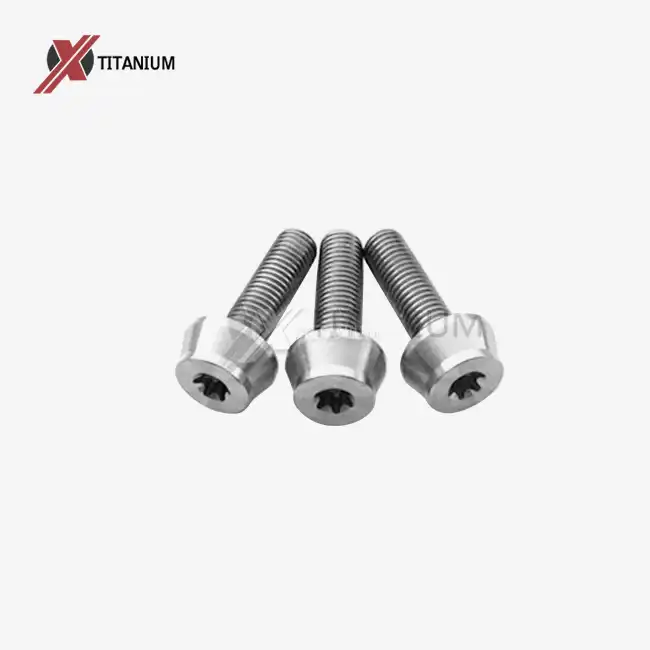
Disc brake plug bolts endure relentless mechanical stress, thermal cycling, and chemical exposure throughout their service life. Recognizing wear early prevents catastrophic brake failure. The most common signs include thread galling, surface pitting, visible corrosion, bolt deformation, torque loss, and unusual vibration during braking. When these fasteners are manufactured from Ti-6Al-4V titanium alloy—as in Chuanglian's CNC-machined titanium disc brake plug bolt—they resist corrosion far longer than steel equivalents, yet fatigue-related wear still demands systematic inspection. Understanding these indicators helps procurement engineers and maintenance teams make timely replacement decisions and maintain system integrity across demanding operating environments.
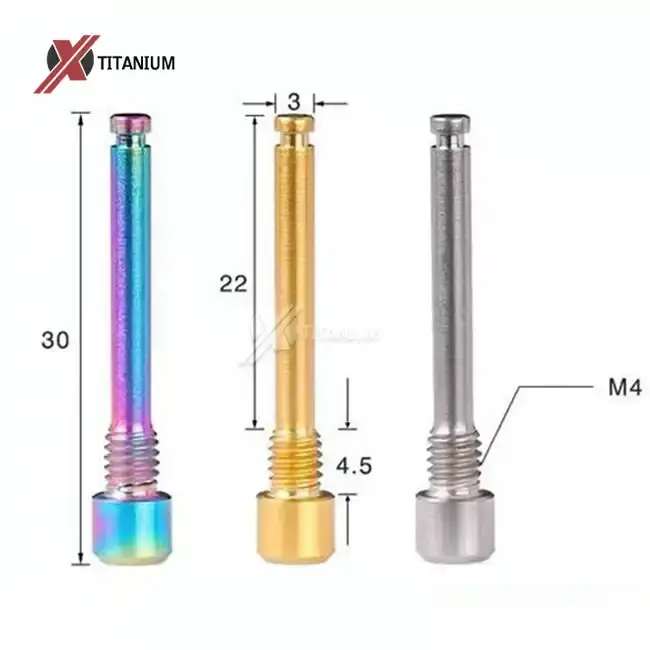
Understanding Disc Brake Plug Bolts and Wear Mechanisms
Disk brake plug bolts are special fasteners that keep important parts inside brake caliper assemblies and seal hydraulic fluid galleries. Their precise structural role is that any change in size or degradation of the material directly affects the reliability of the brakes.
Why Titanium Outperforms Steel in This Application?
Ti-6Al-4V Grade 5 titanium alloy has a tensile strength of at least 950 MPa and a density of about 4.43 g/cm³, which means it is about 40% lighter than steel versions. Its self-regenerating oxide layer makes it naturally resistant to rust, saltwater, and the chemistry of brake fluid. When threaded into aluminum brakes, steel plug nuts, on the other hand, can fail through galvanic corrosion, which speeds up wear and causes expensive seizure events. Titanium is thermally stable up to 400°C (750°F), which further stops heat from changing the shape of parts near areas with a lot of friction.
Primary Drivers of Wear
Three types of wear drivers are most important for a titanium disc brake plug bolt. Over time, micro-fatigue forms at the thread roots due to mechanical stress from repeated stopping cycles. Corrosive agents that damage surfaces are released when they are exposed to the environment, especially in marine, motorsport, and industrial settings. Installation mistakes, like over-torquing, wrong thread engagement, and not using anti-seize chemicals, speed up wear more than any working state by itself. Figuring out which driver causes a failure helps with both planning upkeep and choosing materials.
Common Signs of Wear on Titanium Disc Brake Plug Bolts
Wear can be seen and felt in two ways: operational and visual. Professionals in both procurement and repair who know about both types can make faster and more accurate decisions about replacements.
These are the most accurate signs of wear to keep an eye on:
- Thread damage and galling: Titanium is susceptible to cold welding (galling) when threaded into aluminum or dissimilar metals without anti-seize lubricant. Visible thread deformation, tearing, or binding during removal confirms galling damage. Galled threads lose reliable clamping force, creating a fluid leak risk in hydraulic brake circuits.
- Surface pitting and discoloration: Micro-pitting on the bolt shank signals localized corrosion or fretting. Discoloration beyond the expected anodized finish—particularly irregular darkening or white oxidation deposits—indicates chemical attack. PVD-coated bolts showing coating delamination suggest the substrate has experienced sustained thermal or mechanical overload.
- Bolt head deformation: Rounded hex or Torx socket profiles result from repeated removal with incorrectly sized tools or from over-torquing. A deformed drive interface makes future removal unreliable and risks damaging the caliper bore.
- Torque loss and bolt loosening: A bolt that no longer holds its specified torque (typically 2–6 Nm for small plug bolts) during routine checks has experienced thread stretching or fatigue-induced preload loss. This is a critical failure precursor requiring immediate attention.
- Visible cracks or fractures: Fatigue cracks typically initiate at thread roots under cyclical loading. Although Grade 5 titanium has excellent fatigue resistance, cracks in highly stressed configurations are irreversible and mandate replacement without exception.
These signs for a titanium disc brake plug bolt rarely show up by themselves. For example, torque loss and thread discoloration together strongly suggest galling made worse by bad installation procedures. Fixing the problem at its source, not just changing the fastener, stops it from happening again and lowers the cost of upkeep over time.
How to Inspect and Maintain Titanium Disc Brake Plug Bolts Effectively?
Systematic checking methods make things last longer and cut down on unplanned downtime. Precision-machined fasteners are used in automobile, aircraft, and marine settings. The following repair strategy applies to them.
Visual and Dimensional Inspection
Every inspection cycle should start with a full eye check in good lighting. Check for holes, galling lines, strange coatings, and thread damage. According to ISO 965, use a measured Go/No-Go thread gage to check the quality of the thread. Threads that fail gage testing should be replaced right away, no matter how they look.
Torque Verification and Installation Best Practices
Use a calibrated torque wrench to check the clamping force at regular maintenance times. You should never just rely on tactile feedback. Use an anti-seize substance based on copper or nickel during installation to keep threads from galling when they're screwed into metal caliper bodies. Medium-strength thread locker adds more resistance to vibrations without making it harder to remove in the future. Follow the manufacturer's torque recommendations very carefully. Because titanium has a lower elastic modulus than steel, over-torquing titanium screws shortens their wear life by a large amount.
Titanium Disc Brake Plug Bolts: Procurement Considerations for B2B Clients
Picking the right alloy grade is important, but picking a qualified supplier is even more important. For high-performance brake bolts to be bought, the technical, quality, and supply chain teams all have to work together to do an evaluation. Chuanglian sells CNC-machined Ti-6Al-4V disk brake plug bolts that can be fully customized by having their surfaces anodized, PVD-coated, nitrided, or polished. There are natural titanium, gold, blue, green, purple, black, and rainbow finishes to choose from, meeting the needs of a wide range of industries in terms of both function and style.
The following should be given top priority by procurement teams when assessing a maker of titanium disc brake plug bolts:
- Material traceability: Insist on spectroscopic composition certification confirming genuine Grade 5 Ti-6Al-4V. Inferior Grade 2 titanium lacks the tensile strength (≥ 950 MPa) required for braking applications.
- Dimensional compliance documentation: Thread pitch verification data (M4, M5, or custom fine-pitch) and hardness certification (30–36 HRC) should accompany every shipment.
- Surface treatment consistency: Anodized and PVD finishes must meet batch-to-batch color and adhesion consistency standards, particularly for OEM programs requiring visual uniformity.
- Quality system credentials: Suppliers operating under ISO 9001 or AS9100 frameworks provide systemic defect prevention rather than reactive inspection alone.
These requirements show the level of scrutiny that industry buyers, especially those in the aerospace, motorsport, and marine industries, use to choose a titanium fastener seller. Chuanglian has been in business for more than ten years in Baoji, which is known as China's titanium production hub. This helps B2B clients around the world maintain stable supply chains over the long term.
Troubleshooting Common Issues and When to Replace Disc Brake Plug Bolts
Diagnosing Irreversible Damage
If you see cracks, broken threads, or damage in the head of a bolt, you should throw it away and get a new one. Damage from fatigue builds up over time and can't be seen in its early stages in metal fasteners. Once cracks reach the shank or thread root, the structure will soon fail under load. When you try a fastener's torque and find that it regularly falls below the specified level, you can be sure that it has yielded and needs to be replaced.
Ti-6Al-4V bolts have significantly longer service intervals than steel alternatives in environments that are corrosive and hot. When fleet owners switch from steel to titanium fasteners in marine and racing applications, they report less maintenance needs and no damage from seizures during removal. These results support the higher cost per unit over the lifecycle study.
Conclusion
When repair teams know how their titanium disc brake plug bolt fasteners react to different materials, they can predict, find, and handle wear. The main signs of failure to look for are thread galling, pitting, torque loss, and stress cracks. Ti-6Al-4V Grade 5 titanium fasteners are resistant to corrosion and seizure, which are the two most common ways that things break. However, they need to be carefully watched for fatigue when they are loaded and unloaded over and over again. Setting up strict protocols for qualifying suppliers and regular inspection plans by procurement professionals is good for both operating safety and total cost of ownership. Material quality, being able to track it, and production accuracy are still non-negotiable selection factors.
FAQ
Q1: Does a titanium brake plug bolt require anti-seize compound?
A: Yes. Although titanium doesn't rust, it can gall when it comes into contact with aluminum threads while they are being torqued. Copper or nickel-based anti-seize is usually used to make sure that the contact is smooth and that the caliper can be removed in the future without any damage.
Q2: How does titanium bolt weight compare to OEM steel bolts?
A:Ti-6Al-4V weighs about 4.43 g/cm³, while steel weighs about 7.85 g/cm³. This means that each fastener is about 40–45% lighter. This leads to measured decreases in unsprung mass across a whole car or system using several titanium fasteners.
Q3: Is PVD coating on titanium fasteners permanent?
A: PVD covering doesn't just sit on top of paint; it connects at the molecular level. It is much more resistant to wear and tear, chemical cleaners, and UV damage than anodized aluminum finishing. The color stays the same for the whole life of the fastener.
Q4: What torque specification applies to disc brake plug bolts?
A: Always look at the written specifications from the brake caliper maker. At most, this is between 2 Nm and 6 Nm for small plug bolts.
Q5: When should a titanium plug bolt be replaced outright?
A: Always use a measured torque wrench and never guess by feel, especially when working with titanium fasteners that have a lower elastic modulus that makes over-torquing dangerous.
Partner with Chuanglian for Precision Titanium Fasteners
From confirmed Grade 5 Ti-6Al-4V with full surface treatment customization, Chuanglian designs and makes titanium disc brake plug bolts. Our quality system and production methods that can be tracked help our aircraft, marine, and motorsport customers meet their strict purchasing requirements. Get in touch with us right away to talk about custom specifications, batch certification, and pricing for large orders that are made to fit your needs. Email us at info@cltifastener.com or djy6580@aliyun.com.
References
1. ASM International. Titanium: A Technical Guide. 2nd ed. ASM International, 2000.
2. Boyer, R., Welsch, G., & Collings, E. W. Materials Properties Handbook: Titanium Alloys. ASM International, 1994.
3. Society of Automotive Engineers (SAE). SAE J429: Mechanical and Material Requirements for Externally Threaded Fasteners. SAE International, 2014.
4. ASTM International. ASTM F136: Standard Specification for Wrought Ti-6Al-4V ELI Alloy for Surgical Implant Applications. ASTM International, 2017.
5. Budynas, R. G., & Nisbett, J. K. Shigley's Mechanical Engineering Design. 10th ed. McGraw-Hill Education, 2015.
6. National Institute of Standards and Technology (NIST). Corrosion of Titanium and Titanium Alloys. NIST Technical Note, 2008.
Learn about our latest products and discounts through SMS or email