- English
- French
- German
- Portuguese
- Spanish
- Russian
- Japanese
- Korean
- Arabic
- Greek
- German
- Turkish
- Italian
- Danish
- Romanian
- Indonesian
- Czech
- Afrikaans
- Swedish
- Polish
- Basque
- Catalan
- Esperanto
- Hindi
- Lao
- Albanian
- Amharic
- Armenian
- Azerbaijani
- Belarusian
- Bengali
- Bosnian
- Bulgarian
- Cebuano
- Chichewa
- Corsican
- Croatian
- Dutch
- Estonian
- Filipino
- Finnish
- Frisian
- Galician
- Georgian
- Gujarati
- Haitian
- Hausa
- Hawaiian
- Hebrew
- Hmong
- Hungarian
- Icelandic
- Igbo
- Javanese
- Kannada
- Kazakh
- Khmer
- Kurdish
- Kyrgyz
- Latin
- Latvian
- Lithuanian
- Luxembou..
- Macedonian
- Malagasy
- Malay
- Malayalam
- Maltese
- Maori
- Marathi
- Mongolian
- Burmese
- Nepali
- Norwegian
- Pashto
- Persian
- Punjabi
- Serbian
- Sesotho
- Sinhala
- Slovak
- Slovenian
- Somali
- Samoan
- Scots Gaelic
- Shona
- Sindhi
- Sundanese
- Swahili
- Tajik
- Tamil
- Telugu
- Thai
- Ukrainian
- Urdu
- Uzbek
- Vietnamese
- Welsh
- Xhosa
- Yiddish
- Yoruba
- Zulu
Are medical screws titanium?
Yes, medical screws are indeed titanium in the majority of modern surgical applications. Medical screws manufactured from titanium alloys, particularly medical titanium rods that are machined into precise surgical components, have become the gold standard in orthopedic and spinal procedures. These titanium-based implants offer superior biocompatibility, corrosion resistance, and mechanical properties that closely match human bone characteristics, making them the preferred choice over traditional stainless steel alternatives for permanent implantation.
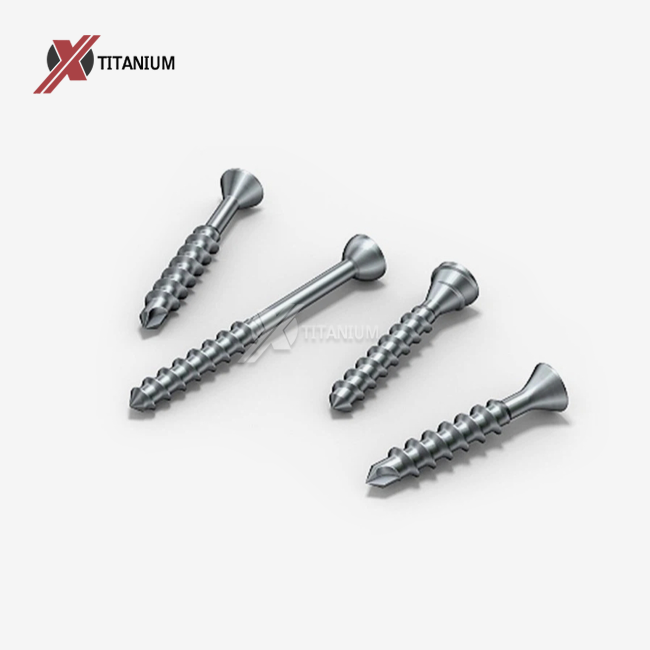
Introducing Medical Screws and Titanium as a Material
Medical titanium screws and bars speak to a progressive headway in surgical embed innovation, in a general sense changing how we approach orthopedic and spinal methods. These precision-engineered components are made essentially from titanium amalgams that have one of a kind fabric properties fundamental for effective long-term implantation in the human body.
Superior Biocompatibility and Material Properties
Titanium's uncommon biocompatibility stems from its capacity to frame a steady oxide layer when uncovered to oxygen, making a obstruction that anticipates antagonistic tissue responses. Not at all like conventional materials, titanium illustrates surprising integration with human bone tissue through a handle called osseointegration. This natural holding guarantees that inserts ended up for all time joined into the skeletal structure, giving enduring solidness and functionality.
The strength-to-weight proportion of titanium outperforms most elective materials utilized in therapeutic applications. With a thickness of roughly 4.5 g/cm³, titanium gives extraordinary mechanical quality whereas remaining essentially lighter than stainless steel partners. This characteristic decreases persistent inconvenience and minimizes push on encompassing tissues amid the recuperating process.
Corrosion Resistance and Long-term Durability
Medical situations show challenging conditions for embedded materials, with consistent presentation to real liquids containing different salts and proteins. Titanium's exceptional erosion resistance guarantees that inserts keep up their auxiliary judgment over decades of benefit. The inactive oxide layer that shapes normally on titanium surfaces gives assurance against electrochemical erosion, avoiding the discharge of metallic particles that seem trigger fiery responses.
Comparison with Traditional Stainless Steel Screws
When comparing titanium screws to conventional stainless steel options, a few basic points of interest develop. Stainless steel inserts, whereas cost-effective, show critical impediments counting higher versatile modulus, potential for nickel affectability, and expanded attractive reverberation imaging artifacts. Titanium's flexible modulus of around 110 GPa closely matches that of human bone, lessening the hazard of push protecting where inserts bear over the top stack and cause bone resorption around the embed site.
Applications and Benefits of Medical Titanium Screws and Rods
The versatility of medical titanium rods and screws has expanded their applications across multiple surgical specialties, with each application benefiting from titanium's unique combination of mechanical and biological properties. These components serve as fundamental building blocks for complex surgical procedures requiring permanent internal fixation.
Spinal Fixation and Fusion Procedures
Spinal surgery speaks to one of the most requesting applications for therapeutic titanium screws and poles. Spinal obsession strategies require inserts able of withstanding millions of cyclic loads whereas keeping up exact situating of vertebral fragments. Titanium pedicle screws and interfacing poles give the fundamental mechanical back for spinal combination, permitting bone development to happen whereas avoiding movement that seem compromise healing.
The moo flexible modulus of titanium demonstrates especially useful in spinal applications, where intemperate solidness can lead to adjoining portion malady. By more closely coordinating the mechanical properties of vertebral bone, titanium inserts decrease push concentrations and advance more common stack dispersion all through the spinal column.
Fracture Repair and Trauma Surgery
Orthopedic injury surgery depends intensely on titanium screws and poles for stabilizing complex breaks. These inserts give quick mechanical solidness whereas permitting normal bone recuperating forms to happen. The biocompatibility of titanium disposes of concerns around long-term tissue responses, making it reasonable for patients of all ages who may require decades of embed service. Titanium's radiolucency compared to stainless steel offers preferences amid post-operative imaging, permitting clearer visualization of bone mending advance without critical artifacts. This characteristic demonstrates priceless for observing break union and identifying potential complications amid the recuperation period.
Pediatric Spine Surgery Applications
Pediatric applications present unique challenges requiring implants that accommodate continued growth and development. Medical titanium rods used in pediatric spine surgery demonstrate excellent compatibility with growing bone tissue, adapting to changes in skeletal dimensions without compromising structural integrity. The corrosion resistance of titanium becomes particularly important in pediatric cases where implants may remain in place for several decades.
Medical Titanium Screws and Rods: Types and Material Comparisons
The differences of therapeutic titanium screws and bars accessible nowadays reflects the advanced understanding of fabric science and surgical prerequisites that has advanced over decades of clinical involvement. Each variation serves particular applications optimized for specific surgical scenarios and persistent populations.
Titanium Alloy Classifications and Properties
Ti-6Al-4V ELI (Review 23) speaks to the most commonly utilized titanium amalgam in therapeutic applications. The Additional Moo Interstitial assignment shows decreased oxygen, nitrogen, and carbon substance, coming about in moved forward ductility and weariness resistance compared to standard Ti-6Al-4V. This combination gives an ideal adjust of quality, biocompatibility, and machinability for complex surgical implants.
Commercially Unadulterated (CP) titanium grades 1-4 offer changing quality levels whereas keeping up amazing erosion resistance and biocompatibility. Review 4 CP titanium gives the most noteworthy quality among immaculate titanium grades, making it appropriate for applications requiring direct mechanical properties without the complexity of alloyed compositions.
Surface Treatments and Coatings
Modern medical titanium rods and screws often incorporate specialized surface treatments designed to enhance osseointegration and reduce healing times, particularly when produced by a reliable medical titanium rods OEM with advanced manufacturing and surface modification capabilities. Plasma-sprayed titanium coatings create porous surfaces that encourage bone ingrowth, while acid-etched surfaces provide micro-texturing that promotes cellular attachment and proliferation.
Hydroxyapatite coatings applied to titanium implants combine the mechanical properties of titanium with the osteoconductivity of calcium phosphate ceramics. These hybrid surfaces accelerate bone formation around implants while maintaining the long-term durability associated with titanium substrates.
Safety Considerations and Potential Complications
While titanium illustrates great biocompatibility, legitimate embed determination and surgical procedure stay basic for effective results. Uncommon cases of titanium affectability have been detailed, in spite of the fact that the rate remains altogether lower than unfavorably susceptible responses to nickel-containing stainless steel implants. Mechanical complications such as screw releasing or pole break can happen beneath extraordinary stacking conditions or in cases of postponed bone recuperating. Legitimate embed measuring and surgical arranging minimize these dangers whereas maximizing the likelihood of fruitful long-term outcomes.
Procurement Insights: Buying Medical Titanium Screws and Rods for Your Business
Procurement professionals in the medical device industry face unique challenges when sourcing medical titanium rods and screws, requiring comprehensive understanding of regulatory requirements, quality standards, and supplier capabilities. The high-value, low-volume nature of these products demands careful supplier evaluation and long-term relationship management.
Regulatory Compliance and Certification Requirements
Medical titanium inserts must comply with exacting administrative measures counting FDA 510(k) clearance in the Joined together States and CE stamping for European markets. Providers must illustrate compliance with ISO 13485 quality administration frameworks and keep up point by point documentation of fabric traceability from crude fabric sourcing through last item delivery. ASTM F136 and ASTM F67 guidelines characterize the chemical composition and mechanical properties required for therapeutic titanium amalgams and commercially unadulterated titanium separately. Acquirement experts ought to confirm provider compliance with these measures through autonomous testing and certification documentation.
Supplier Evaluation and Quality Assurance
Selecting suitable providers for restorative titanium components requires assessment of fabricating capabilities, quality frameworks, and specialized mastery. Providers ought to illustrate involvement with medical-grade titanium handling, counting specialized machining methods and surface treatment capabilities. Quality control frameworks must incorporate comprehensive testing conventions covering chemical composition, mechanical properties, and surface characteristics. Providers ought to give certificates of compliance with each shipment, counting fabric test reports and dimensional review data.
Cost Considerations and Value Analysis
While titanium inserts command premium estimating compared to stainless steel choices, the add up to taken a toll of proprietorship regularly favors titanium due to decreased amendment rates and progressed understanding results. Acquirement choices ought to consider long-term clinical benefits nearby beginning securing costs. Volume obtaining assentions can give taken a toll preferences whereas guaranteeing steady supply chain execution. In any case, the specialized nature of restorative titanium items may constrain provider choices, making relationship administration and supply chain expansion vital key considerations.
Conclusion
Medical screws are predominantly manufactured from titanium alloys due to their superior biocompatibility, mechanical properties, and long-term durability in physiological environments. Medical titanium rods serve as the foundation for these critical surgical components, offering advantages that significantly outweigh traditional alternatives. The combination of corrosion resistance, osseointegration capabilities, and mechanical compatibility with human bone tissue makes titanium the material of choice for modern surgical implants. Procurement professionals should prioritize supplier relationships that emphasize quality, regulatory compliance, and technical expertise to ensure optimal patient outcomes and supply chain reliability.
FAQ
Are all medical screws made from titanium?
While titanium represents the preferred material for most modern medical screws, not all surgical screws are manufactured from titanium. Stainless steel screws remain in use for specific applications where cost considerations outweigh performance advantages, or in temporary fixation scenarios where implant removal is planned.
What advantages do titanium screws offer over stainless steel alternatives?
Titanium screws provide superior biocompatibility, reduced magnetic resonance imaging artifacts, lower elastic modulus matching bone properties, and enhanced corrosion resistance. These advantages translate to improved patient outcomes, reduced revision rates, and better long-term implant performance.
How can procurement teams verify the quality of titanium medical screws?
Quality verification requires review of material certificates, compliance documentation with ASTM standards, and evidence of regulatory approvals. Suppliers should provide detailed material test reports, dimensional inspection data, and traceability documentation for each production lot.
What factors influence the pricing of medical titanium screws and rods?
Pricing factors include raw material costs, manufacturing complexity, surface treatment requirements, regulatory compliance costs, and order volume. The specialized nature of medical titanium processing and stringent quality requirements contribute to premium pricing compared to standard industrial components.
Partner with Chuanglian for Premium Medical Titanium Solutions
Chuanglian stands as your trusted medical titanium rods manufacturer, delivering precision-engineered components that meet the demanding requirements of modern surgical applications. Our comprehensive quality control systems ensure consistent material properties and dimensional accuracy, backed by decades of experience in titanium processing and medical device manufacturing. Contact our technical team at info@cltifastener.com or djy6580@aliyun.com to discuss your specific requirements and discover how our advanced manufacturing capabilities can support your medical device development initiatives.
References
1. American Society for Testing and Materials. "Standard Specification for Wrought Titanium-6Aluminum-4Vanadium ELI Alloy for Surgical Implant Applications." ASTM International, West Conshohocken, PA.
2. Brunette, D.M., Tengvall, P., Textor, M., and Thomsen, P. "Titanium in Medicine: Material Science, Surface Science, Engineering, Biological Responses and Medical Applications." Springer-Verlag, Berlin Heidelberg.
3. International Organization for Standardization. "Implants for Surgery - Metallic Materials - Part 3: Wrought Titanium 6-Aluminium 4-Vanadium Alloy." ISO 5832-3:2021.
4. Niinomi, M. "Mechanical Biocompatibilities of Titanium Alloys for Biomedical Applications." Journal of the Mechanical Behavior of Biomedical Materials, Volume 1, Issue 1.
5. Rack, H.J. and Qazi, J.I. "Titanium Alloys for Biomedical Applications." Materials Science and Engineering: C, Volume 26, Issues 6-7.
6. Williams, D.F. "Titanium for Medical Applications." Titanium in Medicine: Material Science, Surface Science, Engineering, Biological Responses and Medical Applications, Springer-Verlag.
Learn about our latest products and discounts through SMS or email