- English
- French
- German
- Portuguese
- Spanish
- Russian
- Japanese
- Korean
- Arabic
- Greek
- German
- Turkish
- Italian
- Danish
- Romanian
- Indonesian
- Czech
- Afrikaans
- Swedish
- Polish
- Basque
- Catalan
- Esperanto
- Hindi
- Lao
- Albanian
- Amharic
- Armenian
- Azerbaijani
- Belarusian
- Bengali
- Bosnian
- Bulgarian
- Cebuano
- Chichewa
- Corsican
- Croatian
- Dutch
- Estonian
- Filipino
- Finnish
- Frisian
- Galician
- Georgian
- Gujarati
- Haitian
- Hausa
- Hawaiian
- Hebrew
- Hmong
- Hungarian
- Icelandic
- Igbo
- Javanese
- Kannada
- Kazakh
- Khmer
- Kurdish
- Kyrgyz
- Latin
- Latvian
- Lithuanian
- Luxembou..
- Macedonian
- Malagasy
- Malay
- Malayalam
- Maltese
- Maori
- Marathi
- Mongolian
- Burmese
- Nepali
- Norwegian
- Pashto
- Persian
- Punjabi
- Serbian
- Sesotho
- Sinhala
- Slovak
- Slovenian
- Somali
- Samoan
- Scots Gaelic
- Shona
- Sindhi
- Sundanese
- Swahili
- Tajik
- Tamil
- Telugu
- Thai
- Ukrainian
- Urdu
- Uzbek
- Vietnamese
- Welsh
- Xhosa
- Yiddish
- Yoruba
- Zulu
Is titanium good for springs?
The unique mix of high strength, low weight, and better corrosion protection makes titanium a great material for spring uses. Titanium spring washers are a great example of these benefits because they are very flexible and have a yield strength of about 880 MPa for Grade 5 titanium metal. Due to its high resistance to fatigue and ability to keep its spring properties at temperatures ranging from -250°C to 400°C, titanium is the best material for demanding spring uses where other materials don't work consistently.
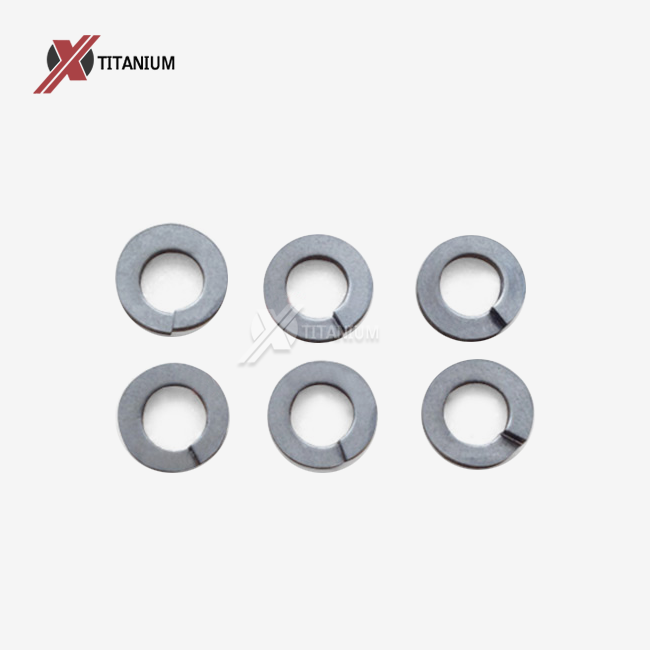
Understanding Titanium Spring Washers: Properties and Benefits
Titanium spring washers are the peak of technical excellence in fastening technology. They combine the natural benefits of titanium with specific spring design principles to make a strong and reliable product. Titanium has amazing qualities that make these parts work better than regular spring washer materials in almost every way that can be measured.
Material Properties That Define Excellence
The success of titanium spring washers is based on the unique properties of titanium itself. Titanium has a density of only 4.51 g/cm³, which means it is about 45% lighter than steel versions while still having better tensile qualities. The 113 GPa elastic stiffness makes sure that the spring behavior is perfect, so these washers can be compressed and then recovered from loads that would permanently damage less durable materials.
Titanium doesn't rust because it can make a protected oxide layer that grows back when it gets broken. This inactive layer protects against chloride attack, which makes titanium spring washers very useful in naval settings where stainless steel parts rust in pits and cracks. The material is very resistant to acids, alkalis, and oxidizing conditions, which fixes some of the most common problems that happen with traditional binding systems.
Enhanced Performance Characteristics
Due to their longer wear life, titanium spring washers directly lead to lower maintenance costs and higher system efficiency. Test results show that Grade 5 titanium keeps its spring qualities after millions of load cycles, which is a lot longer than what similar steel washers can handle. This amazing resistance to fatigue is especially useful in high-vibration situations, like in airplane engines and naval power systems.
Another important benefit of titanium spring washers is that they don't change much with temperature. Titanium keeps its mechanical properties even at very high and very low temperatures, while steel washers lose a lot of their properties at high temps. This thermal stability makes sure that the clamping force stays the same in situations where the temperature changes, which stops the joint from relaxing, which is a frequent cause of fastener failure.
Comparing Titanium Spring Washers with Alternatives
When choosing a material for spring washers, you need to carefully think about how it will work, how much it will cost, and what the purpose needs. While titanium spring washers are more expensive than other materials, they offer unbeatable value in difficult situations where other materials fail.
Performance Comparison with Steel Alternatives
While stainless steel 316 washers are pretty resistant to rust in mild environments, they crack easily when used in sea settings because of chloride. Stainless steel can pit in still seawater, which can cause problems with responsibility for important parts. While carbon steel washers are strong enough and don't cost much, they need protection coatings that wear off over time, allowing catastrophic rust to happen.
With titanium spring washers, these ways of failing are completely eliminated. Their natural resistance to corrosion means they will work reliably even without protective coverings or upkeep. Titanium's non-magnetic qualities also make it useful in certain situations where metal materials would damage sensitive equipment or magnetic fields.
Cost-Benefit Analysis for Industrial Applications
Even though titanium washers cost more at first, they save money in the long run because they don't need to be serviced as often and don't break down early. When used overseas, repairing broken steel washers often costs more than the value of the original part when you factor in the costs of platform downtime and staff deployment. Titanium spring washers get rid of the need for these replacement processes, so they last for decades without any repairs.
Titanium screws are useful in situations where weight is important because they save weight. Aerospace makers say that removing one pound of weight from an airplane part saves about $1,000 in fuel costs over the life of the plane. This means that titanium washers are a good investment, even though they cost more to make.
Application Areas and Installation of Titanium Spring Washers
Many different types of businesses use titanium spring screws when regular fastening methods don't work well enough. Because they have a special mix of qualities, they are essential in places where there are corrosive conditions, high temperatures, or strict weight limits.
Aerospace and Defense Applications
In flight, titanium spring washers keep important parts in place in jet engines, where they have to be able to handle temperatures of more than 500°C and still keep their binding force. The nuts keep the fasteners from coming loose in places with a lot of shaking, and they also help reach weight loss goals. Titanium is used in military uses because it is not magnetic. It is used in electronic weapons systems and naval ships to reduce magnetic signatures.
Marine and Offshore Engineering
Spring cleaners may have to work in the toughest conditions when they are used underwater. Titanium spring washers keep their properties in pressure tanks deep in the ocean and cars that are controlled from afar, where a broken part could cause the whole system to fail. These cleaners are used in high-pressure pump systems at desalination plants, where chloride levels would quickly destroy other materials.
Chemical Processing and Industrial Equipment
To keep the seals on reactor tanks and heat exchangers that are exposed to harsh chemicals intact, chemical processing equipment depends on titanium spring washers. Because the washers are resistant to acids and alkalis, they can be used reliably in chlor-alkali plants and on medicinal equipment that could become contaminated by corroded bolts, which could lower the quality of the products.
Proper Installation Techniques
To put titanium spring washers correctly, you need to pay attention to certain properties of titanium materials. Because titanium tends to blister when it is being installed, molybdenum disulfide chemicals must be used to keep it from sticking. Controlled torque application keeps the spring from being over-compressed and makes sure there is enough loading for the spring to work properly.
Procurement Guide for Titanium Spring Washers
To get titanium spring washers, you need to work with makers who know how to process titanium and make sure the quality of their products. Because titanium metallurgy is so complicated and spring washer uses are so important, suppliers must go through strict screening and approval processes.
Supplier Qualification Criteria
Suppliers who are qualified must show that they follow aircraft standards like AS9100 and medical device standards like ISO 13485. Certifications for materials should include full chemistry analysis, proof of mechanical properties, and paperwork that shows how finished parts can be tracked back to lots of raw materials. With CNC cutting and special titanium tools, you can be sure that the dimensions and surface finish meet your needs.
Customization and Surface Treatment Options
Modern production of titanium spring washers can suit a wide range of customization needs. There are different grades of titanium, such as fully pure titanium, which is the most resistant to rust, and Grade 5 titanium alloy, which is stronger for certain uses. Surface treatments like anodizing protect against rust even more and allow color coding to make it easier to find parts in an assembly. Nitriding processes make the surface harder for uses that need to be resistant to wear.
Quality Assurance and Testing Requirements
Titanium spring washers that are going to be used in important situations go through a lot of tests, such as checking their dimensions, characterizing their load-deflection, and doing a mechanical analysis. Testing for fatigue confirms how well a spring works under repeated loading conditions that are similar to those found in real-world business situations. Non-destructive testing can find flaws inside the washer that could make it less reliable.
Why Titanium Spring Washers Are the Rational Choice for B2B Clients?
Beyond just comparing the properties of different materials, the business case for titanium spring washers takes into account factors like total cost of ownership, risk reduction, and operating effectiveness. More and more B2B clients see titanium washers as smart investments that pay off in the long run by making systems more reliable and lowering their costs over their entire life.
Documented Performance Advantages
Case studies from the business world show that titanium spring washers work better in tough situations. Offshore platform owners say that bolt failures have stopped since they switched from stainless steel washers to titanium washers in seawater service. Aerospace companies say that integrating titanium parts into fixing systems cuts weight by more than 30%.
Return on Investment Calculations
The extended service life of titanium washers provides compelling return on investment in maintenance-intensive applications. Chemical processing facilities figure that titanium washer installations pay for themselves in two years because they don't need to be replaced as often and have less downtime. Because titanium parts work in a predictable way, condition-based repair methods can be used to make operations run more smoothly.
Future Technology Trends
Additive manufacturing technologies are making it easier to create titanium spring washers with complicated shapes and built-in features that were not possible with traditional machining. New titanium alloys that are being made offer even higher strengths-to-weight ratios while keeping the corrosion resistance that makes titanium so useful in harsh settings.
Conclusion
Titanium spring washers are the best option for harsh industrial settings because of their exceptional suitability for spring applications, and high-quality titanium spring washer OEM products ensure consistent performance, durability, and reliability in demanding environments. Their design is very light, they don't rust, and they have a long wear life. This makes them resistant to major failure modes that affect other spring washer materials. Even though they cost more at first, titanium washers are an excellent purchase because they last longer, need less upkeep, and don't break down as quickly as steel washers do in corrosive or high-stress situations.
FAQ
Can titanium spring washers replace stainless steel washers in existing assemblies?
Titanium spring washers can be used instead of stainless steel washers in most situations, but engineers need to take titanium's lower elastic modulus into account when they figure out how it will bend. Because it is less stiff, the width of the washers may need to be changed to get the same spring force. But the better resistance to rust and wear life usually make up for these minor design issues.
What grade of titanium provides optimal spring performance?
Because it has a higher yield strength and better elastic qualities, Grade 5 titanium alloy (Ti-6Al-4V) performs better as a spring than commercially pure grades. This alpha-beta metal keeps its springy properties even after being loaded and unloaded many times. It also resists rust very well. Grade 2 titanium isn't strong enough for challenging spring uses, and when it's under a lot of stress, it may permanently change shape.
Do titanium spring washers require special installation procedures?
Titanium spring screws need to be carefully put in place to avoid galling, which happens a lot with titanium materials. Thread damage can be avoided by using molybdenum disulfide solutions to lubricate the threads properly and applying the pressure in a controlled way. Installation staff should be taught how to handle titanium in a certain way to make sure the washer works well and avoid problems related to installation.
Contact Chuanglian for Premium Titanium Spring Washer Solutions
Engineering teams and purchasing managers looking for dependable titanium spring washer suppliers will find exceptional value through Chuanglian's wide range of manufacturing capabilities. Our Baoji plant is an expert at working with Grade 5 titanium alloys. We use CNC machines to make precise cuts and offer a range of surface treatments, suchs as anodizing and nitriding. With over ten years of titanium expertise and strict quality control systems, Chuanglian makes approved parts that meet standards for medical devices and aircraft. Get in touch with our expert team at info@cltifastener.com or djy6580@aliyun.com to talk about your unique needs and get quotes for custom titanium spring washer solutions.
References
1. Boyer, R.R., "An Overview on the Use of Titanium in the Aerospace Industry," Materials Science and Engineering A, Vol. 213, No. 1-2, pp. 103-114, 1996.
2. Schutz, R.W., "Corrosion of Titanium and Titanium Alloys in Marine Environments," Corrosion Engineering, Science and Technology, Vol. 40, No. 1, pp. 25-35, 2005.
3. Donachie, M.J., "Titanium: A Technical Guide, Second Edition," ASM International, Materials Park, Ohio, 2000.
4. Lutjering, G. and Williams, J.C., "Titanium: Engineering Materials and Processes," Springer-Verlag, Berlin, 2003.
5. Peters, M. and Leyens, C., "Titanium and Titanium Alloys: Fundamentals and Applications," Wiley-VCH, Weinheim, Germany, 2003.
6. American Society for Testing and Materials, "ASTM F67-13 Standard Specification for Unalloyed Titanium for Surgical Implant Applications," ASTM International, West Conshohocken, Pennsylvania, 2013.
Learn about our latest products and discounts through SMS or email