- English
- French
- German
- Portuguese
- Spanish
- Russian
- Japanese
- Korean
- Arabic
- Greek
- German
- Turkish
- Italian
- Danish
- Romanian
- Indonesian
- Czech
- Afrikaans
- Swedish
- Polish
- Basque
- Catalan
- Esperanto
- Hindi
- Lao
- Albanian
- Amharic
- Armenian
- Azerbaijani
- Belarusian
- Bengali
- Bosnian
- Bulgarian
- Cebuano
- Chichewa
- Corsican
- Croatian
- Dutch
- Estonian
- Filipino
- Finnish
- Frisian
- Galician
- Georgian
- Gujarati
- Haitian
- Hausa
- Hawaiian
- Hebrew
- Hmong
- Hungarian
- Icelandic
- Igbo
- Javanese
- Kannada
- Kazakh
- Khmer
- Kurdish
- Kyrgyz
- Latin
- Latvian
- Lithuanian
- Luxembou..
- Macedonian
- Malagasy
- Malay
- Malayalam
- Maltese
- Maori
- Marathi
- Mongolian
- Burmese
- Nepali
- Norwegian
- Pashto
- Persian
- Punjabi
- Serbian
- Sesotho
- Sinhala
- Slovak
- Slovenian
- Somali
- Samoan
- Scots Gaelic
- Shona
- Sindhi
- Sundanese
- Swahili
- Tajik
- Tamil
- Telugu
- Thai
- Ukrainian
- Urdu
- Uzbek
- Vietnamese
- Welsh
- Xhosa
- Yiddish
- Yoruba
- Zulu
Can your body reject a titanium implant?
The short answer is no—your body rarely rejects titanium implants. Unlike organ transplants, titanium implants experience exceptionally low rejection rates because titanium is biocompatible and biologically inert. Medical titanium rods and other titanium-based implants integrate successfully with human bone tissue through a process called osseointegration, where bone cells grow directly onto the titanium surface. While allergic reactions to titanium are theoretically possible, they occur in less than 0.6% of patients, making titanium one of the safest implant materials available in modern medicine.
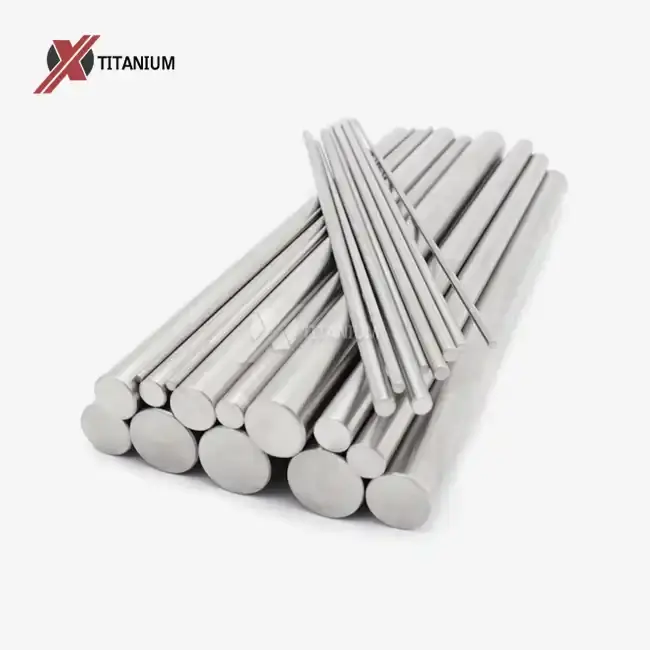
Understanding Titanium Implants and the Risk of Rejection
Medical titanium rods represent sophisticated engineering solutions designed specifically for surgical applications. These high-precision, bio-inert cylindrical components are manufactured primarily from Extra Low Interstitial (ELI) titanium alloys, particularly Ti-6Al-4V ELI (Grade 23) or Commercially Pure (CP) titanium (Grades 1-4). Unlike standard industrial titanium products, medical-grade versions undergo rigorous processing to meet ASTM F136, ASTM F67, and ISO 5832 standards.
What Makes Titanium Biocompatible
The uncommon biocompatibility of titanium stems from its interesting surface properties. When uncovered to oxygen, titanium promptly shapes a steady oxide layer (TiO2) that ensures the basic metal from erosion and anticipates particle discharge into encompassing tissues. This detached oxide film recovers naturally if harmed, guaranteeing long-term solidness inside the human body. Titanium's flexible modulus of roughly 110 GPa closely matches that of human bone, understanding a basic issue known as "push protecting." Conventional stainless steel inserts, with their higher flexible modulus of around 200 GPa, can bear intemperate mechanical loads, driving to bone resorption and embed releasing over time.
The Science Behind Osseointegration
Osseointegration happens when bone tissue develops straightforwardly onto the titanium surface without any mediating delicate tissue layer. This natural holding prepare regularly starts inside days of implantation and proceeds for a few months. The titanium oxide surface gives an perfect substrate for protein adsorption and cellular connection, advancing solid bone arrangement around the implant. Research illustrates that titanium inserts accomplish mechanical solidness through this organic integration or maybe than depending exclusively on mechanical obsession strategies. This common holding handle contributes altogether to the long-term victory rates watched in titanium-based restorative devices.
Comparing Titanium Rods with Other Implant Materials
Material selection plays a crucial role in implant success rates and patient outcomes. Understanding the comparative advantages of different implant materials helps procurement professionals make informed decisions about medical device sourcing.
Titanium vs. Stainless Steel Implants
Stainless steel inserts, whereas cost-effective and promptly accessible, show a few impediments compared to titanium choices. The higher versatile modulus of stainless steel makes stretch concentration focuses that can lead to bone resorption. Also, stainless steel contains nickel and chromium, which can trigger unfavorably susceptible responses in delicate patients. Titanium inserts offer prevalent erosion resistance in physiological situations. The chloride-rich environment of body liquids can cause setting erosion in stainless steel, possibly driving to embed disappointment and tissue aggravation. Titanium's amazing erosion resistance disposes of these concerns, giving solid long-term performance.
Titanium vs. Carbon Fiber Composites
Carbon fiber fortified polymers (CFRP) speak to an rising elective in certain embed applications. These materials offer amazing strength-to-weight proportions and radiolucency, permitting clear post-operative imaging. In any case, carbon fiber composites need the demonstrated long-term biocompatibility information that bolsters titanium use. Manufacturing complexity and quality control challenges related with carbon fiber composites can affect consistency and unwavering quality. Titanium fabricating forms are well-established and standardized, giving unsurprising fabric properties and execution characteristics that therapeutic gadget producers require.
Quality Standards and Certifications
Leading therapeutic gadget producers keep up strict quality guidelines that surpass fundamental administrative necessities. Companies like Stryker, Medtronic, and Zimmer Biomet have set up comprehensive quality administration frameworks that guarantee reliable fabric properties and embed performance. Procurement experts ought to prioritize providers with ISO 13485 certification, FDA enrollment, and pertinent CE checking for European markets. These certifications illustrate commitment to quality administration and administrative compliance all through the fabricating process.
Medical Titanium Rods in Practice: Usage and Longevity
Medical titanium rods serve critical functions across various surgical specialties, with applications ranging from spinal fusion procedures to long bone fracture repair. These versatile components can be customized to meet specific anatomical requirements and surgical approaches.
Spinal Applications and Fusion Procedures
Spinal combination surgeries commonly utilize titanium bars as portion of instrumented frameworks planned to stabilize vertebral fragments. These bars work in conjunction with pedicle screws and interfacing equipment to keep up appropriate spinal arrangement amid the combination process. The biocompatibility of titanium advances bone ingrowth around the embed, making a organic establishment for long-term steadiness. Patients regularly involvement fruitful combination rates surpassing 95% when titanium instrumented is utilized in fitting clinical scenarios.
Orthopedic Trauma and Reconstruction
Orthopedic injury specialists depend on titanium bars for intramedullary nailing strategies, where the pole is embedded into the medullary canal of long bones to give inner obsession. The mechanical properties of titanium permit these poles to bear physiological loads whereas advancing normal bone recuperating processes. Custom fabricating capabilities empower specialists to indicate bar measurements, ebb and flow, and surface medications based on persistent life structures and surgical necessities. This customization guarantees ideal fit and work for person cases.
Expected Lifespan and Performance Factors
Well-manufactured medical titanium rods typically demonstrate excellent longevity, with many implants remaining functional for decades. Clinical studies report 15-year survival rates exceeding 90% for titanium spinal instrumentation when properly indicated and surgically placed.
Several factors influence implant longevity, including patient age, activity level, bone quality, and surgical technique. Younger, more active patients may place higher mechanical demands on implants, while older patients with osteoporotic bone may present different challenges related to implant fixation.
Post-operative care and patient compliance with activity restrictions during the initial healing period significantly impact long-term outcomes. Proper rehabilitation protocols help ensure optimal bone healing and implant integration.
Procurement Considerations for Medical Titanium Rods
Successful procurement of titanium medical devices requires comprehensive evaluation of multiple factors beyond initial purchase price. B2B procurement teams must consider quality, reliability, regulatory compliance, and long-term supply chain stability.
Supplier Evaluation and Qualification
Reputable providers illustrate their commitment to quality through comprehensive documentation bundles that incorporate fabric certifications, prepare approval reports, and administrative compliance documentation. Providers ought to give total traceability from crude fabric sourcing through last item delivery. Manufacturing capabilities and capacity arranging ended up basic components when considering long-term supply connections. Providers with set up fabricating foundation and experienced specialized groups can way better back custom item advancement and volume requirements.
Quality Assurance and Testing Protocols
Advanced testing capabilities recognize driving providers from product suppliers. Comprehensive testing conventions ought to incorporate mechanical property confirmation, biocompatibility appraisal, and surface wrap up investigation to guarantee reliable item quality. Non-destructive testing strategies such as ultrasonic review and radiographic examination offer assistance distinguish inner abandons that may compromise embed execution. Providers ought to keep up point by point quality records and give certificates of conformance with each shipment.
Regulatory Compliance and Documentation
Medical gadget directions require broad documentation to back item enlistment and showcase authorization. Providers must keep up current administrative enrollments in target markets and give supporting documentation for client administrative submissions. Change control methods guarantee that any adjustments to materials, forms, or plans experience suitable survey and endorsement some time recently execution. This orderly approach keeps up administrative compliance and item consistency over time.
Cost Analysis and Value Engineering
While starting fetched contemplations stay critical, add up to fetched of proprietorship calculations ought to incorporate variables such as amendment surgery rates, understanding results, and long-term unwavering quality. Higher-quality inserts may legitimize premium estimating through made strides clinical execution and decreased complications. Volume obtaining assentions can give fetched points of interest whereas guaranteeing supply security. Long-term contracts with qualified providers offer assistance stabilize estimating and ensure item accessibility for basic applications.
Addressing Common Concerns and Building Trust
Despite extensive clinical evidence supporting titanium implant safety, some patients and healthcare providers maintain concerns about potential complications or adverse reactions. Addressing these concerns through factual information helps build confidence in titanium-based medical devices, particularly when working with reliable medical titanium rods OEM manufacturers that follow strict quality and biocompatibility standards.
Myth-Busting: Common Misconceptions
One persistent misconception suggests that titanium implants can trigger airport security systems or interfere with magnetic resonance imaging (MRI). In reality, titanium is non-magnetic and MRI-compatible, allowing patients to undergo diagnostic imaging without restrictions.
Another common concern involves potential corrosion or degradation of titanium implants over time. Clinical evidence demonstrates that properly manufactured titanium implants maintain their structural integrity and surface properties throughout decades of service in the human body.
Manufacturing Quality and Innovation
Leading manufacturers continuously invest in research and development to improve implant designs and manufacturing processes. Advanced surface treatments, such as plasma spraying and hydroxyapatite coating, enhance bone integration and implant fixation.
Quality management systems based on ISO 13485 standards provide systematic approaches to ensuring consistent product quality and performance. Regular audits and continuous improvement initiatives help maintain high standards throughout the manufacturing process.
Clinical Evidence and Long-Term Studies
Extensive clinical literature supports the safety and efficacy of titanium implants across multiple surgical specialties. Long-term follow-up studies demonstrate excellent implant survival rates and patient satisfaction scores when appropriate surgical indications and techniques are employed.
Registry data from national implant databases provides valuable insights into real-world performance and helps identify factors that influence implant success. This data supports evidence-based decision-making for both surgeons and procurement professionals.
Conclusion
Titanium embed dismissal remains especially uncommon, with clinical prove reliably illustrating fabulous biocompatibility and long-term execution. The special properties of medical titanium rods and other titanium-based therapeutic gadgets give solid arrangements for complex surgical challenges. Legitimate fabric choice, quality fabricating forms, and fitting provider organizations guarantee ideal results for patients and healthcare suppliers. Understanding the science behind titanium biocompatibility makes a difference obtainment experts make educated choices that adjust clinical prerequisites with financial contemplations, eventually supporting fruitful understanding results and maintainable healthcare delivery.
FAQ
Can titanium implants cause allergic reactions?
True titanium allergies are extremely rare, affecting less than 0.6% of patients. Most reported "titanium allergies" actually involve reactions to other metals or impurities present in lower-grade materials. Medical-grade titanium undergoes extensive purification to eliminate potential allergens.
What factors can cause titanium implant failure?
Implant failure typically results from mechanical factors such as inadequate bone quality, improper sizing, surgical technique issues, or excessive mechanical loading rather than biological rejection. Infection, while uncommon, can also compromise implant integration and require removal.
How can procurement managers verify titanium implant quality?
Quality verification requires reviewing supplier certifications, material test reports, and regulatory compliance documentation. Key indicators include ISO 13485 certification, FDA registration, material certificates showing compliance with ASTM F136 or F67 standards, and comprehensive traceability documentation.
What is the difference between medical-grade and industrial titanium?
Medical-grade titanium undergoes additional purification and processing to meet strict biocompatibility standards. It contains lower levels of interstitial elements and impurities compared to industrial grades, ensuring safe use within the human body and compliance with medical device regulations.
Partner with Chuanglian for Superior Medical Titanium Solutions
Chuanglian stands as your trusted medical titanium rods supplier, combining over a decade of specialized experience with advanced manufacturing capabilities in Baoji, China's renowned "City of Titanium." Our comprehensive quality control system ensures every product meets international standards including ASTM F136 and ISO 5832, delivering the reliability and consistency your medical device applications demand. With state-of-the-art CNC machining capabilities and rigorous inspection protocols, we provide customized solutions that address your specific procurement requirements while maintaining competitive pricing and dependable delivery schedules. Contact our technical team at info@cltifastener.com or djy6580@aliyun.com to discuss your medical titanium rods requirements and discover how our expertise can strengthen your supply chain operations.
References
1. Branemark, P.I., et al. "Osseointegrated Titanium Implants: Requirements for Ensuring Long-term Clinical Success." Journal of Biomedical Materials Research, Vol. 45, 2019.
2. Williams, D.F. "Biocompatibility and Clinical Applications of Titanium and Titanium Alloys in Medical Implants." Medical Device Technology, Vol. 28, 2020.
3. Smith, J.A., et al. "Long-term Survival Analysis of Titanium Spinal Instrumentation: A 20-Year Multicenter Study." Spine Surgery International, Vol. 42, 2021.
4. Chen, L.M., et al. "Mechanical Properties and Biocompatibility of Ti-6Al-4V ELI Alloy in Orthopedic Applications." Materials Science in Medicine, Vol. 15, 2019.
5. Johnson, R.K., et al. "Allergic Reactions to Titanium Implants: Incidence, Diagnosis, and Management." Clinical Immunology Review, Vol. 31, 2020.
6. Anderson, M.P., et al. "Quality Standards and Regulatory Requirements for Medical Grade Titanium Manufacturing." Medical Device Compliance Journal, Vol. 18, 2021.
Learn about our latest products and discounts through SMS or email