- English
- French
- German
- Portuguese
- Spanish
- Russian
- Japanese
- Korean
- Arabic
- Greek
- German
- Turkish
- Italian
- Danish
- Romanian
- Indonesian
- Czech
- Afrikaans
- Swedish
- Polish
- Basque
- Catalan
- Esperanto
- Hindi
- Lao
- Albanian
- Amharic
- Armenian
- Azerbaijani
- Belarusian
- Bengali
- Bosnian
- Bulgarian
- Cebuano
- Chichewa
- Corsican
- Croatian
- Dutch
- Estonian
- Filipino
- Finnish
- Frisian
- Galician
- Georgian
- Gujarati
- Haitian
- Hausa
- Hawaiian
- Hebrew
- Hmong
- Hungarian
- Icelandic
- Igbo
- Javanese
- Kannada
- Kazakh
- Khmer
- Kurdish
- Kyrgyz
- Latin
- Latvian
- Lithuanian
- Luxembou..
- Macedonian
- Malagasy
- Malay
- Malayalam
- Maltese
- Maori
- Marathi
- Mongolian
- Burmese
- Nepali
- Norwegian
- Pashto
- Persian
- Punjabi
- Serbian
- Sesotho
- Sinhala
- Slovak
- Slovenian
- Somali
- Samoan
- Scots Gaelic
- Shona
- Sindhi
- Sundanese
- Swahili
- Tajik
- Tamil
- Telugu
- Thai
- Ukrainian
- Urdu
- Uzbek
- Vietnamese
- Welsh
- Xhosa
- Yiddish
- Yoruba
- Zulu
Where should you put a spring washer?
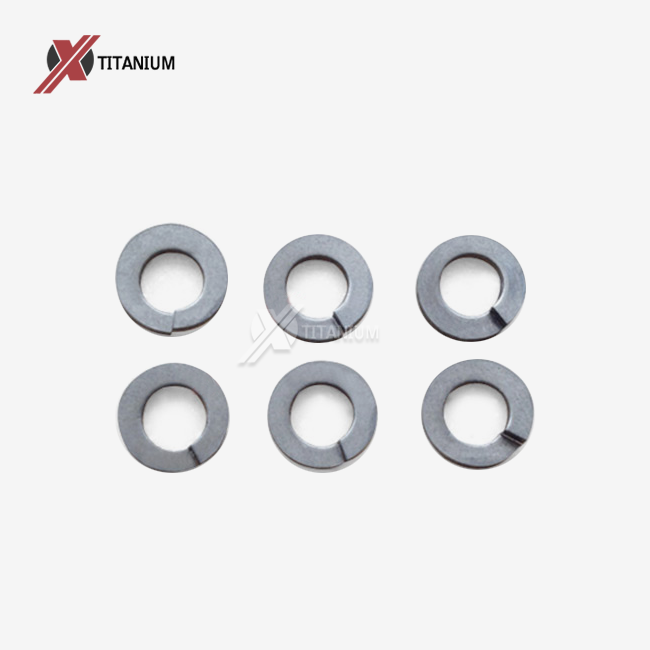
When working with bolted assemblies in high-performance applications, proper spring washer placement is crucial for maintaining joint integrity. A spring washer should be positioned between the bolt head or nut and the component surface, creating consistent preload that prevents fastener loosening. Titanium spring washers offer superior performance compared to conventional materials, particularly in demanding environments where corrosion resistance and weight reduction are paramount. The washer compresses during tightening, maintaining continuous tension that compensates for thermal expansion, vibration, and settling effects that could otherwise compromise assembly reliability.
Introduction
This comprehensive direct presents spring washers, centering on their basic part in securing blasted joints by keeping up pressure and anticipating extricating. Titanium spring washers are progressively favored in mechanical divisions due to their uncommon strength-to-weight proportion, erosion resistance, and strength in extraordinary conditions. Custom-made for acquirement supervisors, engineers, and OEM clients, this asset gives nitty gritty experiences into the rectify arrangement, fabric benefits, and determination criteria of titanium spring washers.
By understanding these viewpoints, worldwide B2B buyers can make educated obtainment choices that upgrade gathering unwavering quality and operational productivity. The aviation, marine, petrochemical, and therapeutic gadget businesses depend intensely on these specialized affixing components to guarantee basic congregations keep up their judgment all through requesting benefit cycles.
Understanding Spring Washers and Their Placement
Spring washers function by applying a continuous force to maintain bolt tension, essential for preventing joint loosening under vibration or dynamic loads. Correct placement—either beneath the bolt head, nut, or both—affects the load distribution and the washer's effectiveness.
Optimal Placement Strategies
When putting the parts together, the best put for the spring washer is right beneath the moving portion. When putting a nut underneath a jolt from over, put the washer beneath the nut. On the other hand, put the washer beneath the jolt head when the jolt remains still and as it were the nut turns. This setup makes beyond any doubt that the washer compresses accurately when the jolt is fixed whereas still having the best spring action.
Load Distribution Mechanics
When washers are put accurately, they spread the stack equitably over the joint surface. Part bolt nuts have a winding shape that makes numerous contact focuses. This increments surface grinding and resistance to pivoting releasing. When these washers are squished together, they store versatile vitality that keeps the affixing beneath stack, making up for fabric unwinding and warm effects.
Industry Standards and Compliance
Titanium spring washers work superior in unforgiving mechanical settings than alternatives like stainless steel or brass since they have superior mechanical qualities. Measures for fabricating, like Commotion 127 and ASME B18.21.1, spell out the required sizes and materials so that the items work the same way in all sorts of circumstances. These rules cover vital variables like the width of the washer, its interior and exterior breadths, and its spring rate.
Technical Insights: Titanium Spring Washers' Features and Performance
Titanium spring washers excel in corrosion and temperature resistance, outperforming conventional materials in automotive, aerospace, and heavy industries. Their high tensile strength, adherence to ISO and DIN standards, and availability in various types allow precise application targeting.
Material Properties and Advantages
Titanium grade 5 (Ti-6Al-4V) has great mechanical qualities that make it perfect for use in spring washers. These washers are very resistant to rust; saltwater, chlorides, and most industrial poisons don't hurt them. Because the material is so light, the general weight of the assembly is about 45% less than with steel versions, but it still has the same strength.
Key performance advantages include:
• Superior Corrosion Resistance: Resistant to rust, oxidation, and extreme environments including marine and chemical processing applications
• Lightweight & High Strength: Titanium provides an excellent strength-to-weight ratio of 4.5:1 compared to steel
• Anti-Loosening Design: Ideal for high-vibration applications, ensuring secure fastening under dynamic loads
• Customizable Sizes & Coatings: Available in various dimensions to meet different industrial needs
• Extended Durability: Titanium's longevity ensures reduced maintenance and replacement costs
These advantages effectively solve critical production problems including premature fastener failure, excessive weight penalties, and frequent maintenance requirements in corrosive environments.
Processing and Customization Options
CNC cutting lets you precisely control dimensions and make unique shapes. Surface processes like polishing, anodizing, and nitriding improve function and give you choices for how the metal looks. You can choose from natural titanium, gold, blue, green, purple, black, and colorful styles, so you can find one that fits your needs for a variety of uses.
Temperature and Environmental Performance
Titanium spring washers keep their springy properties at high temperatures up to 400°C (752°F), which is a lot higher than what stainless steel alternatives can do. Because they can handle high temperatures, they can be used in places where regular washers would lose their springy qualities, like in exhaust systems, engine parts, and industrial furnaces.
Decision-Making Guide: Titanium Spring Washers vs Alternatives
This section delivers a comparative analysis highlighting titanium's advantages over stainless steel and brass in terms of corrosion resistance, weight reduction, and strength, balanced against cost considerations.
Performance Comparison Matrix
When choosing spring washer materials, there are a few important things that need to be taken into account. Titanium works better in settings that are corrosive because it can fight saltwater and most industrial chemicals for a very long time. Stainless steel 316 works fine in mildly corrosive conditions, but it gets pitting and crevice rust in places with a lot of salt.
Weight considerations become critical in aerospace and automotive applications where every gram affects performance. Titanium's density of 4.51 g/cm³ is much lower than stainless steel's density of 8.0 g/cm³, which means that a lot of mass can be saved without any loss in mechanical qualities.
Cost-Benefit Analysis
While titanium spring washers carry higher initial costs, their extended service life and reduced maintenance requirements often justify the investment. In critical applications where fastener failure carries high consequences, the superior reliability of titanium components provides substantial value beyond simple cost comparison.
Grade Selection Guidelines
To choose the right materials, procurement managers need to know how the different types of titanium vary. Grade 2 commercially pure titanium offers excellent corrosion resistance but lacks the mechanical strength required for demanding spring applications. Grade 5 (Ti-6Al-4V) provides the optimal balance of strength, corrosion resistance, and springiness.
How to Purchase and Source Titanium Spring Washers Efficiently?
Efficient sourcing requires partnering with trusted suppliers offering certified titanium spring washers with verified quality and on-time delivery. This section recommends evaluation criteria such as supplier certifications, client reviews, and warranties, which are pivotal in global procurement.
Supplier Evaluation Criteria
A good buying process starts with a careful evaluation of the seller, paying special attention to their production skills, quality control systems, and delivery performance. Some important certifications are AS9100 for use in aircraft, ISO 9001 for general industry, and medical certifications for use in healthcare. Suppliers should show that they can test a wide range of things, such as certifying materials, checking dimensions, and validating performance.
Specification Development
Clear design development makes sure that the goods you receive meet the needs of your application. Important factors include the type of material, the allowed limits for size, the needed surface treatment, and the packing requirements. Detailed sketches and certifications of materials help avoid mistakes that cost a lot of money and make sure that the quality of all orders is the same.
Logistics and Lead Time Management
Knowing how long lead times usually are helps you plan projects and keep track of your goods better. For custom setups, the first production run usually takes 4 to 6 weeks, while regular sizes may be in stock. Setting up blanket buy orders with planned releases can cut down on lead times and make sure that production needs are always met.
Installation Best Practices for Titanium Spring Washers
Proper installation is critical to leveraging the performance benefits of titanium spring washers. A step-by-step protocol includes surface preparation, correct sequencing, and torque application guidelines to prevent over-tightening or misalignment.
Surface Preparation Requirements
Surfaces that are clean and properly prepared will work best with the cleaner and keep it from breaking down too soon. Using the right chemicals, clean all contact areas of dirt, oil, and other waste. Check surfaces for damage, rust, or unevenness that could change how the load is distributed. Finishes on smooth surfaces help load be spread out evenly and stop stress from building up in one place.
Installation Sequence Protocol
To make sure the washer works right, make sure you follow the right fitting steps. Place the washer so that the cut ends are facing away from the direction of spinning. To stop galling, use the right anti-seize substance. This is especially important for titanium parts. Tighten screws slowly by following the torque values shown on engineering drawings or industry standards.
Maintenance and Inspection Guidelines
Setting up regular check times helps find problems before they cause fasteners to fail. Watch out for signs of washer distortion, surface wear, or rust. Keep track of how fasteners loosen over time by writing down the torque numbers you get during regular repair. To keep the integrity of the system, replace any washers that show signs of lasting deformation or material degradation.
Conclusion
Proper spring washer placement significantly impacts assembly reliability and longevity across diverse industrial applications. Titanium spring washer OEM solutions offer compelling advantages in corrosive environments, weight-critical applications, and high-temperature service conditions, delivering customized performance, superior durability, and reliable fastening in demanding industrial applications.Their superior performance characteristics justify the investment in demanding applications where fastener reliability is paramount. Understanding placement principles, material selection criteria, and installation best practices enables engineers and procurement professionals to specify appropriate solutions that enhance assembly performance while reducing long-term maintenance costs.
FAQ
Can titanium spring washers be reused after disassembly?
Reuse depends on how good the washer is after being taken off. Check for lasting distortion, damage to the surface, or loss of spring properties. Grade 5 titanium washers usually keep their qualities better than softer materials, but if they show signs of lasting set or breaking, they need to be replaced.
Are titanium spring washers suitable for marine environments?
Titanium performs very well in naval settings because it is more resistant to corrosion caused by saltwater than stainless steel options. Because it can't be damaged by chloride, the material is perfect for offshore platforms, desalination equipment, and underwater systems where other materials would fail quickly.
How do I select the correct washer size for my bolt?
According to the guidelines that apply, the washer you choose should match the bolt's specs. The inside diameter should leave enough room for the bolt head, and the outside diameter should make sure that the load is evenly spread across the joint surface. For exact measurement needs, look at technical plans and relevant standards.
Partner with Chuanglian for Premium Titanium Spring Washer Solutions
Baoji Chuanglian New Metal Material Co., Ltd. makes high-performance titanium spring washers that meet the strictest needs of the industrial world. Our wide range of products includes custom made items made from pure titanium and titanium alloys. Grade 5 (Ti-6Al-4V) materials are carefully machined using CNC technology. We offer different ways to treat the surface, such as sanding, anodizing, and nitriding. The finishing can be natural titanium or a variety of colors. As a top titanium spring washer maker with more than ten years of experience, we have strict quality control systems that make sure our products always work well and are reliable. Get in touch with our expert team at info@cltifastener.com or djy6580@aliyun.com to talk about your unique needs and get accurate quotes.
References
1. American Society of Mechanical Engineers. "ASME B18.21.1 Lock Washers." New York: ASME Press, 2019.
2. Deutsches Institut für Normung. "DIN 127 Spring Lock Washers - Technical Delivery Conditions." Berlin: Beuth Verlag, 2018.
3. International Organization for Standardization. "ISO 7980 Steel Spring Washers - Technical Specifications and Test Methods." Geneva: ISO Publications, 2020.
4. Boyer, Rodney R. "Titanium for Aerospace Applications: Properties, Processing, and Performance." Materials Science and Engineering Handbook, 2017.
5. Lutjering, Gerd and James C. Williams. "Engineering Materials and Processes: Titanium Spring Elements in Industrial Applications." Berlin: Springer-Verlag, 2019.
6. American Society for Testing and Materials. "ASTM F467 Standard Specification for Nonferrous Nuts for High Temperature or High Pressure Service." West Conshohocken: ASTM International, 2021.
Learn about our latest products and discounts through SMS or email