- English
- French
- German
- Portuguese
- Spanish
- Russian
- Japanese
- Korean
- Arabic
- Greek
- German
- Turkish
- Italian
- Danish
- Romanian
- Indonesian
- Czech
- Afrikaans
- Swedish
- Polish
- Basque
- Catalan
- Esperanto
- Hindi
- Lao
- Albanian
- Amharic
- Armenian
- Azerbaijani
- Belarusian
- Bengali
- Bosnian
- Bulgarian
- Cebuano
- Chichewa
- Corsican
- Croatian
- Dutch
- Estonian
- Filipino
- Finnish
- Frisian
- Galician
- Georgian
- Gujarati
- Haitian
- Hausa
- Hawaiian
- Hebrew
- Hmong
- Hungarian
- Icelandic
- Igbo
- Javanese
- Kannada
- Kazakh
- Khmer
- Kurdish
- Kyrgyz
- Latin
- Latvian
- Lithuanian
- Luxembou..
- Macedonian
- Malagasy
- Malay
- Malayalam
- Maltese
- Maori
- Marathi
- Mongolian
- Burmese
- Nepali
- Norwegian
- Pashto
- Persian
- Punjabi
- Serbian
- Sesotho
- Sinhala
- Slovak
- Slovenian
- Somali
- Samoan
- Scots Gaelic
- Shona
- Sindhi
- Sundanese
- Swahili
- Tajik
- Tamil
- Telugu
- Thai
- Ukrainian
- Urdu
- Uzbek
- Vietnamese
- Welsh
- Xhosa
- Yiddish
- Yoruba
- Zulu
What material is good for springs?
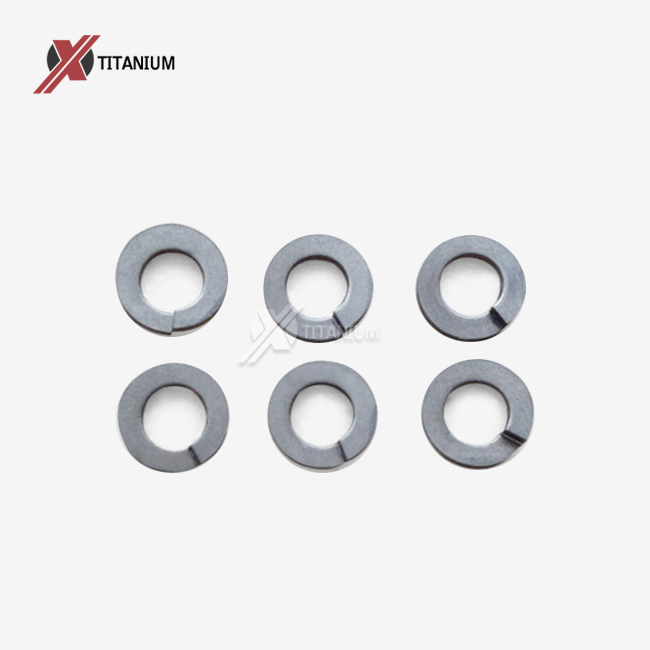
When selecting spring materials for demanding industrial applications, engineers must evaluate multiple performance factors including load capacity, corrosion resistance, and operational environment. Steel remains the traditional choice for general applications, while stainless steel offers improved corrosion resistance. However, for critical applications requiring superior performance, titanium spring washer components have emerged as the premium solution, delivering exceptional strength-to-weight ratios, outstanding corrosion resistance, and reliable performance in extreme environments where conventional materials fail.
Understanding Spring Materials: Key Properties and Performance Criteria
Selecting fitting spring materials requires comprehensive assessment of different execution characteristics that specifically affect operational victory. The fabric choice prepare includes analyzing stack capacity prerequisites, natural conditions, and long-term unwavering quality expectations.
Essential Material Properties for Spring Applications
Spring fabric execution depends on a few basic components that decide appropriateness for particular applications. Stack capacity speaks to the greatest drive a spring can handle without lasting distortion, whereas flexibility guarantees the component returns to its unique shape after stack evacuation. Temperature resilience gets to be vital in high-heat situations, where materials must keep up their mechanical properties beneath extraordinary warm conditions.
Corrosion resistance altogether influences component life span, especially in marine, chemical, or open air applications. Steel springs, whereas advertising fabulous stack capacity, display constrained erosion resistance in unforgiving situations. Stainless steel progresses erosion execution but may compromise quality characteristics. Aluminum gives weight focal points but needs the strength required for heavy-duty applications.
Comparative Analysis of Common Spring Materials
Different materials offer particular preferences depending on application prerequisites. Carbon steel conveys remarkable quality and cost-effectiveness for standard mechanical applications. Its tall flexible modulus empowers effective stack exchange, making it appropriate for overwhelming apparatus and car applications where erosion presentation remains minimal. Stainless steel grades, especially 316 and 304, give direct erosion resistance whereas keeping up sensible quality characteristics.
These materials perform satisfactorily in gently destructive situations but may involvement setting or cleft erosion in chloride-rich conditions. Copper amalgams offer fabulous electrical conductivity and direct erosion resistance, making them important for electrical applications. Be that as it may, their lower quality limits utilize in high-load scenarios. Nylon and polymer springs give chemical resistance and vibration hosing but need the mechanical quality required for requesting applications.
Titanium Spring Washers: Advantages and Unique Characteristics
Titanium spring washer components represent the pinnacle of spring material technology, combining exceptional mechanical properties with outstanding environmental resistance. These components are typically manufactured from Grade 5 (Ti-6Al-4V) titanium alloy, which provides optimal balance between strength, ductility, and corrosion resistance.
Superior Material Properties
The interesting characteristics of titanium amalgams make them perfect for basic spring applications. With a thickness around 60% that of steel, titanium components essentially decrease gathering weight whereas keeping up comparable quality levels. The strength-to-weight proportion of Ti-6Al-4V comes to around 140 kN⋅m/kg, considerably surpassing customary spring materials. Titanium's extraordinary erosion resistance stems from the arrangement of a steady titanium dioxide surface layer that gives security against oxidation, chloride assault, and acidic situations. This detached layer recovers naturally when harmed, guaranteeing long-term security indeed beneath grating conditions.
Temperature Performance and Mechanical Stability
Titanium spring components keep up their mechanical properties over a wide temperature run, regularly from -250°C to 400°C. This temperature solidness makes them appropriate for aviation applications including extraordinary warm cycling and cryogenic exposure. The flexible modulus of titanium (roughly 113 GPa) varies from steel, requiring cautious thought amid plan. Whereas lower than steel's modulus, this characteristic can give preferences in applications requiring particular diversion characteristics or vibration hosing properties.
Manufacturing Capabilities and Customization Options
Modern CNC machining capabilities enable precise fabrication of custom titanium spring components. Available surface treatments include polishing, anodizing, and nitriding, each providing specific performance enhancements. Anodizing creates colorful, wear-resistant surfaces while improving corrosion protection. Nitriding increases surface hardness and wear resistance for high-cycle applications.
Applications and Performance of Titanium Spring Washers in Industry
Titanium spring washer applications span multiple high-performance industries where material reliability directly impacts operational success. These components excel in environments where conventional materials experience premature failure due to corrosion, temperature extremes, or weight constraints.
Aerospace and Defense Applications
Aerospace applications request materials that perform dependably beneath extraordinary conditions whereas minimizing weight punishments. Titanium spring components are broadly utilized in airplane motor gatherings, landing equip frameworks, and flight control components. The combination of tall quality, moo weight, and temperature resistance makes titanium fundamental for present day flying machine design. In fly motor applications, titanium springs keep up their properties at temperatures surpassing 400°C whereas standing up to oxidation and warm weariness. The weight diminishment accomplished through titanium components straightforwardly interprets to progressed fuel effectiveness and expanded payload capacity.
Marine and Offshore Engineering
Marine situations display extreme challenges for metal components due to saltwater introduction and chloride-induced erosion. Conventional stainless steel springs regularly involvement setting erosion and stretch erosion splitting in seawater applications. Titanium components give for all intents and purposes boundless erosion resistance in marine situations, making them perfect for seaward stages, desalination hardware, and submarine systems. The non-magnetic properties of titanium too make it important for maritime applications where attractive signature decrease is basic. Sonar hardware and mine location frameworks advantage from titanium's electromagnetic neutrality.
Chemical Processing and Petrochemical Industries
Chemical handling situations regularly include forceful chemicals that quickly debase routine spring materials. Titanium's uncommon chemical resistance empowers solid operation in corrosive handling, chlor-alkali generation, and petroleum refining applications. The biocompatibility of titanium makes it appropriate for pharmaceutical and nourishment handling gear where fabric immaculateness is fundamental. Not at all like a few stainless steel grades, titanium does not filter metallic particles that seem sully products.
How to Select and Procure Titanium Spring Washers for Your Business Needs?
Effective procurement of titanium spring washer OEM components requires thorough understanding of application requirements, supplier capabilities, and quality standards. The procurement process involves multiple evaluation criteria beyond initial cost considerations.
Technical Specification Development
Successful obtainment starts with point by point specialized determinations that characterize execution prerequisites, dimensional resistances, and natural conditions. Stack calculations must consider the diverse versatile modulus of titanium compared to steel, possibly requiring plan adjustments to accomplish identical performance. Material certification necessities change by industry, with aviation applications ordinarily requiring AS9100 certification and fabric traceability. Restorative applications may require ISO 13485 compliance and biocompatibility documentation. Chemical preparing applications frequently indicate NACE necessities for erosion resistance.
Supplier Evaluation and Quality Assurance
Reputable titanium providers keep up comprehensive quality administration frameworks and give total fabric traceability. Key assessment criteria incorporate fabricating capabilities, testing hardware, and certification support. Providers ought to illustrate involvement with comparable applications and give references from comparable industries. Quality documentation ought to incorporate fabric certificates, dimensional assessment reports, and mechanical property confirmation. Progressed providers offer extra administrations such as plan meeting, prototyping, and custom bundling solutions.
Cost Considerations and Value Analysis
While titanium components ordinarily command premium estimating compared to customary materials, add up to fetched investigation frequently illustrates predominant esteem. Amplified benefit life, decreased support necessities, and disposal of corrosion-related disappointments as often as possible legitimize the introductory investment. Procurement groups ought to assess lifecycle costs counting establishment, support, and substitution costs. Weight diminishment benefits may give extra esteem through progressed productivity or decreased auxiliary requirements.
Installation and Maintenance of Titanium Spring Washers
Proper installation and maintenance procedures maximize the performance and service life of titanium spring components. Understanding material-specific requirements prevents installation errors that could compromise performance or cause premature failure.
Installation Best Practices
Titanium's rankling inclination requires cautious consideration amid establishment. Anti-seize compounds containing molybdenum disulfide or copper ought to be connected to strung associations to anticipate rankling and guarantee appropriate torque application. Stainless steel or titanium clasp are prescribed to anticipate galvanic corrosion. Torque details may vary from steel reciprocals due to titanium's distinctive flexible properties. Establishment methods ought to indicate legitimate torque values and fixing groupings to guarantee uniform stacking and avoid stretch concentrations.
Maintenance and Inspection Protocols
Regular assessment plans ought to center on visual examination for surface harm, dimensional changes, or signs of over-burdening. Titanium's fabulous erosion resistance ordinarily dispenses with concerns around rust or oxidation, rearranging review procedures. Surface medications such as anodizing may appear wear in high-friction applications. Checking coating condition makes a difference anticipate support necessities and avoid substrate harm. Appropriate cleaning methods utilizing fitting solvents keep up surface astuteness and amplify benefit life.
Conclusion
Material selection for spring applications significantly impacts performance, reliability, and operational costs across critical industries. While traditional materials like steel and stainless steel serve many applications effectively, titanium spring washer components provide superior performance where demanding conditions require exceptional material properties. The combination of outstanding corrosion resistance, favorable strength-to-weight characteristics, and temperature stability makes titanium the optimal choice for aerospace, marine, chemical processing, and other high-performance applications where material failure could have serious consequences.
FAQ
Can titanium spring washers directly replace stainless steel components?
Physical replacement is typically possible, but engineering considerations are essential. Titanium's lower elastic modulus (113 GPa versus 200 GPa for steel) affects deflection characteristics and may require design modifications to achieve equivalent clamping forces. Consultation with engineering teams ensures proper performance matching.
Why choose Grade 5 titanium over Grade 2 for spring applications?
Grade 5 (Ti-6Al-4V) provides significantly higher yield strength and better spring characteristics compared to commercially pure Grade 2 titanium. Grade 2's lower strength results in permanent deformation under high loads, while Grade 5 maintains elastic recovery essential for spring function.
What precautions prevent galling during installation?
Titanium's tendency to gall requires anti-seize lubrication during installation. Molybdenum disulfide lubricants effectively prevent galling, while proper torque control and slow installation speeds minimize friction heating. Anodized surfaces also reduce galling susceptibility.
Partner with Chuanglian for Premium Titanium Spring Washer Solutions
Chuanglian stands as a leading titanium spring washer manufacturer, combining over a decade of specialized experience with comprehensive CNC machining capabilities. Our Grade 5 titanium components undergo rigorous quality control processes, ensuring consistent performance for demanding applications across aerospace, marine, and chemical processing industries.
Located in Baoji City, renowned as the "City of Titanium," we leverage regional expertise and material access to deliver customized solutions including polishing, anodizing, and nitriding surface treatments in multiple colors. Our ISO-certified quality systems and traceable manufacturing processes meet stringent industry requirements while maintaining competitive delivery schedules. Contact our technical team at info@cltifastener.com or djy6580@aliyun.com to discuss your specific requirements.
References
1. Boyer, R.R., "An Overview on the Use of Titanium in the Aerospace Industry," Materials Science and Engineering A, Volume 213, Pages 103-114.
2. Schutz, R.W. and Thomas, D.E., "Corrosion of Titanium and Titanium Alloys in Marine Environments," ASM Handbook Volume 13A: Corrosion Fundamentals, Testing, and Protection.
3. Peters, M., Kumpfert, J., Ward, C.H., and Leyens, C., "Titanium Alloys for Aerospace Applications," Advanced Engineering Materials, Volume 5, Issue 6, Pages 419-427.
4. Donachie, M.J., "Titanium: A Technical Guide," ASM International Materials Park, Second Edition.
5. Lutjering, G. and Williams, J.C., "Titanium Engineering Materials and Processes," Springer-Verlag Berlin Heidelberg, Second Edition.
6. Rack, H.J. and Qazi, J.I., "Titanium Alloys for Biomedical Applications," Materials Science and Engineering C, Volume 26, Issues 6-7, Pages 1269-1277.
Learn about our latest products and discounts through SMS or email