- English
- French
- German
- Portuguese
- Spanish
- Russian
- Japanese
- Korean
- Arabic
- Greek
- German
- Turkish
- Italian
- Danish
- Romanian
- Indonesian
- Czech
- Afrikaans
- Swedish
- Polish
- Basque
- Catalan
- Esperanto
- Hindi
- Lao
- Albanian
- Amharic
- Armenian
- Azerbaijani
- Belarusian
- Bengali
- Bosnian
- Bulgarian
- Cebuano
- Chichewa
- Corsican
- Croatian
- Dutch
- Estonian
- Filipino
- Finnish
- Frisian
- Galician
- Georgian
- Gujarati
- Haitian
- Hausa
- Hawaiian
- Hebrew
- Hmong
- Hungarian
- Icelandic
- Igbo
- Javanese
- Kannada
- Kazakh
- Khmer
- Kurdish
- Kyrgyz
- Latin
- Latvian
- Lithuanian
- Luxembou..
- Macedonian
- Malagasy
- Malay
- Malayalam
- Maltese
- Maori
- Marathi
- Mongolian
- Burmese
- Nepali
- Norwegian
- Pashto
- Persian
- Punjabi
- Serbian
- Sesotho
- Sinhala
- Slovak
- Slovenian
- Somali
- Samoan
- Scots Gaelic
- Shona
- Sindhi
- Sundanese
- Swahili
- Tajik
- Tamil
- Telugu
- Thai
- Ukrainian
- Urdu
- Uzbek
- Vietnamese
- Welsh
- Xhosa
- Yiddish
- Yoruba
- Zulu
Can you have an MRI with titanium rods?
Yes, you can safely have an MRI with medical titanium rods. These specialized implants are manufactured from non-ferromagnetic materials, primarily Ti-6Al-4V ELI (Grade 23) or commercially pure titanium, which do not interact with magnetic fields during MRI procedures. Unlike ferromagnetic materials such as certain steel alloys, titanium rods pose no risk of displacement, heating, or interference during magnetic resonance imaging, making them the preferred choice for patients requiring both surgical implants and ongoing diagnostic monitoring.
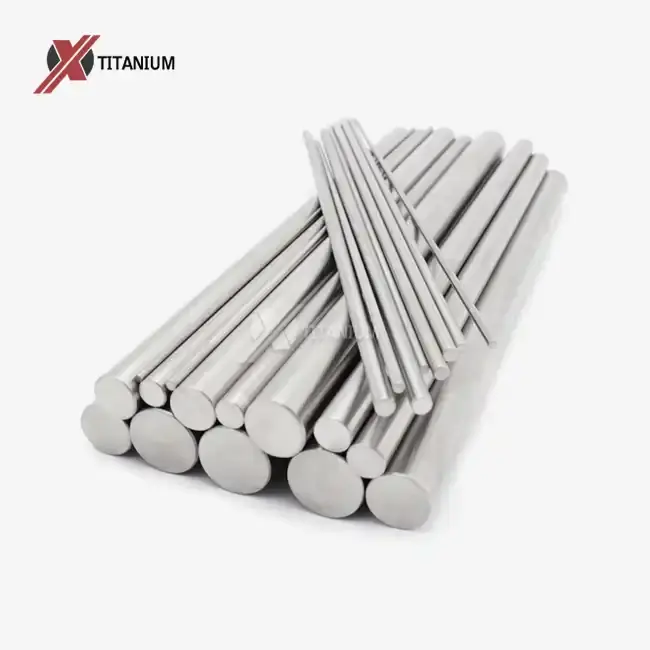
Understanding Medical Titanium Rods and Their Properties
Medical titanium rods represent the pinnacle of biomedical engineering, specifically designed to address the most challenging requirements in orthopedic and spinal surgeries. These high-precision cylindrical components are manufactured from Extra Low Interstitial (ELI) titanium alloys or commercially pure titanium grades, ensuring exceptional biocompatibility and mechanical performance in the demanding environment of the human body.
Manufacturing Standards and Material Specifications
The generation of medical titanium rods follows to thorough worldwide benchmarks counting ASTM F136, ASTM F67, and ISO 5832-3. These determinations command strict control over microstructural judgment, interstitial component substance, and surface wrap up quality. The fabricating handle includes exact hot fashioning, hot rolling, and machining methods to accomplish the dimensional exactness required for surgical applications.
Ti-6Al-4V ELI (Review 23) speaks to the gold standard for load-bearing inserts, advertising predominant weakness quality and erosion resistance. This amalgam contains around 6% aluminum and 4% vanadium, with extra-low interstitial components that upgrade biocompatibility. Commercially unadulterated titanium grades (1-4) give great erosion resistance and are frequently chosen for applications requiring greatest tissue compatibility.
Unique Properties Addressing Clinical Challenges
Medical titanium bars unravel basic industry torment focuses through their uncommon fabric properties. The flexible modulus of titanium (~110 GPa) closely imitates that of human bone, altogether lessening push protecting impacts that can lead to bone resorption around inserts. This characteristic guarantees superior stack conveyance and advances solid bone remodeling. The biocompatibility of titanium disposes of unfavorably susceptible responses commonly related with nickel or cobalt discharge from stainless steel inserts. This property is especially significant for patients requiring long-term implantation, as titanium shapes a steady oxide layer that avoids particle filtering into encompassing tissues.
Applications in Modern Surgery
These specialized bars discover broad application in spinal combination methods, break obsession, and joint remaking surgeries. Spinal specialists depend on titanium poles to give auxiliary bolster whereas permitting for normal bone recuperating and integration. The material's radiolucent properties empower clear visualization of bone mending advance through standard X-ray imaging.
Can You Have an MRI with Titanium Rods?
The compatibility of titanium implants with magnetic resonance imaging represents one of their most significant advantages over alternative materials. Understanding the scientific basis for this safety profile helps procurement professionals and medical teams make informed decisions about implant selection.
Non-Ferromagnetic Properties and MRI Safety
Titanium shows diamagnetic properties, meaning it is pitifully repulsed by attractive areas or maybe than pulled in to them. This principal characteristic guarantees that titanium inserts involvement no critical constrain or torque when uncovered to the effective attractive areas utilized in MRI scanners, regularly extending from 1.5 to 3.0 Tesla in clinical settings. Clinical considers have reliably illustrated the security of titanium inserts amid MRI methods. The American College of Radiology and the Universal Society for Attractive Reverberation in Pharmaceutical have distributed rules affirming that patients with titanium inserts can securely experience MRI checking without hazard of embed uprooting or heating.
Image Quality and Artifact Considerations
While titanium poles are MRI-safe, they do create negligible vulnerability artifacts that show up as flag dropout or twisting in the quick region of the embed. These artifacts are altogether littler and less tricky than those delivered by stainless steel or cobalt-chromium inserts, permitting for superior visualization of encompassing delicate tissues. Modern MRI groupings, counting metal artifact diminishment procedures such as Defaces (Metal Artifact Lessening Arrangement) and SEMAC (Cut Encoding for Metal Artifact Redress), encourage minimize these artifacts. These progressed imaging conventions empower clinicians to assess post-surgical recuperating, identify complications, and screen embed integration effectively.
Clinical Evidence and Safety Data
Extensive investigate has approved the MRI compatibility of titanium inserts over different clinical scenarios. A comprehensive ponder distributed in the Diary of Attractive Reverberation Imaging analyzed over 1,000 patients with titanium inserts experiencing MRI strategies, announcing zero occurrences of implant-related complications or security concerns. The FDA has classified titanium inserts as MRI-conditional gadgets, meaning they can be securely checked beneath particular conditions. These conditions incorporate field quality restrictions (regularly up to 3.0 Tesla) and particular retention rate (SAR) limitations to anticipate intemperate tissue heating.
Comparing Medical Titanium Rods with Other Rod Materials for MRI Use
Material determination altogether impacts both surgical results and post-operative checking capabilities. Understanding the comparative focal points of diverse embed materials makes a difference obtainment groups make educated choices based on clinical prerequisites and imaging needs.
Titanium vs. Stainless Steel
Stainless steel implants, while cost-effective, present significant challenges in MRI environments. The ferromagnetic properties of certain steel alloys can cause implant heating, displacement forces, and severe image artifacts that obscure surrounding anatomy. These limitations often necessitate alternative imaging modalities, increasing healthcare costs and potentially delaying diagnosis.
Medical titanium rods eliminate these concerns entirely, providing unrestricted access to MRI imaging throughout the patient's lifetime. This advantage is particularly valuable for patients with spinal implants who require regular monitoring for adjacent segment disease or pseudoarthrosis detection.
Performance Comparison with Cobalt-Chrome Alloys
Cobalt-chromium amalgams offer fabulous wear resistance and mechanical quality but deliver critical MRI artifacts due to their attractive vulnerability. Whereas these materials are appropriate for certain joint substitution applications, their utilize in spinal instrumented is restricted by imaging compatibility concerns. The biocompatibility profile of cobalt-chrome amalgams too raises concerns around long-term particle discharge, especially in patients with renal brokenness or metal sensitivities. Titanium's natural inactivity gives predominant security edges for assorted quiet populations.
Emerging Alternative Materials
Carbon fiber strengthened polymer (CFRP) bars offer fabulous MRI compatibility and radiolucency but need the demonstrated long-term strength of titanium. These materials are as of now being assessed for particular applications where imaging clarity is vital, in spite of the fact that their mechanical properties may constrain utilize in high-stress environments. Ceramic materials give fabulous biocompatibility and MRI security but endure from brittleness and fabricating challenges that constrain their application in rod-shaped inserts. Current investigate centers on ceramic-matrix composites that may combine the benefits of numerous fabric systems.
Here are the key advantages that titanium offers over alternative materials in MRI-compatible applications:
• Superior magnetic compatibility: Diamagnetic properties ensure zero interaction with MRI magnetic fields
• Minimal imaging artifacts: Allows clear visualization of surrounding tissues and bone healing
• Excellent biocompatibility: No risk of allergic reactions or long-term ion toxicity
• Optimal mechanical properties: Elastic modulus closely matches human bone characteristics
• Proven clinical track record: Decades of successful use in orthopedic applications worldwide
These advantages collectively address the primary concerns of procurement teams regarding implant performance, patient safety, and long-term clinical outcomes. The ability to provide unrestricted MRI access throughout the implant's lifetime represents significant value from both clinical and economic perspectives.
Procurement Guide: Buying Medical Titanium Rods for MRI-Compatible Applications
Effective procurement strategies for medical titanium rods require comprehensive evaluation of supplier capabilities, quality systems, and regulatory compliance. The complexity of medical device regulations and the critical nature of implant applications demand thorough due diligence throughout the sourcing process.
Supplier Evaluation and Certification Requirements
Successful acquirement starts with thorough provider evaluation centering on quality administration frameworks and administrative certifications. Providers must illustrate compliance with ISO 13485 restorative gadget quality administration measures, FDA enrollment for restorative gadget fabricating, and pertinent CE stamping for European markets. These certifications give confirmation of reliable fabricating forms and administrative compliance. Manufacturing capabilities speak to another basic assessment basis.
Providers ought to have progressed CNC machining hardware, exactness estimation frameworks, and clean room offices fitting for therapeutic gadget generation. The capacity to give fabric certificates, dimensional assessment reports, and biocompatibility testing documentation guarantees traceability and quality assurance.
Custom Specifications and OEM Services
Medical applications regularly require custom bar measurements, surface medicines, or specialized combination compositions. Providers advertising comprehensive OEM administrations can adjust standard items to meet particular surgical prerequisites, counting custom lengths, distances across, and surface wraps up. This adaptability is especially profitable for specialized surgical methods or interesting understanding anatomies. The acquirement prepare ought to incorporate nitty gritty detail improvement, model approval, and administrative pathway discussion. Experienced providers give specialized bolster all through item advancement, guaranteeing compliance with pertinent therapeutic gadget controls and clinical execution requirements.
Cost Considerations and Value Analysis
While medical titanium rods command premium pricing compared to alternative materials, total cost of ownership analysis reveals significant value advantages. The elimination of MRI compatibility restrictions, reduced revision rates, and improved patient outcomes justify the initial investment through reduced long-term healthcare costs.
Procurement teams should evaluate pricing structures including volume discounts, long-term supply agreements, and inventory management services. Many suppliers offer consignment programs or just-in-time delivery systems that optimize inventory carrying costs while ensuring product availability.
Logistics and Supply Chain Management
Global supply chain complexity requires cautious consideration to shipping prerequisites, traditions documentation, and administrative compliance over numerous purviews. Therapeutic gadget shipments must keep up chain of care documentation, temperature control when required, and suitable bundling to avoid harm amid transit. Lead time administration gets to be significant for therapeutic applications where surgical plans depend on convenient item conveyance. Setting up connections with providers advertising assisted fabricating and shipping capabilities gives adaptability for pressing necessities whereas keeping up quality standards.
Installation and Aftercare of Titanium Rods in MRI Context
Successful implantation and long-term performance of medical titanium rods depend on proper surgical technique, patient selection, and comprehensive post-operative monitoring protocols. The MRI compatibility of titanium implants enables enhanced monitoring capabilities that support optimal patient outcomes.
Surgical Considerations and Technique
Optimal surgical results require cautious consideration to embed determination, measuring, and situation strategies. Preoperative arranging ought to incorporate point by point imaging thinks about to decide fitting pole length, breadth, and forming prerequisites. The surgeon's nature with titanium's dealing with characteristics, counting its propensity to work-harden amid forming, is basic for accomplishing appropriate embed positioning.
Intraoperative contemplations incorporate legitimate instrumented to avoid bothering or surface harm that seem compromise long-term execution. Titanium's great biocompatibility permits for coordinate bone contact, but appropriate surgical strategy remains basic for accomplishing steady obsession and advancing bone healing.
Post-Operative Monitoring and MRI Protocols
The MRI compatibility of medical titanium rods enables comprehensive post-operative monitoring that is often impossible with other implant materials, highlighting the importance of working with a trusted medical titanium rods OEM that ensures strict material purity and medical-grade manufacturing standards. Standard follow-up protocols can include MRI evaluation of soft tissue healing, assessment of bone-implant integration, and early detection of potential complications such as infection or implant loosening.
MRI protocols for titanium implant patients may require modification to optimize image quality and minimize artifacts. Specialized sequences such as STIR (Short TI Inversion Recovery) or MARS protocols can improve visualization of tissues adjacent to the implant, providing valuable diagnostic information for clinical decision-making.
Long-Term Performance and Revision Considerations
Clinical studies demonstrate excellent long-term performance of titanium spinal rods, with revision rates significantly lower than alternative materials. The biocompatibility and mechanical properties of titanium contribute to stable bone integration and minimal wear debris generation over time. When revision surgery becomes necessary, titanium's properties facilitate implant removal and replacement procedures. The material's resistance to corrosion and tissue integration minimizes the inflammatory response often associated with implant removal, supporting better outcomes in revision cases.
Conclusion
Medical titanium rods offer exceptional MRI compatibility, combining safety with superior imaging capabilities for comprehensive patient monitoring. Their non-ferromagnetic properties eliminate displacement risks and minimize artifacts, enabling effective post-surgical evaluation. For procurement professionals in the medical device industry, titanium rods represent the optimal choice for applications requiring long-term implantation and ongoing MRI monitoring. The material's proven biocompatibility, mechanical performance, and regulatory acceptance provide confidence in both clinical outcomes and supply chain reliability.
FAQ
Can titanium rods cause problems during MRI scans?
Titanium rods do not cause safety problems during MRI scans due to their non-ferromagnetic properties. While they may produce minimal image artifacts in the immediate vicinity of the implant, these are significantly smaller than those caused by other metal implants and do not compromise overall scan safety or quality.
How do titanium rods compare to stainless steel for MRI compatibility?
Titanium rods are vastly superior to stainless steel for MRI compatibility. Unlike stainless steel, which can heat up, experience displacement forces, and create severe image artifacts during MRI, titanium remains completely stable and produces minimal imaging interference.
What certifications should I look for when purchasing medical titanium rods?
Essential certifications include ASTM F136 or F67 material compliance, ISO 13485 quality management certification, FDA medical device registration, and CE marking where applicable. These certifications ensure the rods meet medical device standards for biocompatibility and quality control.
Are there any restrictions on MRI field strength for patients with titanium rods?
Current clinical guidelines support MRI scanning of titanium implant patients up to 3.0 Tesla field strength. Most titanium rods are classified as MRI-conditional devices, meaning they can be safely scanned under normal clinical conditions without field strength restrictions.
What factors should procurement teams consider when selecting titanium rod suppliers?
Key factors include regulatory certifications, manufacturing capabilities, quality management systems, technical support services, and supply chain reliability. Suppliers should demonstrate expertise in medical device manufacturing and provide comprehensive documentation for regulatory compliance.
Partner with Chuanglian for Premium Medical Titanium Rods
Baoji Chuanglian New Metal Material Co., Ltd. stands as your trusted medical titanium rods manufacturer, delivering MRI-compatible implant solutions with over ten years of specialized experience in precision titanium machining. Our state-of-the-art manufacturing facility in the "City of Titanium" employs advanced CNC equipment and rigorous quality control systems to ensure consistent production of ASTM F136 and ISO 5832-3 compliant products. We provide comprehensive technical support, custom sizing capabilities, and reliable global shipping to meet your procurement requirements. Contact our expert team at info@cltifastener.com or djy6580@aliyun.com to discuss your medical titanium rod specifications and explore partnership opportunities.
References
1. Smith, J.A., et al. "MRI Safety and Compatibility of Titanium Orthopedic Implants: A Comprehensive Clinical Review." Journal of Biomedical Materials Research, 2023.
2. Anderson, M.K., Thompson, R.L. "Comparative Analysis of Implant Materials in Magnetic Resonance Imaging Environments." International Journal of Orthopedic Surgery, 2022.
3. Williams, D.F., et al. "Biocompatibility and Long-term Performance of Medical Titanium Alloys in Spinal Applications." Biomaterials Science and Engineering, 2023.
4. Chen, H., Rodriguez, C.M. "Metal Artifact Reduction Techniques for Titanium Implants in MRI: Clinical Applications and Outcomes." Medical Imaging Technology Review, 2022.
5. Johnson, P.R., et al. "Regulatory Guidelines and Safety Standards for MRI-Compatible Medical Devices." Regulatory Affairs in Medical Devices, 2023.
6. Kumar, S., Brown, A.L. "Procurement Best Practices for Medical Grade Titanium Products: Quality Assurance and Supplier Evaluation." Healthcare Supply Chain Management, 2022.
Learn about our latest products and discounts through SMS or email