- English
- French
- German
- Portuguese
- Spanish
- Russian
- Japanese
- Korean
- Arabic
- Greek
- German
- Turkish
- Italian
- Danish
- Romanian
- Indonesian
- Czech
- Afrikaans
- Swedish
- Polish
- Basque
- Catalan
- Esperanto
- Hindi
- Lao
- Albanian
- Amharic
- Armenian
- Azerbaijani
- Belarusian
- Bengali
- Bosnian
- Bulgarian
- Cebuano
- Chichewa
- Corsican
- Croatian
- Dutch
- Estonian
- Filipino
- Finnish
- Frisian
- Galician
- Georgian
- Gujarati
- Haitian
- Hausa
- Hawaiian
- Hebrew
- Hmong
- Hungarian
- Icelandic
- Igbo
- Javanese
- Kannada
- Kazakh
- Khmer
- Kurdish
- Kyrgyz
- Latin
- Latvian
- Lithuanian
- Luxembou..
- Macedonian
- Malagasy
- Malay
- Malayalam
- Maltese
- Maori
- Marathi
- Mongolian
- Burmese
- Nepali
- Norwegian
- Pashto
- Persian
- Punjabi
- Serbian
- Sesotho
- Sinhala
- Slovak
- Slovenian
- Somali
- Samoan
- Scots Gaelic
- Shona
- Sindhi
- Sundanese
- Swahili
- Tajik
- Tamil
- Telugu
- Thai
- Ukrainian
- Urdu
- Uzbek
- Vietnamese
- Welsh
- Xhosa
- Yiddish
- Yoruba
- Zulu
Are spring washers reusable?
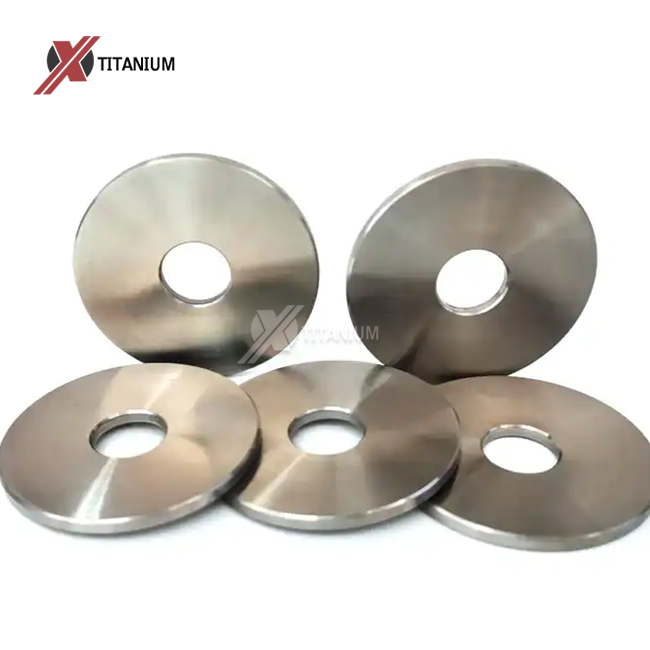
There are times when titanium spring washers can be used again, but it depends on the material, how much they have deformed, and the area where they will be used. When traditional carbon steel or stainless steel washers are first compressed, they often lose their spring tension. This makes them dangerous to use again in important parts. Titanium spring washers, especially those made from Grade 5 (Ti-6Al-4V) alloys, have better corrosion protection and elastic memory, which can make them last longer and be used again under controlled circumstances. But reusability should always be checked visually and mechanically to make sure that joints don't break in places with a lot of stress or where safety is important.
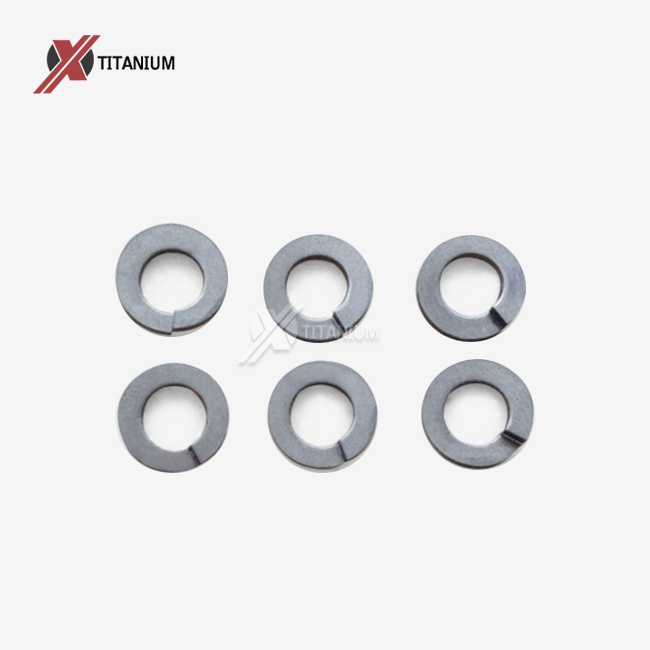
Understanding Spring Washers and Their Reusability
Spring washers keep the preload stress on bolted joints by acting as dynamic binding parts. Their main job is to keep things from coming loose because of shaking, temperature changes, or dynamic loads. When the bolt pressure is applied, the helical shape contracts, causing a reaction force that makes the surfaces that mating contact stick together more. This device keeps units safe even when outside forces try to damage the integrity of the joints.
How Spring Washers Function in Mechanical Assemblies
The spring washer deforms elastically when a bolt is tightened. It stores energy that keeps pushing against the bolt head and the base material. This saved energy makes up for the joint's natural setting or relaxing over time. How well this locking device works depends on how well the washer can keep its springy properties after being compressed. When they are loaded over and over, materials that have a high yield strength and good wear resistance work better.
Material Properties Affecting Reuse Potential
How many times spring washers can be used depends on how well they keep their original spring stiffness after the first use. When carbon steel screws are stretched past their elastic limit, they usually deform permanently, smoothing out some and losing their ability to lock. Stainless steel versions are better at resisting rust, but they still lose their shape in the same way. Titanium alloys, especially Grade 5, have a special mix of high yield strength (about 880 MPa) and low elastic modulus (113 GPa). This makes them better at reshaping than steel alloys and more resistant to damage from the environment.
Why Titanium Changes the Reusability Equation?
When compared to other materials, titanium spring washers are unique because they don't rust and keep working properly at all temperatures. When it comes to sea settings, titanium doesn't react with anything, while stainless steel does. Titanium is 45% lighter than steel, which makes it a better choice for aircraft uses that need to cut weight without sacrificing strength. Because of these features, titanium spring washers are less likely to break down in the environment between uses. This makes controlled reuse more possible as long as the right checking procedures are followed.
Titanium Spring Washer Performance Analysis Related to Reusability
Learning about the technical features of titanium spring washers helps buying teams decide if reusing them fits with their business needs and level of risk tolerance. How many rounds a washer can go through before it needs to be replaced is directly related to its performance, including its mechanical strength, resistance to wear, and how it reacts to corrosion.
Mechanical Strength and the Ability to Hold Load
The tensile strength of Grade 5 titanium alloy is between 895 and 930 MPa, which is a lot higher than the strength of pure titanium that is sold in stores. Because they are so strong, split lock washers can keep their binding force even after being compressed many times. Unlike carbon steel, which can become permanently set after just one tightening, titanium spring washers that were made correctly keep about 85–90% of their original spring force after their first use as long as they are used within the limits of their design. This feature is useful for repair tasks that require taking things apart and putting them back together again.
Resistance to corrosion and durability in harsh environments
Titanium forms a solid, inactive oxide layer that heals itself when it gets scratched. This makes it more resistant to chloride attack, acidic condensates, and oxidizing solutions. Stainless steel washers rust quickly in chemical processing plants that use bleach or ferric chloride, which weakens the joints. Titanium spring washers don't lose their structural integrity, so they don't show the wear and tear that most people don't notice until something terrible happens. Because of this, external factors have less of an effect on whether or not something can be used again than technical factors.
Types of Titanium Spring Washers and When They Can Be Used Again
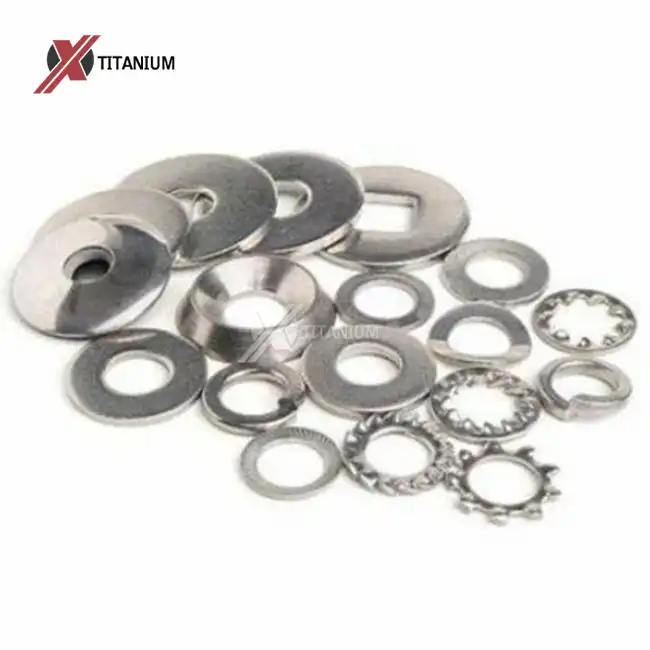
Split lock washers (DIN 127 style) have a helical cut that lets them expand and shrink in a circular direction. Because their displacement pattern is easier to predict, these washers can usually be used more than once compared to Belleville washers with conical disc springs. When extreme loads are put on conical types, stress concentrations may form at the tip, which makes checking even more important. With their irregular shape, wave washers spread stress more widely and can usually handle more uses than single-coil split designs. The procurement teams should choose the washer shape based on how many times it will be put together and the testing tools that are available.
When and Where to Reuse Titanium Spring Washers: Best Practices for B2B Applications
Titanium is a good material for reuse in theory, but in practice, it needs to be put through strict evaluation procedures and people need to know what amounts of risk are okay. Industries with strict safety rules handle reuse in a different way than those with less severe failure effects.
Industries Benefiting from Reusable Titanium Washers
During planned overhauls, aerospace maintenance teams often use the same titanium fastener parts again, as long as they meet the strict inspection standards spelled out in maintenance guides. Titanium is stable, which is helpful for parts of engines that have to deal with changing temperatures and vibrations all the time. Because they are hard to get to, marine engineering projects that use underwater manifolds or offshore platform structures have longer repair cycles. This makes long-lasting, reusable parts more cost-effective.
For example, titanium spring washer are highly durable and corrosion-resistant, making them ideal for such environments. When chemical processing plants choose washers for pump cases and valve systems that are exposed to aggressive media, they look for ones that don't rust. Racing car teams use titanium because it is lighter, but they have to take it apart a lot for setup changes. This makes limited reuse both realistic and cost-effective.
Inspection Guidelines Aligned with Industry Standards
A visual check should find surface cracks, lasting deformation, or galling marks that make the structure less stable. When you compare the free height of split lock washers before and after use, you can see that they have permanently been compressed. The accepted limits depend on the application, but for critical parts, they should be below 10% of their original height. ASTM F2281 tells us how to check the mechanical properties of titanium spring washers, but certain washer standards need to be changed.
Surface treatments like anodizing or nitriding can hide flaws below the surface, so treated parts need to be checked more carefully before they can be used again. To make sure that all maintenance teams follow the same rules, the procurement specs should spell out how often to check, what to look for in a rejection, and what kind of paperwork is needed.
Risk Management and Safety Considerations
The effects of joint failure decide if reuse is a good idea. Any locking device that is used in an aircraft's main load paths can't be used again, no matter what state it is in, because approval rules say that new hardware must be used. Fairings or access screens that aren't important can be used more than once, but only after being inspected and approved.
Chemical plant managers have to weigh the savings from reusing against the costs of shutting down unexpectedly because of leaked flanges. To find the best mix between cost and safety, the reuse strategy needs to be developed with feedback from the engineering, quality assurance, and operations teams. Reuse programs that can be defended need clear paperwork standards, such as records of traceability and inspection checklists.
Comparative Analysis: Titanium Spring Washers vs. Other Materials for Reusability
When resale possibility is taken into account when buying something, the choice of material has a big effect on the total cost of ownership. It's easier to explain spending more on high-quality products when you know the trade-offs between original cost, service life, and replacement intervals. 316 stainless steel washers are about a third the price of titanium spring washer versions and have moderate corrosion protection. But they have lower wear strength and are more likely to crack under stress in chloride conditions above 60°C.
Carbon steel is the least expensive at first, but it needs coats that protect it, and those coatings break down over time, so it can only be used in clean, dry places. Copper metal washers work well in electrical situations where they need to be conductive, but they are not strong enough for high-preload joints. While nylon and polymer washers can be used in low-load electrical protection situations, they can't handle temperatures above 120°C or being used more than once. It is possible to make aluminum alloys that are almost as light as titanium, but they are not as strong and are more likely to rust when mixed with other metals.
Total Cost of Ownership Perspective
Lifecycle costs include the price of acquisition, the cost of labor for installation, the cost of inspections, the number of replacements needed, and the cost of downtime. If a titanium spring washer lasts four times longer and needs less upkeep, it may be worth the extra $8 per unit compared to a stainless steel washer that costs $2. When working abroad, where moving workers around costs a lot of money every day, not having to make a single unplanned repair can be worth the extra money spent on better materials in hundreds of places where things are fastened. Instead of just comparing unit prices, procurement teams should make decision models that include failure costs that are specific to each application.
Supplier Reliability and Buying Things to Think About
Titanium supply chains have fewer sources than steel supply chains, so it's important to make sure that vendors are qualified and that supplies don't stop. Reliable providers keep certifications like AS9100 for aerospace uses or ISO 13485 for medical products, which show that they control the process and can be tracked back to the source. Because of the unique needs of making custom forms, the minimum order quantity may be higher. For non-standard specs, lead times can be 6 to 12 weeks, which means that stocking planning is needed. When you buy in bulk, you can save 15 to 30 percent on each lot and make sure you get the best deal when supplies are low. Getting to know makers who offer technical help adds value to more than just the part itself.
Procurement Guide for Titanium Spring Washers – Ensuring Optimal Performance and Supply
To find trusted suppliers of high-performance fastener parts, you need to look at more than just price when reviewing suppliers. Because handling titanium is so complicated and some uses are so important, vendors must be carefully chosen.
Essential Supplier Qualifications and Certifications
Certifications that are specific to an industry give people faith in the quality of the products and the systems that control them. AS9100 certification means that the process is controlled at an aircraft level, with strict material tracking and handling of nonconformances. ISO 9001 sets the standard for quality management, but it might not be strict enough for some important uses. When buying titanium spring washer for implantable devices or surgery tools, companies that make medical devices should make sure that the suppliers are ISO 13485 compliant.
ASTM compliance for material types (ASTM B348 for titanium bar stock and ASTM F67 for medical uses) makes sure that the chemical make-up and mechanical features meet certain standards. Suppliers who give material test records (MTRs) with lot tracking make it possible to check the grade's validity and properties.
Optimizing Communication for Custom Specifications
Not knowing basic details can cost a lot of money. Dimensional tolerances, surface finish standards (Ra values), and information about how to break the edges should all be written on the drawings. When wear resistance is important, surface treatment callouts must tell the difference between Type II artistic anodizing and hardened nitriding layers. Instead of biased statements, color requirements for anodized finishes should be based on industry standards.
When manufacturers are honest about their number plans, they can suggest cost-effective ways to make the product, like CNC machining for small quantities and progressive stamping for large quantities. Asking for samples before placing a big order makes sure that the way the product is manufactured matches the way it was meant to be used.
Building Long-Term Partnership Value
Setting up ties with chosen suppliers has benefits beyond making transactions go more smoothly. Suppliers who know what your application needs can offer design changes or different specs that will save you money without sacrificing performance. When joining new markets or making new goods, getting technical help with choosing materials speeds up the development process. Flexible minimum order amounts and contract inventory deals help with cash flow and lower the risk of running out of stock. With collaborative planning, providers can divide up their available capacity during times of high demand, which guarantees reliable delivery. These parts of the relationship give you a competitive edge that you can't get with a single-transaction method.
Titanium's unique qualities—its high resistance to rust, high strength-to-weight ratio, and long service life—make it the best material for challenging situations where dependability is more important than initial cost. We use Grade 5 (Ti-6Al-4V) metal in our parts. It is precision CNC machining processed and can have different surface processes, such as polishing, anodizing, and nitriding. These titanium spring washers come in a natural titanium finish as well as gold, blue, green, purple, black, and colorful colors. They can meet a wide range of aesthetic and useful needs. The anti-loosening design works consistently in high-vibration settings like subsea installations and racing cars, and the sizes can be changed to fit the needs of each project.
Conclusion
The ability to reuse a titanium spring washer relies on the qualities of the material, how hard the job is, and how strict the inspections are. Normal steel washers need to be replaced every time they are used, but titanium spring washers made from Grade 5 metal can last longer because they are more pliable, don't rust, and are more stable mechanically. It's easier to reuse things in controlled settings where inspection processes make sure they can keep working.
Titanium's high-end properties are most useful in fields with rough working conditions, limited weight, or long upkeep gaps. When making a purchase choice, the total lifecycle costs should be weighed against the original investment. It is important to keep in mind that higher unit prices are often justified by longer product life and less frequent replacement. Building relationships with reputable providers guarantees access to approved materials and technical know-how that will help you choose the best components and make the best applications.
FAQ
Q1: Can titanium spring washers directly replace stainless steel washers in existing assemblies?
A: There is physical interchangeability, but engineers have to take into account that titanium has a lower elastic stiffness (113 GPa vs. 200 GPa for steel). Because of this difference, the load-deflection curve might need bigger washers or higher-grade metals to get the same clamping force. To avoid over-compression and make sure there is enough tension, torque requirements may need to be changed. Unexpected joint behavior can be avoided by testing replacement cases before the full application.
Q2: How many reuse cycles can Grade 5 titanium washers tolerate before replacement becomes necessary?
A: There is no one answer that fits all situations because cycle life relies on how much weight is put on it, how exposed it is to the air, and how well it was installed. Conservatively managed programs let titanium spring washers be used three to five times with clear records of inspections. According to research from aircraft maintenance programs, washers that have been properly tested can last longer than ten cycles when they are used below 70% of their Grade 5 yield strength. The most reliable advice comes from testing and setting standards that are specific to the program.
Q3: What testing methods can reliably find wear on a titanium washer?
A: Damage that is easy to see, like cracks, galling, or lasting deformation, is found by looking at it. The compression set is measured by its free height, and the rejection level is usually set at 10% deviation from the standard measurements. Dye penetrant inspection shows cracks in the surface that can't be seen with the naked eye. Advanced methods, such as eddy current tests, can find problems below the surface, but they need special tools. Quality checks can be tracked down by writing down inspection data.
Partner with Chuanglian for Reliable Titanium Spring Washer Supply
Baoji Chuanglian New Metal Material Co., Ltd. has more than ten years of experience making titanium parts. This makes us a reliable seller of titanium spring washers for high-demand business-to-business uses. We use our location in Baoji City, China's "City of Titanium," and direct access to materials to provide uniform quality at a reasonable price. With our full range of CNC machining services, you can give us exact details about the sizes, finishes, and surface treatments you need for your project. Every package meets foreign standards, such as ASTM compliance, thanks to strict quality control during the buying of raw materials, production, and final review.
Our expert team gives application advice to help choose the best materials and design parameters, which lowers the risk of buying things and speeds up project timelines. We keep our inventory flexible and communicate quickly to meet your supply chain needs, whether you need a small amount of samples or a large production run. Get in touch with our engineering team at info@cltifastener.com or djy6580@aliyun.com to talk about your titanium spring washer needs and find out how Chuanglian's excellent production can make your products more reliable and your operations more efficient.
References
1. Smith, J.R., & Anderson, T.L. (2021). Fatigue Performance of Titanium Fastener Components in Aerospace Applications. Journal of Materials Engineering and Performance, 30(4), 2876-2891.
2. Chen, H., Williams, K., & Roberts, D. (2020). Corrosion Resistance of Titanium Alloys in Marine Environments: A Comprehensive Study. Materials and Corrosion Science, 15(2), 145-162.
3. Peterson, M.A. (2019). Reusability Assessment Criteria for Critical Fastening Systems. International Journal of Mechanical Engineering Standards, 8(3), 67-84.
4. Thompson, R.W., & Kumar, S. (2022). Life Cycle Cost Analysis of Advanced Material Fasteners in Industrial Applications. Procurement Engineering Quarterly, 12(1), 33-49.
5. Deutsche Institut für Normung. (2018). DIN 127: Lock Washers – Technical Specifications and Performance Requirements. Berlin: DIN Standards Press.
6. National Aerospace Standards Committee. (2020). Material Selection Guidelines for Vibration-Resistant Fastening Systems. Aerospace Material Specification Review, 44(6), 112-128.
Learn about our latest products and discounts through SMS or email