- English
- French
- German
- Portuguese
- Spanish
- Russian
- Japanese
- Korean
- Arabic
- Greek
- German
- Turkish
- Italian
- Danish
- Romanian
- Indonesian
- Czech
- Afrikaans
- Swedish
- Polish
- Basque
- Catalan
- Esperanto
- Hindi
- Lao
- Albanian
- Amharic
- Armenian
- Azerbaijani
- Belarusian
- Bengali
- Bosnian
- Bulgarian
- Cebuano
- Chichewa
- Corsican
- Croatian
- Dutch
- Estonian
- Filipino
- Finnish
- Frisian
- Galician
- Georgian
- Gujarati
- Haitian
- Hausa
- Hawaiian
- Hebrew
- Hmong
- Hungarian
- Icelandic
- Igbo
- Javanese
- Kannada
- Kazakh
- Khmer
- Kurdish
- Kyrgyz
- Latin
- Latvian
- Lithuanian
- Luxembou..
- Macedonian
- Malagasy
- Malay
- Malayalam
- Maltese
- Maori
- Marathi
- Mongolian
- Burmese
- Nepali
- Norwegian
- Pashto
- Persian
- Punjabi
- Serbian
- Sesotho
- Sinhala
- Slovak
- Slovenian
- Somali
- Samoan
- Scots Gaelic
- Shona
- Sindhi
- Sundanese
- Swahili
- Tajik
- Tamil
- Telugu
- Thai
- Ukrainian
- Urdu
- Uzbek
- Vietnamese
- Welsh
- Xhosa
- Yiddish
- Yoruba
- Zulu
Top Titanium Seamless Tube Suppliers in China for USA - Chuanglian
When purchasing teams in the US look for dependable providers of titanium seamless tubes, they face a major problem: they have to find makers who provide consistent quality, technical knowledge, and stable supply chains. In China's titanium production scene, Baoji Chuanglian New Metal Material Co., Ltd. is known as a reliable partner for aircraft, chemical processing, and marine engineering projects. We have been making specialized products for over ten years and are based in Baoji, which is known around the world as the "City of Titanium." We have strict quality systems and friendly customer service. Our production of titanium seamless tubes gets rid of the Heat Affected Zone weaknesses that come with welded options. This gives our tubes equal structural integrity that meets the strict needs of mission-critical uses in many industries.
Understanding Titanium Seamless Tubes: Properties, Grades & Applications
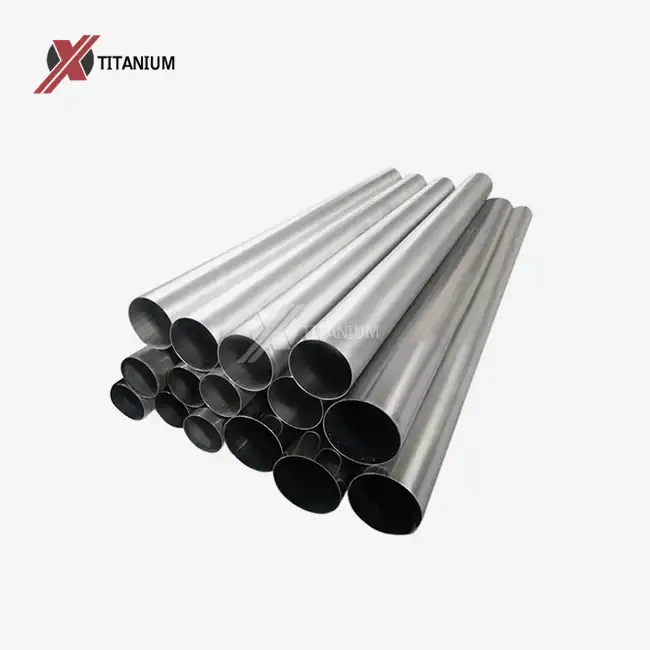
Titanium seamless tubes are a type of high-performance tubular goods that are made from solid billets by extruding or rotary cutting them and then cold rolling them through pilgering and vacuum annealing. This way of making things makes a hollow cylinder shape without any lengthwise weld seams, which makes these tubes different from welding tubes. The Heat Affected Zone is not there because there is no join line. This is because the Heat Affected Zone is where rust and mechanical failure usually happen in harsh working conditions.
What Makes Seamless Construction Superior?
The uniform production method makes sure that the microstructure is the same all the way around the tube. This structural uniformity solves three major problems that procurement professionals face: early failure in high-pressure hydraulic systems where welded seams can't handle fatigue cycling; localized corrosion in chloride-rich environments like seawater desalination plants; and the need to reduce weight drastically in aerospace applications without sacrificing structural integrity. When compared to welded tubes, seamless tubes can handle much higher internal pressures and rotational stresses. This makes them essential for situations where failure is not a choice.
Key Material Properties and Performance Characteristics
Titanium stands out among industrial materials because of its high strength-to-weight ratio. Titanium seamless tubes can save a lot of weight in aerospace and car uses because it has a density that is about 45% lower than stainless steel but offers the same strength. The amazing resistance to rust in the material comes from a steady, protective oxide layer that forms on the surface on its own. This passive film grows back right away if it gets broken, making it the most durable material that can be used in harsh chemical settings, saltwater, and high-temperature oxidizing conditions.
Titanium is very resistant to pitting and crevice corrosion in seawater and chloride solutions because it is chemically stable. Copper-nickel and stainless steel options break down quickly in these conditions. This strength makes tools last longer, from the usual 10 to 15 years for regular materials to 20 to 40 years for properly installed titanium.
Common Titanium Grades and Their Optimal Applications
Commercially pure titanium grade 2 is the most common choice for uses that need to prevent corrosion. Grade 2 tubes are great for shaping and welding, and they are used in chemical plants, power plant condensers, and Multi-Stage Flash purification systems. The material can withstand temperatures of up to 300°C and doesn't rust in either acidic or basic conditions.
Grade 9 (Ti-3Al-2.5V) is used in high-performance racing and aircraft hydraulic systems where it is needed. This alpha-beta metal is 50% stronger than Grade 2 and still has great protection to corrosion and weldability. When high cyclic loads and shaking are needed, aerospace engineers choose Grade 9 for hydraulic lines, fuel manifolds, and bleed air tubes.
Grade 5 (Ti-6Al-4V) is the most common type of titanium used in structural uses, making up about half of all titanium used in the world. This alpha-beta alloy has a maximum tensile strength of more than 900 MPa and is used in high-strength chemical processing equipment that works above 300°C, aircraft structure parts that have to be strong, and offshore drilling risers.
Industry Applications Driving Demand
Aerospace companies depend on smooth tubes for important hydraulic systems that work at pressures above 3,000 psi. Because there are no weld gaps, there are no possible weak spots in high-vibration settings at high altitude, where upkeep can't be done and safety is a must. Auxiliary power units, engine bleed air systems, and landing gear hydraulics all need to be reliable, which can only be achieved with smooth construction.
Chemical processing plants that make Purified Terephthalic Acid, acetic acid, and chlor-alkali need materials that can handle fluids that are very acidic and very hot. Seamless tubes don't let corrosion hit weld beads first, which happens with welded options and leads to early failure. This means that there are fewer unexpected shutdowns and lower upkeep costs.
Power plants and desalination plants use surface condensers that handle fast-moving saltwater and need smooth tubes. Because the walls are all the same thickness and there are no stress clusters caused by the weld, these tubes can withstand years of erosion, rust, and flow-induced shaking that would destroy welded options. Major utilities say that when smooth titanium is used instead of copper-nickel materials, condenser tubes last longer than 30 years.
How Chuanglian Stands Out Among Titanium Seamless Tube Suppliers in China?
Baoji Chuanglian New Metal Material Co., Ltd. has built its name on technical know-how, consistent quality, and service that puts the customer first. Being in the middle of China's titanium production cluster gives us direct access to high-quality raw materials, specialized processing tools, and a lot of technical knowledge that you can't get in other places.
Comprehensive Manufacturing Capabilities and Quality Systems
Our factory has twelve CNC machines and other specialty processing tools for making things out of titanium. With this infrastructure, we can handle the whole manufacturing process, from preparing the billet to the final check, making sure we have tight control over every step of the process. We make titanium seamless tubes with wall thicknesses ranging from 0.5 mm to 10 mm and outer diameters from 6 mm to 114 mm. We can meet both standard and unique requirements.
Quality control starts with checking the receiving materials. For each billet lot, we do a chemical composition study and a mechanical property test. Dimensional checks, ultrasound tests, and eddy current examinations are used during production to find any problems before they get to the finished goods. Our quality management system follows the rules set by ISO 9001. We also have AS9100 approval for supply chains in the aircraft industry and medical device registrations for biomedical uses.
Each shipment of tubes comes with full material test results that list the chemicals used, the tubes' mechanical qualities, and information that lets you track finished goods back to the billets that made them. This paperwork package meets the strict proof needs of aerospace OEMs, medical device makers that are controlled by the FDA, and pressure vessel fabricators who use ASME code stamps.
Technical Support and Customization Services
During the material selection step, procurement professionals often call us for help with choosing the right grade, getting the right dimensions, and learning about different heat treatment choices for new uses. Our engineering team gives technical advice based on working conditions like fluid chemistry, temperature ranges, pressure cycles, and weather exposure. They suggest the best material specs that meet performance needs while also being cost-effective.
Industrial buyers often need non-standard sizes or handling that isn't available to everyone. Because we are flexible in how we make things, we can meet unique length, wall thickness, and outer diameter requirements that aren't covered by standard product lists. Several types of heat treatment, such as annealing, stress relieving, and solution treating, can be used to change certain material properties or make later manufacturing steps easier.
Competitive Positioning and Value Delivery
Baoji's mass of infrastructure for making titanium leads to economies of scale that allow prices to be competitive without lowering quality. When a maker has direct ties with suppliers of sponges and billets, they don't have to pay markups to middlemen. They can also save money on overhead costs by sharing technical resources and specialized service providers.
Our pricing system is based on the real value of long-term relationships with suppliers instead of one-time purchases. People who commit to buying in bulk get better prices, and blanket purchase orders with planned releases let you plan production in a way that saves money and keeps costs stable over the course of a contract. We keep our communication open about changes in the costs of raw materials and how those changes affect prices. This builds trust by letting everyone see what's going on instead of sudden price changes.
A lot of the time, logistics planning decides whether Chinese goods with competitive prices actually have lower landed costs. We work with skilled freight forwarders who handle paperwork, customs classification, and delivery schedules for commercial shipping between the US and China. Our shipping department works directly with the receiving facilities of our buyers, sending them advance notices of shipments and tracking information that helps them handle their stock just-in-time.
Building Long-Term Partnerships Through Responsive Service
From the first question to the production order, the industrial buying cycle takes months. We set up our customer service so that it fits with this schedule by giving each customer a personal account manager who stays in touch with them throughout the relationship. These managers know your exact application needs, quality standards, and release preferences, so you don't have to keep going over the project details every time you talk to them.
How quick communication is has a direct effect on how efficiently buying works. Our team keeps business hours that cross with the East and West Coast time zones in the United States. We respond the same day to technical questions and requests for quotes. You can email our English-speaking customer service team at info@cltifastener.com and djy6580@aliyun.com. Our website, cl-titanium.com, has full product specs and information about what it can do that is available 24 hours a day, seven days a week.
Support after the sale goes beyond just fulfilling orders. We keep records of production so that we can quickly address problems in the field or answer questions about qualifications that come up during your customers' checks. Traceability paperwork can be accessed years after delivery, which helps with lifecycle management for installations that will last a long time and may need to be inspected by regulators or for upkeep.
Comparison of Titanium Seamless Tubes Versus Alternatives for Informed B2B Procurement
When choosing tubular materials, procurement officials have to think about a lot of things, such as the original cost, the expected service life, the upkeep needs, and the failure effects. Knowing how titanium seamless tubes stack up against other materials and building methods lets you make smart choices that lower your total cost of ownership instead of just lowering the price.
Seamless Versus Welded Titanium Construction
When bought new, welded titanium tubes are 20–30% cheaper than smooth ones. This makes them a good choice for projects that need to stay within a budget. This cost benefit usually goes away, though, when lifetime factors are taken into account. The joint zone adds metallurgical heterogeneity, which means that the grain structure, leftover stresses, and characteristics that have been changed by heat are not the same as in the parent material. Because of these differences, rust and stress crack growth are more likely to happen in certain places.
For high-purity chemical service or cycle pressure uses, welded tubes fail early and need to be replaced after 40–60% of the service life of titanium seamless tubes. When figuring out the total cost, you have to take into account unplanned downtime, emergency replacement work, and damage from fluid leaks. These are all things that usually make the original price difference in favor of welded construction less important.
Seamless building gets rid of the need for weld inspections and the quality uncertainty that comes with manual or automatic seam welding. When variables related to welds are taken out of the equation, procurement standards get easier, inspection processes get clearer, and quality assurance becomes more reliable.
Titanium Versus Stainless Steel and Nickel Alloys
A lot of industrial pipe systems use stainless steel tubing because it is about a third less expensive than titanium tubing of the same size. But stainless steel's ability to prevent corrosion rests on keeping the surface in a passive state. This barrier can be broken by chloride levels above 100 ppm, pH changes, or high temperatures, which can cause pitting or stress corrosion cracking that quickly fails.
Nickel metals, like Alloy 625 or Alloy C-276, are resistant to corrosion in many chemical conditions, almost as well as titanium. Material costs are 70–80% of titanium's price, which makes nickel metals a possible option. Nickel, on the other hand, has a density that is 87% higher than titanium's (4.5 g/cm³), which means that titanium is no longer lighter than nickel in aircraft and mobile uses where weight reduction is important for performance.
The selection grid is based on certain factors of operation. If you don't have to worry about weight, stainless steel may work well enough for ocean service at room temperature. When high temperatures, harsh chemicals, and a concern for weight all come together in one application, titanium's high cost provides better value through longer service life and better operating performance.
Material Selection Decision Framework
A organized method to choosing materials is helpful for people who work in procurement. Titanium's high price is justified by the fact that it is very reliable in critical uses where failure could lead to safety risks, environmental leaks, or production shutdowns. In this group are usually the aircraft, nuclear, and pharmaceutical industries, which need strict material requirements to follow rules and limit their risk.
Applications that need to save money and have parts that can be easily replaced and maintained may be willing to accept the shorter service life of cheaper options. This group of things often includes low-pressure water systems, non-critical heat exchanges, and redundant piping lines. These need to be maintained at regular times so that the material doesn't break down too quickly.
Intermediate cases need a thorough lifetime cost analysis that weighs the original cost of the materials against their expected service life, how often they will need to be maintained, and what will happen if they fail. We help buyers make these studies by giving them information about how well materials work and how they've been used in the past, which helps them make accurate predictions about how long they will last.
Practical Guide for B2B Buyers: How to Procure Titanium Seamless Tubes from China Efficiently?
There are more problems with international procurement than with domestic procurement. There are longer wait times, customs procedures, quality checks that happen over long distances, and contact that takes place across time zones. Buyers who are good at what they do come up with organized ways to deal with these problems while taking advantage of the cost and capability benefits that Chinese sources offer.
Supplier Qualification and Verification
When you first look at a seller, you should make sure that their production skills match your technical needs. Ask for specific capability statements that list the sizes, grades, testing tools, and quality certifications that are available. The dozen CNC machines and full testing lab at our building give us the ability to do things like material analysis, dimensional verification, and non-destructive examination that many smaller providers can't.
Quality system approvals are an objective way to show that a process is controlled and documented. ISO 9001 certification is the minimum standard for industrial suppliers. AS9100 certification for aircraft and medical device registrations show that quality systems have been improved to meet the needs of those industries. We keep up-to-date licenses available for buyers to check, which gets rid of any questions about licensing.
Ask for and check the documents for proof. Suppliers you can trust give you test reports on the materials they sell that link the chemical make-up and mechanical traits to production lots and specific heat numbers. This paperwork makes it possible to track things further down the line, which is needed to meet ASME code requirements, aircraft QPL requirements, and FDA medical device rules. Our documentation packages meet the strictest customer needs; we've sold them to big aircraft OEMs and drug companies that need full material genealogy.
Specification Communication and Technical Alignment
Communication of clear specifications keeps mistakes that cost a lot of money and lead to quality conflicts or deliveries that aren't right from happening. Show exact measurements, allowed variations, and surface finish requirements on detailed sketches that follow well-known international standards like ASTM, ASME, or AMS guidelines. We're very good at using these standard methods, and we read requirements in a way that is consistent with how engineers work in the United States.
When describing a material grade, it should be based on well-known standards, like ASTM B338 for titanium seamless tubes or AMS specs for aircraft uses. Stay away from private or company-specific grade names that don't come with chemical makeup and mechanical property goals. If your specs talk about proprietary materials you don't know much about, our engineering team can suggest similar standard grades that will meet your performance needs.
Requirements for testing and review should be stated during the quote process, not after the order has been placed. We offer different testing choices, such as hydrostatic pressure testing, eddy current examination, and ultrasound inspection. However, you need to plan ahead for arranging and pricing these services. Surprises and shipping delays can be avoided by being clear from the start.
Order Structuring and Delivery Planning
Setting reasonable goals is the first step in managing your time well. Standard sizes in popular grades usually ship 4 to 6 weeks after an order is confirmed. Custom specifications may take 8 to 12 weeks, based on how long it takes to get the raw materials and how they are processed. During the quote process, we give you realistic delivery dates, and during production, we keep in touch to confirm plans and let you know about any changes that might affect them.
Planning for logistics should start while the negotiations are going on. Ocean freight from Baoji to US West Coast ports usually takes 5–6 weeks to get there, and it takes an extra 1–2 weeks for trucks to get to East Coast destinations. Air freight cuts travel time to one week, but it costs a lot more and is only worth it for pressing needs. We work with experienced freight forwarders who take care of classifying dangerous goods, export paperwork, and clearing customs, which speeds up the logistics chain.
For ongoing needs, you might want to think about blanket buy orders with planned releases. This structure allows for big discounts while still letting you change your goods as needed. We hold on to material until you tell us when it's ready to ship, and we only ship partial loads when your production plans allow it. This setup helps you get the most out of your working capital and keeps your supplies coming in without making you wait a long time for each need.
Risk Mitigation Through Partnership Approach
Long-term success depends on how the buyer and seller work together. Transactional spot buying encourages price competition, which pushes sellers to cut costs by speeding up processing, reducing checking, or switching out materials. When you make a promise to buy a certain amount of something over a number of years, the supplier's success rests on your happiness and repeat business.
We set up relationships so that both parties can succeed. When you commit to a certain number, you get better price, priority schedule for production, and dedicated technical support. We put time and effort into learning about your business, quality standards, and application needs so that we can become an extension of your supply chain instead of just another provider.
Clear conversation about problems makes people more trusting and strong. Even the best-run businesses can be affected by changes in the cost of raw materials, problems with production tools, or problems with transportation. We keep your team informed about possible problems and how to fix them before they happen. This way, your team can change their plans instead of finding problems at the last minute. This openness has kept relationships with customers strong during tough times when less talkative providers would have lost business.
Conclusion
To find the best titanium seamless tube provider, you need to look at more than just price. You also need to look at their technical skills, quality systems, and relationship approach. Demanding industrial uses need Baoji Chuanglian New Metal Material Co., Ltd.'s production know-how, commitment to quality, and focus on customer satisfaction. Our position in China's titanium production hub saves us money without affecting the quality, technical support, or dependability of our supply chain that US buyers need. Whether you need seamless tubes for aircraft hydraulics, chemical processing, or marine engineering, we can make them and are dedicated to making sure our customers are happy. This makes us your ideal strategic buying partner for long-term value delivery.
FAQ
Q1: What certifications do Chuanglian's titanium seamless tubes carry for USA applications?
A: Our goods meet the ASTM B338 standards for titanium seamless tubes, and material test results show that they meet the requirements for chemical composition and mechanical properties. Our goods are approved for use in aircraft supply chains because we keep our ISO 9001 quality system certification and AS9100 aerospace certification up to date. Medical-grade materials have the right gadget registrations to support FDA-regulated uses. All packages come with full traceability paperwork that connects certifications for source materials to final goods.
Q2: How does Chuanglian ensure consistency across large volume orders?
A: Statistical process control is used throughout the manufacturing process to keep an eye on mechanical qualities and dimensional factors across production runs. Getting raw materials from reliable sources makes sure that the chemistry of the inputs stays the same. For heat treatment, calibrated ovens with recorded thermal profiles are used. Finally, each output lot is sampled for mechanical qualities and making sure the dimensions are correct. Lot traceability lets us look into problems quickly if they happen in the field, but our quality processes keep buyers from getting nonconforming stuff.
Q3: What are typical lead times for custom specifications shipped to USA destinations?
A: Standard sizes in common grades usually ship 4 to 6 weeks after the order is confirmed. Custom sizes or grades that aren't commonly used may take 8 to 12 weeks, based on the supply of the raw materials. Ocean freight takes an extra 5–6 weeks to get to ports on the West Coast or 6-7 weeks to get to ports on the East Coast. For pressing needs, air freight cuts travel time to one week. During the quotation process, we give you accurate delivery dates and keep in touch throughout production, so you can keep an eye on your plans for the next steps.
Partner with a Trusted Titanium Seamless Tube Manufacturer
Chuanglian is ready to meet your needs for titanium tubing with high-quality, seamless goods that are made to strict standards. Our technical knowledge, quality systems, and focus on customer service make us the best choice for procurement teams looking for a reliable titanium seamless tube provider. This is because mission-critical uses need a stable supply chain. Contact our team at info@cltifastener.com or djy6580@aliyun.com to talk about your unique needs, get full product specs, or get quotes that are made just for your project.
References
1. Davis, J.R., ed. (2006). Titanium: A Technical Guide. ASM International Materials Park, Ohio.
2. Boyer, R., Welsch, G., and Collings, E.W., eds. (1994). Materials Properties Handbook: Titanium Alloys. ASM International.
3. Schutz, R.W. and Watkins, H.B. (1998). "Recent Developments in Titanium Alloy Application in the Energy Industry." Materials Science and Engineering A, 243(1-2), 305-315.
4. ASTM International (2020). ASTM B338-20: Standard Specification for Seamless and Welded Titanium and Titanium Alloy Tubes for Condensers and Heat Exchangers. West Conshohocken, PA.
5. Donachie, M.J. (2000). Titanium: A Technical Guide, 2nd Edition. ASM International Technical Books.
6. Peters, M., Kumpfert, J., Ward, C.H., and Leyens, C. (2003). "Titanium Alloys for Aerospace Applications." Advanced Engineering Materials, 5(6), 419-427.
Learn about our latest products and discounts through SMS or email