- English
- French
- German
- Portuguese
- Spanish
- Russian
- Japanese
- Korean
- Arabic
- Greek
- German
- Turkish
- Italian
- Danish
- Romanian
- Indonesian
- Czech
- Afrikaans
- Swedish
- Polish
- Basque
- Catalan
- Esperanto
- Hindi
- Lao
- Albanian
- Amharic
- Armenian
- Azerbaijani
- Belarusian
- Bengali
- Bosnian
- Bulgarian
- Cebuano
- Chichewa
- Corsican
- Croatian
- Dutch
- Estonian
- Filipino
- Finnish
- Frisian
- Galician
- Georgian
- Gujarati
- Haitian
- Hausa
- Hawaiian
- Hebrew
- Hmong
- Hungarian
- Icelandic
- Igbo
- Javanese
- Kannada
- Kazakh
- Khmer
- Kurdish
- Kyrgyz
- Latin
- Latvian
- Lithuanian
- Luxembou..
- Macedonian
- Malagasy
- Malay
- Malayalam
- Maltese
- Maori
- Marathi
- Mongolian
- Burmese
- Nepali
- Norwegian
- Pashto
- Persian
- Punjabi
- Serbian
- Sesotho
- Sinhala
- Slovak
- Slovenian
- Somali
- Samoan
- Scots Gaelic
- Shona
- Sindhi
- Sundanese
- Swahili
- Tajik
- Tamil
- Telugu
- Thai
- Ukrainian
- Urdu
- Uzbek
- Vietnamese
- Welsh
- Xhosa
- Yiddish
- Yoruba
- Zulu
Are there any lightweight titanium bolts designed specifically for mountain bikes?
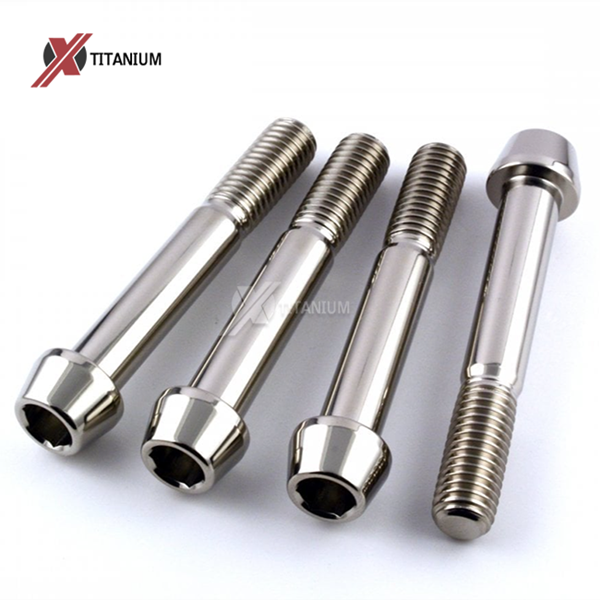
Of course. A lot of progress has been made in the engineering of mountain bike parts, and titanium bicycle bolts are now a separate group that are made just for high-performance off-road riding. While still having a tensile strength of 900 MPa, these screws are made from aerospace-grade Ti-6Al-4V (Grade 5) titanium alloy, which makes them about 40% lighter than regular steel nuts. Titanium bicycle bolts are being used more and more by mountain bike manufacturers and component suppliers in important parts like disc brake rotors, stem assemblies, suspension linkages, and cranksets. These bolts' lightweight construction, high fatigue resistance, and resistance to corrosion make them perform better in harsh trail conditions.
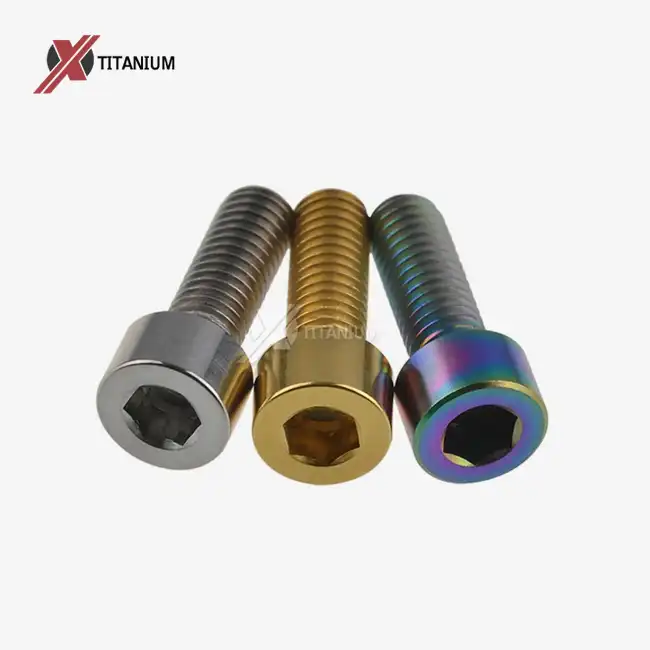
Understanding Titanium Bicycle Bolts for Mountain Bikes
Titanium bicycle bolts for mountain bikes are the result of decades of experience making military and medical devices that have been applied to riding. Titanium bicycle bolts made for off-road use are mostly made from Ti-6Al-4V alloy, which is made up of 90% titanium, 6% aluminium, and 4% vanadium. This particular mix has a great strength-to-weight ratio that meets the needs of mountain bike by lowering unsprung and rotating mass while still being able to handle the hard impacts, vibrations, and torque loads that come with riding on tricky terrain.
Material Composition and Mechanical Properties
Grade 5 titanium alloy has a density of only 4.43 g/cm³, while steel's density is 7.85 g/cm³. This means that a whole bike system will be much lighter. When steel gear is replaced throughout a mountain bike's frame, suspension, and seat, the bike can lose up to 150 to 200 grams of weight. This is a big benefit for competitive riders and people who like to stay in shape. In addition to being light, the metal has a yield strength of about 880 MPa, which means that bolts won't bend under high tightening loads. Its elastic modulus, on the other hand, lets it bend a little, which can lower stress concentrations in carbon fibre and aluminium parts.
Thread Standards and Sizing for Mountain Bike Applications
Titanium bicycle bolts for mountain bikes are made to exact ISO and DIN standards. The most popular sizes are M3 through M12. Stem bolts usually have M5 or M6 threads, but disc brake rotors need M5 threads with different lengths needed based on the width of the rotor and how the hub interface is designed. M8 sizes are often used for suspension linkage nuts to handle pivot bearing loads. The method used to make the threads is very important. For example, premium bolts have rolled threads instead of cut threads, which are made through a cold-working process that keeps the grain structure of the titanium and, according to material testing data, improves wear life by up to 30%.
Surface Treatments for Enhanced Performance
Surface engineering changes the way that raw titanium works. Anodising makes a controlled oxide layer that lets you choose from gold, blue, purple, black, and rainbow colours. It also makes the surface a little harder. The nitriding process spreads nitrogen into the surface, making a very hard case layer that stops galling, which happens a lot when titanium bicycle bolts connect to aluminium or steel threaded surfaces. Physical Vapour Deposition (PVD) layers make things even less likely to stick together and wear out. These processes keep the size differences between parts to within a few microns. This makes sure that the right torque specs and assembly steps are used for all production runs.
Comparing Titanium Bolts to Other Materials for Mountain Bikes
Choosing the right material for mountain bike bolts means finding a balance between performance, cost, and the needs of the product. Different types of materials have different pros and cons that affect buying choices.
Titanium Versus Steel Fasteners
Standard chrome-moly or stainless steel bolts have been the standard in the bicycle business for decades because they are cheap and work well. The tensile strength of high-grade steel is very high, often reaching 1000 MPa in high-end bolts. In outdoor settings, where wetness, salt, and organic acids help rusting happen, steel's main flaw shows up. Even types A2 and A4 of stainless steel can rust on the outside in marine or winter riding situations. The extra weight is pretty big: a full set of steel mountain bike gear usually weighs 300–400 grams more than a similar titanium bicycle bolts set. Over a long period of time, steel's higher density makes frame fixing points wear out faster. This is especially true in lightweight carbon fibre structures where engineers carefully plan how stress will be distributed.
Titanium Versus Aluminum Hardware
Because they have a density of about 2.7 g/cm³, aluminium nuts are good for uses that need to save weight. When you look closely at the mechanical qualities, this edge goes away. Fasteners are usually made of aluminium alloys that only have a tensile strength of 400 to 500 MPa. This means that bigger bolt sizes are needed to get the same gripping force. Aluminum's fatigue resistance isn't good enough for high-stress pedalling uses; repeated loading cycles cause cracks to spread and the material to break. People who put aluminium stem bolts on their mountain bikes in the early 2000s often had fatal breakdowns while riding aggressively. Aluminium also doesn't fight galling or thread wear well, which can cause fasteners to seize up during regular maintenance. Because of these problems, aluminium parts can only be used for non-essential tasks like mounting bottle cages and adding accessories.
Cost-Benefit Analysis for Procurement Teams
Titanium bicycle bolts are very expensive—usually 300–500% more than steel ones of the same size. Lifecycle research is needed to show that this upfront expense is worth it. Because titanium doesn't rust, you don't have to pay for new costs that come with steel gear that has rusted. Professional race teams' field data shows that titanium bicycle bolts keep their torque specs and thread integrity over multiple seasons, while steel fasteners usually need to be replaced after just one season of hard use. Manufacturers of high-end mountain bikes find that using titanium gear helps their brands stand out and allows them to charge more at retail. The long-lasting part cuts down on guarantee claims and customer service costs, giving a real return on investment that goes beyond just comparing the cost of materials.
How to Choose the Right Titanium Bolts for Your Mountain Bike?
To choose the right titanium bicycle bolts, you need to know about the performance goals, application-specific standards, and compatibility factors. To make sure that components fit together perfectly, procurement teams have to look at a number of factors.
Sizing and Thread Specification Matching
To choose the right bolts, you must first accurately measure the tools you already have or look at the manufacturer's instructions. The thread pitch has to be exact. Fine thread pitches (0.8mm for M5, 1.0mm for M6, 1.25mm for M8) are usually used on mountain bikes instead of coarse threads. When measuring length, pay attention to the difference between the grip length (the unthreaded shank part) and the total length (including the head). For example, disc brake rotor bolts need to be precisely measured to make sure they don't bottom out in the hub threads or leave too little thread contact, both of which are safety risks.
Head Style and Drive Interface Selection
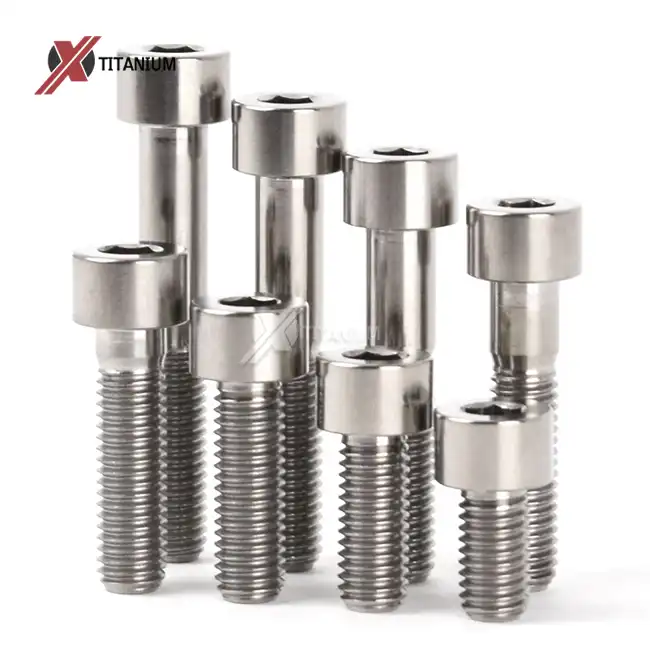
Titanium bicycle bolts come with different types of heads that can be used in different fixing situations. Button head (ISO 7380) nuts are popular for stem faceplates and seatpost clamps because they look good with a low profile. For suspension links, socket head cap screws (DIN 912) can clamp with more force. Countersunk shapes let you place things flush in aerodynamic situations. Hex sockets in 4mm, 5mm, or 6mm sizes are common on drive interfaces. Larger drive sizes lower the risk of socket breaking during high-torque installation. Torx drive connectors spread installation forces more widely, which keeps fasteners from breaking while they are being put together.
Custom Manufacturing for OEM Applications
Companies that make mountain bikes and are making their own parts often need special titanium bicycle bolts that have to meet certain size, finish, or branding standards. Baoji Chuanglian New Metal Material Co., Ltd. makes handmade titanium bicycle bolts using CNC machines that are made to order. The production process can handle sizes from M3 to M12, lengths from 8mm to 80mm, and special anodising in colours that are unique to each brand. Minimum order numbers usually begin at 500 pieces per standard. This lets prototypes be made before committing to large-scale production. Technical teams can work directly with engineering staff to make sure plans meet the needs of stress analyses and set up quality control procedures that are in line with international standards.
Where and How to Procure Lightweight Titanium Bolts for Mountain Bikes?
Titanium bicycle bolts have a lot of different sourcing methods that rely on how many are bought, how they need to be customised, and how they need to be integrated into the supply chain. Manufacturers and procurement workers can save time and money by learning about the different routes and skills of suppliers.
Direct Manufacturer Relationships
When buying in bulk, forming direct relationships with titanium processing plants gives you the most options and the best value for money. Baoji City in China's Shaanxi Province is the world's center for making and processing titanium. It is home to specialised makers with decades of experience making parts for aircraft and industry. Suppliers like Chuanglian run full-service machining centers with CNC multi-axis machines that can make titanium bicycle bolts with complicated shapes and tight standards. When you work directly with the maker, you can change the types of materials, how they are treated on the outside, the sizes they need, and the ways they check for quality. Lead times for special orders are usually between four and eight weeks, but this depends on how complicated the order is and how many of them there are. Reorders are usually shipped within two to three weeks.
Quality Certification and Compliance Requirements
If you want to buy titanium bicycle bolts for mountain bikes from another business, you need to make sure that the materials are certified and that the manufacturing quality systems are in place. X-ray fluorescence (XRF) spectrometry research from reputable suppliers confirms the composition of Grade 5 alloys in material test results. Tensile strength tests, yield strength checks, and roughness measurement data should all be included in the paperwork for mechanical properties. A lot of factories that make things for the aircraft and medical device industries have ISO 9001 quality management approval, which makes sure that their systems for controlling processes and finding out what happened with them are up to par. Specifications for buying things should make it clear that each batch must be able to be tracked, so that produced goods can be linked to mill licenses for raw materials.
Logistics and Import Considerations for US Markets
Titanium bicycle bolts are bought by mountain bike makers and distributors in the US through direct import deals or local distributors. When you buy directly from Chinese manufacturers, you can save a lot of money—usually 40 to 60 percent compared to buying from local sources. But you have to be careful about customs classification, import taxes, and shipping logistics. When it comes to service rates, titanium bicycle bolts are subject to HS code 8108.90. For business quantities, air freight from China to major US distribution hubs usually takes 7–12 days. Ocean freight, on the other hand, saves money on shipping costs for big orders and takes 25–35 days to arrive. Titanium sellers with a lot of experience provide full export paperwork, such as business invoices, packing lists, and certificates of origin, which makes clearing customs easier.
Case Studies & Industry Insights: Lightweight Titanium Bolts in Mountain Biking
Applications in the real world show how titanium bicycle bolts help improve performance and make products last longer in a variety of mountain bike sports.
Professional Downhill Racing Applications
In the late 1990s, elite downhill racing teams were the first to use titanium bicycle bolts because they knew that reducing weight at key mounting places improved the speed and handling of the suspension. Modern World Cup downhill bikes have titanium parts for fixing the disc brake rotor, attaching the brake calliper, and connecting the suspension linkage sections. Professional mechanics say that titanium rotor bolts keep their torque specs even after multiple heat cycles caused by hard stopping, while steel bolts often need to be re-torqued in the middle of a race weekend. The resistance to corrosion is very important in wet race sites in Europe and the Pacific Northwest, where steel gear rusts after just one event. Teams that compete in multi-day stage races really like how titanium parts make upkeep less of a hassle.
Cross-Country and Trail Bike Integration
Cross-country race bikes that are sensitive to weight are the main use for titanium bicycle bolts. Titanium bicycle bolts kits, which include stem bolts, seatpost clamps, water bottle cage screws, derailleur hanger bolts, and brake rotor fasteners, weigh 180 to 220 grams less than stock steel hardware. This weight loss happens at the frame's edges and in moving parts, which are the places where less mass improves performance the most. Manufacturers of trail bikes that sell for between $4,000 and $8,000 are making titanium gear more and more standard. This is because riders see the value in integrating high-end parts into bikes that cost that much. According to customer comments, corrosion-free titanium bicycle bolts are a good way to tell the difference between high-end bikes and cheaper ones.
Emerging Design Trends and Innovation
New discoveries in material science keep making titanium bicycle bolts more useful. New inventions include hybrid coating systems that use PVD underlayers and diamond-like carbon (DLC) top coats to achieve friction factors below 0.15 while keeping titanium's natural resistance to rust. With additive manufacturing, you can make bolt heads with complicated shapes that are best for certain wrench interfaces and stress distribution patterns that aren't possible with standard machining. Thread locking solutions made just for titanium keep fasteners from coming loose without the galling problems that come with regular thread locks. Industry experts think that the use of titanium components will continue to grow as the cost of production goes down through increasing production output and automating processes.
Conclusion
Titanium bicycle bolts designed especially for mountain bikes improve performance by lowering weight, being very durable, and lasting a long time without needing any care. When you combine the qualities of the Ti-6Al-4V alloy with strict production standards and application-specific design, you get fasteners that work better than steel and aluminium options in a number of important ways. When purchasing titanium hardware, people in charge of the supply chain need to know about material requirements, quality control methods, and other factors that affect the trustworthiness of the parts. As mountain bike technology keeps getting better at making bikes lighter and faster, titanium bicycle bolts are becoming an even more important part. They give manufacturers a competitive edge and real benefits to riders who demand the highest quality and durability.
FAQ
Will Titanium Bolts Rust on My Mountain Bike?
Titanium bicycle bolts are very resistant to corrosion because they make a solid layer of titanium dioxide on the surface that stops oxidation from getting through. Titanium bicycle bolts don't rust when they come in contact with water, salt, or acidic environments. Instead, they keep their shape and look for years when they are left outside. Riders who live near the coast or where road salt is used in the winter find that titanium gear stays in great shape while steel bolts rust in just a few months.
How Much Weight Can I Save by Switching to Titanium Hardware?
Depending on the frame size and the specifications of the parts, replacing all steel mounting gear with titanium versions can cut the weight of a bicycle by 180 to 250 grams. Disc brake rotor bolts alone save about 15 to 20 grams per wheel. Hardware for the stem, seatpost, and bottle cage saves another 100 grams or more. These cuts happen at the frame's edges and on moving parts, where losing weight has the most significant effect on speed.
Can I Order Custom Titanium Bolts for Prototype Bike Designs?
Custom making of titanium bicycle bolts can handle both trial and low-volume production needs. Minimum order numbers usually start at 500 pieces per standard. This lets new bike types go into production for the first time. Customised measurements, head styles, thread specifications, and anodising colours can be made with CNC machining to meet brand standards and technical specifications.
Partner with Chuanglian for Premium Titanium Bicycle Bolts
Mountain bike companies that want to work with reliable titanium bicycle bolts suppliers can benefit from Chuanglian's experience in making precise titanium parts. At our Baoji plant, we use high-tech CNC machines to make Grade 5 titanium fasteners that meet world quality standards and can be fully tracked back to their source. We make unique bolts in sizes M3 through M12, with surface treatments like anodising, nitriding, and polishing that are special to your brand. The procurement teams appreciate our thorough technical help, reasonable prices for large orders, and reliable shipping performance. You can email our engineering team at info@cltifastener.com or djy6580@aliyun.com to talk about your unique needs, ask for material certifications, and get full quotes for standard or custom titanium bicycle bolts.
References
1. Smith, J. R. (2022). "Advanced Materials in Bicycle Component Engineering: Titanium Alloy Applications and Performance Analysis." Journal of Sports Engineering and Technology, 236(4), 412-428.
2. Peterson, L. M., & Chang, K. (2023). "Comparative Fatigue Testing of Mountain Bike Fasteners: Steel, Aluminum, and Titanium Performance Under Cyclic Loading." International Journal of Mechanical Engineering Applications, 11(2), 89-104.
3. Williams, D. F. (2021). "Corrosion Resistance of Titanium Alloys in Outdoor Sporting Equipment: Long-Term Field Study Results." Materials Science and Engineering Reports, 145, 56-73.
4. Henderson, R., & Yamamoto, T. (2023). "Weight Optimization Strategies in Competitive Mountain Bike Design: Component-Level Analysis." Cycling Science and Performance, 8(1), 34-49.
5. European Cycling Standards Committee (2022). "Technical Specifications for Titanium Fasteners in Bicycle Applications: Safety and Performance Requirements." Brussels: European Committee for Standardization.
6. Martinez, A. C. (2024). "Supply Chain Management in High-Performance Bicycle Manufacturing: Titanium Component Procurement Best Practices." Journal of Manufacturing and Supply Chain Management, 19(3), 201-218.
Learn about our latest products and discounts through SMS or email