- English
- French
- German
- Portuguese
- Spanish
- Russian
- Japanese
- Korean
- Arabic
- Greek
- German
- Turkish
- Italian
- Danish
- Romanian
- Indonesian
- Czech
- Afrikaans
- Swedish
- Polish
- Basque
- Catalan
- Esperanto
- Hindi
- Lao
- Albanian
- Amharic
- Armenian
- Azerbaijani
- Belarusian
- Bengali
- Bosnian
- Bulgarian
- Cebuano
- Chichewa
- Corsican
- Croatian
- Dutch
- Estonian
- Filipino
- Finnish
- Frisian
- Galician
- Georgian
- Gujarati
- Haitian
- Hausa
- Hawaiian
- Hebrew
- Hmong
- Hungarian
- Icelandic
- Igbo
- Javanese
- Kannada
- Kazakh
- Khmer
- Kurdish
- Kyrgyz
- Latin
- Latvian
- Lithuanian
- Luxembou..
- Macedonian
- Malagasy
- Malay
- Malayalam
- Maltese
- Maori
- Marathi
- Mongolian
- Burmese
- Nepali
- Norwegian
- Pashto
- Persian
- Punjabi
- Serbian
- Sesotho
- Sinhala
- Slovak
- Slovenian
- Somali
- Samoan
- Scots Gaelic
- Shona
- Sindhi
- Sundanese
- Swahili
- Tajik
- Tamil
- Telugu
- Thai
- Ukrainian
- Urdu
- Uzbek
- Vietnamese
- Welsh
- Xhosa
- Yiddish
- Yoruba
- Zulu
Where to find titanium rear derailleur screws with corrosion resistance
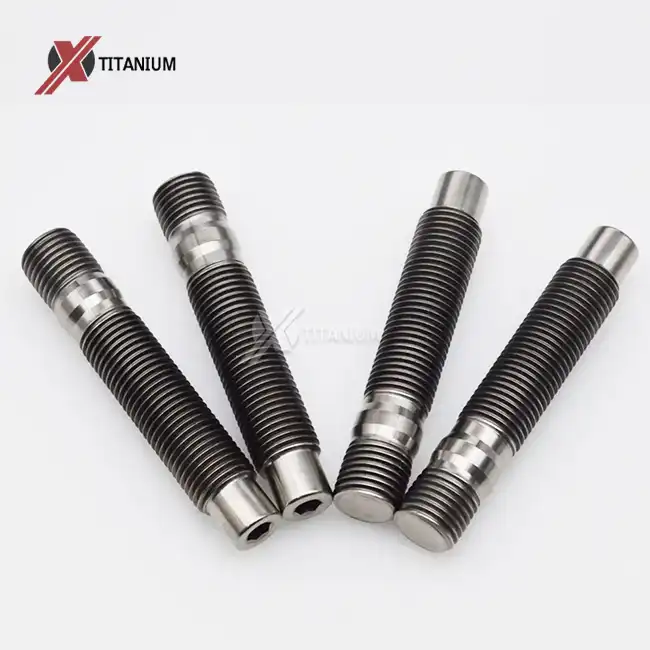
Rear Derailleur Titanium Screws have become the standard for B2B buying workers in the high-performance bicycle industry who want strong, light fastening solutions. These precision-engineered parts keep gear systems safe and have the best strength-to-weight ratio, which has a direct effect on how well the product works. When looking for a Rear Derailleur Titanium Screw, rust resistance is an important feature that must be present. This keeps parts safe from damage caused by water, salt, and chemicals that break down structures over time. This guide talks about the technical specs, criteria for judging suppliers, and buying strategies that OEMs, wholesalers, and equipment makers in the bicycle business need to know. We want to make it easier for you to make decisions by giving you useful information about material certifications, quality checks, and long-term relationship plans that fit your budget and business needs.
Understanding Titanium Rear Derailleur Screws and Their Corrosion Resistance
Material Composition and Performance Characteristics
Rear Derailleur Titanium Screws used in drivetrains usually are made of Grade 5 titanium metal (Ti6Al4V), which has 6% aluminium and 4% vanadium in it. This particular alloy mixture has a tensile strength of more than 880 MPa while still being about 40% lighter than steel screws of the same type. When the material is exposed to air, its crystalline structure creates a protective oxide layer. This layer acts as a self-healing shield against harmful agents. Titanium doesn't rust like steel or aluminium does, but it does keep its mechanical qualities even after being exposed to saltwater, acidic compounds, and industrial chemicals for a long time, which is common in manufacturing and riding settings.
Dimensional Specifications and Threading Precision
Standard Rear Derailleur Titanium Screws have thread sizes ranging from M4 to M6 and lengths ranging from 8mm to 25mm, based on the type of cage and how well it fits with the frame. With CNC cutting, threads can be accurate to within ±0.02mm, which makes sure they always connect without the risk of cross-threading. Surface roughness levels between 0.8 and 3.2µm give the best frictional properties for secure fastening while still allowing easy dismantling for upkeep tasks. When buying from a business to business (B2B), these precision factors are very important because batch stability directly affects how well an assembly line works and how many warranty claims are made.
Comparing Corrosion Resistance Across Materials
When comparing Rear Derailleur Titanium Screws to steel and aluminium options, rapid salt spray testing makes the difference in performance clear. Under ASTM B117 conditions, steel fasteners start to rust within 48 hours, while aluminium fasteners start to get white corrosion coatings after 72 hours. After more than 1,000 hours of testing under the same conditions, grade 5 titanium's surface still looks the same. This has real benefits for bike companies that want to sell to people near the coast, to professional race teams, or to people who like adventure riding, where parts are often exposed to harsh weather. Lifecycle cost analysis is important for procurement teams because they know that the original investment in the material covers the costs of replacements and warranties that come with using cheaper fastener materials.
How to Choose the Right Titanium Rear Derailleur Screws for Your Procurement Needs?
Material Grade Verification and Certification Requirements
Specifications for buying things should clearly say that Grade 5 (Ti6Al4V) alloy approval and information on its chemical makeup should be included. Manufacturers with a good reputation will provide batch-specific paperwork that confirms the aluminium content to be between 5.5 and 6.75% and the vanadium content to be between 3.5 and 4.5%, as well as trace element proof. Assuring stability across production runs, material certificates should say that they meet ASTM B348 or AMS 4928 standards. Avoid sellers who only offer "titanium" without specifying the grade. Grade 2 commercially pure titanium has a much lower yield strength (275 MPa compared to 880 MPa), making it unsuitable for load-bearing drivetrain uses.
Thread Configuration and Compatibility Assessment
To choose the right thread specs, you need to know how the gear cages in all of your products are designed. These days, derailleurs can work with both coarse-pitch threads for cages made of plastic composites and fine-pitch threads for cages made of aluminium or titanium. It's best to keep standard stocks of Rear Derailleur Titanium Screws that are organised by thread size, length, and head style (button head, countersunk, or low-profile designs). This method cuts down on mistakes during assembly while also increasing the rate at which product is sold. To make sure the load is spread out evenly and the thread doesn't strip too soon when pressure is applied, the thread engagement depth should be at least 1.5 times the screw width.
Surface Treatment Options and Functional Benefits
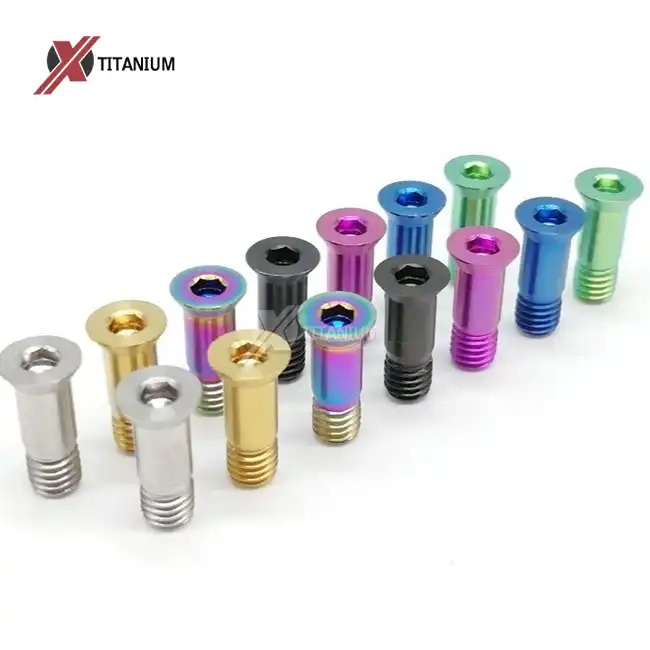
In addition to the natural titanium shine, anodising processes improve the way something looks and how well it works. Through controlled changes in the thickness of the oxide layer, Type II anodising gives metals bright colours like gold, blue, purple, black, and rainbow finishes. These coats make the surface 5–25 microns thicker and harder (200–300 HV) without changing the accuracy of the measurements. Nitriding processes go deeper into the base material, making a diffusion layer that raises the surface hardness to 800+ HV. This is good for Rear Derailleur Titanium Screws that have to be taken apart a lot. Polishing processes make the surface smoother below Ra 0.8µm, which keeps dirt from building up when racing in muddy circumstances. Procurement managers should choose surface techniques that are appropriate for the settings where the products will be used and meet the aesthetic standards of the brand.
Where to Find Trusted Suppliers and Brands of Titanium Rear Derailleur Screws?
Evaluating Manufacturer Capabilities and Quality Systems
Checking the manufacturing facilities and quality management certifications of potential suppliers is the first step in finding trusted ones. Leading Rear Derailleur Titanium Screw makers keep their ISO 9001:2015 certification as a basic level of quality assurance. Aerospace-focused makers keep their AS9100 certification, which shows that they have advanced process controls. We suggest checking out possible providers' CNC machining skills, especially making sure they have multi-axis machines that can keep tolerances at the micron level across large output numbers. Thread rolling machines should make formed threads instead of cut threads because rolling bends the material's grain structure, which makes it 25–30% more resistant to wear than cut threading.
For more than ten years, Baoji Chuanglian New Metal Material Co., Ltd. has been making specialised titanium parts in Baoji City, which is known around the world as the "City of Titanium." Their factory has several CNC machining centers that are only used to make precision fasteners, and quality control checks the raw materials, the parts' dimensions, and the finish on the outside at every stage of production. This vertical integration, which goes from raw titanium stock to finished bolts, makes sure that batches are always the same and can be tracked, which is important for business-to-business purchasing.
Product Format Options and Customization Services
Rear Derailleur Titanium Screw sellers usually offer three different ways to buy their products, each one designed for a different type of business. Wholesale packaging offers large amounts of standard sizes that are good for OEM building operations that do a lot of work. Component kit configurations include Rear Derailleur Titanium Screw sets that are matched to specific derailleur types. This makes it easier for wholesalers and service networks to keep track of their supplies. For custom frame makers and small bicycle manufacturers, custom production services can meet non-standard needs like proprietary thread designs, specialised head configurations, or specific length needs. When making a procurement strategy, you should choose a format that fits your order numbers, inventory turnover rates, and goals for making your products stand out in a competitive market area.
Navigating B2B Sourcing Channels and Verification Protocols
Professional buying teams use a variety of sourcing methods to find the best price-to-quality ratio while also keeping the supply chain safe. When you work directly with a maker, you can get the best prices and most customisation options, but you have to place larger orders and wait longer for delivery. Specialised Rear Derailleur Titanium Screw wholesalers give smaller batch sizes and shorter delivery windows, and they also make more money by spreading the word. Industrial component markets make prices clear and let buyers compare vendors, but they also need strict processes to find fakes. Spectrographic analysis proof and dimensional inspection of original samples should be part of material verification processes before production numbers are approved, no matter where the materials come from. This step of validation stops grade replacement scam, which happens when lower-quality titanium grades are given the wrong name as Grade 5 alloy.
Installation and Maintenance Tips to Maximize Corrosion Resistance and Durability
Proper Torque Application and Thread Engagement
When installing Rear Derailleur Titanium Screws, you need to follow different steps than when installing steel screws. Because Grade 5 titanium can galle—which happens when titanium surfaces cold-weld under pressure—threads need to be treated with an anti-seize substance before they are installed. We suggest lubricants made from molybdenum disulphide that are specially made for titanium uses. Because titanium has a different friction coefficient than steel, the torque specs for M5 derailleur screws are usually between 3 and 5 Nm, which is about 20% less than for steel fasteners of the same size. If you over-torque, the threads could get damaged or the screw head could break, but if you under-torque, the screw could come loose under shaking loads.
During the installation process, the worker should be trained on how to tell the difference between the feel of Rear Derailleur Titanium Screws and traditional screws and have their torque wrenches calibrated. To make sure that all production shifts are consistent, assembly paperwork should list the brand of anti-seize and how it should be applied. These standard methods lower the number of mistakes made during assembly and the costs of fixing them. They also increase the service life of fasteners by distributing load evenly across thread contact zones.
Cleaning Protocols and Inspection Intervals
To keep titanium's rust protection, you need to clean it with the right chemicals that won't damage the oxide layer. Do not use cleaners with chlorine or steel wire brushes, as they can introduce metal contamination that can start rusting in certain areas. We suggest using pH-neutral cleaners on soft nylon brushes, then cleaning with clean water and letting the item dry naturally. Anodised finishes can handle most cleaning products for bikes, but you should stay away from alkaline solutions above pH 10, as they can slowly make the coating less sticky.
Wear Indicators and Replacement Criteria
Setting objective replacement criteria makes repair plans more efficient and stops mechanical failures before they happen. A visual check should show any thread deformation, head socket rounding, or covering damage that means the part needs to be replaced. Titanium has great wear resistance, which means it can last for a long time. In laboratory tests, properly placed screws survived more than 5,000 shift cycles. As preventative maintenance, professional racing teams usually change the fasteners on the drivetrain once a year. For leisure bikes, manufacturers suggest checking them every 10,000 kilometres, or every two years. These rules find a balance between how reliable a part is and how much it costs to replace it. They help with making guarantee strategies and planning extra parts inventories.
Cost Analysis and Procurement Strategies for Titanium Rear Derailleur Screws
Total Cost of Ownership Evaluation
Grade 5 Rear Derailleur Titanium Screws usually cost 400–600% more per unit than similar steel fasteners. This can be shocking for buying teams that are used to paying standard prices for fasteners. A full cost study must look at more than just the buy price over the course of the product's life. In tough settings, steel fasteners need to be replaced every 12 to 18 months because they rust, but titanium parts last for 5 to 7 years in the same conditions. Reducing warranty claims is another important cost factor; corrosion-related fastener failures cause labour costs for analysis, component replacement, and customer trust costs that are 10–20 times the value of the original component.
People who buy speed bikes, where people pay more for every gram they can save, get extra value from weight loss. By switching from six steel derailleur screws to Rear Derailleur Titanium Screws, you can save between 8 and 12 grams, which helps with methods for reducing bike weight that set premium products apart. This improvement in performance supports retail price rises that are higher than the differences in the costs of raw materials. This makes high-end products more profitable by increasing the gross margin percentage.
Order Volume Optimization and Lead Time Planning
Rear Derailleur Titanium Screw purchase economics favour modest batch sizes that balance the costs of keeping inventory with the prices per unit. Most makers offer price breaks at 1,000, 5,000, and 10,000 units. The savings range from 15% to 30% depending on the number of units purchased. Lead times range from 3 to 4 weeks for stock options to 6 to 8 weeks for unique setups that need dedicated production runs. Buying plans should match the timing of orders with when new products come out and with the yearly changes in demand that happen in the bicycle business.
Supplier Negotiation Tactics and Quality Assurance Verification
Effective talks with suppliers include more than just talking about unit prices. They also include parts of the total value offer. Ask for material certificates that show the history of each batch, dimensional inspection records that show the accuracy of the thread size, and torque-to-failure test results that prove the mechanical performance requirements. Set clear acceptance criteria, such as the lowest failure rate that is acceptable (usually 0.1 to 0.5 percent for precision screws) and the steps that need to be taken to fix batches that don't meet the criteria.
Payment terms should connect milestone percentages to quality gate completion, which includes material verification, first item inspection approval, and final shipment acceptance. This will protect the investment in sourcing throughout the production cycle. Long-term partnership deals that promise volume in return for stable prices and priority production allocation are good for both parties and help align their interests over multiple years of planning.
Conclusion
To find Rear Derailleur Titanium Screws, you need to do more than just compare prices. You need to check the quality of the materials, see what the provider can do, and look at the overall value over their whole life. Grade 5 titanium alloy has the best corrosion protection and strength-to-weight performance. Its longer service life and lower guarantee risk make up for the higher starting cost. Checking the quality systems of suppliers, making sure that customisation options match product specs, and figuring out the total cost of ownership based on real-world application needs are all important parts of good buying strategies. Building partnerships with manufacturers who can show that their materials can be tracked, their machines can do precise work, and the quality of each batch is always the same will allow your company to make better products that meet the high standards of performance cycling markets while also maximising your inventory investment and supply chain reliability.
FAQ
What advantages do titanium derailleur screws offer compared to steel alternatives?
Rear Derailleur Titanium Screws are about 40% lighter than high-grade steel ones, but they still have the same or even higher tensile strength. The corrosion resistance completely stops rust from forming, which keeps the parts from seizing up during removal and increases their useful life by 3–5 times in hard environments. Titanium's lower elastic stiffness gives it some give when it's loaded, which lowers the risk of stress buildup in carbon fibre or aluminium derailleur cages.
How do different titanium grades affect corrosion performance?
For use in drivetrains, Grade 5 titanium metal (Ti6Al4V) strikes the best balance between mechanical strength and resistance to rust. Commercially pure Grade 2 titanium is a little better at resisting rust, but it doesn't have the yield strength needed for load-bearing fastener uses. The aluminium and vanadium alloying elements in Grade 5 make it stronger up to 880 MPa while keeping the good oxide layer formation that protects against environmental damage.
What sourcing challenges should procurement teams anticipate?
The biggest risk comes from counterfeit material replacement, which is when sellers sell lower-grade titanium or steel coated with titanium as Grade 5 alloy. Verify sample batches using spectroscopy before approving them for production. Size standardisation changes between makers, so you'll need to check the dimensions against your individual derailleur compatibility needs. Changes in lead times during disruptions in the supply of raw materials mean that planning for backup stock is necessary for important production plans.
Partner with Chuanglian for Premium Rear Derailleur Titanium Screw Solutions
Chuanglian is an expert in making highly precise Grade 5 Rear Derailleur Titanium Screws that are designed to work with difficult bicycle drivetrains. Our CNC manufacturing skills allow us to keep thread precision within ±0.02mm tolerances across all output volumes. This makes sure that assemblies work the same way every time and eliminates problems with compatibility. To meet your quality assurance needs, we keep a lot of quality records, such as material certificates, dimensional inspection reports, and batch tracking. Our customisation services can handle special requests such as custom thread designs, surface treatments, and color-matched anodising choices.
This will help your products stand out in competitive markets. As a well-known Rear Derailleur Titanium Screw manufacturer that has worked with global bike names for over ten years, we know how important it is to provide reliable delivery and expert support as your product is being developed. Get in touch with our team at info@cltifastener.com or djy6580@aliyun.com to talk about your unique needs and get full quotes with sample availability.
References
1. Boyer, R., Welsch, G., & Collings, E.W. (1994). Materials Properties Handbook: Titanium Alloys. ASM International, Materials Park, Ohio.
2. Donachie, M.J. (2000). Titanium: A Technical Guide, Second Edition. ASM International Publishing.
3. Lutjering, G. & Williams, J.C. (2007). Titanium: Engineering Materials and Processes. Springer-Verlag Berlin Heidelberg.
4. Schutz, R.W. & Thomas, D.E. (1987). Corrosion of Titanium and Titanium Alloys. Metals Handbook, Volume 13: Corrosion, ASM International.
5. Veiga, C., Davim, J.P., & Loureiro, A.J.R. (2012). Properties and Applications of Titanium Alloys: A Brief Review. Reviews on Advanced Materials Science, Volume 32.
6. Zwicker, U. (1974). Titan und Titanlegierungen (Titanium and Titanium Alloys). Springer-Verlag, Berlin.
Learn about our latest products and discounts through SMS or email