- English
- French
- German
- Portuguese
- Spanish
- Russian
- Japanese
- Korean
- Arabic
- Greek
- German
- Turkish
- Italian
- Danish
- Romanian
- Indonesian
- Czech
- Afrikaans
- Swedish
- Polish
- Basque
- Catalan
- Esperanto
- Hindi
- Lao
- Albanian
- Amharic
- Armenian
- Azerbaijani
- Belarusian
- Bengali
- Bosnian
- Bulgarian
- Cebuano
- Chichewa
- Corsican
- Croatian
- Dutch
- Estonian
- Filipino
- Finnish
- Frisian
- Galician
- Georgian
- Gujarati
- Haitian
- Hausa
- Hawaiian
- Hebrew
- Hmong
- Hungarian
- Icelandic
- Igbo
- Javanese
- Kannada
- Kazakh
- Khmer
- Kurdish
- Kyrgyz
- Latin
- Latvian
- Lithuanian
- Luxembou..
- Macedonian
- Malagasy
- Malay
- Malayalam
- Maltese
- Maori
- Marathi
- Mongolian
- Burmese
- Nepali
- Norwegian
- Pashto
- Persian
- Punjabi
- Serbian
- Sesotho
- Sinhala
- Slovak
- Slovenian
- Somali
- Samoan
- Scots Gaelic
- Shona
- Sindhi
- Sundanese
- Swahili
- Tajik
- Tamil
- Telugu
- Thai
- Ukrainian
- Urdu
- Uzbek
- Vietnamese
- Welsh
- Xhosa
- Yiddish
- Yoruba
- Zulu
Are there specific coatings available for motocross titanium bolts?
Yes — and the answer matters more than most riders and procurement engineers initially assume. Motocross titanium bolts manufactured from Grade 5 Ti-6Al-4V alloy already deliver impressive baseline performance, including a tensile strength of 930 MPa, temperature resistance up to 600°C, and inherent corrosion resistance. However, in real-world racing conditions involving mud, acidic soil, high-pressure washing, and thermal cycling, surface coatings provide a measurable performance edge. Selecting the right coating can extend service life, prevent galling, and reduce maintenance frequency across brake systems, engine mounts, suspension hardware, and exhaust assemblies.
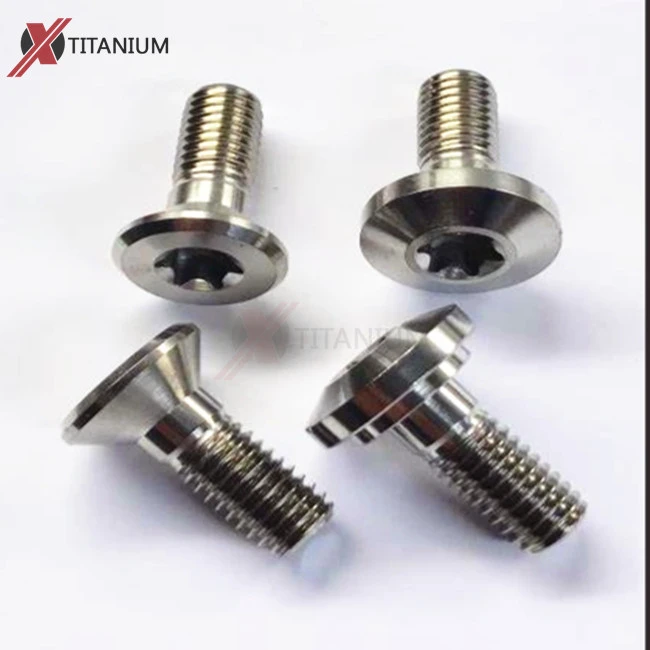
Why Bare Titanium Alone Is Not Always Enough?
Titanium's natural oxide layer does protect against rusting. There is a lot of proof of that. But "not corroded" does not mean "no upkeep needed." Uncoated titanium bolts often galle when they are exposed to high-frequency vibrations from single-cylinder race engines. Galling is a cold-welding event in which two titanium surfaces seize up due to pressure and friction. This is a big problem for aluminum engine cases because the difference in electrochemical potential between titanium (cathodic) and aluminum (anodic) makes it possible for galvanic corrosion to happen when mud or water is used as an electrolyte.
The Real-World Cost of Uncoated Fasteners
When racing teams and OEM purchasing managers don't clean the surface, they often end up with exhaust studs that won't turn, suspension hardware that comes loose, and threads that break down too quickly. These problems are real; they cause downtime, cost a lot of money to repair, and put people's safety at risk. Putting on the right surface treatment on titanium fasteners doesn't cost much compared to the value of the whole set, and it makes service intervals much longer.
Types of Coatings Available for Motocross Titanium Bolts
High-performance motocross titanium bolts used in off-road racing are coated with a number of tried-and-true methods. Each one has a different function, and procurement engineers can be more specific when they know the differences.
Here is a list of the main finishing choices that are offered right now:
- Anodizing (Type II): This electrochemical process builds a controlled oxide layer on the titanium surface. It is primarily aesthetic — producing colors such as gold, blue, green, purple, and rainbow — but also provides mild corrosion insulation that helps reduce galvanic interaction with aluminum components. It does not meaningfully increase surface hardness.
- Hardcoat Anodizing (Type III): A denser, thicker variant of standard anodizing, hardcoat delivers improved wear resistance and better dielectric properties. It is well-suited for fasteners in suspension pivot areas and axle hardware where contact friction is elevated.
- Titanium Nitride (TiN) Coating: Applied via Physical Vapor Deposition (PVD), TiN produces a gold-toned, ceramic-hard surface with a hardness rating exceeding 2,000 HV. It dramatically reduces friction coefficients and resists adhesive wear. TiN-coated bolts perform well in high-temperature zones like exhaust manifolds, consistent with titanium's thermal tolerance up to 600°C.
- Diamond-Like Carbon (DLC): DLC coatings achieve hardness values between 1,500 and 3,000 HV depending on formulation. They provide the lowest friction coefficient of any available coating, making them ideal for bolts in sliding contact environments. DLC also contributes genuine functional value beyond aesthetics, contrary to a common misconception about "colored" titanium fasteners.
- Nitriding: A thermochemical diffusion process that integrates nitrogen into the surface layer of the titanium. Unlike coatings applied on top of the substrate, nitriding modifies the material itself, producing exceptional hardness and wear resistance without adding measurable thickness — an advantage in precision-threaded applications.
You can't switch these coats out for each other. The engineering purpose of a DLC-coated bolt made for brake caliper hardware is different from that of an anodized fastener used on a subframe. In order to choose the right treatment, the coating's qualities must be matched to the unique mechanical and environmental needs of each application zone.
How to Select the Right Coating for Your Application?
The first step in the hiring process for motocross titanium bolts should be an honest look at the work setting. For fasteners on exhaust systems that are exposed to long-term heat, TiN or nitriding is the right choice. Bolts on suspension links are always moving against each other. Hardcoat anodizing or DLC coating provides wear protection that can be measured. Any type of anodizing can provide the galvanic separation that fasteners in metal cases need. This insulation layer works especially well when used with anti-seize paste.
Key Performance Metrics to Evaluate
Three things should be taken into account when choosing a coating for industrial or race use: the surface hardness (HV), how well the coating sticks to the metal, and how it affects the thread specs. For Grade 5 titanium bolts that are threaded to ISO 6g standards (M6, M8, M10), a coating that makes them too thick can make it hard for the Go/No-Go gage to work. PVD coatings, such as TiN and DLC, are usually put on at a thickness of 2 to 5 microns, which is fine for precision-threaded fasteners. Nitriding doesn't change the dimensions much, which makes it useful for applications with tight tolerances.
Supplier Evaluation Criteria
A good supplier should give you material certifications that can be tracked, written instructions on how to coat the material, and tensile and hardness test reports for each batch. It is necessary to have ISO 9001 certification. For aerospace-related purchases or motorsport OEM purchases, providers who are familiar with AS9100 show that they know how to follow the process discipline that goes straight into making motocross-grade fasteners.
Installation and Maintenance Tips for Coated Titanium Fasteners
To keep the surface consistency of coated screws, they need to be handled in a certain way. Even a DLC-coated bolt can lose its speed benefit if it is put in the wrong way.
Best Practices During Installation
When putting motocross titanium bolts into aluminum threads, you have to use anti-seize compound or copper paste. Titanium tends to gall, which means that dry fitting almost always leads to damage. When it comes to torque values, you should stick to what the OEM says. Since Grade 5 titanium has a yield strength of about 880 MPa, which is similar to high-grade steel, factory torque values are usually fine to use, but you should never go over them. When working with coated fasteners, you should not use an impact wrench. Instead, hand-torquing with a calibrated wrench will protect both the coating and the thread surface.
Cleaning and Inspection Intervals
You can clean anodized screws with water and light soap. Do not use rough pads that can scratch the oxide layer. Even though DLC and TiN coats are chemically neutral and can handle most cleaning agents, you should still stay away from acidic degreasers to protect the thread surfaces. After each race, visually check the coated nuts. Pay special attention to the thread roots and bearing faces, which are where coating wear shows up first.
Procurement Insights: Sourcing Coated Titanium Fasteners at Scale
As more motocross OEMs and aftermarket race teams choose Grade 5 alloys over steel in weight-sensitive assemblies, the North American market for performance titanium fasteners has grown steadily. When teams buy coated fasteners in bulk, they can save money on each unit, especially if they stick to the same coating specs for all of their bike setups.
Price isn't the only thing that counts when choosing a motocross titanium bolts provider. Technical help is just as important. Instead of just offering one finish, suppliers who can help choose the right coating for each application zone show that they know their stuff when it comes to applications, which is important for long-term contracts. Customization options, such as OEM-specific thread sizes and unique color coding, make the product even more valuable for race teams that need to keep a lot of fasteners on hand.
Conclusion
When used in motocross settings, coatings really make motocross titanium bolts more useful. Anodizing takes care of both galvanic isolation and looks. TiN and DLC make the surface harder and less rough where there is a lot of wear. For uses that need to be very precise, nitriding builds safety right into the material. Grade 5 Ti-6Al-4V is still the most popular alloy. Its 930 MPa tensile strength, temperature range of up to 600°C, and natural resistance to corrosion make it a strong base that can then be improved with surface treatments to suit different conditions. When you buy something with coating specifications in mind, it lasts longer and costs less to maintain. It also works better during race seasons.
FAQ
Q1: Can I use the same torque values for coated titanium bolts as OEM steel?
A: Generally, yes. Grade 5 titanium has comparable yield strength to standard OEM steel. However, always apply anti-seize paste to account for titanium's sensitivity to galling, which alters the friction coefficient slightly.
Q2: Does anodizing provide real corrosion protection or is it only cosmetic?
A: Anodizing creates a dielectric oxide layer that reduces galvanic interaction between titanium and aluminum components. While it is primarily aesthetic, it serves a functional role in electrically insulating dissimilar metals — especially important when titanium bolts are installed in aluminum engine cases.
Q3: Are DLC-coated titanium bolts worth the additional cost?
A: DLC coatings provide measurable reductions in friction and significantly higher surface hardness compared to uncoated titanium. For fasteners in sliding contact zones — suspension linkages, brake hardware — the functional benefit justifies the cost differential over a full racing season.
Q4: Will coating thickness affect thread fitment?
A: PVD-based coatings like TiN and DLC are applied at 2–5 microns, which typically falls within ISO 6g thread tolerance. Nitriding adds negligible dimensional change. Always confirm dimensional compliance with your supplier before installation on precision-threaded components.
Partner With Chuanglian for Your Next Titanium Fastener Order
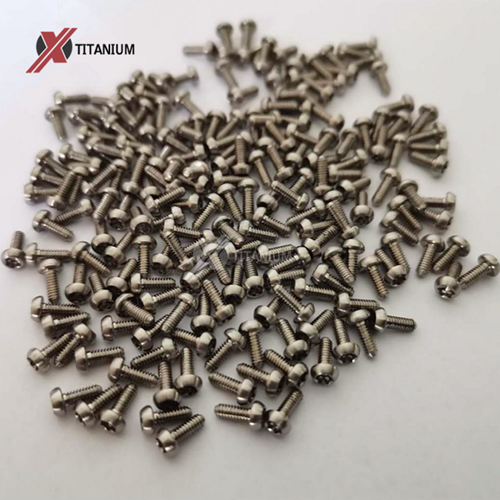
Precision-engineered Grade 5 Ti-6Al-4V bike titanium bolts are available from Chuanglian. The bolts can have their surfaces polished, anodized, nitrided, and coated with PVD in gold, blue, black, purple, green, and rainbow colors. Every bolt meets strict standards for tensile strength, thread integrity, and surface finish, and all of the materials used can be tracked back to the source. Bolts come in M6, M8, M10, and special thread sizes. Based in Baoji, China's titanium production hub, Chuanglian is an experienced maker of motocross titanium nuts that works with OEMs to buy in bulk, meet unique needs, and form long-term supply partnerships. You can email the expert team at info@cltifastener.com or djy6580@aliyun.com to get a price.
References
1. ASM International. Titanium: A Technical Guide. ASM International, 2000.
2. Boyer, R., Welsch, G., & Collings, E. W. Materials Properties Handbook: Titanium Alloys. ASM International, 1994.
3. Donnet, C., & Erdemir, A. Tribology of Diamond-Like Carbon Films: Fundamentals and Applications. Springer, 2008.
4. Rack, H. J., & Qazi, J. I. "Titanium Alloys for Biomedical Applications." Materials Science and Engineering: C, 2006.
5. Sheppard, T. Titanium Alloys: Processing and Applications in Aerospace Engineering. Materials Today, 2015.
6. Budinski, K. G. "Tribological Properties of Titanium Alloys." Wear, 1991.
Learn about our latest products and discounts through SMS or email