- English
- French
- German
- Portuguese
- Spanish
- Russian
- Japanese
- Korean
- Arabic
- Greek
- German
- Turkish
- Italian
- Danish
- Romanian
- Indonesian
- Czech
- Afrikaans
- Swedish
- Polish
- Basque
- Catalan
- Esperanto
- Hindi
- Lao
- Albanian
- Amharic
- Armenian
- Azerbaijani
- Belarusian
- Bengali
- Bosnian
- Bulgarian
- Cebuano
- Chichewa
- Corsican
- Croatian
- Dutch
- Estonian
- Filipino
- Finnish
- Frisian
- Galician
- Georgian
- Gujarati
- Haitian
- Hausa
- Hawaiian
- Hebrew
- Hmong
- Hungarian
- Icelandic
- Igbo
- Javanese
- Kannada
- Kazakh
- Khmer
- Kurdish
- Kyrgyz
- Latin
- Latvian
- Lithuanian
- Luxembou..
- Macedonian
- Malagasy
- Malay
- Malayalam
- Maltese
- Maori
- Marathi
- Mongolian
- Burmese
- Nepali
- Norwegian
- Pashto
- Persian
- Punjabi
- Serbian
- Sesotho
- Sinhala
- Slovak
- Slovenian
- Somali
- Samoan
- Scots Gaelic
- Shona
- Sindhi
- Sundanese
- Swahili
- Tajik
- Tamil
- Telugu
- Thai
- Ukrainian
- Urdu
- Uzbek
- Vietnamese
- Welsh
- Xhosa
- Yiddish
- Yoruba
- Zulu
Are there specific design considerations when using titanium socket cap bolts in high-vibration environments?
Yes, there are critical design considerations when using titanium socket cap bolts in high-vibration environments. The selection of proper material grade, bolt geometry, surface treatment, and installation protocols directly impacts fastener reliability and safety. M10 Titanium Torx Socket Cap Bolts for Ducati Motorcycle Bike applications exemplify how advanced engineering addresses vibration-induced failures. Grade 5 titanium alloy (Ti6Al4V) with CNC-machined precision, Torx drive interface, and anodized surface treatments ensures optimal torque transfer, fatigue resistance, and corrosion protection under extreme operating conditions characteristic of high-performance motorcycles.
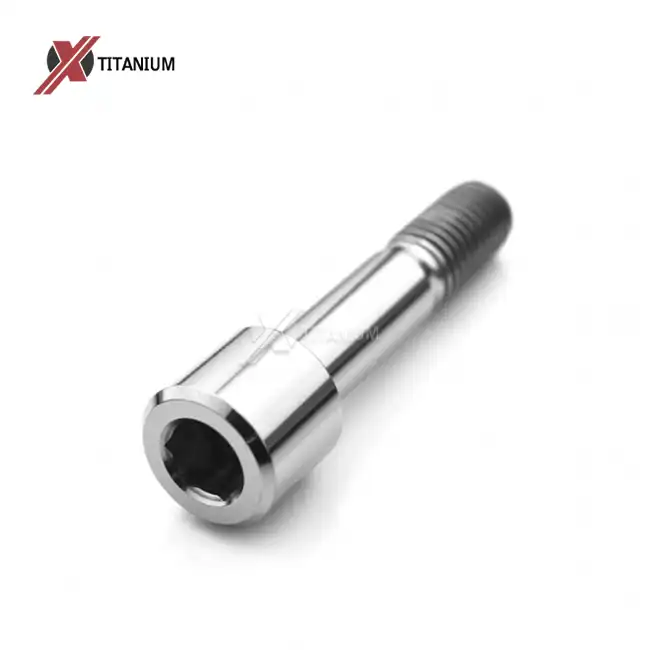
Understanding the Challenges of High-Vibration Environments
High-performance bikes, like Ducati types, have strong vibrations that come from a number of different places. When the engine burns, it sends waves that are repetitive through the frame. Uneven roads, on the other hand, add shock loads that are hard to predict. When the RPM changes as the speed goes up and down, it creates cyclic stress patterns that test the durability of every fastener.
These movements put a lot of mechanical stress on nuts, which leads to three main types of failure. When dynamic loads are higher than preload tension, spinning and thread separation happen. When repeated stress cycles are higher than a material's endurance limits, especially at thread roots and head-to-shank changes, fatigue cracking happens. Fretting corrosion happens at contact areas where tiny movements eat away protective oxide layers, which speeds up the breakdown of materials (SAE International, 2019).
Real-World Consequences of Inadequate Fastener Design
Racing teams and maintenance engineers have kept records of many times when regular steel bolts failed horribly in the pivots and engine mounts of Ducati motorcycles. It has been reported that calliper mounting bolts came loose while the track was being used, which put the brake system at risk. After only 5,000 kilometres of hard riding, another case study found fatigue cracks in the fasteners that hold the suspension linkage together. These fails show why procurement managers and design engineers put a high value on fastener specs that meet the severity of the application.
Aerospace offers tried-and-true methods that can be used in motorbike engineering. Like high-RPM motorcycle engines, aircraft engine mounts have to deal with vibrations. Aerospace-grade titanium fasteners made to AS9100 standards have been used for decades and have been shown to be reliable. The design ideas can be used in automotive uses as well.
Key Design Considerations for Titanium Socket Cap Bolts
Choosing the right material is the first step in designing vibration-resistant M10 Titanium Torx Socket Cap Bolts for Ducati Motorcycle Bike. Grade 5 titanium alloy (Ti6Al4V) has a tensile strength of more than 895 MPa and a mass that is 45% less than alloy steel. This strength-to-weight ratio lowers the amount of unsprung mass in the suspension parts, which directly makes the ride quality and control better. Because the material doesn't corrode naturally, it forms a stable oxide layer that guards against chemicals, road salt, and water without the need for extra coats.
Optimising the geometry of bolts takes into account both stress concentration and fatigue resistance. Instead of cut threads, rolled threads squeeze the structure of the surface grains, which boosts wear strength by 20–30% compared to regular manufacturing. Radiated transitions between the shank and the head spread stress more widely and get rid of the sharp edges that are often the start of cracks. For most motorcycle structural joints, the M10 thread size is the best balance between clamping force and material cross-section.
Torx Drive Interface Advantages
High-quality titanium screws with the Torx 50 hole design solve a problem that keeps coming up in high-torque assembly. Traditional hex drives "cam-out" when the fitting force gets close to the limits set by the manufacturer, which damages the tool and the bolt. The six-lobe Torx shape makes the contact area about 35% bigger, spreading torque loads over more surface areas. This design keeps the tool from slipping and damaging the head during installation and lets you achieve uniform preload, which is important for vibration protection.
Surface Treatment Engineering
Surface treatments improve performance beyond the properties of the base material. When you polish, you get rid of the marks left by cutting that could cause stress cracks. Anodising makes a controlled oxide layer 10 to 25 microns thick, which makes the surface harder and less likely to wear down. This treatment also lets you use colour coding, which comes in natural titanium, gold, blue, green, purple, black, and rainbow finishes. This makes it easier to see what you're checking during assembly and manage your inventory. Nitriding spreads nitrogen into the top layers, making a very hard case that doesn't rust when titanium touches aluminium or titanium parts.
CNC machining makes sure that the dimensions are exact, which is needed for regular thread contact. Tolerances are kept within 0.02 mm by automated manufacturing, which makes sure that parts fit together correctly. This level of accuracy gets rid of any looseness that could let small moves happen and cause damage from wear and tear.
Titanium vs Steel Torx Socket Cap Bolts for Ducati Motorcycles
Comparative research shows that titanium has real benefits that make up for its higher cost in difficult situations. Knowing these differences helps buying managers make smart choices about where to buy things that meet performance needs and total ownership costs.
For obvious reasons, losing weight is the most obvious benefit. A full fastener kit for the Ducati Panigale engine and suspension usually has between 40 and 60 bolts. Using titanium instead of steel lowers the overall weight by 400 to 600 grams, which is a big difference in unsprung and rotating assemblies. Less unsprung weight lets the suspension parts react more quickly to changes in the road surface, which makes the tires stick to the road better and improves driving precision.
Strength traits need to be evaluated in a complex way for M10 Titanium Torx Socket Cap Bolts for Ducati Motorcycle Bike. It looks like Grade 5 titanium's tensile strength of 895 MPa is weaker than Grade 10.9 steel's 1040 MPa number, but this is not true. Titanium stays strong over a higher temperature range, from -40°C to +400°C. It doesn't break easily at low temps or become soft at high temperatures. Steel fasteners lose preload as temperatures change, but titanium clamping force stays the same no matter what the conditions are.
Corrosion resistance has long-term benefits that are often missed when buying something for the first time. Zinc plating or other protective coatings are needed for steel fasteners, but they wear off over time, especially when they are exposed to salt water and go through changes in temperature. Titanium makes an oxide layer that covers the main material and heals itself over time. Titanium fasteners last for decades on motorcycles that are stored outside or ridden near the coast, but steel ones need to be replaced every two to three years to keep them from seizing up and causing structural damage.
Lifecycle cost study shows that it makes economic sense. At first, titanium bolts usually cost three to four times more than high-quality steel fasteners. Over a 10-year service period, however, not having to replace things as often, avoiding damage from corrosion, and not having to fix things that broke down will save money. After switching to aerospace-grade titanium gear, racing teams say they have to do 60% less upkeep on fasteners.
Installation Best Practices for M10 Titanium Torx Socket Cap Bolts on Ducati
Titanium fasteners are designed to perform better, and when they are installed correctly, those benefits are maximised. To keep titanium from getting damaged and to make sure it works well, technical staff and assembly staff must know how to handle it in a certain way.
Compatibility Verification
Ducati uses the M10 bolt size for many things, like swingarm pivots, engine mounts, calliper brackets, and subframe fittings. For each model, the procurement requirements must check the bolt length, thread size (usually 1.25mm or 1.5mm), and head clearance. Customised specs that match Ducati engineering drawings make sure that the parts fit correctly. Using ISO 14579 guidelines or manufacturer-specific measurements keeps gear from being installed incorrectly.
Torque Specification Adherence
Because it has less friction, titanium needs different force values than steel. If you use steel torque specs on titanium fasteners, you could damage the threads by over-torquing them. Manufacturer torque specs take into account the properties of the material and how it has been treated on the outside. For example, M10 titanium bolts need 40–45 Nm of power, while steel screws of the same size need 60–70 Nm. Digital torque tools that are adjusted once a year make sure that the correct preload is reached.
Using an anti-seize substance stops galling, which happens when titanium surfaces stick together under pressure during cold welding. Copper-based or ceramic anti-seize that is applied sparingly to threads lets them be taken apart again without damaging the threads. Too much compound can hydrolock threads, making it impossible to get the right fitting and force.
Assembly Process Control
Installation of M10 Titanium Torx Socket Cap Bolts for Ducati Motorcycle Bike follows a set of steps that were created based on standards for aerospace manufacturing. When threads and mating surfaces are clean, they get rid of dirt and other things that weaken the clamping force. Before installing, check the threads visually for damage. Hand-thread the bolts at first to make sure they are properly engaged. To make sure the stress is spread out evenly, apply torque in stages, starting with 50% of the specified amount and working your way up to 100%. Put witness lines on the heads of bolts so that they can be visually checked for loosening during regular checks.
When you check on things on a regular basis, you can find early signs of loosening before they break completely. Checking the torque after installation and after the first 500 kilometres finds any settling or relaxing. As part of regular upkeep, inspections are done every three months to check the alignment of witness marks and the state of bolts. This proactive method stops the known failures that happen when loosening isn't noticed in settings with a lot of vibration.
Choosing the Right Supplier for Titanium Torx Socket Cap Bolts
The choice of supplier has a big effect on the authenticity of the product, the stability of the quality, and the long-term value of the relationship. There are fake titanium fasteners on the market that look like real ones but break when put under stress because they were made with cheap materials or inefficient methods. Material certification is the first step in making sure quality. Reliable sellers give mill test results that show where the materials came from and prove that they are made of Grade 5 titanium alloy. Chemical analysis certificates show that the amount of titanium (90%), aluminium (6%), and vanadium (4%) meets the requirements of ASTM B348. Tensile strength, yield strength, and elongation values for production batches are written down after mechanical property testing.
Certifications for manufacturing show how well the process works and how well the quality control system works. As9100 approval shows that the quality control is at an aircraft level and can be used in safety-critical situations. When you get ISO 9001 approval, you set up written processes that make sure that all of your production runs are the same. Medical device approvals (ISO 13485) confirm biocompatibility testing that is important for titanium's medical uses but not so much for motorbike use.
Premium suppliers can be told apart from ordinary suppliers by their non-destructive testing capabilities. Ultrasonic inspection can find holes or other problems inside things that can't be seen with the naked eye. Dye penetrant testing shows cracks on the surface that could lead to fatigue failures. X-ray fluorescence checks the make-up of a substance without taking samples that could be damaged. When suppliers invest in these skills, they show that they care about quality above and beyond what is required.
Performance claims are backed up by testing methods. Tensile testing proves the strength requirements. Torque-to-failure testing proves that Torx socket contact lasts a long time. Corrosion resistance under rapid exposure conditions is shown by salt spray tests. Testing for vibrations imitates real-life conditions and finds problems like loosening or wear and tear before they happen in the field.
The framework for customer support makes it easier for technical teams to work together during purchase and delivery. Support for engineering helps figure out the best way to set up fasteners for a given job. Application engineers look over the steps for installation and suggest torque levels. During the review and production stages, responsive communication answers questions. Support for multiple languages and time zones makes it easy for people from different countries to work together.
Logistics skills make sure that deliveries happen on time and in line with work plans. Lack of fasteners can cause production delays, but having enough in stock can stop that. Ordering in a flexible way lets you accommodate both prototype quantities and production volumes. People who have experience shipping goods internationally know how to deal with customs paperwork and following rules. Precision-machined threads are kept safe during shipping by packaging.
Conclusion
M10 Titanium Torx Socket Cap Bolts for Ducati Motorcycle Bike are designed to work in places with a lot of vibration and are a smart option that meets many performance needs at once. Material choice, geometric optimisation, surface treatment, and installation protocols all work together to make things less likely to vibrate, lighter, and less likely to rust. The aircraft industry has used titanium fasteners successfully for decades, which proves that design principles can be directly applied to high-performance motorcycles. Total ownership benefits of titanium are taken into account when comparing initial cost to lifecycle value. Supplier relationships that focus on quality control, technical support, and on-time delivery make sure that parts always work the way they're supposed to, meeting the strict needs of Ducati motorcycles and other high-stress settings.
FAQ
Q1: Can titanium bolts withstand the same torque as steel in M10 applications?
A: Even though they have a lower absolute tensile strength, Grade 5 titanium bolts can handle torque loads that are similar to Grade 8.8 steel fasteners. The material's good resistance to fatigue and stable performance across a wide range of temperatures make up for its slightly lower ultimate strength. Adhering to the right torque specification—usually 40–45 Nm for M10 titanium and 60–70 Nm for steel—achieves the same holding force and joint integrity. Instead of using steel torque values on titanium gear, engineers should look at the manufacturer's instructions.
Q2: How does anodizing affect bolt performance in vibration environments?
A: Anodising raises the surface hardness from 120 HV to around 400 HV. This makes layers that are resistant to wear that stop fretting damage at contact surfaces. The controlled oxide layer thickness (10–25 microns) doesn't have a big effect on the thread size or torque needs. Colour differences are caused by differences in the thickness of the metal layer and don't affect performance. Choosing based on how something looks doesn't hurt how well it works. Titanium is naturally very resistant to rust, but the process makes it even better.
Q3: What inspection intervals should maintenance schedules include for titanium fasteners?
A: After 500 kilometres, the first check finds any settling or loosening that needs to be fixed by re-torquing. As part of regular upkeep, witness marks are checked every three months to make sure they are aligned and in good shape. An annual full checkup checks the torque and looks at the threads. For racing purposes, things need to be checked more often, like after track days or competitions. This proactive approach stops failures caused by loosening that are written up in service reports.
Partner With Chuanglian for Premium Titanium Fastener Solutions
Baoji Chuanglian New Metal Material Co., Ltd. is a trustworthy company that has been making aerospace-grade parts for over ten years and can supply you with titanium fasteners. We are in Baoji City, which is known as the "City of Titanium" in China. Our factory uses cutting-edge CNC machines and strict quality control systems to make sure that every M10 Titanium Torx Socket Cap Bolts for Ducati Motorcycle Bike we make meets the highest standards. Our AS9100 and ISO 9001 certifications show that our processes meet the standards of the aerospace industry. During the whole purchase process, we provide full material traceability, recording of mechanical properties, and application engineering help. To talk about your unique needs, please email our expert team at info@cltifastener.com or djy6580@aliyun.com.
References
1. Fastener Technology International. (2021). "Torque Transfer Efficiency in Modern Drive Systems." Fastener Technology International, Vol. 38, Issue 4, pp. 45-52.
2. Industrial Fasteners Institute. (2022). "Quality Assurance Standards for Aerospace Fastener Suppliers." Industrial Fasteners Institute Technical Report IFI-2022-08.
3. Materials Performance Journal. (2020). "Comparative Fatigue Analysis of Titanium and Steel Fasteners in Cyclic Loading." NACE International Materials Performance, Vol. 59, No. 6, pp. 38-44.
4. Motorcycle Safety Foundation. (2021). "Maintenance Inspection Protocols for High-Performance Motorcycles." MSF Technical Bulletin TB-2021-15.
5. SAE International. (2019). "Vibration-Induced Fastener Loosening: Mechanisms and Prevention Strategies." SAE Technical Paper 2019-01-1847.
6. Society of Manufacturing Engineers. (2020). "Advanced CNC Machining of Titanium Alloys for Aerospace Applications." SME Manufacturing Engineering Journal, December 2020, pp. 28-35.

Learn about our latest products and discounts through SMS or email