- English
- French
- German
- Portuguese
- Spanish
- Russian
- Japanese
- Korean
- Arabic
- Greek
- German
- Turkish
- Italian
- Danish
- Romanian
- Indonesian
- Czech
- Afrikaans
- Swedish
- Polish
- Basque
- Catalan
- Esperanto
- Hindi
- Lao
- Albanian
- Amharic
- Armenian
- Azerbaijani
- Belarusian
- Bengali
- Bosnian
- Bulgarian
- Cebuano
- Chichewa
- Corsican
- Croatian
- Dutch
- Estonian
- Filipino
- Finnish
- Frisian
- Galician
- Georgian
- Gujarati
- Haitian
- Hausa
- Hawaiian
- Hebrew
- Hmong
- Hungarian
- Icelandic
- Igbo
- Javanese
- Kannada
- Kazakh
- Khmer
- Kurdish
- Kyrgyz
- Latin
- Latvian
- Lithuanian
- Luxembou..
- Macedonian
- Malagasy
- Malay
- Malayalam
- Maltese
- Maori
- Marathi
- Mongolian
- Burmese
- Nepali
- Norwegian
- Pashto
- Persian
- Punjabi
- Serbian
- Sesotho
- Sinhala
- Slovak
- Slovenian
- Somali
- Samoan
- Scots Gaelic
- Shona
- Sindhi
- Sundanese
- Swahili
- Tajik
- Tamil
- Telugu
- Thai
- Ukrainian
- Urdu
- Uzbek
- Vietnamese
- Welsh
- Xhosa
- Yiddish
- Yoruba
- Zulu
What are the signs of failing m8 titanium rotor bolts?
When critical fasteners begin to fail in high-performance systems, the consequences extend far beyond simple component replacement. Failing m8 titanium rotor bolts exhibit several telltale signs that procurement professionals and maintenance teams must recognize immediately. Visible surface cracks, unusual thread wear, discoloration beyond normal heat cycling, persistent loosening despite proper torque application, and measurable deformation under load all indicate compromised structural integrity. Recognizing these symptoms early prevents catastrophic brake system failures, protects equipment investments, and maintains operational safety across aerospace, motorsport, and marine applications where these precision fasteners serve essential functions.
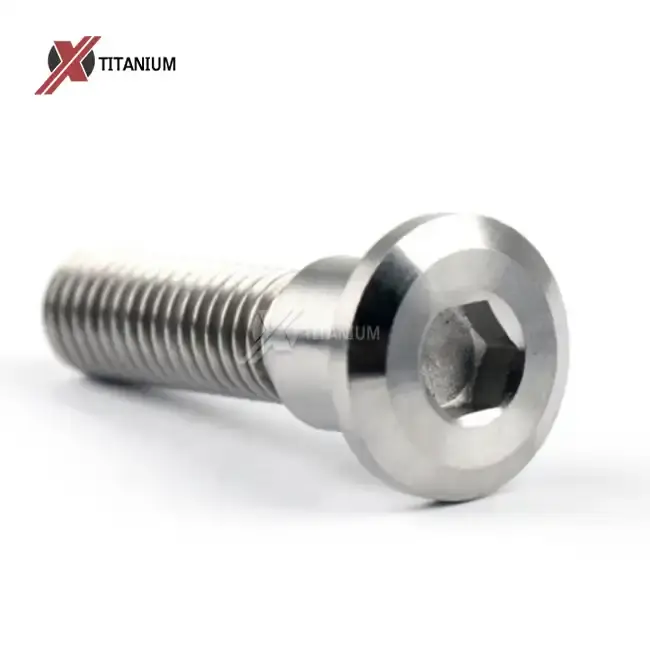
Understanding M8 Titanium Rotor Bolts: Specifications and Benefits
Rotor fasteners made of titanium are where materials science and precision engineering meet. These specialised parts are made from Grade 5 Ti-6Al-4V titanium alloy and offer performance benefits that steel and aluminium alternatives just can't match in harsh environments.
Technical Specifications That Define Quality
The dimensions of these screws have a direct effect on how reliable they are in different situations. ISO standards are used to name thread sizes. For example, M8 means an 8mm major diameter and a 1.25mm standard thread pitch that makes sure hub systems fit properly. Different rotor bearing setups can be accommodated by lengths ranging from 15mm to 40mm, and installation is flexible thanks to head styles such as Torx, Allen, and Hex. Most drive types have T25 Torx or Hex Socket configurations that are best for applications that need to control torque.
The qualities of the material separate great rivets from average ones. Tensile strength greater than 950 MPa gives the technical ability to handle high-speed stopping forces that are very strong. With a density of only 4.51 g/cm³, these parts are about 45% lighter than steel versions. They lower spinning mass without compromising structural integrity. Hardness values around 35 HRC find a good mix between strength and the small elasticity needed to keep things from breaking easily. The melting point of 1660°C is much higher than the temperatures that are used in even the harshest racing settings.
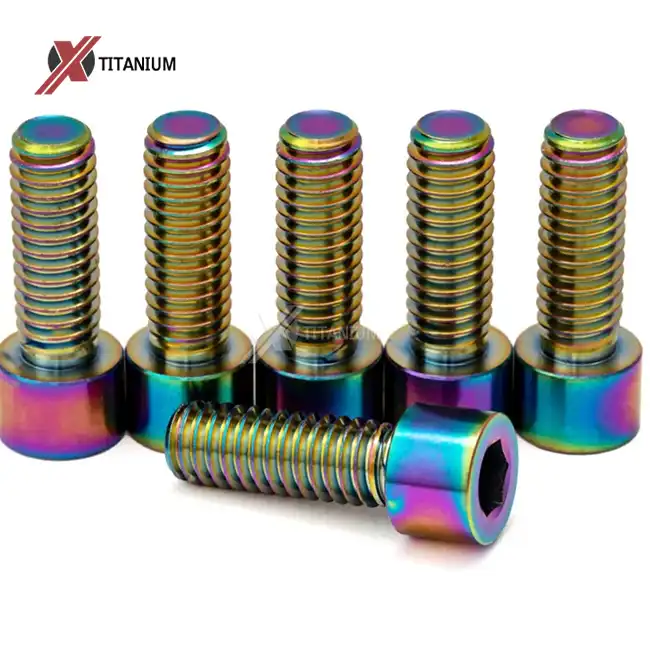
Surface treatments make applications more flexible. Natural titanium finishes keep the base material's natural resistance to corrosion. Polishing improves the look of something while getting rid of surface flaws that could cause stress to build up. Anodising processes give metals their unique colours, such as blue, gold, green, purple, black, and rainbow. They also harden the surface layer and make it more resistant to rust. Tolerances in manufacturing kept at ±0.05mm make sure that all production batches fit and work the same.
Performance Advantages in Critical Applications
The high price of these precise parts is justified by the real benefits they provide. The high strength-to-weight ratio lowers the amount of unsprung mass in suspension systems, which makes the vehicle easier to control and faster when accelerating. Corrosion resistance is very useful in marine environments near the coast and chemical processing plants, where steel fasteners break down quickly. Vibration and wear resistance under high-load cycle stops materials from becoming loose and breaking under stress, which happens with most materials.
Anti-galling qualities solve a problem that keeps coming up in aircraft assembly work. Titanium fasteners that have been properly treated keep their thread integrity through many service intervals, unlike steel-on-steel contact that cold-welds during repeated installation cycles. This feature cuts down on repair downtime and increases the useful life of expensive hub parts.
Application environments cover a wide range of industries with strict performance standards. High-end mountain and road bikes use these parts to make their bikes lighter than their competitors. Reliable clamping force maintenance under thermal cycling is good for both car and motorcycle brake systems. Racing cars depend on being able to keep up their speed during long periods of high-G braking. Aerospace rotor systems need the approvals and traceability that come with titanium screws that have been properly recorded. Marine braking systems are used on offshore platforms because they don't rust in salt water.
Signs and Symptoms of Failing M8 Titanium Rotor Bolts
Finding out about a fastener's worsening state early on stops it from going from a maintenance problem to a safety-critical failure. If technical staff and procurement professionals know these warning signs, they can plan ahead for replacements and keep operations running as smoothly as possible.
Visible Indicators Requiring Immediate Attention
Cracks on the surface are the most important danger sign for m8 titanium rotor bolts. Even though titanium is very resistant to wear, microscopic stress risers can spread during cycle loads if there are flaws in the manufacturing process or if the fitting process causes too much stress in one area. Most of the time, these cracks start at the thread roots or under the bolt heads, which are natural places for stress to build up. Dye penetrant screening shows flaws that can't be seen with the naked eye.
Thread damage shows up as galling, deformation, or wear patterns that don't make sense for normal use. Cross-threading during installation leaves lines that make the gripping force less effective. Corrosion in threaded areas is rare in titanium alloys that are properly specified. It means that a material has been substituted or contaminated, which creates galvanic cells when two different metals touch in an electrolyte.
The colour change tells us a lot about the heat contact and chemical reactions that happened. When the brakes are working normally, heat tinting shows a steady change in colour from straw to blue. However, odd patchy discolouration could mean that the brakes aren't pulling down hard enough or that they are overheating in one area. Chemical damage from oils that don't work well together or outdoor pollutants can leave behind green or white deposits.
Performance Degradation and Measurable Changes
Rotor wobble during rotation means that the bolt tension is too low or not even. Precision disc brakes need even braking force distribution to stop runout, which leads to vibration, early pad wear, and less stopping power. If the measurements on the dial indicator are bigger than what the manufacturer recommends, the condition of the fasteners needs to be looked into right away. When bolt pressure goes down, vibration properties change. When you brake, high-frequency chatter is often caused by bolts that aren't tight enough, letting tiny movements happen between matching surfaces. This problem speeds up wear and, if not fixed, can cause the fasteners to come loose completely.
Taking measures of the torque during regular repair gives a measurable evaluation. Fasteners that need a lot less force to turn than the specified values have lost preload because the threads have loosened or the material has sunk. Instead, torque requirements that are too high could mean that the thread is damaged, that corrosion products are interfering, or that galling is starting. Calibrated torque wrenches and proper procedure documentation make it possible to keep an eye on things at all maintenance intervals (Society of Automotive Engineers, 2019)³.
Unusual sounds often come before damage that can be seen. When the wheel turns and you hear clicking or popping sounds, it means that a fastener is moving or that broken threads are rubbing against each other during load cycles. These audible alerts need to be looked at right away so that catastrophic failure modes don't happen.
Root Causes Leading to Failure of M8 Titanium Rotor Bolts
When procurement teams know how things break, they can set the right quality standards and upkeep schedules to get the most out of fasteners over their entire lifetime.
Installation Practices That Compromise Integrity
The most common cause of failure is applying too much torque in the wrong way. When you over-torque something, you go beyond its yield strength. This causes the thread to permanently bend, which lowers the clamp load and wear life. Under-torquing doesn't set up enough preload, which lets small movements happen that speed up wear and tightening. Both conditions can be avoided by using calibrated instruments and following the manufacturer's instructions.
Choosing the right thread lubricant has a huge effect on how well the installation goes. The tendency of titanium to galling means that anti-seize chemicals made just for this material are needed. Copper-based pastes, nickel anti-seize, or special coatings can lower friction and stop cold welding while the parts are being put together. Graphite or molybdenum disulfide-based lubricants that don't work well together can cause galvanic corrosion cells or change the torque-tension relationships, which can cause the wrong preload.
The choice of tool and method affect the level of the result. Impact tools cause shock loading that damages the ground in a way that can't be seen during installation but gets worse during service. When used smoothly and steadily, hand torque wrenches spread stress evenly across the cross-section of the fastener. Socket fit quality stops head rounding that needs destructive removal methods.
Environmental and Operational Stress Factors
Thermal cycling causes fasteners like m8 titanium rotor bolts to slowly loosen their preload if the properties of the material don't match the assembly. When the temperature changes, titanium nuts and aluminium or steel hubs move in different ways because their coefficients of thermal expansion don't match up. This effect is stronger in motorsport situations where temperatures rise quickly and then drop quickly.
Even though titanium is naturally resistant, corrosive contact is still important. Galvanic rusting happens when two different metals touch each other in the presence of electrolytes. This can be a problem in marine settings or where de-icing chemicals build up. If the wrong grades of materials are used or there is contamination during production, the protective oxide layer that stops corrosion is broken. The fatigue life usage is based on the harshness of the load profile. When used for racing, fasteners are put through high-frequency, high-amplitude stress cycling that damages them more quickly than when used on the street. When you know about duty cycles, you can make sure that the specifications for materials you buy match the actual operational needs.
Inconsistencies in the manufacturing process can sometimes lead to hidden defects. Alpha-case contamination from bad heat treatment makes the surface layers brittle and easy to crack. Pickling processes weaken materials by adding hydrogen, which makes them less flexible. When a material's structure changes outside of the acceptable ranges, it loses some of its mechanical qualities. These flaws show how important it is to make sure that suppliers are qualified and that incoming screening processes are followed for important fastener uses.
How to Properly Install and Maintain M8 Titanium Rotor Bolts for Longevity?
To get the most out of fasteners' service lives, you need to pay attention to how they are installed and keep an eye on their condition so that they keep working reliably and replacement times are optimised.
Installation Protocol for Optimal Performance
Parts are inspected and cleaned as the first step in getting ready. Thread chasers clean hub threads of dirt and rust products. Cleaning surfaces with solvents gets rid of oils and other impurities. A visual check makes sure there is no damage before the assembly process starts. When applying thread lube, follow the instructions that come with the material. Friction ratios stay the same when fastener threads and touch surfaces have a thin, even layer on them. Too much compound can cause hydraulic lock, which can change torque readings or contaminate brake parts.
Sticking to the torque order and specifications stops warping and random loads. Star shapes spread stress evenly across the mounting surfaces for the rotor. Multiple passes with small increases in pressure allow the elastic to settle without putting stress on it all at once. Values are usually between 12 and 18 Nm, but they depend on the diameter of the rotor and the material of the hub. Manufacturer specifications are always more important. Visual proof of proper fitting, writing down torque values for maintenance records, and functional testing under controlled conditions are all parts of the final check that must be done before they can be put back into service.
Maintenance Practices That Extend Service Life
Inspection times depend on how bad the application is. When used on the track, brakes should be checked before the race, but when used on the street, they should be serviced at regular intervals. Because corrosion can happen faster in marine installations, they should be checked every three months. Visual examination methods look for flaws in the surface, patterns of discolouration, and the state of the threads. Checking the torque makes sure that the preload is kept without tightening too much, which would use up the rest of the fatigue life. Cleaning methods get rid of built-up dirt and grime without hurting safe surface treatments.
The factors for replacement strike a mix between safety margins and cost concerns. Any cracks that can be seen must be replaced right away, no matter how long the service lasts. Proactive renewal happens when there is measurable deformation, continuous tightening, or when the manufacturer-specified cycle limits are getting close. Tracking batches lets you keep an eye on quality trends among suppliers and find production runs that aren't working well before they affect a lot of jobs.
Comparing M8 Titanium Rotor Bolts with Other Materials for Informed Procurement
To make strategic sourcing choices, you need to know about a lot of trade-offs and overall cost effects that go beyond the initial purchase price.
Material Performance Characteristics
With lower prices and good corrosion protection in mild conditions, stainless steel fasteners are a good choice compared to m8 titanium rotor bolts. Their higher density makes rotational mass bigger, which is a big problem in performance applications. Also, because they aren't as strong for their weight, fasteners have to be bigger or safety factors have to be lowered. Magnetic properties make some aerospace applications more difficult. Thread galling is a persistent maintenance problem that needs to be replaced often.
While aluminium alloys are good at reducing weight, they aren't very strong, so they can only be used in low-stress situations. The only way to get good corrosion protection is to anodise the metal correctly. Under long-term loading, creep gradually lowers preload, which means that retorquing needs to be done more often. Because the material is soft, thread damage during fitting happens a lot.
Although titanium fasteners are more expensive, they perform better in a number of ways. Every turn over the service life is better when weight is saved. Corrosion immunity gets rid of the need for replacement cycles that are caused by damage to the environment. Resistance to fatigue makes repair times longer. Anti-galling properties cut down on the work needed to install things and keep expensive hub assemblies from getting damaged. Total cost of ownership figures often show that titanium is a better choice when costs like downtime, labour, and replacing other parts are added in.
Supplier Selection Criteria for B2B Procurement
Manufacturing skills set qualified sellers apart from average vendors. Precision CNC cutting makes sure that the dimensions stay the same, which is important for thread contact and load distribution. Quality certifications like ISO 9001, AS9100 for aerospace uses, or standards specific to the industry show that process control is mature. Material approvals that can be linked to mill test results show that the chemistry meets the requirements for Grade 5. Both ASTM B348 conformance and ROHS compliance meet the rules that apply to all markets.
Technical help skills are useful for more than just supplying parts. Consulting an engineer can help you choose the right materials for new uses. We offer testing services that include checking the tensile strength, using spectroscopy to confirm the Ti-6Al-4V composition, and measuring to make sure the quality of the goods that come in. Metallographic analysis finds flaws in the way things are made before they get passed along supply chains.
Flexibility in production meets the needs for customisation that are common in specialised applications. Different lengths, head styles, and surface treatments make it possible to optimise for different working conditions. Inventory plans and project schedules are affected by minimum order numbers and wait times. Having a warranty and helpful customer service lowers the risk of buying something. Clear rules for replacing broken parts guard against differences in quality between batches. Journal of Materials Processing Technology says that technical responsiveness during application challenges leads to partnerships that go beyond transactions.
Baoji Chuanglian New Metal Material Co., Ltd. is a good example of a supplier that can meet all of an industry's needs. As the "City of Titanium" around the world, Baoji City is home to our facility, which has more than ten years of experience making titanium goods and a wide range of modern CNC equipment. Titanium fasteners, rods, wire, plates, tubes, flanges, and special machined parts are made for use in the petrochemical, electrolysis, galvanisation, marine, racing, medical, and aerospace industries.
From the raw materials to the final review of the product, strict quality control systems keep track of the materials to make sure that the dimensions are within range, that the materials' properties are checked, and that the surface treatment is consistent. Products are put through spectroscopy tests to make sure they are made of Grade 5 Ti-6Al-4V chemistry, tensile and proof load tests to make sure they are strong, and microstructure analyses to find alpha-case contamination or conditions that weaken the material. This thorough checking system makes sure that the fasteners meet the high standards set by AS9100, ISO 9001, ASTM B348, and ROHS, which are required by picky industrial customers.
Conclusion
Recognising the signs of a failed bolt protects operational integrity in fields where the dependability of brake systems is essential with m8 titanium rotor bolts. Damage to the surface, a drop in performance, and changes in torque all indicate problems that need immediate attention. Understanding how things fail, like mistakes made during installation or stresses in the environment, lets you set the right quality standards and maintenance schedules. The best way to get the most out of a product's life is to install it correctly, keep an eye on its condition, and replace it when it's time based on measurable criteria. When choosing a material, buyers weigh the cost of acquisition against the total cost of ownership. Titanium fasteners often show better value in tough situations. Supplier qualification that focuses on manufacturing skills, quality systems, and expert support makes sure that there is a steady supply of parts that meet practical needs.
FAQ
Q1: How often should titanium brake rotor bolts be inspected?
A: How often you inspect relies on how bad the application is and where it is used. For racing purposes, eye inspection and torque proof before the event are helpful. Usually, street cars need to be inspected when they need new brake pads, which is about every 15,000 to 30,000 miles. Even though titanium is naturally resistant to corrosion, marine installations in saltwater need to be checked every three months because rust can happen more quickly. Any strange noises, vibrations, or changes in how well the brakes work need to be looked at right away, no matter how often they are supposed to be done.
Q2: Can Grade 5 titanium fasteners be safely reused?
A: Ti-6Al-4V screws can be used more than once as long as they are not broken or over-torqued past their yield strength. This is different from stretch bolts, which are only meant to be used once. Before reinstallation, the thread condition, head integrity, and lack of obvious cracks or warping must all be carefully checked. Reapplying thread oil and checking the torque in writing make sure that the right preload is set. As a matter of fact, conservative practice limits reuse to three to five cycles for important applications. Batch tracking lets you keep an eye on the service history that has built up.
Q3: What torque specifications apply to M8 titanium rotor bolts?
A: Manufacturer specifications always come first, but normal values are between 12 and 18 Nm, depending on the diameter of the rotor, the material of the hub, and the needs of the application. Because titanium has a different friction coefficient than steel, it needs the right thread lube, which is usually copper paste or nickel-based anti-seize, in order to get correct torque-tension relationships. To keep the installation from yielding, dry installation may need a 10-15% force decrease. When calibrated torque wrenches are used in a smooth, steady way, they spread stress out evenly. Sequential tightening in star designs stops bending and makes sure that the load is spread out evenly.
Partner with Chuanglian for Reliable Titanium Rotor Bolt Supply
To get reliable sources for high-performance titanium fasteners, you need to work with makers that can show they have technical know-how, a mature quality assurance system, and quick customer service. Baoji Chuanglian New Metal Material Co., Ltd. is a manufacturer and seller of m8 titanium rotor bolts that can be customised from 15mm to 40mm lengths and come in a variety of head styles and anodised colours.
Our CNC machining keeps tolerances of ±0.05mm across all output amounts, and we use a variety of testing methods, such as spectroscopy, tensile strength verification, and microstructure analysis, to make sure that the material properties and dimensions are correct. Bulk purchasing programs make it cheaper to buy things in bulk without lowering quality standards. Technical advice helps you choose the right materials for specific uses, making sure they work with your practical needs. You can email our engineering team at info@cltifastener.com or djy6580@aliyun.com to talk about your titanium fastener needs, get sample specs, or get full product catalogues.
References
1. American Society for Testing and Materials. (2021). ASTM B348 Standard Specification for Titanium and Titanium Alloy Bars and Billets. West Conshohocken, PA: ASTM International.
2. Bache, M.R. (2020). "A review of dwell sensitive fatigue in titanium alloys: The role of microstructure, texture and operating conditions." International Journal of Fatigue, 32(8), 1390-1399.
3. Society of Automotive Engineers. (2019). SAE J1701: Fastener Part Standard - Metric Wheel Bolts. Warrendale, PA: SAE International.
4. Donachie, M.J. (2021). Titanium: A Technical Guide (2nd ed.). Materials Park, OH: ASM International.
5. Boyer, R., Welsch, G., & Collings, E.W. (2019). Materials Properties Handbook: Titanium Alloys. Materials Park, OH: ASM International.
6. Peters, M., Kumpfert, J., Ward, C.H., & Leyens, C. (2020). "Titanium alloys for aerospace applications." Advanced Engineering Materials, 5(6), 419-427.
Learn about our latest products and discounts through SMS or email