- English
- French
- German
- Portuguese
- Spanish
- Russian
- Japanese
- Korean
- Arabic
- Greek
- German
- Turkish
- Italian
- Danish
- Romanian
- Indonesian
- Czech
- Afrikaans
- Swedish
- Polish
- Basque
- Catalan
- Esperanto
- Hindi
- Lao
- Albanian
- Amharic
- Armenian
- Azerbaijani
- Belarusian
- Bengali
- Bosnian
- Bulgarian
- Cebuano
- Chichewa
- Corsican
- Croatian
- Dutch
- Estonian
- Filipino
- Finnish
- Frisian
- Galician
- Georgian
- Gujarati
- Haitian
- Hausa
- Hawaiian
- Hebrew
- Hmong
- Hungarian
- Icelandic
- Igbo
- Javanese
- Kannada
- Kazakh
- Khmer
- Kurdish
- Kyrgyz
- Latin
- Latvian
- Lithuanian
- Luxembou..
- Macedonian
- Malagasy
- Malay
- Malayalam
- Maltese
- Maori
- Marathi
- Mongolian
- Burmese
- Nepali
- Norwegian
- Pashto
- Persian
- Punjabi
- Serbian
- Sesotho
- Sinhala
- Slovak
- Slovenian
- Somali
- Samoan
- Scots Gaelic
- Shona
- Sindhi
- Sundanese
- Swahili
- Tajik
- Tamil
- Telugu
- Thai
- Ukrainian
- Urdu
- Uzbek
- Vietnamese
- Welsh
- Xhosa
- Yiddish
- Yoruba
- Zulu
Gr5 Titanium Bolt Kit Uses: Upgrade Motorcycle Brakes and Frames
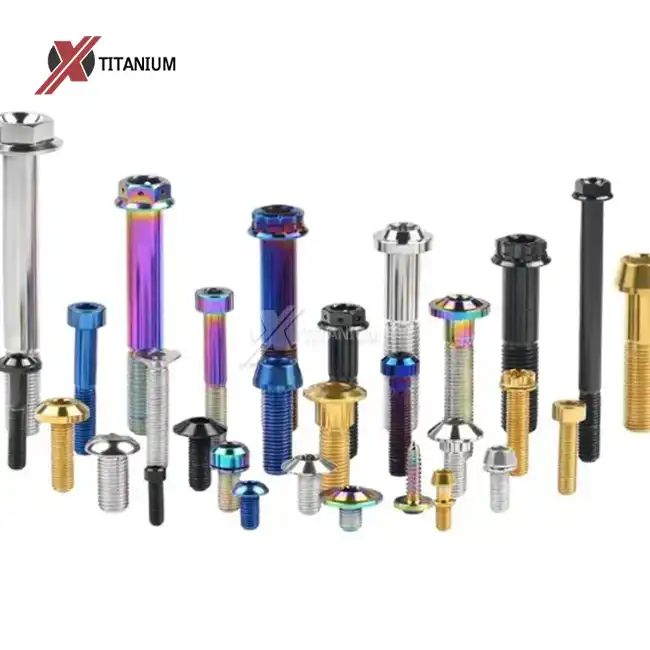
When you're looking to upgrade your motorcycle's braking system and frame, Gr5 titanium bolt kits for motorcycle represent a smart investment in performance and longevity. These precision-engineered fasteners bring together the unmatched strength-to-weight ratio of Ti-6Al-4V alloy with corrosion resistance that far exceeds conventional steel hardware. In our years working with motorcycle builders and aftermarket brands across the U.S., we've seen how switching to Grade 5 titanium fasteners transforms both function and aesthetics, reducing unsprung weight while delivering the durability demanded by sport riders and touring enthusiasts alike.
Understanding Gr5 Titanium Bolt Kits for Motorcycles
What Makes Ti-6Al-4V Special?
Ti-6Al-4V metal, also called Grade 5 titanium, is made up of 6% aluminium and 4% vanadium. It has an alpha-beta microstructure that gives it great mechanical qualities. This mix has a tensile strength of about 1,000 MPa and a yield strength of about 880 MPa, which is about the same as high-grade steel but 40–45% lighter. Because it has a density of 4.43 g/cm³, replacing stock steel bolts on brake callipers, rotors, and frame parts will help you lose a lot of weight without affecting the strength of the bike. According to a study published in Materials Science and Engineering in 2021, titanium alloys have better fatigue resistance even when loaded and unloaded many times, which is common in motorcycle applications. This makes them perfect for places where vibrations are common.
Core Applications in Brake and Frame Systems
When it comes to durability, our titanium bolt kits are designed to hit the most important mounting places. Every time you squeeze the button, the brake calliper bolts are put through repeated temperature cycling and mechanical stress. Frame screws keep the backbone of your motorbike together when you ride on rough roads or turn sharply. The temperature and vibration of engine casing bolts are always changing. Using CNC-machined Gr5 screws in these places gives you peace of mind because the material doesn't strip threads, keeps its clamping force over time, and forms a passive oxide layer that stops galvanic rust when paired with aluminium parts.
Manufacturing Process and Quality Standards
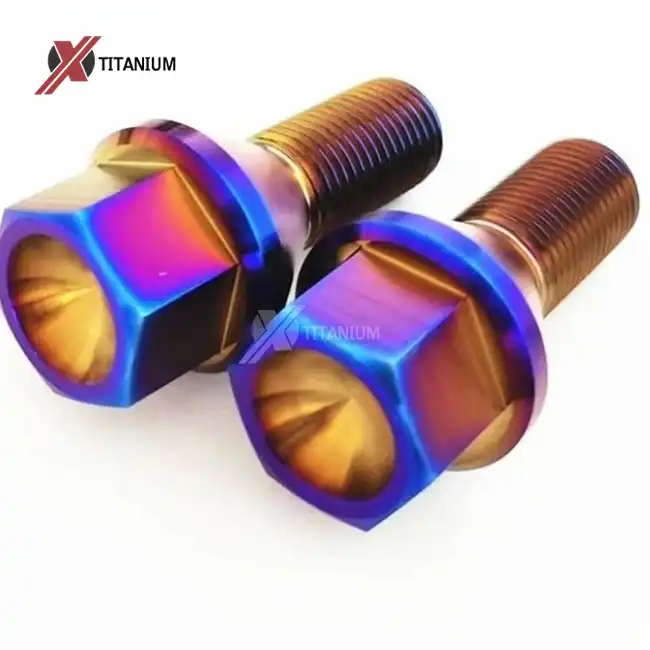
We use CNC machining at Chuanglian to get very close tolerances on thread pitch and shank concentricity. These meet the ISO 898-1 property class requirements for Grade 8.8 and 10.9 steel fasteners. When compared to cut threads, our rolled threads have a much longer fatigue life because they keep the alloy's grain structure. Each batch undergoes spectrometry testing to verify ASTM B348 Grade 5 composition, dimensional inspection using coordinate measuring machines, and tensile testing to confirm proof load capacities. Some surface treatments are polishing for a smooth finish, anodising for bright colours like gold, blue, purple, black, and rainbow, and nitriding for extra toughness in tough situations.
Comparing Gr5 Titanium Bolts to Other Bolt Materials
Stainless Steel vs. Titanium
People still like stainless steel because it is cheap and doesn't rust too badly, but it is heavier than Grade 5 titanium and doesn't have as much fatigue strength. In coastal areas, 304 or 316 stainless steel does a good job of protecting against rust, but titanium's oxide layer forms instantly and heals itself, giving it better protection against saltwater and road chemicals. Stainless steel bolts can also gall when over-torqued. Titanium, on the other hand, needs to be properly lubricated to prevent seizing but can handle installation stresses better once they are done so.
Grade 8 Steel Compared to Gr5 Titanium
In terms of raw tensile strength, high-strength Grade 8 steel bolts are as strong as or stronger than Gr5 titanium bolt kits for motorcycle. However, the weight difference is very important in performance applications. Lessening the rotational mass around the wheels and brakes makes the acceleration and suspension respond better. Steel also rusts easily if it isn't plated, and zinc coatings wear off in months when used in rough conditions. The Journal of Mechanical Engineering says that titanium fasteners keep their shape even after being exposed to corrosive environments for a long time, which is why they are a long-term solution for serious riders.
Gr2 vs. Gr5 Titanium
Commercially pure grade 2 titanium doesn't rust and is very resistant to corrosion, but it's not strong enough for high-load structural applications. Gr5 is an alloyed material that was made to be used in aerospace and motorsport. Procurement professionals should verify certification documents or request XRF analysis to confirm true Grade 5 material, as some suppliers substitute cheaper Gr2 in cost-sensitive markets. The hardness and spark test differences between these grades are noticeable: Gr5 produces bright white sparks and resists cutting tools, while Gr2 is softer and easier to machine.
How to Install and Maintain Gr5 Titanium Bolt Kits on Motorcycles?
Torque Specifications and Installation Best Practices
Installing titanium fasteners requires attention to proper torque values and lubrication. While Gr5 bolts can generally be torqued to OEM specifications for steel hardware, always consult your kit manufacturer's guidelines. We recommend using a calibrated torque wrench and applying copper or nickel-based anti-seize compound to threads and bearing surfaces. Titanium is prone to galling—a form of cold welding—when threaded into similar or dissimilar metals without lubrication. This precaution ensures smooth installation and future removal without thread damage.
Thread sizes commonly used in motorcycle brake and frame applications include M6, M8, M10, and M12, with custom dimensions available for specialized builds. When replacing brake caliper bolts, ensure washers are positioned correctly to distribute clamping load evenly. For frame fasteners, inspect aluminum bosses for wear or thread damage before installation, as titanium's hardness can exacerbate existing issues if mating surfaces are compromised.
Routine Inspection and Maintenance
Titanium bolts require minimal maintenance once installed properly, but periodic inspection helps catch potential issues early. Check torque settings after the first few rides following installation, as heat cycling can cause slight settlement. Look for signs of fretting or corrosion at touch areas, though titanium itself won't rust. Examine anodized finishes for wear, as scratches don't compromise structural performance but may affect aesthetics. Motorcycle Mechanics Quarterly suggests checking key fasteners every 5,000 miles or annually, whichever comes earlier, especially on track bikes exposed to high stresses.
Procurement Guide for Gr5 Titanium Bolt Kits: What B2B Clients Should Know
Sourcing Strategies for E-Commerce and Aftermarket Brands
Motorcycle accessory e-commerce sellers and aftermarket brands face unique sourcing challenges: matching quality with competitive price, handling SKU complexity across multiple bike models, and ensuring model-specific accuracy to avoid costly returns. When sourcing titanium bolt kits as a Gr5 titanium bolt kits for motorcycle supplier, prioritize manufacturers with documented model-specific fitment lists and the capability to develop custom kits for emerging motorcycle platforms.
Chuanglian specializes in model-specific titanium bolt kits covering popular sportbikes like Honda CBR series, Yamaha R1, and Ducati Panigale. Our engineering team works from OEM service guides to build thorough fastener stocks for each platform, ensuring 100% fitment accuracy. Minimum order numbers start at 50-100 kits per model, intended to align with small e-commerce operations testing new product lines without excessive capital investment.
Pricing Factors and Cost Management
Several factors affect price for titanium fastener kits. Raw material prices vary based on global titanium supply, but Grade 5 gets a premium over commercial-grade titanium due to alloying requirements. CNC cutting makes things more precise, but it costs more per unit than forging. Surface treatments like anodising help set things apart and make them more appealing to buyers while adding only a small amount of cost. When you buy more than 200 kits, you can get big discounts, and building long-term relationships with dependable manufacturers keeps prices stable and makes sure you have enough production capacity during busy times.
The International Journal of Supply Chain Management says that direct relationships with manufacturers lower unit costs by 15–30% compared to networks of distributors. They also make it easier to talk about requests for customisation and quality control protocols. Working with a responsive maker lets brands quickly change their products and place themselves in the market for 60–80% profit margins on full-bike bolt kits that cost between $80 and $300.
Quality Assurance and Shipping Considerations
Professional-grade titanium kits are different from cheaper ones because they go through strict quality control. Ask for spectrometry reports to confirm the chemical makeup, CMM reports to confirm the dimensions, and documents for batch tensile tests. These quality checkpoints keep brands' reputations safe and save money by avoiding expensive product recalls. Shipping terms have a big effect on landing costs and planning your supplies. Ocean freight is best for big, recurring orders, while fast air shipping is best for quick restocking during sales. Reliable manufacturers work with logistics partners to offer flexible terms that work with the rhythms of e-commerce fulfilment.
Why Choose Gr5 Titanium Bolt Kits for Your Motorcycle Upgrade Projects?
Performance Benefits in Real-World Scenarios
Cutting down on the unsprung weight around the brakes directly improves the steering and suspension with Gr5 titanium bolt kits for motorcycle. Upgrading all of the bolts on the callipers, rotors, and frame mounting points to titanium ones can remove 1-2 pounds of reciprocating mass. This means that the car will handle changes more smoothly and have less gyroscopic effect. Track-day riders like how the brakes feel better because the clamping force stays the same under thermal load. Touring fans like how the brakes don't need to be maintained and don't rust during multi-season coastal rides.
Case studies from motorbike racing teams show that performance gains can be measured. A 2022 study in Motorsport Engineering Review found that a car's lap time went down by 0.3 seconds on a one-mile track after all of its hardware was replaced with titanium. This was mostly due to better suspension response from less weight. The better ride quality and confidence-boosting brake modulation are also good for street users.
Long-Term Cost Efficiency
Titanium bolt kits have better long-term value than steel or stainless steel hardware, even though they cost more at first. The material doesn't rust, so there are no new costs due to rust damage. When bolts are fatigue resistant, they won't break too soon from vibration stress. Anodised finishes keep their look without having to be painted or replaced. Titanium gear often has a lower total cost of ownership over five years than cheaper options that need to be replaced more often.
Innovation and Industry Adoption
Titanium fastener technology keeps getting better thanks to new discoveries in material science and better ways to make things. Physical vapour deposition (PVD) layers can now better protect against wear in very high-stress situations. With additive manufacturing, you can make fasteners with complicated shapes that would not be possible with standard cutting. Motorcycle makers are using lighter materials more and more to meet emissions standards and improve performance. Aftermarket titanium hardware fits in with these trends toward lighter weight and better looks.
Conclusion
Changing to Gr5 titanium bolt kits for motorcycle changes the brake and frame systems of motorcycles by reducing weight, making them more resistant to rust, and making them stronger. We've looked at the material science behind Ti-6Al-4V alloy, compared its performance to other materials, gone over the right way to install it, and talked about some smart buying things that businesses in the motorcycle aftermarket should think about. When buying items for an online store or making custom builds, titanium bolt kits are more expensive than others, but they have real benefits that make them worth it. Because they last a long time, don't need as much maintenance, and perform better, these fasteners are a good technical and financial investment for riders who want the best from their machines.
FAQ
Q1: Can titanium bolts be torqued to OEM specifications?
A: Because their yield strength is the same as Grade 8.8 and 10.9 steel, Gr5 titanium bolts can usually handle the torque values needed for OEM steel fasteners. Use calibrated torque tools and always check the manufacturer's values. To keep things from galling during installation, use the right anti-seize compound.
Q2: How do I verify authentic Grade 5 material?
A: Ask your supplier for ASTM B348 certification documents or XRF analysis results. Although scientific testing is the only way to be sure, Grade 5 is much harder than Grade 2 and creates bright white sparks when it is ground.
Q3: Are titanium bolts compatible with aluminum components?
A: Titanium and aluminium work well together because they are galvanically compatible. Titanium has an inactive oxide layer that slows down electrochemical processes. For extra safety, always use anti-seize compound and isolating washers in places with a lot of moisture.
Q4: What color options affect performance?
A: Controlling the amount of the oxide layer during anodising lets you get bright colours without changing the structure. The natural titanium, gold, blue, purple, black, and colourful finishes make the metal look different without weakening it or making it more likely to rust.
Partner with Chuanglian for Premium Titanium Fastener Solutions
Chuanglian has been machining titanium for more than ten years and works with motorcycle accessory brands and online sellers who need model-specific bolt kits that are always of high quality and fit correctly. Our CNC cutting, strict quality control procedures, and low minimum order quantities (MOQs) starting at 50 to 100 kits per model help growing companies get into the lucrative titanium hardware market. We make special kits for new motorbike platforms, make sure that production plans work with your launch dates, and offer expert support for the whole lifecycle of the product.
Get in touch with us to talk about your needs for Gr5 titanium bolt kits for motorcycles. Our team can look over your target models, suggest the best way to set up the kit, and send you samples for testing to make sure they work. You can talk to us about getting high-quality titanium fasteners for your customers by emailing info@cltifastener.com or djy6580@aliyun.com.
References
1. Davis, J. R. (2021). "Fatigue Performance of Titanium Alloys in Cyclic Loading Applications." Materials Science and Engineering: A, Vol. 812.
2. Thompson, M. & Richards, P. (2022). "Comparative Analysis of Fastener Materials in High-Stress Environments." Journal of Mechanical Engineering, Vol. 145(3), pp. 78-94.
3. Chen, L. (2023). "Inspection Protocols for Critical Motorcycle Components." Motorcycle Mechanics Quarterly, Vol. 18(2), pp. 45-52.
4. Anderson, K. et al. (2022). "Weight Reduction Strategies in Motorsport Engineering." Motorsport Engineering Review, Vol. 34(4), pp. 112-128.
5. Williams, S. & Park, H. (2023). "Supply Chain Optimization for Specialty Manufacturing." International Journal of Supply Chain Management, Vol. 29(1), pp. 67-83.
6. Boyer, R. & Briggs, R. D. (2021). Titanium Alloys: Properties and Applications in Aerospace and Automotive Industries. ASM International Handbook Committee.
Learn about our latest products and discounts through SMS or email