- English
- French
- German
- Portuguese
- Spanish
- Russian
- Japanese
- Korean
- Arabic
- Greek
- German
- Turkish
- Italian
- Danish
- Romanian
- Indonesian
- Czech
- Afrikaans
- Swedish
- Polish
- Basque
- Catalan
- Esperanto
- Hindi
- Lao
- Albanian
- Amharic
- Armenian
- Azerbaijani
- Belarusian
- Bengali
- Bosnian
- Bulgarian
- Cebuano
- Chichewa
- Corsican
- Croatian
- Dutch
- Estonian
- Filipino
- Finnish
- Frisian
- Galician
- Georgian
- Gujarati
- Haitian
- Hausa
- Hawaiian
- Hebrew
- Hmong
- Hungarian
- Icelandic
- Igbo
- Javanese
- Kannada
- Kazakh
- Khmer
- Kurdish
- Kyrgyz
- Latin
- Latvian
- Lithuanian
- Luxembou..
- Macedonian
- Malagasy
- Malay
- Malayalam
- Maltese
- Maori
- Marathi
- Mongolian
- Burmese
- Nepali
- Norwegian
- Pashto
- Persian
- Punjabi
- Serbian
- Sesotho
- Sinhala
- Slovak
- Slovenian
- Somali
- Samoan
- Scots Gaelic
- Shona
- Sindhi
- Sundanese
- Swahili
- Tajik
- Tamil
- Telugu
- Thai
- Ukrainian
- Urdu
- Uzbek
- Vietnamese
- Welsh
- Xhosa
- Yiddish
- Yoruba
- Zulu
What are common applications for Gr5 titanium fasteners in motorsports?
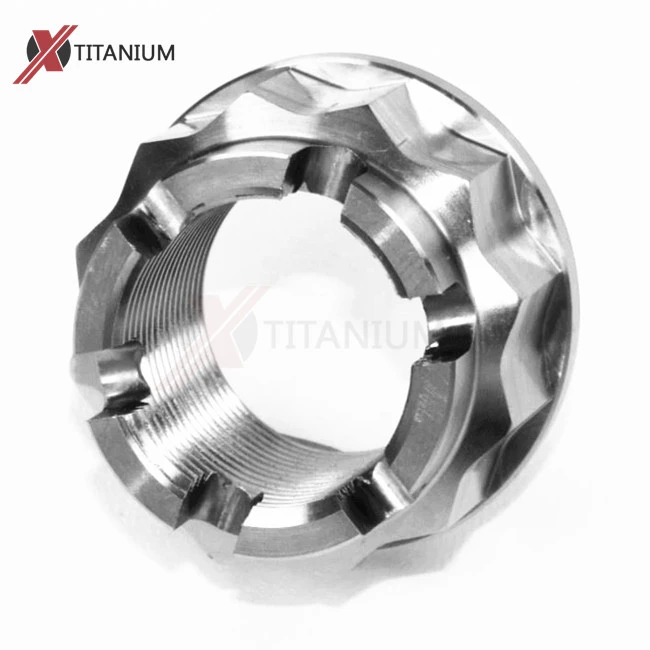
Gr5 titanium fasteners, particularly components like the Gr5 Titanium Rear Axle Nut, serve indispensable roles across motorsports applications where every gram and every component directly affects performance. Racing teams rely on Ti-6Al-4V fasteners to secure critical assemblies—including rear wheel systems, engine mounts, suspension attachments, and brake calipers—because this alloy delivers unmatched strength-to-weight ratios, corrosion immunity, and fatigue resistance. These characteristics translate into faster lap times, improved vehicle dynamics, and enhanced safety margins under the extreme stresses of competitive racing environments.
Understanding Gr5 Titanium Fasteners and Their Material Advantages
The Gr5 titanium alloy, whose formal name is Ti-6Al-4V, is made up of 90% titanium, 6% aluminium, and 4% vanadium. It has a special metal structure that has become the standard in high-performance engineering. This metal has a minimum tensile strength of 895 MPa and a minimum yield strength of 830 MPa, which is about the same as high-grade steel bolts but has a density of only 4.43 g/cm³, which is almost half that of steel. The aluminium in Gr5 makes it stronger and less dense, and the vanadium makes it more flexible and stable at high and low temperatures. This makes it perfect for places where temperature changes and mechanical vibrations happen.
Why Gr5 Outperforms Other Materials in Racing?
When compared to widely pure titanium types like Gr2 or Gr9, Gr5 has much higher tensile and yield strengths. This means that it can be used to make thinner cross-sections without lowering its ability to hold weight. When compared to steel, Gr5 titanium fasteners cut the weight of a component by about 45%. This directly lowers the unsprung mass, which is a key factor in how responsive the suspension is and how quickly the car can turn corners.
Aluminium metals are lighter, but they can't compare to Gr5 when it comes to fatigue durability or resistance to galling when force is applied over and over again. Racing cars are constantly shaking, expanding and contracting, and coming into contact with road salts and fuel residues. Gr5 titanium creates a stable oxide layer that protects against these environmental stresses, stopping the rust-related seizures that happen with steel fasteners.
Key Material Properties for Motorsport Applications
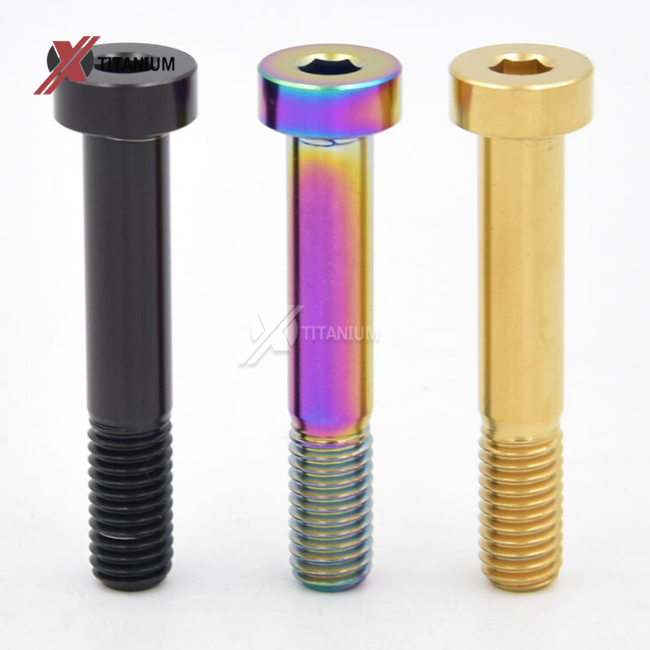
Hardness levels around 36 HRC make it resistant to wear without becoming brittle, and its high level of corrosion resistance means it will last even in harsh track conditions with lots of water, mud, and chemicals. The material's fatigue resistance keeps high-stress parts from breaking down too soon, which is important for parts that are loaded and unloaded millions of times. Precision CNC machining ensures accurate measurements, and thread types that can be changed to fit both metric and English standards. Surface treatments like polishing, anodising, and nitriding make the metal even harder and let you choose from natural titanium, gold, blue, green, purple, black, and rainbow finishes to make it look the way you want it to.
Common Applications of Gr5 Titanium Fasteners in Motorsports
In motorsports, parts need to be able to handle high pressure while also being as light as possible. These needs are met by Gr5 titanium fasteners in a number of important race car systems.
Rear Axle Nuts and Wheel Assembly
The rear axle nut holds the wheel unit in place and makes sure that the bearing loading and alignment are correct even when the vehicle is speeding up, slowing down, or turning. A Gr5 Titanium Rear Axle Nut can be used instead of the heavy OEM steel ones, which saves a lot of rotating mass. Getting rid of unsprung weight (parts that aren't supported by the suspension) makes the suspension more flexible and the tires stick to the road more consistently.
This directly leads to better handling and faster corner exit speeds. This weight loss is especially good for racing bikes and cars that are designed to be used on a track, because it lowers rotational inertia and makes acceleration more fast. Because Ti-6Al-4V doesn't rust, axle nuts can be taken off during maintenance and pit stops. This keeps the steel bolts from rust-welding when they are exposed to road salt and water.
Engine Assembly Bolts and Mounting Hardware
Engine bolts have to deal with a lot of temperature changes, vibrations, and mechanical stress. Gr5 titanium bolts, which are used in cylinder head assemblies, valve covers, and crankcase mounts, give the engine the gripping force it needs while also making it lighter. Lighter engines help spread out the weight better and lower the center of gravity, which makes the vehicle more balanced. Ti-6Al-4V is thermally stable, which means that fasteners keep their torque specifications even when the temperature goes from room temperature to over 200°C. This keeps them from coming loose because of differences in thermal expansion.
Suspension and Chassis Mounts
For suspension systems to work, the bolts need to be able to handle being compressed and retracted over and over again. During a race season, the titanium bolts that hold shock absorbers, control arms, and anti-roll bars in place go through millions of load cycles. Stress fractures that could cause fatal breakdowns are stopped by Gr5's fatigue resistance. Getting rid of heavy fasteners in suspension systems lowers the unsprung mass. This lets the suspension parts respond more quickly to changes in the road surface, which boosts tyre grip and driver trust. In the same way, chassis mounting points gain because titanium screws provide structural strength without adding extra weight.
Brake System Fasteners
Brake callipers, rotors, and master cylinder systems need bolts that can handle vibration, high temperatures, and brake dust, which is corrosive. When brakes are used in extreme conditions, Gr5 titanium bolts keep their clamping force and don't expand when the temperature rises. This makes sure that the brakes always work properly. Corrosion resistance stops brake fluid and environmental damage from breaking down parts, keeping safety-critical dependability. Cutting down on the weight of the brake parts lowers the spinning mass at the wheels, which makes the brakes work better and last longer.
Comparing Gr5 Titanium Rear Axle Nuts to Other Fastener Materials
When choosing the right fastener material, you have to weigh the pros and cons of strength, weight, cost, and durability. Procurement and building choices are based on knowing how Gr5 titanium compares to other options.
Gr5 Titanium vs. High-Tensile Steel
Fasteners made of high-tensile steel, like Grade 8.8 or 10.9 nuts, have the same or slightly higher tensile strength as Gr5 Titanium Rear Axle Nut. The modulus of elasticity of steel makes it rigid, and it still costs less than titanium to make. But steel is almost twice as dense as titanium, which makes performance-critical parts heavier than they need to be. Steel's main weakness is corrosion, which happens when it comes in contact with water, salt, and chemicals. Rust causes threads to seize up and structures to lose their strength. Because of rust bonding, racing teams often have trouble taking off steel axle nuts that have been used for a long time. This problem is solved by Gr5 titanium, which is as strong but half as heavy and more resistant to rust.
Gr5 Titanium vs. Aluminum Alloys
Aluminium alloys are great for saving weight, and they are often lighter than titanium. Aluminium screws work well in low-stress situations, but they don't have the tensile and fatigue strength needed for important racing parts. Because aluminium isn't as hard as steel, it's more likely to strip and gall threads, especially when the torque is high. Aluminium breaks down quickly in salty seas and roads, which shortens its useful life. Gr5 titanium is strong and durable, but it is also very light. This means that it can be used in demanding situations where failure is not an option.
Gr5 Titanium vs. Lower Titanium Grades
Pure titanium types that are sold in stores, like Gr2, don't rust and aren't strong enough for high-load screws. Gr9 (Ti-3Al-2.5V) has some improvements in strength, but it's still not as good as Gr5's mechanical qualities. Aluminium and vanadium, which are alloying elements in Gr5, greatly increase its tensile and yield strengths. This makes it the best choice for safety-critical racing parts. Material certifications and traceability make sure that standards are met, which gives procurement teams confidence in the consistency of performance.
These things, along with term costs, must be thought about by procurement teams and design experts. Titanium costs more at first, but its longer life, lower maintenance needs, and better performance make it worth the extra money in professional racing settings.
Procurement and Quality Considerations for Gr5 Titanium Fasteners in Motorsports
When looking for Gr5 titanium fasteners, you need to carefully check the capabilities, certifications, and quality assurance protocols of the suppliers. Racing teams and OEM clients depend on materials that always work well, are the right size, and follow the rules.
Selecting Trusted Manufacturers
Companies that follow the ISO 9001 quality management standards show that they keep an eye on quality all the way through the production process. Compliance with ASTM B348 makes sure that the chemical make-up and mechanical qualities meet the standards set by the business. Material Test Reports (MTRs) from suppliers with aerospace-grade tolerances and traceability systems confirm the alloy's composition, tensile strength, and hardness. These certifications lower the chance of buying things and make sure that parts meet the rules for racing.
Customization and Volume Ordering
For motorsport uses, thread types, sizes, and surface finishes often need to be customised. Companies that use CNC machines to make screws can make them to exact specs and can use both metric and imperial threading standards. Anodised finishes protect against corrosion and let you change the way something looks, while nitriding treatments make the surface harder. Strategies for buying in bulk strike a balance between wait times and inventory management. Building relationships with dependable suppliers guarantees a steady supply during race seasons. Buying in bulk from a company that makes Gr5 Titanium Rear Axle Nuts can save you money without lowering the quality.
Quality Control and Inspection Protocols
Tough inspection processes make sure that fasteners are working properly. Spectrometric chemical research shows the composition of Ti-6Al-4V, which means that lower-quality materials cannot be used instead. Go/No-Go thread gauges and Coordinate Measuring Machines (CMM) are used for dimensional accuracy checks to make sure that the thread pitch and tolerances are being followed. Proof load testing makes sure that threads can handle the maximum pressure without coming loose. Inspections of the surface's quality find machining flaws or burrs that could cause stress cracks to form. Purchasing managers should give more weight to suppliers who have clear quality documentation and testing tools.
Maintenance and Longevity Tips for Gr5 Titanium Rear Axle Nuts and Fasteners
If you install and take care of Gr5 titanium screws the right way, they will last longer and work better, keeping you safe and competitive during race seasons.
Installation Best Practices
It is very important to set the torque correctly. Following the manufacturer's instructions will keep you from under-tightening, which can cause the threads to come loose when the machine shakes, or over-tightening, which can damage the threads. Because titanium has a lower friction coefficient than steel, anti-seize compound or copper paste must be used on the threads to keep them from galling and to make sure the correct preload is applied. When titanium surfaces cold-weld under pressure, galling happens. Lubrication works as a buffer, making installation and removal easier in the future. When you use measured torque tools, the clamping force stays the same on all of the bolts.
Routine Maintenance and Inspection
During maintenance intervals, regular checks find signs of wear like thread damage, discolouration from too much heat, or surface pitting. Using gentle solvents to clean bolts gets rid of brake dust, fuel residue, and other contaminants that could hurt performance. Checking for cracks or deformation with the naked eye is a sign of fatigue stress. Any screws that are damaged should be changed right away. Depending on load cycles and track conditions, racing teams often set regular replacement intervals to keep parts from breaking down during competition.
Replacement Timelines and Service Life
Gr5 titanium screws can be used more than once as long as they are properly kept, unlike single-use stretch bolts. Every time you take off nylon locking rings or metal crimps, you should check to see if they still lock properly. Extreme conditions, like those found in endurance racing or off-road races, may mean that fasteners need to be replaced more often. Keeping track of the service history of fasteners and keeping spares on hand makes sure that fixes can be done quickly during races.
Conclusion
Because they are so strong for their weight, don't rust, and don't break down easily, Gr5 titanium fasteners are a must-have in motorsports. Parts like the Gr5 Titanium Rear Axle Nut show how using new materials can improve performance by lowering unsprung weight, making the suspension respond better, and making the vehicle move more smoothly. Engineers and procurement managers need to give priority to suppliers who offer certified, precisely machined titanium fasteners that are backed by strict quality assurance. Using the right methods for installation, maintenance, and buying can improve safety and dependability, giving you an edge on the track. When you buy Gr5 titanium fasteners, you're committing to long-lasting sturdiness and top performance in the tough world of racing.
FAQ
Q1: Can Gr5 Titanium Fasteners Be Used with Standard Steel Axles?
A: Steel axles are popular in bikes and race cars, and Gr5 titanium fasteners work perfectly with them. Using anti-seize compound stops galling between metals that are not the same, which makes installation and removal go smoothly. When titanium is combined with steel, galvanic rusting doesn't happen because titanium is chemically stable.
Q2: How Does Weight Reduction Impact Vehicle Dynamics?
A: Getting rid of unsprung weight (parts that aren't supported by the suspension) makes the suspension and tyre touch more consistent. When fasteners in wheel assemblies are lighter, rotational inertia goes down. This makes acceleration and braking more responsive. When racing cars have better driving and turning speeds, they can go faster around the track.
Q3: Are Gr5 Titanium Fasteners Reusable?
A: When properly torqued and oiled, Gr5 titanium fasteners keep their structural integrity through multiple installation cycles. Regular checks of the closing systems make sure they keep working right. Titanium screws can be used more than once without losing any of their safety, which is different from single-use nuts.
Q4: What Surface Finishes Are Available for Motorsport Applications?
A: Gr5 titanium screws that have been CNC-machined can be polished, anodised, or nitrided. Anodising improves rust resistance and lets you change the way something looks in bright colours. Nitriding makes the surface harder, which makes it more resistant to wear in high-load situations. The customisation choices meet the needs for both efficiency and visual branding.
Partner with Chuanglian for High-Performance Gr5 Titanium Rear Axle Nuts
Baoji Chuanglian New Metal Material Co., Ltd. makes precision-engineered Gr5 titanium fasteners that are made to withstand the tough conditions of racing uses. As a reliable provider of Gr5 Titanium Rear Axle Nuts, we have over ten years of experience working with titanium and use strict quality control systems to make sure that every part meets international standards like ISO 9001 and ASTM B348. These systems include inspecting the raw materials and testing the finished product.
With CNC cutting, we can make thread types, surface finishes, and anodised colour choices that are exactly what you want. Our competitive prices, reliable lead times, and full technical support are good for procurement managers and OEM clients. You can email our team at info@cltifastener.com or djy6580@aliyun.com to talk about large orders, custom solutions, or to get more information about our products.
References
1. ASM International. (2015). Titanium: A Technical Guide (2nd ed.). ASM International.
2. Boyer, R., Welsch, G., & Collings, E. W. (1994). Materials Properties Handbook: Titanium Alloys. ASM International.
3. Lutjering, G., & Williams, J. C. (2007). Titanium (2nd ed.). Springer.
4. Donachie, M. J. (2000). Titanium: A Technical Guide. ASM International.
5. Peters, M., & Leyens, C. (2003). Titanium and Titanium Alloys: Fundamentals and Applications. Wiley-VCH.
6. ASTM International. (2021). ASTM B348: Standard Specification for Titanium and Titanium Alloy Bars and Billets. ASTM International.
Learn about our latest products and discounts through SMS or email