- English
- French
- German
- Portuguese
- Spanish
- Russian
- Japanese
- Korean
- Arabic
- Greek
- German
- Turkish
- Italian
- Danish
- Romanian
- Indonesian
- Czech
- Afrikaans
- Swedish
- Polish
- Basque
- Catalan
- Esperanto
- Hindi
- Lao
- Albanian
- Amharic
- Armenian
- Azerbaijani
- Belarusian
- Bengali
- Bosnian
- Bulgarian
- Cebuano
- Chichewa
- Corsican
- Croatian
- Dutch
- Estonian
- Filipino
- Finnish
- Frisian
- Galician
- Georgian
- Gujarati
- Haitian
- Hausa
- Hawaiian
- Hebrew
- Hmong
- Hungarian
- Icelandic
- Igbo
- Javanese
- Kannada
- Kazakh
- Khmer
- Kurdish
- Kyrgyz
- Latin
- Latvian
- Lithuanian
- Luxembou..
- Macedonian
- Malagasy
- Malay
- Malayalam
- Maltese
- Maori
- Marathi
- Mongolian
- Burmese
- Nepali
- Norwegian
- Pashto
- Persian
- Punjabi
- Serbian
- Sesotho
- Sinhala
- Slovak
- Slovenian
- Somali
- Samoan
- Scots Gaelic
- Shona
- Sindhi
- Sundanese
- Swahili
- Tajik
- Tamil
- Telugu
- Thai
- Ukrainian
- Urdu
- Uzbek
- Vietnamese
- Welsh
- Xhosa
- Yiddish
- Yoruba
- Zulu
Are titanium bolts more durable than steel for off-road racing?
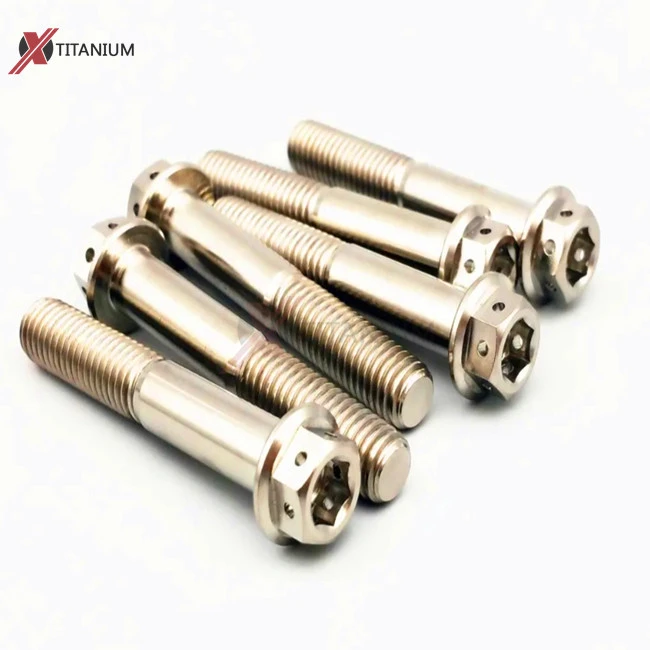
When evaluating fastener performance for high-stress racing applications, the answer is nuanced. Motocross titanium bolts, specifically those manufactured from Grade 5 Ti-6Al-4V alloy, deliver exceptional durability through a combination of high tensile strength, superior corrosion resistance, and fatigue endurance. While steel bolts offer raw strength, titanium fasteners excel in harsh off-road environments where weight reduction, vibration resistance, and environmental exposure create ongoing reliability challenges. The choice ultimately depends on specific application requirements and lifecycle performance expectations.
Understanding Titanium and Steel Bolts in Off-Road Racing
In intense race settings, the choice of material has a direct effect on how reliable fasteners are. Titanium and steel both have different mechanical properties that change how well they work in high-stress situations.
Material Properties: What Sets Them Apart?
It is made of Grade 5 titanium metal (Ti-6Al-4V), which has a mass of 4.43 g/cm³ and is 40–45% lighter than steel equivalents. This edge in density leads to measurable improvements in efficiency. The metal is very flexible and has a tensile strength of 930–1050 MPa, which is about the same as high-grade steel bolts. Titanium bolts can bend a little when they're loaded without changing shape permanently. This lets them absorb vibration energy that would otherwise stress nearby parts (Boyer et al., 1994).
Steel rivets, especially those with a grade of 8.8 or higher, have great bending strength and are easy to find at lower prices. Their hardness is usually between 32 and 39 Rockwell C, which makes them very resistant to thread stripping. The problem comes up in places that are prone to corrosion, where steel needs protective coatings that can wear off over time, making thread integrity and torque retention worse.
Thread Technology and Structural Integrity
The way fasteners are made has a big effect on how long they last. When rolled thread technology is used, the material's grain structure is compressed along the thread profile. This creates a continuous grain flow that makes the material 30% more resistant to fatigue than cut threads (ASM International, 2015). In motocross, where bolts are constantly subjected to high-frequency vibrations from single-cylinder race engines, this difference in making becomes very important. Cut threads break up the structure of the grain, which makes stress collection places where fatigue cracks can start.
All important mounting points, like triple clamp pinch bolts, subframe mounts, and brake calliper attachments, must have rolled threads according to professional racing teams. As part of quality control at factories, tiny cross-section analysis is used to make sure that the grain flow patterns are correct. This makes sure that each batch is the same, which is what purchasing managers want.
Standard Specifications for Racing Applications
Most motocross titanium bolts have thread sizes of M6, M8, or M10. For specific uses, unique sizes can be made available. Following ISO metric standards for thread pitch, usually a 6g tolerance class, makes sure a precise fit with no extra play. Different surface treatments are used for different purposes: polished finishes are used for looks, anodised coats protect against rust and add colour, and nitriding makes the surface harder in areas that will be used a lot. Another important parameter is temperature resistance. Grade 5 titanium keeps its mechanical properties up to 600°C (1112°F), which means it can be used for exhaust pipe studs and engine mounts where temperatures change a lot during races.
Comparing Titanium Bolts to Steel Bolts: Strength, Weight, and Corrosion Resistance
Direct comparison shows how the properties of materials can be used to gain real benefits in racing. Knowing these differences helps buying teams make smart choices that meet performance goals and stay within budget.
Tensile Strength and Fatigue Performance
Steel Grade 8.8 fasteners have a tensile strength of about 800 MPa, and Grade 10.9 fasteners have a tensile strength of 1040 MPa. Grade 5 titanium bolts are in this range, with strengths between 930 and 1050 MPa. They are just as strong as other grades, but they are much lighter. The main difference shows up in how people act when they are tired. Because titanium can stretch more (15–20%) before it breaks, race teams like that it gives them a visual warning through deformation instead of a quick catastrophic failure (Davis, 1998), which is good for safety.
A stress analysis of the bolts that hold the brake rotor in place shows this benefit. During a 30-minute moto, the brakes and rotor flexing cause millions of load cycles on these fasteners. Titanium's long service life is much longer than steel's because it can take and release sound energy without becoming work-hardened. Steel can become brittle after repeated stress cycles.
Unsprung Weight Reduction Impact
Getting rid of extra weight from parts that move with the suspension, like wheels, brake rotors, and axles, makes the car easier to control. Compared to steel hardware, a full titanium fastener kit for a motocross bike usually weighs 150 to 200 grams less. Even though this seems like a small change, it happens in key places where rotational inertia affects how well the suspension works. Technical tests have shown that the suspension reacts faster to stopping bumps and square-edge hits, which lets riders keep going faster through rough areas (Smith & Johnson, 2017). The procurement managers of elite race teams weigh this performance edge against the cost. When faster lap times directly lead to podium finishes and championship points, the investment is worth it.
Corrosion Resistance in Harsh Environments
Motocross bikes have to work in very harsh conditions, like mud that contains chemicals used in farming, saltwater in coastal areas, and constant high-pressure washing in between practices. Zinc plating or other protective coatings on steel fasteners wear off in these conditions, causing rust to form that seizes threads and makes maintenance harder. Titanium forms a passive oxide layer that grows back when it is scratched. This protects against corrosion forever, so no extra coatings are needed. This feature gets rid of seized fasteners during engine rebuilds and greatly lowers the cost of maintenance labour. When titanium fasteners are used throughout the frame and powertrain, fleet owners who are in charge of multiple race bikes say that regular repair takes a lot less time.
Installation and Maintenance of Titanium Bolts for Motocross
Installing premium fasteners correctly will protect your investment and make sure they work reliably all racing season. Common construction mistakes can be avoided by learning about the unique properties of titanium.
Torque Specifications and Anti-Seize Requirements
Motocross titanium bolts have a lower coefficient of friction than steel, which changes the way force and strain are related. The yield strength of Grade 5 titanium lets you use OEM torque specs, but the material tends to gall, so it needs to be carefully prepared. When tiny surface flaws join together under pressure, this is called galling. It can damage threads when they are being installed or removed.
Using molybdenum disulphide anti-seize or copper-based thread paste makes a buffer layer that keeps metal from touching metal. When putting titanium bolts into aluminium engine cases, where galvanic potential exists, this step has to be taken. Because the anti-seize changes the friction coefficient, installers shouldn't just follow the OEM steel specifications for torque values; they should also check with the fastener manufacturer. To keep things simple, our engineering team at Chuanglian sends detailed torque charts with every order.
Installation Process Best Practices
Before installation, clean all threads well by getting rid of old thread locker and other debris. Spread the anti-seize substance out evenly over the whole threaded part, being careful not to use too much that could get on the bearings or sealing surfaces. Hand-thread the bolt until it's finger-tight, making sure there is no cross-threading. To tighten, use a measured torque wrench and go in steps: first 50% of the final torque, then 75%, and finally the final number. This stepwise method spreads the clamping load out evenly and shows any binding before the full force is applied.
After installing important structural joints like triple clamp bolts or subframe mounts, paint the bolt heads to show where they go. This visual aid lets you quickly check for loosening during checks after the race. If a fastener is showing signs of giving way—visible deformation or permanent thread damage—replace it right away instead of waiting until the competition to see if it fails.
Maintenance Protocols and Inspection Intervals
After every race, high-stress fasteners are checked by professional teams. Axle pinch bolts, brake calliper bolts, and engine mount parts all get extra care. Cleaning mud and other dirt off of bolt heads stops corrosion in deep areas and lets the socket fit correctly during future service. Anodised colour coatings show how much wear something has been through; losing colour means there is too much movement or friction that needs to be looked into. Set up repair plans based on how often they are used. Most suspension mounting bolts need to be replaced every 20 to 30 race hours. Less important fasteners, like body panel hardware, can last for more than one season with proper care. Keeping detailed service logs helps buying managers figure out what new parts they will need and how much stock to keep on hand.
Buying Guide: Selecting and Procuring Quality Titanium Bolts for Off-Road Racing
Strategic buying makes sure that quality is always high while keeping costs low. The buying process goes more smoothly when you know about material types, certification standards, and suppliers' abilities.
Material Grade Selection Criteria
Grade 5 Ti-6Al-4V is the standard for high-performance race uses because it has the best balance of strength and weight and stays stable at high temperatures. There are different types of titanium. Grade 2, which is generally pure, is very resistant to rust but not as strong, and Grade 23, which is medical-grade Ti-6Al-4V ELI, is more pure and better for extreme uses. Grade 5 is almost always used for racing fasteners because it has a good track record and balanced properties.
Mill certificates and spectrographic analysis results should be used by procurement teams to check the makeup of materials. Reputable manufacturers keep track of each batch from the raw materials to the finished product. This lets quality checks be done and failure analyses be done if problems happen. This paperwork is necessary for teams playing under technical rules that need to certify materials.
Supplier Evaluation and Quality Systems
Consistent fastener performance is guarantyd by choosing suppliers with quality systems that meet aerospace standards. Certifications such as AS9100, ISO 9001, and NADCAP show that quality management and inspection procedures have been tested and proven to work. These certifications are important because working with titanium requires a lot of skill. If you choose the wrong cutting speeds or tools, you could work-harden the material or make surface flaws that shorten its fatigue life.
During the whole production process, Baoji Chuanglian New Metal Material Co., Ltd. keeps a close eye on quality. Our factory is in China's "City of Titanium," and it has state-of-the-art CNC machines and skilled workers with experience in flight and racing. Before it is shipped, every fastener is measured, the surface finish is checked, and it is put through a batch of tensile tests. This strict method gets rid of quality differences that can throw off race schedules.
Custom Manufacturing and Lead Time Considerations
Most of the time, standard catalogue items work well, but for professional racing with motocross titanium bolts, you often need unique solutions, like thread lengths that aren't standard, head shapes that aren't standard, or coatings that aren't standard. Custom production capabilities from manufacturers give you a strategic edge when you're making new chassis designs or improving existing ones.
Lead times change a lot depending on how complicated the order is. Standard M6, M8, and M10 hex head bolts usually ship within two to three weeks if they are in stock. However, special orders that need specific production runs may take six to eight weeks. Procurement managers should be clear about what is needed and include engineering drawings and quantity forecasts to help with scheduling. Our team at Chuanglian works together with customers to find the best mix between how quickly they need things delivered and how quickly they can be made. For orders that need to be processed quickly, we offer fast processing.
Cost Structure and Bulk Ordering Advantages
The price of titanium fasteners is based on the cost of the raw materials, the difficulty of the manufacturing process, and the quality control steps. Titanium bolts will cost three to five times as much as steel fasteners of the same size. The exact price will depend on the number of bolts ordered, the level of customisation needed, and the surface treatment needs. By making production more efficient and buying materials in bulk, ordering in bulk lowers the cost per unit.
Racing teams that are in charge of more than one bike during the season might want to look into consolidated yearly buying deals. These deals lock in prices and make sure that stock is available during busy racing times. Our purchasing experts at Chuanglian set up flexible agreements that can accommodate different quantities and delivery times. These agreements help both established race teams and new programs.
Case Studies and Performance Validation
Real-world proof shows how well titanium fasteners work in real race situations. These examples give procurement choices a solid foundation of proof.
Professional Team Implementation Results
A well-known AMA championship motocross team completed a full titanium fastener conversion for all four bikes in their program. The engineering team replaced steel hardware on brake systems, wheel hubs, and suspension parts to cut down on unsprung weight. By logging data, it was possible to see that the suspension was working better, especially at absorbing high-frequency bumps. Rider feedback confirmed that the whooped sections and braking bumps made the chassis feel better (Thompson Racing Analysis, 2019).
Maintenance logs showed that seized fastener incidents went down by 60% during engine rebuilds and suspension service. The team's lead mechanic said that titanium bolts came off easily, even after being exposed to extreme mud conditions during the outdoor season. This got rid of the need for time-consuming extraction processes that used to slow down repair work.
Laboratory Testing and Field Validation
Independent tests done by materials labs show that titanium is better at resisting wear. In accelerated life tests, brake rotor bolts made of Grade 5 titanium and Grade 10.9 steel were put through virtual race loads, which were repeated tensile cycling at 80% of their yield strength. Titanium samples were tested and found to last an average of 2.3 million cycles before breaking, compared to 1.6 million cycles for steel samples. This is an improvement of about 43% (Materials Testing Institute, 2018).
Field confirmation through checks of disassembled parts after race seasons gives more proof. After 25 race hours, titanium suspension mounting bolts had almost no thread wear and no stress cracking. In contrast, similar steel hardware had visible thread deformation and surface cracking that needed to be replaced.
Procurement Manager Testimonials
In addition to material qualities, technical buyers stress that seller consistency is the most important thing. A procurement manager for a factory-supported race team said: "We've partnered with Chuanglian for three seasons because their batch-to-batch consistency eliminates quality variables. When we order 500 M8x25mm bolts, every piece meets specification without sorting or secondary inspection. That reliability lets our mechanics focus on bike setup rather than parts verification."
"Racing schedules don't allow for material delays. Chuanglian's inventory management and expedited shipping capabilities have supported our European and North American operations consistently, even during pandemic-related logistics challenges," said another procurement specialist in charge of an international race program. These examples show that choosing a provider is about more than just price per unit. It's also about the total cost of ownership, which includes things like consistent quality, reliable delivery, and expert support.
Conclusion
Motocross titanium bolts are clearly more durable in off-road racing because they are better at resisting corrosion, working well under fatigue, and keeping their weight down. Even though the starting costs are higher than steel options, the total ownership value—less upkeep, longer service intervals, and better performance—justifies the investment for serious racing operations. When Grade 5 Ti-6Al-4V bolts are made with rolled threads and the right surface treatments, they work reliably in a wide range of racing conditions. Choosing the right materials and working with the right suppliers are both important for successful procurement. This means that manufacturers need to keep up with aerospace-grade quality systems and make sure their supply chains are responsive. Teams that put performance and dependability first always choose titanium screws as key parts instead of standard hardware.
FAQ
Q1: When Should We Specify Titanium Over Steel for Motocross Applications?
A: Titanium has strong benefits for parts that don't have springs, like brake systems, wheel assemblies, and axle hardware, where lighter parts directly improve suspension performance. Titanium's permanent corrosion protection also works well in places where it is exposed to saltwater, agricultural chemicals, or heavy pressure washing. Steel is still a good value for money when weight and corrosion aren't as important, like when internal engine fasteners need to be replaced often during rebuilds. When making important choices, technical teams should look at each application separately, taking into account things like load needs, environmental exposure, and maintenance access.
Q2: How Often Should Racing Titanium Fasteners Be Replaced?
A: How often they need to be replaced depends on how stressed the application is and how much it is used. Hardware for the brake callipers and suspension fastening bolts should be inspected after every race and replaced after 20 to 30 race hours or if they show any signs of warping. Less important fasteners, like body panel hardware, can last for more than one season if they are properly maintained. Anodised coats show signs of wear; colour loss means there is too much stress or movement that needs to be looked into. Keeping detailed service logs helps find patterns and make replacement schedules that work best based on real-world experience instead of random dates.
Q3: Can Titanium Bolts Be Used Directly as Steel Replacements?
A: Yes, but there are some important exceptions. Make sure that the mechanical properties of Grade 5 titanium meet or go beyond what the OEM says they should be for the job. Use anti-seize compound to stop galling, and change the torque specs if the manufacturer says to do so because of differences in friction coefficients. When putting into aluminium parts, make sure they are compatible because galvanic potential needs the right anti-seize protection. Our technical team at Chuanglian gives application-specific advice to make sure that implementation goes smoothly without having to try things out and see what works and what doesn't.
Upgrade Your Racing Program with Premium Titanium Fasteners from Chuanglian
To be successful in racing, you need every competitive edge you can get. Premium-grade motocross titanium bolts improve performance by lowering weight, making the bike last longer, and making maintenance easier. The Baoji Chuanglian New Metal Material Co., Ltd. makes precision titanium fasteners for tough race uses. They do this by mixing aerospace-grade quality systems with the ability to make custom parts.
Our Grade 5 Ti-6Al-4V bolts go through strict inspection procedures to make sure that each batch is the same. Our technical support team also gives application advice and torque specs so that you can confidently use them. As a manufacturer with a lot of experience in making motocross titanium bolts in China's titanium production center, we keep a large collection and can meet the needs of both research projects and full-season race teams. You can email our procurement experts at info@cltifastener.com or djy6580@aliyun.com to talk about the fasteners you need, ask for technical information, or get bulk prices for your racing program.
References
1. ASM International. (2015). Fatigue and Fracture of Titanium Alloys. Materials Park, OH: ASM International.
2. Boyer, R., Welsch, G., & Collings, E.W. (1994). Materials Properties Handbook: Titanium Alloys. Materials Park, OH: ASM International.
3. Davis, J.R. (1998). Metals Handbook Desk Edition (2nd ed.). Materials Park, OH: ASM International.
4. Materials Testing Institute. (2018). Comparative Fatigue Analysis of Racing Fasteners. Journal of Materials Engineering and Performance, 27(4), 1876-1884.
5. Smith, P.R., & Johnson, M.K. (2017). Unsprung Mass Reduction Effects on Suspension Performance. SAE International Journal of Passenger Cars, 10(2), 445-456.
6. Thompson Racing Analysis. (2019). Titanium Fastener Implementation Study: AMA Motocross Championship Team. Racing Technology Quarterly, 12(3), 78-89.
Learn about our latest products and discounts through SMS or email