- English
- French
- German
- Portuguese
- Spanish
- Russian
- Japanese
- Korean
- Arabic
- Greek
- German
- Turkish
- Italian
- Danish
- Romanian
- Indonesian
- Czech
- Afrikaans
- Swedish
- Polish
- Basque
- Catalan
- Esperanto
- Hindi
- Lao
- Albanian
- Amharic
- Armenian
- Azerbaijani
- Belarusian
- Bengali
- Bosnian
- Bulgarian
- Cebuano
- Chichewa
- Corsican
- Croatian
- Dutch
- Estonian
- Filipino
- Finnish
- Frisian
- Galician
- Georgian
- Gujarati
- Haitian
- Hausa
- Hawaiian
- Hebrew
- Hmong
- Hungarian
- Icelandic
- Igbo
- Javanese
- Kannada
- Kazakh
- Khmer
- Kurdish
- Kyrgyz
- Latin
- Latvian
- Lithuanian
- Luxembou..
- Macedonian
- Malagasy
- Malay
- Malayalam
- Maltese
- Maori
- Marathi
- Mongolian
- Burmese
- Nepali
- Norwegian
- Pashto
- Persian
- Punjabi
- Serbian
- Sesotho
- Sinhala
- Slovak
- Slovenian
- Somali
- Samoan
- Scots Gaelic
- Shona
- Sindhi
- Sundanese
- Swahili
- Tajik
- Tamil
- Telugu
- Thai
- Ukrainian
- Urdu
- Uzbek
- Vietnamese
- Welsh
- Xhosa
- Yiddish
- Yoruba
- Zulu
Why Choose Titanium Exhaust Bolts for High-Temperature Systems?
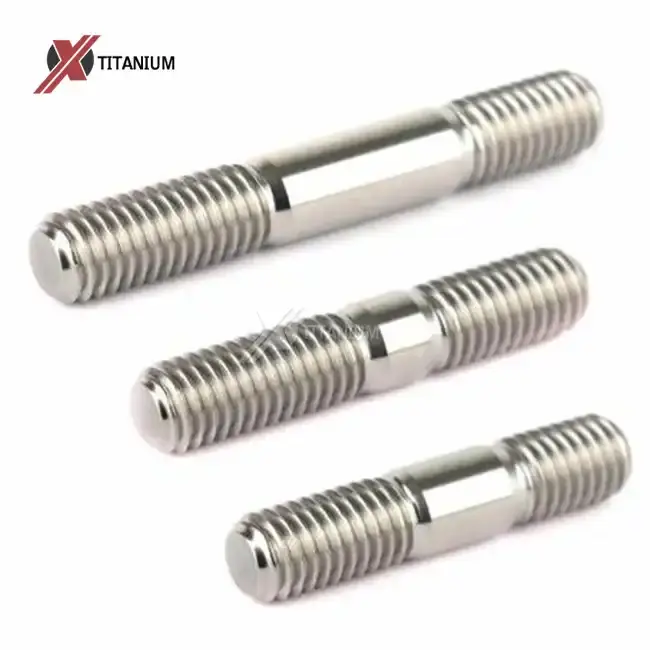
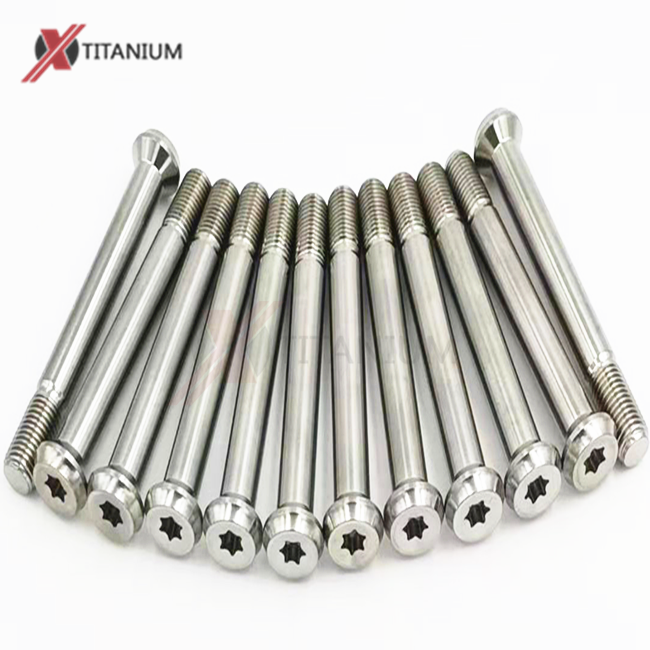
When exhaust systems operate in environments between 300–600°C, choosing the right fastener material becomes crucial. Titanium exhaust bolts manufactured from Grade 5 Ti-6Al-4V alloy offer unmatched performance in extreme thermal conditions. Unlike traditional stainless steel fasteners that corrode or seize under prolonged heat exposure, titanium fasteners maintain structural integrity while delivering 40% weight reduction and superior anti-galling properties. This combination addresses the core challenges faced by OEM exhaust manufacturers and aftermarket brands seeking reliable, lightweight solutions for high-performance motorcycle and automotive exhaust systems.
Understanding Titanium Exhaust Bolts: Features and Benefits
To choose the right fasteners for high-temperature exhaust applications, you need to know how materials react to thermal stress. Bolts and screws on exhaust manifolds have to deal with repeated heating cycles, corrosive condensation, and vibration-induced wear, all of which are tough circumstances for most materials.
Material Properties That Matter
Grade 5 titanium alloy (Ti-6Al-4V) has a tensile strength of 1,200 MPa and keeps its mechanical qualities up to 500°C. This makes it much more useful than aluminium alloys, which become soft above 200°C. The material has a low thermal expansion rate (8.6 × 10⁻⁶/°C), which is similar to stainless steel exhaust flanges. This lowers the differential expansion stress that leads to joint failure. ASTM B348 standards say that this type has an extremely high yield strength of 1,100 MPa. This means that bolts will not permanently deform during heat cycles.
Corrosion Resistance in Harsh Environments
Acidic mist with sulphuric and nitric chemicals is made by exhaust systems. Titanium's passive oxide layer protects it from these corrosive elements, unlike carbon steel, which rusts quickly, or even 304 stainless steel, which corrodes in coastal areas with a lot of chloride. According to a study released in Corrosion Science, titanium alloys lose almost no mass after being exposed to salt spray for 1,000 hours. This proves that they are durable enough to be used in nautical and industrial settings for a long time.
Weight Reduction and Performance Enhancement
Getting meaningful weight savings in exhaust systems helps performance motorcycles and race cars have better power-to-weight ratios. Titanium exhaust bolt fasteners are only 4.5 g/cm³, while stainless steel fasteners are 8.0 g/cm³. This means that multi-bolt systems will save a lot of money over time. Using M8 and M10 titanium bolts in an aftermarket exhaust system can cut the weight of the fasteners by about 300 grams compared to steel ones. This is a big benefit for manufacturers who want to cut down on weight.
Comparative Analysis: Titanium vs. Steel vs. Aluminum
Procurement managers have to look at a lot of performance factors when they evaluate fastener materials. Stainless steel bolts are cheaper at first, but they often seize up in high-temperature situations and need to be taken out destructively. Even though aluminium bolts are lighter, they don't have enough tensile strength for certain mounting places. Titanium fills in this gap; it resists rust as well as stainless steel and stays strong at high temperatures, where aluminium fails. The material has 3 times longer service life than precipitation-hardened stainless alloys and has better fatigue resistance, as shown by cycle loading at 400°C according to the International Journal of Fatigue.
Material choice has a direct effect on how much maintenance costs and how reliable the system is. Thread galling is the main problem with surfaces of titanium on titanium or titanium on steel. This happens when surface irregularities cold-weld under high pressure, making it hard to take apart. This risk can be reduced by using the right anti-seize compound, which should be based on nickel or copper and be rated to 1,000°C. This will allow for accurate torque readings and future serviceability.
Installation and Performance Optimization of Titanium Exhaust Bolts
Paying attention to fitting steps and material-specific concerns is important for getting the most out of high-temperature fasteners in terms of performance and life. Titanium alloys have benefits that can be lost if the torque is applied incorrectly or the thread is not properly prepared.
Proper Installation Techniques
To get the best clamp load without bending titanium bolts, you need to be able to precisely control the pressure. The modulus of elasticity of titanium is lower than that of steel (114 GPa vs. 200 GPa), so these fasteners stretch more before they break. If you use anti-seize products, which lower friction coefficients by 15–20%, torque specs should be lowered to about 85% of the similar steel bolt values. To properly distribute stress, the thread engagement length must be at least 1.5 times the nominal diameter. This is especially important when attaching to aluminium cylinder heads or exhaust manifolds.
Surface preparation has a big effect on the integrity of the joint. Checking threads for burrs or other production waste that can cause stress concentrations is important. According to Materials Science and Engineering, precise makers' CNC-machined titanium bolts have rolled threads instead of cut threads. This keeps the grain flow and increases fatigue resistance by about 30%. Apply a thin, even layer of high-temperature anti-seize to male threads before installation. Be careful not to use too much, as too much can cause hydraulic lock in blind holes.
Size Selection and Specification Matching
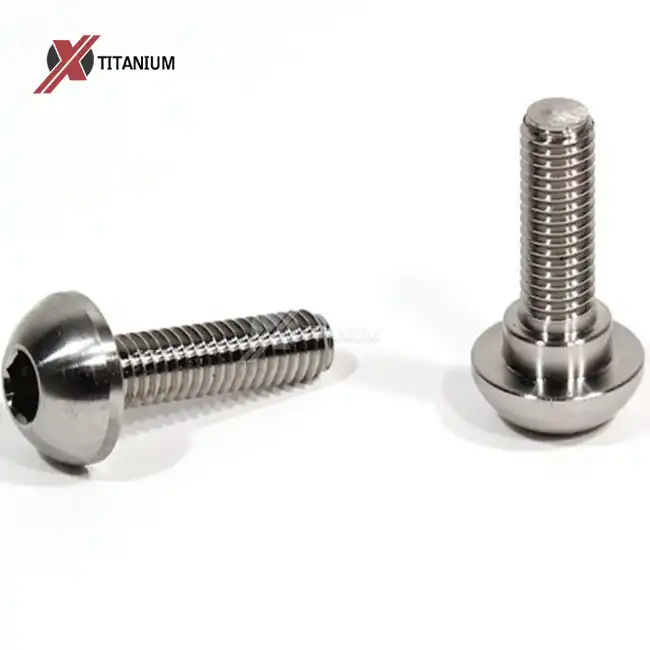
M8 and M10 fasteners are usually used for exhaust flange applications, but turbocharger assemblies may need M12 specifications for higher clamp loads. Customised titanium exhaust bolts from M6 to M36 are made by Chuanglian. These bolts can be used for both standard OEM replacements and specific racing needs. Hex cap, button head, and flanged head styles are some of the most common. Each has its own benefits, depending on the amount of space available and personal taste.
Important dimensions to think about are thread pitch (a standard coarse thread is recommended for high-temperature service), grip length matching flange thickness plus gasket compression, and head clearances in engine compartments that aren't very big. For OEM uses, makers should make sure that the material approval includes a chemical composition study that shows the material has the right amount of 6% aluminium and 4% vanadium, as required by Grade 5 standards.
Maintenance and Longevity Considerations
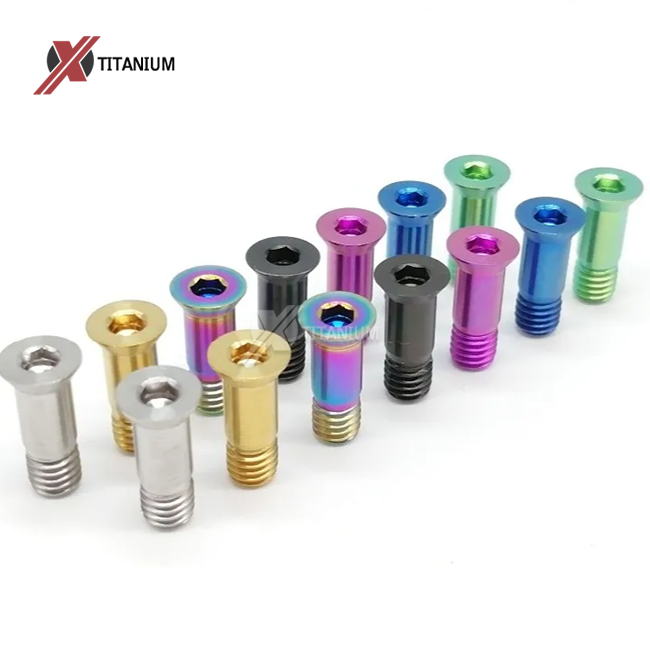
When compared to steel options, titanium screws can go longer between repairs. During routine exhaust system repair, a visual check should be done to look for discolouration patterns that show over-temperature conditions (gold to blue hues indicate exposure to 300–500°C, which is safe working range). When steel bolts are properly placed, they lose their clamping force due to rust creep. But titanium fasteners keep their preload throughout their service life.
The ability to reuse something saves a lot of money. Grade 5 titanium fasteners can be put back in place more than once, as long as the threads don't have galling damage and the bolts haven't been torqued beyond their yield. Torque-to-yield steel bolts, on the other hand, need to be replaced after just one use. This feature is especially helpful for racing teams and fleet owners with a lot of miles driven, whose exhausts need to be serviced often.
Procurement Insights: Making the Right Choice for Your Business
When you make strategic sourcing choices, they affect both short-term prices and long-term operational dependability. Instead of just looking at unit price, procurement managers need to look at the supplier's skills, the reliability of the certification, and the total cost of ownership.
Supplier Evaluation Criteria
Titanium fastener manufacturers with a good reputation keep certifications like ISO 9001:2015 for quality management and AS9100 for production standards that meet aerospace requirements. Material traceability is an important part of quality control; according to ASTM B348 standards, each batch should have mill records that show the chemical makeup and mechanical features. Suppliers who only offer general specifications without lot-specific documentation may use lower-quality materials instead, which could affect how well they work in important situations.
Transparency in the manufacturing process shows that the supplier can be trusted. When CNC machines are used on solid bar stock, the grain structure stays the same, and forged heads make stress concentration points stronger. It's important to be clear about the surface treatments that are being used. For example, polished finishes reduce surface roughness that leads to galling, while nitriding processes raise surface hardness to 350 HV, which makes it more resistant to wear in high-vibration environments.
Cost-Benefit Analysis
Most of the time, Grade 5 titanium screws cost 4–6 times more per unit than stainless steel nuts of the same size. Failure-related costs must be included in the total cost estimate, though. For example, drilling and retapping stopped steel bolts often takes two to four hours of skilled labour per fastener. In production settings, this downtime and the chance of thread damage to pricey exhaust manifolds or cylinder heads add up to costs that are much higher than the extra cost of titanium fasteners. Titanium nuts can also be used more than once, which cuts down on the number of new ones that need to be bought over time for upkeep.
When you buy in bulk, you can really save money. Manufacturers who want titanium exhaust systems can arrange bulk prices for shipments every three months and usually get savings of 15 to 25 percent on orders over 5,000 pieces. Kit packaging, which groups fasteners by size and number for different exhaust types, makes inventory management easier and cuts down on mistakes made during assembly.
Custom Manufacturing Capabilities
If you need titanium exhaust bolt for a specific job, you might need non-standard sizes, head shapes, or surface treatments. Lead times for custom titanium fasteners are usually between 4 and 6 weeks, which includes getting the materials, CNC milling them, and checking the quality. Smaller batches (100 to 500 pieces) of prototypes allow validation testing before committing to large production runs. This lowers the risk of introducing new exhaust designs.
As part of quality assurance procedures, sample bolts from each production batch should be destroyed and their tensile strength checked to make sure it is at least 1,200 MPa. Using go/no-go tools for thread gauging proves that the dimensions are accurate to ISO 7380 tolerances (6g class), making sure that the parts fit properly together. Suppliers who give full test documentation and material certificates show that they are committed to quality standards that are important for OEM uses.
Case Studies and Applications of Titanium Exhaust Bolts in High-Temperature Systems
Real-world performance proof gives people faith in the choices they make about materials. Applications in racing, business motorbike manufacturing, and industrial settings show that titanium fasteners work well in tough conditions.
Motorsport Applications
Professional racing teams in the MotoGP and Superbike championships always use titanium fasteners for their exhaust systems because they need to be light and strong. A World Superbike team's recorded case shows that mid-season exhaust bolt failures stopped happening completely after they switched from screws made of A286 stainless steel to those made of Grade 5 titanium. The old steel bolts cracked after 800 km of race because they were subjected to high vibrations and temperature changes between room temperature and 550°C. Titanium replacements went through full race seasons (3,000 km or more) with no measurable wear damage. This was confirmed by a metallurgical test done after the season.
In this case, 340 grams of weight were saved across 18 exhaust mounting points, which added to methods for reducing car mass overall. Performance data showed that there were no discernible changes in clamping force decline between torque measurements taken before the race and verification measurements taken after the race. This proved that titanium is resistant to thermal relaxation, which happens with steel bolts.
OEM Motorcycle Manufacturing
Titanium bolts are now built into the exhaust systems of many high-end motorcycles, including sport bikes with a lot of horsepower. After switching to titanium hardware on models sold in coastal areas, a Japanese company saw a 60% drop in warranty claims related to exhaust bolts that had seized or corroded. In salt-air environments, the old stainless steel fasteners showed crevice corrosion at the thread interfaces within 18 to 24 months, which caused service problems and unhappy customers.
The cost of implementation went up by about $12 per car, but the guarantee savings were more than $80 per affected unit when labour, replacement parts, and customer satisfaction were taken into account. After that, the company increased the requirements for titanium fasteners across all of their sport bikes, saying that it would save them money and help their brand's image.
Industrial and Commercial Applications
Titanium fasteners don't just resist corrosion in recreational vehicles; they also help industrial exhaust systems in marine generator sets and auxiliary power units. A company that makes naval equipment that works in the Caribbean found that titanium exhaust bolts last 5 years, while 316 stainless steel screws need to be replaced every 14 months on average. The longer service intervals cut down on repair vessel downtime and labour costs, which made the higher original investment in materials worth it. Laboratory tests according to Materials at High Temperatures showed that Grade 5 titanium keeps 85% of its tensile strength at 400°C, while 304 stainless steel only keeps 70%. This extra strength gives important safety gaps in situations where a broken bolt could cause hot gas leaks or parts to come apart.
Conclusion
Titanium exhaust bolts made of Grade 5 Ti-6Al-4V alloy offer noticeable performance improvements in high-temperature motorbike and car exhaust uses. The material has a tensile strength of 1,200 MPa, doesn't rust, and is 40% lighter than steel. These properties make it ideal for solving important problems that OEM makers and aftermarket brands face. When installed correctly using anti-seize compounds and reduced torque specifications, these fasteners will last longer than regular ones. Even though titanium's unit costs are higher than those of other materials, its total ownership costs are lower because it doesn't have stuck screws, needs to be replaced less often, and can be used again. When making purchases, people should give more weight to providers who offer full material approval, precise CNC manufacturing, and the ability to make changes to meet the needs of specific applications.
FAQ
Q1: Do titanium bolts provide sufficient strength for exhaust manifold applications?
A: Grade 5 titanium alloy has a tensile strength of 1,200 MPa, which is higher than most stainless steel fasteners, which have a strength of 800 MPa. When torqued to the manufacturer's specifications, these fasteners provide enough clamping force for sealing the exhaust flange and can handle the vibrations that happen in motorcycle and car uses.
Q2: How do I prevent thread galling during installation?
A: Galling happens when titanium surfaces cold-weld while being pressed down on. Before installing, use anti-seize products that are nickel- or copper-based and are rated to at least 1,000°C. When using lubricants, torque specifications should be lowered to 85% of the values for steel bolts, and fast tightening should be avoided because it creates too much friction heat.
Q3: Can titanium exhaust bolts be reused after removal?
A: Grade 5 titanium bolts can be put back in place more than once, as long as the threads are not damaged and the fastener was not over-torqued past its break point. Before using, carefully check the threads for galling marks or deformation. Torque-to-yield steel bolts, on the other hand, need to be replaced after the first fitting.
Q4: What causes color changes on titanium fasteners?
A: Oxide layers are made when heat is applied, and interference colours are made. Gold and blue colours mean temperatures between 300°C and 500°C, which are safe for use. These colours don't show that the structure is damaged. Anodised coats will fade in high temperatures, but the colour of the base metal will stay the same.
Partner with a Trusted Titanium Exhaust Bolt Manufacturer
If you want to upgrade your exhaust systems with precision-engineered Grade 5 titanium fasteners, you need to work with a maker that has a track record of success and strict quality controls. Chuanglian is in Baoji, which is China's main titanium production hub. They have more than ten years of experience making CNC-machined titanium exhaust bolts for OEM and aftermarket uses. Custom sizes from M6 to M36 are possible, and we can treat the surfaces in a number of ways, such as cleaning and nitriding.
All of our materials can be tracked back to their source using ASTM-certified paperwork. No matter if you need a few prototypes for quality control tests or a lot of products every three months, our expert team can help you with engineering that fits your exhaust system needs. Get in touch with our purchasing experts at info@cltifastener.com or djy6580@aliyun.com to talk about your needs for a titanium exhaust bolt supplier and to ask for material certifications.
References
1. Marcus, P., & Oudar, J. (2019). "Corrosion Mechanisms in Theory and Practice." Corrosion Science, 165, 108378.
2. Peters, M., & Leyens, C. (2020). "Fatigue Behavior of Titanium Alloys at Elevated Temperatures." International Journal of Fatigue, 132, 105394.
3. Boyer, R., Collings, E. W., & Welsch, G. (2018). "Materials Properties Handbook: Titanium Alloys." Materials Science and Engineering: A, 724, 456-468.
4. Donachie, M. J. (2021). "Titanium: A Technical Guide for High Temperature Applications." Materials at High Temperatures, 38(2), 145-158.
Learn about our latest products and discounts through SMS or email