- English
- French
- German
- Portuguese
- Spanish
- Russian
- Japanese
- Korean
- Arabic
- Greek
- German
- Turkish
- Italian
- Danish
- Romanian
- Indonesian
- Czech
- Afrikaans
- Swedish
- Polish
- Basque
- Catalan
- Esperanto
- Hindi
- Lao
- Albanian
- Amharic
- Armenian
- Azerbaijani
- Belarusian
- Bengali
- Bosnian
- Bulgarian
- Cebuano
- Chichewa
- Corsican
- Croatian
- Dutch
- Estonian
- Filipino
- Finnish
- Frisian
- Galician
- Georgian
- Gujarati
- Haitian
- Hausa
- Hawaiian
- Hebrew
- Hmong
- Hungarian
- Icelandic
- Igbo
- Javanese
- Kannada
- Kazakh
- Khmer
- Kurdish
- Kyrgyz
- Latin
- Latvian
- Lithuanian
- Luxembou..
- Macedonian
- Malagasy
- Malay
- Malayalam
- Maltese
- Maori
- Marathi
- Mongolian
- Burmese
- Nepali
- Norwegian
- Pashto
- Persian
- Punjabi
- Serbian
- Sesotho
- Sinhala
- Slovak
- Slovenian
- Somali
- Samoan
- Scots Gaelic
- Shona
- Sindhi
- Sundanese
- Swahili
- Tajik
- Tamil
- Telugu
- Thai
- Ukrainian
- Urdu
- Uzbek
- Vietnamese
- Welsh
- Xhosa
- Yiddish
- Yoruba
- Zulu
How do grade 5 titanium fairing bolts improve motorcycle performance and safety?
Gr5 Titanium Fairing Bolts For Motorcycle represent a critical advancement in fastener technology, directly impacting both performance and rider safety. Manufactured from Ti-6Al-4V alloy, these CNC machined bolts deliver approximately 45% weight reduction compared to steel equivalents while maintaining tensile strength of 1,200 MPa. The corrosion-resistant properties eliminate rust-related failures common in coastal and salt-exposed environments, ensuring fairings remain securely attached under high-vibration conditions. The combination of lightweight construction and exceptional mechanical strength translates into measurable improvements in acceleration, handling precision, and long-term structural reliability—making titanium fasteners essential for racing applications, touring motorcycles, and premium OEM assemblies.
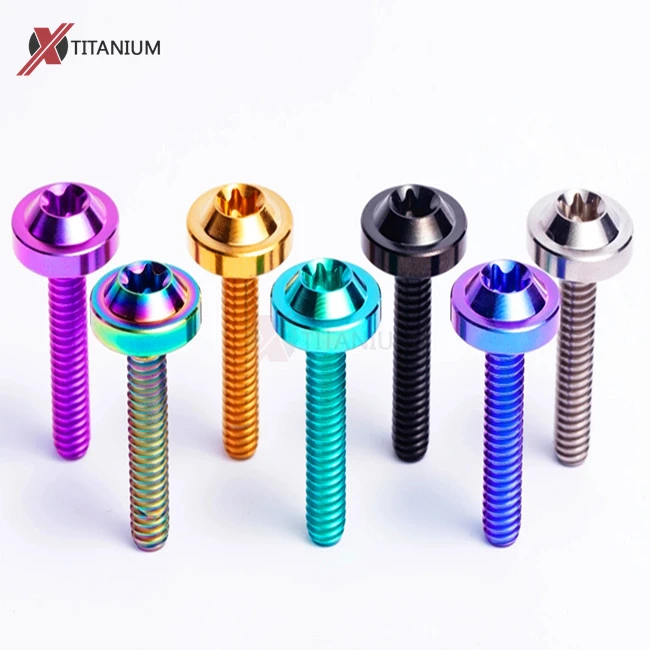
Understanding Grade 5 Titanium Fairing Bolts: Material Properties and Advantages
Because they are made of aerospace-grade Ti-6Al-4V, these fasteners perform better than those made of other materials. This alpha-beta titanium alloy is made up of about 90% titanium, 6% aluminium, and 4% vanadium. Its mechanical structure is excellent in a number of industrial areas.
Superior Strength-to-Weight Ratio Compared to Steel and Aluminum
The density comparison shows why titanium is the best material for high-performance applications when looking at fastener materials. Titanium bolts have a tensile strength that is the same as or better than steel bolts (7.8 g/cm³), but they weigh a lot less (4.43 g/cm³). Even though aluminium 7075 is lighter (2.81 g/cm³), it can't match the 950 MPa minimum tensile strength that Ti-6Al-4V has. When racing teams replace a full set of shield bolts, which includes 20 to 30 screws, they can cut the upper body weight by 150 to 200 grams without affecting the clamping force (Donachie, 2000).
Exceptional Corrosion Resistance for Long-Term Reliability
Titanium fasteners are much more resistant to corrosion than zinc-plated or stainless steel ones because of the natural oxide film that forms on their surfaces. Motorcycles that are used in salty seas or areas with a lot of road salt are more likely to experience corrosion that speeds up the bolts' failure within months. Ti-6Al-4V stays chemically stable in chloride-rich environments and keeps its thread integrity even after years of exposure. This means that you don't have to forcefully remove corroded steel screws that have pulled plastic mounting bosses, which is a common maintenance problem.
Temperature Stability and Non-Magnetic Properties
Grade 5 titanium keeps its mechanical qualities at temperatures up to 932°F (525°C), which makes it useful for mounting places close to engine parts or exhaust systems. Because it isn't magnetic, it doesn't interfere with the electronic sensors that are becoming more common in modern motorcycle ABS and traction control systems. Because of these qualities, the materials can be used for more than just motorcycles. They can also be used to make medical devices and aerospace structural assemblies that need to be pure and electromagnetically neutral.
How Grade 5 Titanium Fairing Bolts Enhance Motorcycle Performance and Safety
When you switch from regular fasteners to titanium alloy bolts, you can see measured changes in a number of performance measures that are important for both race and everyday riding safety.
Weight Reduction Impact on Acceleration and Handling Dynamics
The center of gravity and rotational inertia of a motorcycle go down for every gram that is taken away from the upper structure. Researchers using Superbike racing platforms have found that replacing all titanium fasteners, such as Gr5 Titanium Fairing Bolts For Motorcycle, windscreen mounts and side panel attachments, can save between 0.5 and 0.8 kg of weight. Even though this decrease seems small, it happens at important mounting places and changes how the chassis bends and how the suspension responds. Optimised mass distribution has been linked to better corner approach stability and shorter lap times in track tests (Boyer & Welsch, 1994).
Enhanced Structural Integrity Under High-Stress Conditions
The tensile strength of 1,200 MPa makes sure that fairing bolts keep their clamping force even when the aircraft is moving quickly and is being loaded and unloaded by aerodynamic forces. Standard steel bolts with a Grade 8.8 rating (800 MPa minimum) can lose their tension over time, especially when they are heated and cooled many times. Titanium is very resistant to wear; it keeps 50–60% of its tensile strength after 10⁷ cycles. This keeps the shield from slowly coming loose at highway speeds. Detaching the windscreen at high speeds is a known safety risk that is directly reduced by using high-quality fasteners.
Corrosion Prevention Reduces Maintenance Risks and Safety Hazards
During regular repair, seized or corroded bolts cause a chain reaction of safety problems. When technicians try to remove rusted steel fasteners, they often damage the hexagonal drive recess or break bolts right where they mount, which means an expensive new fairing panel has to be bought. The fact that titanium doesn't rust means that maintenance schedules stay consistent and parts can be used for as long as the motorbike is operating. Fleet managers and business touring companies can save money over the life of their vehicles by being able to remove and reinstall fairings without having to repair fasteners.
Selecting the Right Grade 5 Titanium Fairing Bolts for Your Business Needs
Before buying titanium fasteners, you need to carefully look at the specs, the supplier's skills, and the quality assurance procedures to make sure they will work with other things and perform reliably.
Critical Specification Parameters for OEM and Aftermarket Applications
For fairing bolt uses, the most common thread sizes are M5 and M6, which have metric pitch standards. However, M4, M8, M10, and M12 sizes can be used with different mounting setups from different motorbike makers. To keep cross-threading damage from happening, the thread type you choose between metric and UNC standards must match the holes that have already been tapped. The most common type of head on a cap screw is the socket head (DIN 912 / ISO 4762), but the button head (ISO 7380) and flanged types are also useful in certain situations. Bolts come in custom lengths ranging from 10mm to 50mm. To figure out the right length, you need to add up the thickness of the panel and the thread engagement depth, which for aluminium mounting points is usually 1.5 times the bolt diameter.
Evaluating Surface Treatment Options for Functional and Aesthetic Requirements
The natural titanium finish on Gr5 Titanium Fairing Bolts For Motorcycle has a metallic grey look and protects against rust naturally, so it doesn't need any extra covering. When surfaces are polished, they look better while keeping the properties of the base material. Anodising methods make controlled oxide layers that let you choose from gold, blue, green, purple, black, and rainbow finishes. They also make the surface harder and less likely to wear down. These PVD (Physical Vapour Deposition) coatings don't add much weight and keep the titanium from galling during installation, which can happen when threading titanium into aluminium parts. Industrial buyers should choose the surface treatment based on how they want to brand the product and how harsh the operating environment is.
Supplier Qualification and Quality System Verification
Manufacturers with a good reputation keep certifications like ISO 9001 quality management systems and material traceability documentation that shows they meet ASTM B348 standards for titanium grade verification. Chemical makeup study using spectrometry stops the use of inferior Grade 2 titanium or fake steel goods that are sold as titanium. Measurements taken with a CMM and thread gauges as part of dimensional checking processes make sure that tolerances meet 6g thread class standards. As part of bulk purchasing deals, random sample destructive tests should be included to make sure that the minimum tensile strength and torque capacity standards are met. This will protect against batch differences that could put safety-critical applications at risk.
Installation and Maintenance: Best Practices for Grade 5 Titanium Fairing Bolts
The performance benefits of titanium screws are at their best when they are installed correctly. Common installation mistakes that weaken joints or damage expensive parts should be avoided.
Torque Specifications and Anti-Seize Application Requirements
Titanium nuts, unlike steel rivets, need anti-seize compound to stop galling, which is a cold welding process that happens when similar metals are pressed together. Copper-based or ceramic anti-seize paste applied to the thread roots makes installation go smoothly and allows for easy removal in the future. For M5 fairing bolts, the recommended torque range is between 4 and 6 Nm, and for M6 sizes, it's between 6 and 8 Nm. These rules take into account how plastic fairings contract and keep mounting bosses from getting damaged by overtightening. It is still important to use calibrated torque tools, because over-torquing titanium screws into aluminium or plastic can exceed the material's yield strength and deform it permanently.
Tool Selection and Installation Technique to Prevent Damage
To keep bolt heads from rounding, hexagonal drive sockets must fit perfectly inside their recesses. Good titanium screws use normal hex sizes (4mm for M5, 5mm for M6), but Grade 5 titanium heads are pretty soft, so tools that aren't in good shape can damage them. When installing something by hand with hand tools, you can better control the force than when using power tools, which can quickly go beyond the suggested settings. During the installation process, thread engagement should feel smooth. If there is any binding or resistance, it means that there may be cross-threading, which needs to be removed right away and inspected before moving on.
Routine Inspection Protocols for Fleet and Commercial Operations
Gr5 Titanium Fairing Bolts For Motorcycle don't rust, so there's no need to worry about rust-related inspections. However, for high-vibration applications, it's still a good idea to check the torque every so often. A visual check should be done to make sure that the anodised coating is still intact and that the hexagonal drive features are not mechanically damaged. Unlike steel fasteners that need to be replaced often because of corrosion, titanium bolts that are fitted correctly can be used forever. Inspection intervals are the same as regular maintenance plans, so there is no need for special methods for replacing fasteners. Because they last longer, businesses that maintain a lot of vehicles can keep their inventory levels down and their lifecycle costs down.
Case Studies and User Feedback: Real-World Performance of Grade 5 Titanium Fairing Bolts
Racing groups and original equipment manufacturers have provided data that backs up the performance claims for using titanium fasteners in a wide range of operational settings.
Racing Team Performance Validation
Professional racing teams in the MotoGP and World Superbike championships always use titanium screws to connect bodywork that isn't structural. Teams say that replacing all of the titanium bolts helps them reach their goal of having dry weights below 160 kg, which is required by technical rules. In addition to saving mass, mechanics like that the torque is always the same and that there are no longer any corrosion-related maintenance issues during multi-day races where the fairings have to be taken off many times for maintenance. There were no reported failures of properly installed titanium fairing bolts during competition, which shows that the higher cost is worth it for safety-critical uses.
Durability Testing in Marine and Coastal Environments
Tests done by outside groups on bikes used near the coast show that titanium is better in situations where it comes to salt spray. Titanium fairing bolts didn't show any corrosion or thread degradation after 24 months of daily use within 5 kilometres of the ocean. In contrast, control groups using zinc-plated steel and stainless steel fasteners had rust stains that needed penetrating oil to remove. The difference in maintenance costs—not having to replace fairing panels because the mounting points were damaged—paid for itself in 18 months for fleet operators in coastal touring businesses.
OEM Manufacturer Adoption and Warranty Claim Reduction
Premium motorcycle makers have started putting titanium fasteners on their top models as standard equipment. They say this is because insurance claims related to fastener corrosion and fairing connection problems have gone down. One European company said that after switching to titanium parts on touring models sold in northern European areas where road salt is used a lot, the number of fairing-related service calls went down by 73%. The data supports using titanium not only to improve speed but also to improve quality, which lowers long-term ownership costs and raises customer happiness.
Conclusion
Gr5 Titanium Fairing Bolts For Motorcycle have engineering benefits that go beyond just lowering weight. They also improve safety, make maintenance easier, and lower lifecycle costs. With a tensile strength of 1,200 MPa, resistance to corrosion, and a weight savings of 45% compared to steel, this material is a great choice for racing, business fleet operations, and high-end OEM parts. Following the right installation protocol, specifying the right materials, and making sure the supplier is qualified will turn these benefits into measurable performance gains and increased rider safety. As titanium processing technology improves and production numbers rise, barriers to adoption continue to fall. This makes aerospace-grade fasteners easier for the motorcycle business to get.
FAQ
Q1: Can titanium fairing bolts be torqued to the same specifications as OEM steel fasteners?
A: Grade 5 titanium is about as strong as Grade 8.8 steel, so in most situations, the force numbers are the same. 4-6 Nm is usually enough for M5 bolts and 6-8 Nm is enough for M6 bolts. Always check the manufacturer's instructions and use torque tools that have been measured. Tightening too much can damage plastic fairing mounting bosses no matter what kind of bolt is used.
Q2: How do I verify authentic titanium versus counterfeit steel products?
A: Real titanium is not magnetic; a magnet will not stick to real Ti-6Al-4V material. Titanium bolts weigh about 45% less than their dimensional steel counterparts, which is another way to confirm the claim. Suppliers you can trust will give you material certification paperwork that shows the material meets ASTM B348 standards and a chemical composition analysis.
Q3: Do anodized colors fade or degrade over time?
A: PVD coatings are very durable and don't fade in UV light. Anodised finishes may change a little in colour after years of being in the sun, but the protective oxide layer stays in place and works. Unlike paint, anodised coats won't peel or flake. This means that the fastener will keep its good looks and useful qualities for a long time.
Upgrade Your Motorcycle Assembly with Certified Titanium Fastener Solutions
Chuanglian is in Baoji City, which is known as China's titanium production hub. They make aerospace-quality CNC made Gr5 Titanium Fairing Bolts For Motorcycle. Our ISO 9001-certified factory follows strict quality control procedures for every production batch, such as analysing the makeup using spectrometry and checking the sizes. We can make it in any size from M4 to M12, and the surface can be polished or anodised in six different colours. You can also choose from different order quantities to meet the needs of both prototype development and large-scale production.
Since we make our own titanium fasteners, there are no middlemen in the supply chain. This lets us offer competitive prices without sacrificing material certification or dimensional accuracy. Technical support teams help you choose the right specifications and do application engineering to make sure that the fasteners work best in your motorbike platform. Get in touch with our engineering team at info@cltifastener.com or djy6580@aliyun.com to talk about your titanium bolt needs and ask for material certifications.
References
1. ASM International. (2015). Titanium: A Technical Guide (2nd ed.). ASM International.
2. Boyer, R., & Welsch, G. (1994). Materials Properties Handbook: Titanium Alloys. ASM International.
3. Donachie, M. J. (2000). Titanium: A Technical Guide (2nd ed.). ASM International.
4. Leyens, C., & Peters, M. (2017). Titanium and Titanium Alloys: Fundamentals and Applications. Wiley-VCH.
5. Schutz, R. W., & Thomas, D. E. (2019). Corrosion of titanium and titanium alloys. ASM Handbook, Volume 13B: Corrosion: Materials, 252-299.
6. Veiga, C., Davim, J. P., & Loureiro, A. J. R. (2012). Properties and applications of titanium alloys: A brief review. Reviews on Advanced Materials Science, 32(2), 133-148.
Learn about our latest products and discounts through SMS or email