- English
- French
- German
- Portuguese
- Spanish
- Russian
- Japanese
- Korean
- Arabic
- Greek
- German
- Turkish
- Italian
- Danish
- Romanian
- Indonesian
- Czech
- Afrikaans
- Swedish
- Polish
- Basque
- Catalan
- Esperanto
- Hindi
- Lao
- Albanian
- Amharic
- Armenian
- Azerbaijani
- Belarusian
- Bengali
- Bosnian
- Bulgarian
- Cebuano
- Chichewa
- Corsican
- Croatian
- Dutch
- Estonian
- Filipino
- Finnish
- Frisian
- Galician
- Georgian
- Gujarati
- Haitian
- Hausa
- Hawaiian
- Hebrew
- Hmong
- Hungarian
- Icelandic
- Igbo
- Javanese
- Kannada
- Kazakh
- Khmer
- Kurdish
- Kyrgyz
- Latin
- Latvian
- Lithuanian
- Luxembou..
- Macedonian
- Malagasy
- Malay
- Malayalam
- Maltese
- Maori
- Marathi
- Mongolian
- Burmese
- Nepali
- Norwegian
- Pashto
- Persian
- Punjabi
- Serbian
- Sesotho
- Sinhala
- Slovak
- Slovenian
- Somali
- Samoan
- Scots Gaelic
- Shona
- Sindhi
- Sundanese
- Swahili
- Tajik
- Tamil
- Telugu
- Thai
- Ukrainian
- Urdu
- Uzbek
- Vietnamese
- Welsh
- Xhosa
- Yiddish
- Yoruba
- Zulu
How to choose high-quality grade 5 titanium fairing bolts for your bike
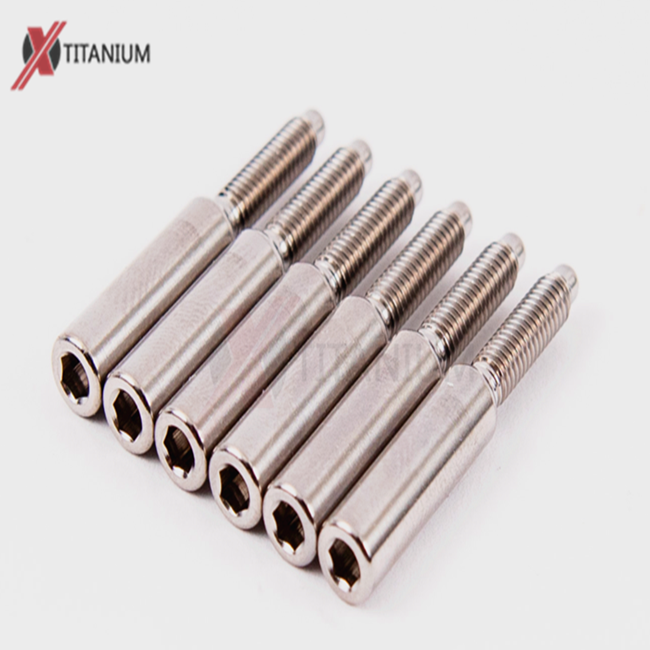
Choosing high-quality Gr5 Titanium Fairing Bolts For Motorcycle demands attention to material certification, mechanical properties, and supplier credibility. Prioritize bolts manufactured from authentic Ti-6Al-4V alloy with verified ASTM B348 compliance, featuring tensile strength exceeding 1,200 MPa. Verify CNC machining standards, thread accuracy (typically M5 or M6 for fairings), and surface treatments like anodizing or PVD coating that resist galling while maintaining aesthetic appeal. Reputable suppliers provide full material traceability, batch testing documentation, and demonstrate expertise in aerospace-grade manufacturing processes—key indicators that separate premium fasteners from inferior substitutes prone to early failure or corrosion.
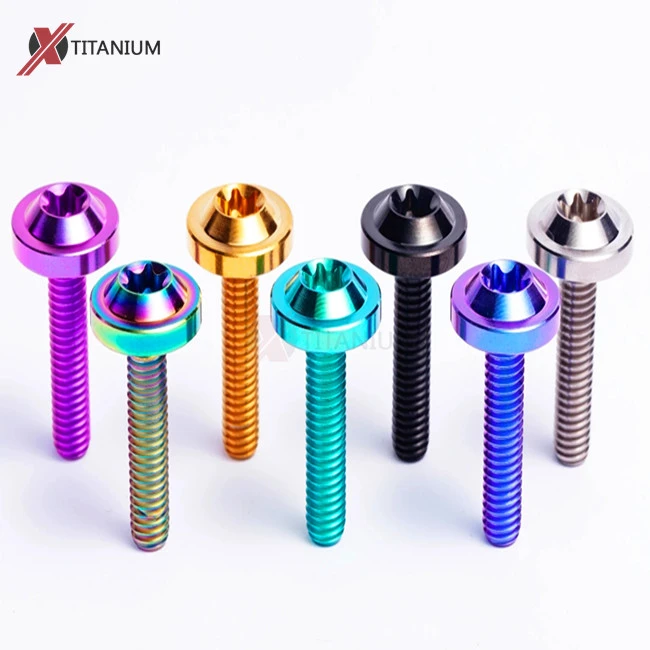
Understanding Grade 5 Titanium Fairing Bolts and Their Benefits
It is Grade 5 titanium, which is scientifically called Ti-6Al-4V, that is most often used in performance engineering. A little over 90% of this is titanium, 6% is aluminum, and 4% is vanadium. This material is very strong because it has an alpha-beta microstructure. This part is made of vanadium, which stabilizes the beta phase and makes it stronger and less dense. This makes it more resistant to heat and easier to work with during production.
Superior Strength-to-Weight Ratio
The best thing about Ti-6Al-4V is that it is very strong for how light it is. Titanium covering bolts weigh only 4.43 g/cm³, while steel ones weigh 7.8 g/cm³. This means that titanium covering bolts are about 45% lighter than steel ones. They can also be pulled apart with about 1,200 MPa of force, which is the same as Grade 8.8 steel fasteners. This weight loss is very helpful for racing, where each gram changes how the vehicle moves and how fast it goes. Changing a full set of fender bolts, which includes 20 to 30 pieces, can cut the weight of the upper body shell by 150 to 200 grams. This makes the bike more safe when turning by lowering the center of gravity a little.
Unmatched Corrosion Resistance
Titanium naturally makes an oxide layer (TiO₂) to protect itself when it comes in touch with air. This layer keeps the metal safe from weak acids, air corrosion, and road salts. In coastal areas or on roads that are cleaned up for winter use, standard zinc-plated steel bolts rust very quickly. The nuts get stuck in the threads and damage the expensive fixing spots on the bumper when the bolts are taken off. Fairings can still be used after years of rough use without thread damage or screws that won't turn if they are made of Grade 5 titanium.
Long-Term Economic Value
Titanium nuts save a lot of money over time, even though they cost more than steel nuts at first. They keep the clamping power for a long time, don't need to be changed when the screws rust, and keep mounting heads from getting damaged by bolts that get stuck. Racing teams and touring riders say that titanium fairing hardware doesn't break for as long as the bike does. If you live in a harsh area, steel fairing hardware needs to be replaced every two to three seasons.
Core Criteria for Selecting High-Quality Grade 5 Titanium Fairing Bolts
There are a lot of technical things that need to be checked to tell the difference between real Grade 5 titanium screws and cheaper faux ones. False titanium screws are easy to find. For example, Grade 2 titanium is sold as Grade 5 titanium, and steel nuts covered in titanium break when they are put through their paces.
Material Certification and Compliance
For every batch of materials, real suppliers give full certifications that can be tracked back to mill test reports. These papers show that spectrometry was used to look at the chemical make-up and that the exact Ti-6Al-4V ratio meets the standards set by ASTM B348 or AMS 4928. When procurement teams place an order, they should ask for these certificates because they are the only way to be sure. The heat lot number should be put on the papers so that the form can be matched with the real product.
Mechanical Property Verification
Grade 5 titanium bolts must have a tensile strength of at least 895 MPa (130 ksi) and a yield strength of at least 828 MPa (120 ksi), according to ASTM F2282. Professional manufacturers randomly damage production runs to get torque-to-failure data that shows how well the head holds up under installation stress. The threads are rolled instead of cut when making good nuts, which can be seen with a microscope. Rolling keeps the grain flow patterns and makes the resistance to wear much higher. This is a very important trait for fairings since they are always moving and being loaded and emptied.
Thread Accuracy and Dimensional Tolerance
With an ISO 68-1 accuracy class of 6g and M5 or M6 metric threads for fairings, most people stick to those. The accuracy of the thread pitch has a direct effect on how the fitting power is spread out and how stable it is. Precision CNC cutting and laser measurement systems are used by high-end makers to keep a close eye on sizes. This makes sure that threads work together smoothly and that cross-threading doesn't happen.
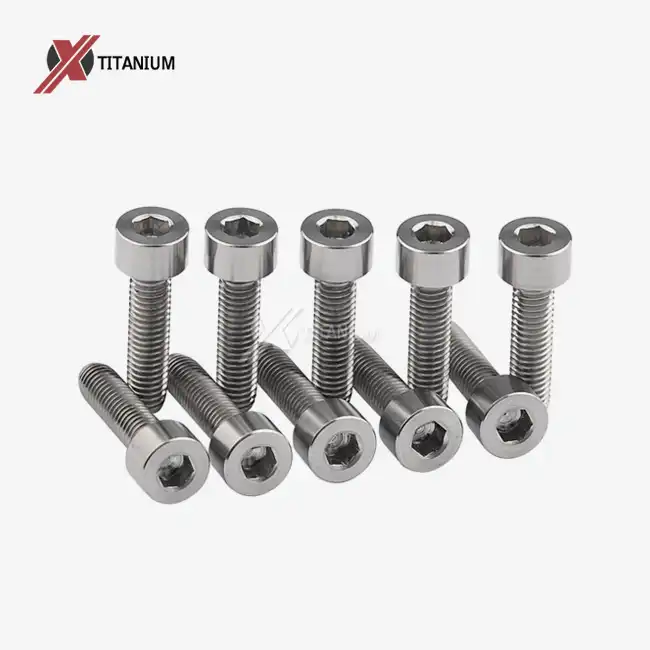
Gr5 Titanium Fairing Bolts For Motorcycle are particularly valued in this context because their high strength-to-weight ratio and corrosion resistance further enhance thread engagement stability and long-term fastening reliability. So that the bearing surface stays in touch with the covering plastic or mounting hardware, the type of head—button head (ISO 7380), socket head (DIN 912), or flanged—should match OEM specs.
Surface Treatment Selection
The natural silver-gray finish on titanium is good enough to keep it from rusting, but surface processes can make it look better and work better too. When you polish bikes, they get a shiny finish that doesn't make them go faster. The electrochemical process of anodising makes the oxide layer thicker and the surface a little harder. The oxide layer can be gold, blue, purple, or black, among other colors. Titanium is stronger and less likely to wear down because of the Physical Vapor Deposition (PVD) layer. As well, it stops galling almost totally. Galling is when titanium cold-welds against other metals or itself during installation. Professional buyers choose nuts that have been treated with PVD for important tasks that need to be taken apart and put back together a lot.
Comparing Grade 5 Titanium Fairing Bolts with Other Bolt Types
It is helpful to know how the performance of different fastener materials compares so that you can make smart purchases that fit your needs and your budget.
Grade 5 Titanium vs. Stainless Steel
In OEM fairings, stainless steel nuts (usually 304 or 316 grade) are most often used because they are cheap and don't rust. On the other hand, they are a lot heavier—about 76% heavier than titanium ones of the same size. 316 stainless steel doesn't rust easily in salt water, but it's not as strong as Grade 5 titanium when it comes to pulling apart. To get the same holding force, you need bolts with a bigger width.
Different installations need very different amounts of power. To keep the threads from galling on titanium, you need to be very careful with your torque wrench and use anti-seize compound. On the other hand, you can use higher torque values on stainless steel before the threads start to strip. Even though they cost 4–5 times more at first, titanium screws are a better deal over the course of their life. The reason for this is that stainless steel fasteners rust in harsh conditions and need to be changed every so often.
Grade 5 Titanium vs. Aluminum Alloy
Aluminum 7075-T6 is the lightest choice, weighing only 2.81 g/cm³. On the other hand, its tensile strength (about 570 MPa) is much lower than titanium's, which means it is not safe to use in structures. Aluminum bolts are easy to strip when they are torqued to the right level. Also, their heads often round out when they are taken off after being used for a long time.
When aluminum comes into touch with metals that are not the same, it corrodes through a process called galvanic reaction. This makes white powder layers that hold threads together. Because they aren't reliable, professional mechanics never use aluminum screws to hold fairings in place. Instead, they only use them for looks and not for anything solid.
Grade 5 vs. Grade 2 Titanium
Pure titanium Grade 2 for sale doesn't rust or corrode easily, but it's only 345 MPa strong, which is only about a third as strong as Grade 5. Some sellers charge more for Grade 2 screws because they know that people don't know the difference between the types of titanium. For low-stress tasks like mounting a license plate, Grade 2 titanium works fine. But it's not strong enough for fairing mounting points that get hit, vibrated, or loaded by wind.
There is no way to tell the difference between grades without chemical testing or mill approval. A eye check is not enough. The grade is often clear from the price. Real Grade 5 bolts, for example, cost about 60% more than Grade 2 bolts because they have to be made using more complicated methods and cost more alloying elements.
Practical Considerations for Procurement and Installation
It takes more than just picking the right product to get titanium screws right. It also includes managing logistics, making sure the supplier is qualified, and installing things in the best way to get the best performance and service life.
Supplier Qualification and Sourcing
There are a few main differences between trustworthy sellers of titanium bolts and cheap ones. The very least is that they are certified by ISO 9001 for quality management. AS9100 certification also shows that aerospace suppliers can meet the quality standards of the aerospace industry. Companies that make things should have their own CNC machine centers, thread rolling equipment, and surface treatment tools instead of paying people to do these jobs. Gr5 Titanium Fairing Bolts For Motorcycle exemplify this need for in-house capability, as their consistent mechanical properties and fatigue resistance depend directly on precise process control that only vertically integrated manufacturers can reliably ensure.
This is known as "integrated production," and it helps make sure that quality standards are being met. Manufacturers, racing teams, or aftermarket brands that have been in business for a while can give you customer examples from people who have bought from them before and are ready to tell you how well the product has worked in the past. Baoji City in Shaanxi Province, China, is called the "City of Titanium" because it has a lot of tools for working with and melting titanium.
The supply chains for raw materials are easy for manufacturers in this industrial cluster to get to. This means that people who want to export can often get better deals without giving up quality. This is to make sure that fake goods don't get into supply chains through illegal sellers. The export paperwork, material approvals, and customs compliance must all be checked.
Installation Best Practices
It's important to use the right way to put titanium screws because they are not the same as steel or stainless steel ones. When you're getting the threads ready, be very careful. Before putting titanium bolts in, always clean the mounting holes of any dirt, old anti-seize, or rust products. Put a thin coat of a copper or ceramic anti-seize material on the threads and bearing surfaces to keep them from stuck.
These steps must be taken no matter what surface treatment is used. They keep the part from galling and make sure it can be taken off after a long time of use. Some fairing nuts, like M5 and M6, need a torque range of 4 to 6 Nm. However, this can change depending on the substrate material and what the designer suggests. Use tools that measure force instead of guessing how tight something is by hand.
This is because the way titanium feels in your hand is different from how steel feels. If you tighten too much, plastic fairings or threads could get damaged. If you loosen too little, fasteners could vibrate loose. Install the bolts in a cross-pattern order when connecting panels with more than one connection point. This will make sure that the pressure is spread properly across the fairing surface.
Maintenance and Service Life Optimization
Titanium is not magnetic and doesn't react with chemicals, so it doesn't need to be cleaned or fixed as often as other fittings. Every year, screws should be checked to make sure they are still tight enough and not coming loose because of vibrations or changes in temperature. Clean bolt heads with water and mild soap every so often to keep their good looks. Do not use harsh chemicals on anodised products because they could hurt them.
Check the threads for damage or galling when you take off the fairings to fix them. Threads can usually be taken off and put back on 50 times or more without breaking if anti-seize is used properly and pressure is kept in check. This is very different from steel bolts, which break after only 3–4 rounds in acidic places.
How to Make the Final Decision: B2B Buyer's Checklist
The research and procurement teams use structured review methods to make sure that the titanium fasteners they pick meet technical needs, price limits, and supply chain goals.
Material Authentication Protocol: In order to make sure that the Ti-6Al-4V mix meets the standards set by ASTM B348 Grade 5, you should ask for mill test certificates for each production lot. Ask that bolts be sent to a third party for an independent metallurgy study if the amount being bought is big enough to cover the cost. Make sure the seller keeps good records of how the goods were made and how the raw materials were used.
Dimensional Verification Requirements: It's important to be clear about the exact size you need, including the thread pitch, length under the head, head style, and drive type. You should ask for first-article inspection records that show the sizes are correct before giving the go-ahead for production runs. Check to see if it can be installed and built with the tools you already have.
Surface Treatment Selection Criteria: Pick a surface treatment that looks good and fits the space where it will be used. The natural finish looks good on parts inside the car where cost is more important than style. Gr5 Titanium Fairing Bolts For Motorcycle often benefit from a more durable coating, as they are exposed to weather and vibration. Anodised colors help brands stand out on things that people will see. If you need something to last a long time or be put together and taken apart a lot, the extra cost of a PVD finish is worth it.
Volume and Customization Flexibility: Find out how much your provider can handle in terms of sample orders, test runs, and large-scale production. What about customization options? It should be made clear what the minimum order size is, how long the lead time is for standard vs. custom specifications, and how long they are willing to keep inventory on hand for just-in-time delivery programs. Being able to change the length, style of the head, or special finishes of a product helps it stand out in a crowded market.
Quality System and Certification Validation: Use registrar databases to make sure that the current ISO 9001 certification is still valid. This is part of the quality system. Ask for parts of the quality rules that show how to do inspections, deal with materials that don't meet standards, and fix problems. Customers who want to buy medical or aerospace devices should check that the company is registered under AS9100 or ISO 13485.
Commercial Terms and Supply Chain Stability: Talk about how to pay, what the promise covers, and how to return items that don't fit or don't match the measurements. Make it easy for people to talk to each other by giving them technical help, letting them see where their things are, and giving them options for faster shipping for urgent needs. For long-term partnerships, check your providers' credit records or site reports to see if they are financially stable and run their businesses consistently.
Conclusion
There are many things you should consider when picking high-quality Gr5 Titanium Fairing Bolts For Motorcycle. These include the authenticity of the material, how well it works mechanically, how well it was made, and how skilled the seller is. While they may cost more at first, buying high-quality Ti-6Al-4V screws will save you money in the long run by reducing weight, protecting against corrosion, and cutting costs over the life of the product.
A good procurement process strikes a balance between scientific needs and practical ones. For example, it makes sure that the certification is true, that installation needs are met, and that the supply chain is reliable. If business-to-business buyers follow the tips and guidelines in this guide, they will be able to find titanium fixing solutions that make products work better while lowering the quality and delivery risks that come with global supply chains.
FAQ
What thread type should I specify for motorcycle fairing applications?
Most motorcycle companies use metric ISO threads, and most of the places where fairings attach are M5 or M6 sizes. Check the service manual for the model of motorcycle you own or measure the screws that are already there to make sure they are the right size. American makers sometimes use UNC threads, but it's not happening as often these days. For general purposes, you should choose a 6g tolerance class. This is the best way to get great thread interest and easy growth.
How do I verify authenticity of Grade 5 titanium bolts?
If you want to see the chemical makeup of each batch of production, ask for mill test certificates. Real Grade 5 has about 6% aluminum and 4% vanadium, which is why spectrometry can tell the difference between it and fake Grade 5. At least 1,200 MPa of strength should be seen when the material is pulled apart. You can't tell the difference between titanium types just by looking at them. The first step in the screening process is to test the magnet. Magnets can stick to titanium, but fake steel can stick to them.
Can titanium bolts be reused after removal?
If you use anti-seize powder to keep the screws from galling, you can put them in more than once. Pay close attention to the threads every time you take them off to see if they are damaged or warped. You should get a new bolt if the threads are damaged, the head is rounded, or the bolt has been lengthened over time. With the right amount of torque, most high-quality titanium bolts can be used more than 50 times. This is a lot more than steel bolts can handle in dangerous situations.
Partner with Chuanglian for Certified Gr5 Titanium Fairing Bolts For Motorcycle
Aluminum fasteners made by Baoji Chuanglian New Metal Material Co., Ltd. have been around for more than ten years. They sell aerospace-grade Ti-6Al-4V parts to picky markets all over the world. When we use CNC cutting, we can make shield bolts in all sizes (M4 to M12) with tight thread specs and a number of surface treatments, like anodising, polishing, and nitriding. Each batch of production goes through strict quality control, and all the materials can be tracked back to their source, and ASTM compliance paperwork is included. This makes sure the performance stays the same and meets the wants of users in racing, OEM, and aftermarket.
We have merged the production centers that check the quality of the products from the raw materials to the final tests. These buildings are in Baoji City, which is the center of titanium production in China. We have a strict quality management system and have worked with international customers for ten years, which shows that we can give B2B procurement teams the reliable and expert help they need. If you need a few samples to help you come up with a new product or a lot of them made with just-in-time delivery, our customer service team is ready to help you with all of your titanium fixing needs.
You can email our knowledgeable sales team at info@cltifastener.com or djy6580@aliyun.com to talk about your unique needs, get material certifications, or get prices for Gr5 Titanium Fairing Bolts For Motorcycle setups that are very different from the norm. Check out cl-titanium.com to see all of our products and find out how working with an experienced titanium supplier manufacturer can help your supply chain run more smoothly and keep the quality of the parts your customers depend on.
References
1. Boyer, R., Welsch, G., & Collings, E.W. (1994). Materials Properties Handbook: Titanium Alloys. ASM International.
2. ASTM International. (2021). ASTM B348-21: Standard Specification for Titanium and Titanium Alloy Bars and Billets. West Conshohocken, PA.
3. Donachie, M.J. (2000). Titanium: A Technical Guide, 2nd Edition. ASM International.
4. SAE International. (2019). AMS 4928: Titanium Alloy Bars, Wire, Forgings, Rings, and Drawn Shapes 6Al-4V Annealed.
5. Lutjering, G. & Williams, J.C. (2007). Titanium: Engineering Materials and Processes, 2nd Edition. Springer-Verlag Berlin Heidelberg.
6. ISO. (2014). ISO 7380-1:2011: Hexagon Socket Button Head Screws. International Organization for Standardization, Geneva.
Learn about our latest products and discounts through SMS or email