- English
- French
- German
- Portuguese
- Spanish
- Russian
- Japanese
- Korean
- Arabic
- Greek
- German
- Turkish
- Italian
- Danish
- Romanian
- Indonesian
- Czech
- Afrikaans
- Swedish
- Polish
- Basque
- Catalan
- Esperanto
- Hindi
- Lao
- Albanian
- Amharic
- Armenian
- Azerbaijani
- Belarusian
- Bengali
- Bosnian
- Bulgarian
- Cebuano
- Chichewa
- Corsican
- Croatian
- Dutch
- Estonian
- Filipino
- Finnish
- Frisian
- Galician
- Georgian
- Gujarati
- Haitian
- Hausa
- Hawaiian
- Hebrew
- Hmong
- Hungarian
- Icelandic
- Igbo
- Javanese
- Kannada
- Kazakh
- Khmer
- Kurdish
- Kyrgyz
- Latin
- Latvian
- Lithuanian
- Luxembou..
- Macedonian
- Malagasy
- Malay
- Malayalam
- Maltese
- Maori
- Marathi
- Mongolian
- Burmese
- Nepali
- Norwegian
- Pashto
- Persian
- Punjabi
- Serbian
- Sesotho
- Sinhala
- Slovak
- Slovenian
- Somali
- Samoan
- Scots Gaelic
- Shona
- Sindhi
- Sundanese
- Swahili
- Tajik
- Tamil
- Telugu
- Thai
- Ukrainian
- Urdu
- Uzbek
- Vietnamese
- Welsh
- Xhosa
- Yiddish
- Yoruba
- Zulu
Are titanium bolts worth it on a bike?
If you want to know if titanium bicycle bolts are worth the high price, you should think about your performance needs and long-term riding goals. These aerospace-grade fasteners have amazing strength-to-weight ratios, great resistance to rust, and amazing sturdiness that regular steel or aluminum bolts just can't match. Titanium bolts are an investment that pays off in the form of better performance, longer component life, and a better riding experience in a variety of weather conditions. They are a good choice for serious cyclists, competitive riders, and bicycle manufacturers who want to make their bikes more reliable and cut down on maintenance intervals.
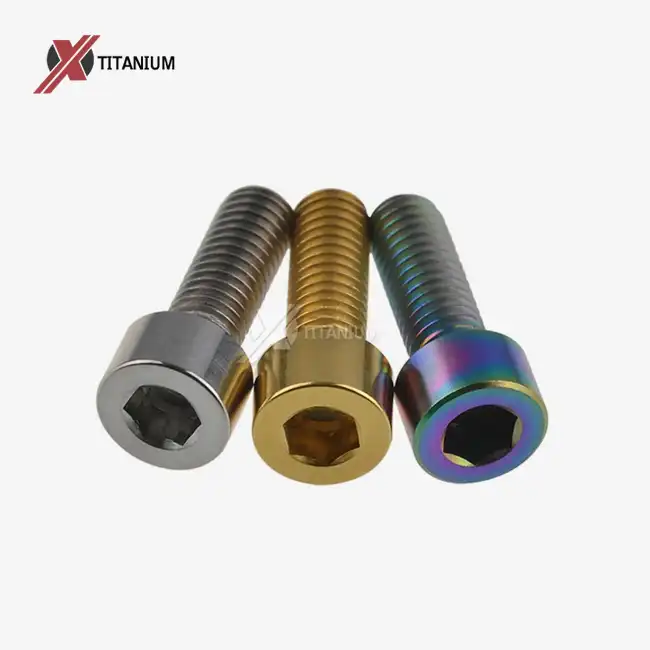
Understanding Titanium Bicycle Bolts: Performance and Benefits
Titanium cycling bolts are a big step forward in the technology of bicycle parts. They are mostly made from Grade 5 Ti-6Al-4V alloy, which has performance qualities similar to those found in aircraft. Because of this advanced material makeup, riders can use fasteners that are about 45% lighter than steel ones but still have the same tensile strength numbers (900–1000 MPa).
Material Science Behind Titanium Alloy Construction
Because of their distinctive crystalline structure and chemical makeup, titanium bicycle bolts are among the best in engineering. The Ti-6Al-4V metal is made up of about 90% titanium, 6% aluminum, and 4% vanadium. It has a self-healing rust layer that protects it from corrosion in the air and from road salt. This molecular-level security gets rid of the galvanic corrosion problems that most normal steel fasteners have in settings with a lot of changes in wetness.
Titanium's mass (4.43 g/cm³ vs. 7.8 g/cm³) makes it possible to reduce weight by a large amount without affecting the strength of the structure. Professional testing has shown that titanium bolts keep their mechanical qualities at temperatures ranging from -100°F to 600°F. This means that they can be used for racing in the desert or skiing down mountains in the winter.
Common Applications and Bolt Configurations
Titanium fasteners are used in many important parts of a bicycle. Some examples are stem faceplate bolts, disc brake rotor fixing hardware, gear limit adjustment screws, and seatpost clamps. Some of the most popular types are hex socket head bolts (M4–M8), button head bolts for looks, and flanged bolts for spreading out loads.
Each type of bolt solves a different technical problem in bicycle systems. Stem bolts are subject to high tension forces and a lot of adjustments, which makes titanium's resistance to wear very useful. Titanium's low thermal conductivity helps brake rotor bolts because it stops heat from moving from brake rotors to wheel hubs when the car is going downhill for a long time.
Corrosion Resistance Analysis
Titanium nuts are more resistant to rust than bolts made of stainless steel or aluminum because they form a passive oxide layer. Steel bolts need protective layers that can chip or wear off. Titanium, on the other hand, forms a protective shield that repairs itself when it comes in contact with oxygen. It is very helpful to have this trait in seaside riding areas where salt air speeds up the corrosion process.
Testing done in marine settings shows that titanium bolts keep their original look and structural qualities after being in saltwater for a long time, while steel bolts start to break down within months. This resistance to environmental damage means that bicycle parts will need less upkeep and be serviced more often.
Titanium Bicycle Bolts vs Other Materials: Making the Right Choice
Choosing the right material has a big effect on both the performance right away and the long-term costs of ownership in a variety of riding situations. Knowing the pros and cons of titanium compared to other materials helps you make smart purchasing choices based on your individual performance needs.
Mechanical Property Comparisons
Most of the time, steel bolts have the best absolute strengths. Grade 8 steel can reach tensile strengths of up to 1200 MPa. But when looking at strength-to-weight ratios, titanium bicycle bolts perform better than other types, with strength values of 900–1000 MPa and much lower weight penalties. Even though aluminum nuts are light, their tensile strengths are only 300 to 400 MPa, which means they can't be used in high-stress situations.
Another important way that titanium stands out is that it is very resistant to fatigue. When used in cycling, pedaling forces, stopping loads, and road vibrations put stress on nuts over and over again. Titanium's better fatigue qualities mean that its structure stays strong even after millions of stress cycles, while aluminum screws can break under the same conditions.
Titanium's elastic modulus (110 GPa) makes it the perfect material for bicycle uses because it allows controlled bending under load without lasting deformation. This quality is especially useful in carbon fiber frame uses, where rigid steel nuts could cause stress clusters that damage the composite.
Environmental Durability Assessment
Environmental resistance is more than just protecting against rust; it also includes how well it works in different types of weather. Titanium nuts keep their mechanical features even when the temperature drops below freezing. This means that they don't become brittle like some steel types do when they're cold. Resistance to UV rays makes sure that exposed bolts keep their look and qualities even after being stored outside for a long time.
Cyclists who use different cleaners, lubricants, and degreasers for upkeep tasks will benefit from chemical protection. Titanium is inert, so bicycle care chemicals that attack aluminum surfaces or speed up steel rust can't break it down.
Cost Analysis and Procurement Implications
While titanium bolts command premium pricing compared to steel alternatives, total cost of ownership calculations often make titanium the better choice for high-performance applications. The extended service life, lower upkeep needs, and lack of replacement costs often make up for the higher original investment over the normal length of time that a bicycle is owned.
It's worth noting that titanium bolt prices become more competitive as order quantities rise. This makes them appealing to bicycle makers and dealers who deal in large quantities. Custom choices for size and finish add more value for specific uses that need exact measurements or looks.
Selecting and Procuring Titanium Bicycle Bolts: A B2B Buyer's Guide
To buy titanium screws effectively, you need to know both the technical specs and how the supply chain works so that you can choose the right parts and be sure they will arrive on time.
Sizing and Specification Requirements
Bicycle applications utilize titanium bolts across size ranges from M3 (for derailleur adjustments) to M12 (for bottom bracket systems). For stem and brake uses, M5 and M6 are the most popular sizes. Standardization of thread pitch is based on ISO metric norms. Fine pitch options are offered for specific uses that need better thread engagement.
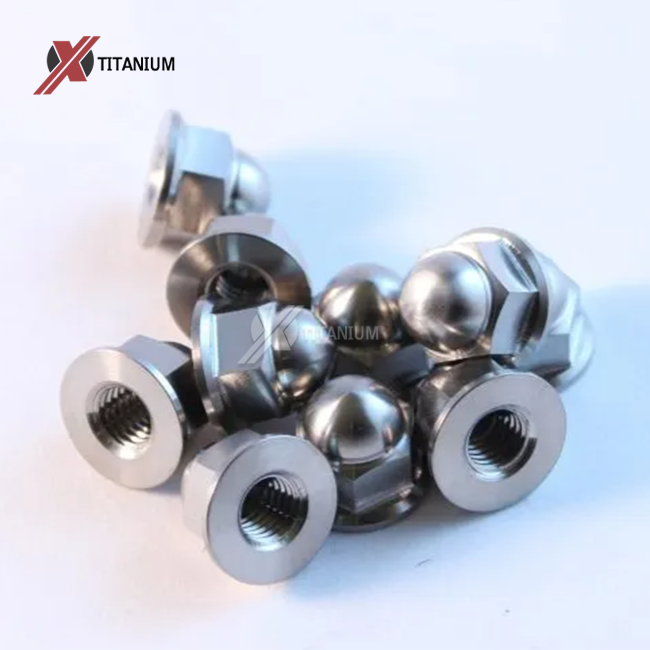
Choosing a head style has an effect on both how well it works and how it looks. When it comes to structural uses, socket head cap screws are the strongest. On the other hand, button head bolts have a lower profile and are better for setups where clearance is important. Flanged nuts spread clamping loads over a bigger surface area, which keeps carbon fiber or thin metal parts from getting damaged.
When figuring out length, you have to take into account how the parts are stacked, which includes gaps, washers, and different sizes of material. Standard length steps of 2 to 3 mm give you options for most uses, and custom lengths can be made to fit unique frame designs or aftermarket component arrangements.
Global Sourcing Landscape
The titanium bolt manufacturing ecosystem is centered on three main production areas: the US, Europe, and Asia. Each of these places has its own benefits for different buying strategies. European providers focus on precise engineering and environmental compliance, while American makers tend to focus on aerospace-grade quality standards and the ability to make prototypes quickly. Asian manufacturers offer reasonable prices for large orders and offer a wide range of customization choices.
AS9100 aircraft quality certifications, ISO 9001 compliance, and material tracking documents should be used to choose suppliers. These guidelines make sure that the quality of each production batch is the same and give important applications the supply chain transparency they need. Customization needs have a big effect on lead times, which range from 2 to 4 weeks for standard goods to 8 to 12 weeks for custom specs.
Bulk Ordering and Customization Strategies
When you buy in bulk, you can get better prices and more customization choices that aren't available for small orders. Smaller wholesalers may be interested in joint buying arrangements because the minimum order numbers are usually between 100 and 1000 pieces, based on the size and level of customization.
Customization choices include different surface treatments, such as anodizing to change the color, polishing to make it look better, and applying special coats to make it work better. Bicycle companies that want to gain a competitive edge through quality component choices can use these options to make their products stand out and integrate their brands.
Evaluating the Cost-Effectiveness of Titanium Bicycle Bolts
To make titanium fasteners economically viable, you need to look at all of their costs, as well as the money they save on upkeep and the performance they provide over the course of a normal product's existence.
Comparative Pricing Analysis
Standard steel bolts vary in price from $0.50 to $2.00 per piece, based on size and quality grade, while titanium bicycle bolts cost between $3.00 and $15.00 per piece for the same specifications. Aluminum nuts cost between $1.00 and $4.00 each, but they can only be used for non-critical parts because they aren't very strong.
Volume pricing models have a big effect on the total cost of buying. For example, when you buy more than 500 titanium bolts, the price drops by 20 to 40 percent. Custom finishing choices can add $1.00 to $3.00 per piece, based on how complicated they are. For rush orders, faster shipping may add 15–25% to the cost.
When you look at how often replacements are needed and how much it costs to do upkeep, the economics work out in titanium's favor. In acidic settings, steel bolts may need to be replaced every one to two years. Titanium bolts, on the other hand, usually keep working for five to ten years in the same conditions.
Long-term Maintenance Considerations
In addition to their higher original price, titanium screws have a big economic benefit in the form of lower maintenance costs. Because they don't rust, you don't have to use thread chemicals, protective treatments, or check them often like you do with steel bolts in harsh settings.
Depending on how complicated the part is and how much the shop charges for work, replacing bolts can cost more than $50 to $100 per service. By choosing titanium bolts, you can avoid having to replace your bike more than once, which saves you a lot of money over the normal length of time you own it.
Performance Impact on Brand Reputation
For bike makers and high-end wholesalers, the quality of the parts directly affects how customers see their brand and how loyal they are to it. Titanium bicycle bolts add to the general quality of the product and show attention to detail that customers who are focused on performance will appreciate.
One economic benefit of premium screws that is often ignored is that they lower the number of warranty claims. Failures of parts caused by corrosion can lead to expensive warranty repairs and bad customer experiences that hurt the long-term worth of the brand. Titanium nuts pretty much get rid of these risks and make the product more reliable overall.
Leading Titanium Bicycle Bolt Brands and Trusted Suppliers
Picking the right supplier has a big effect on both the quality of the product and the experience of buying it. This is why evaluating suppliers is such an important part of finding good titanium bolts.
Quality Standards and Certifications
Premium titanium bolt providers have full quality control systems that include AS9100 aircraft certifications, ISO 9001 compliance, and the ability to do specialty testing. These approvals make sure that all production batches have the same material qualities, dimensions, and performance.
Checking the chemical make-up, checking the mechanical properties, and keeping records that connect produced goods to their raw material sources should all be part of material certifications. For each production lot, advanced suppliers give full test results with measures of tensile strength, yield strength, and elongation.
The quality of the surface finish has a direct effect on both how it looks and how well it resists rust. Premium providers use controlled atmosphere processing, precise cutting, and high-quality surface processes that make the product look better and work better.
Supplier Evaluation Criteria
Titanium bolt suppliers that you can rely on have a few key traits, such as reliable delivery, quick expert help, and the ability to make changes to your order. Production capacity should match the expected number of orders, and quality standards should be kept high during times of high demand. The ability to provide technical help is useful for complicated applications that need engineering advice or custom solutions. Suppliers who offer design help, application advice, and suggestions for improving performance go above and beyond just supplying products.
Logistics skills like good packing, on-time shipping, and managing inventory have a big effect on how efficiently the supply chain works. Suppliers that offer contract inventory programs or vendor-managed inventory solutions can lower the costs of buying while still making sure that parts are available.
At Baoji Chuanglian New Metal Material Co., Ltd., our comprehensive experience in titanium processing and commitment to quality excellence positions us as a trusted partner for demanding bicycle component applications. Our state-of-the-art CNC machining capabilities and rigorous quality control systems ensure consistent product quality that meets the exacting standards of performance-oriented cycling applications.
Conclusion
For applications requiring exceptional performance, reliability, and longevity, investing in titanium bicycle bolts free sample programs can help evaluate product quality before purchase. Although they cost more initially than standard options, the combination of reduced weight, excellent corrosion resistance, and extended service life makes them an outstanding choice for a wide range of cycling applications. When it comes to high-performance bikes, seaside areas, and situations where upkeep is hard to get to, the economic case is especially strong. Titanium bolts are becoming more and more important to professional riders, bicycle makers, and quality-conscious dealers who want to make sure their customers are happy with their products.
FAQ
Are titanium bolts significantly lighter than steel bolts?
Titanium bolts weigh approximately 45% less than equivalent steel bolts while maintaining comparable strength ratings. This weight reduction proves particularly valuable for rotating components and high-performance cycling applications where every gram impacts overall bike performance and rider efficiency.
How long do titanium bicycle bolts typically last?
Under normal cycling conditions, titanium bolts can maintain their performance characteristics for 10 to 15 years or more, significantly exceeding the 1 to 3 year typical replacement intervals for steel bolts in corrosive environments. Their exceptional fatigue resistance and corrosion immunity eliminate most common failure modes that affect traditional fasteners.
Can titanium bolts be used with carbon fiber bicycle frames?
Titanium bolts represent an excellent choice for carbon fiber applications due to their optimal elastic modulus characteristics that prevent stress concentrations in composite materials. Their corrosion resistance also eliminates galvanic corrosion concerns that can occur between carbon fiber and steel fasteners in the presence of moisture.
Contact Chuanglian for Premium Titanium Bicycle Bolt Solutions
Chuanglian specializes in manufacturing precision titanium bicycle bolts that meet the exacting demands of performance cycling applications. Our Grade 5 Ti-6Al-4V bolts undergo rigorous CNC machining processes and comprehensive quality testing to ensure exceptional reliability and performance. With over ten years of titanium processing expertise and advanced manufacturing capabilities, we serve as a trusted titanium bicycle bolts manufacturer for customers worldwide requiring superior fastener solutions. Contact our technical team at info@cltifastener.com or djy6580@aliyun.com to discuss your specific requirements and discover how our premium titanium bolts can enhance your cycling products.
References
1. American Society for Testing and Materials. "Standard Specification for Titanium and Titanium Alloy Bars and Billets." ASTM B348-19, 2019.
2. Boyer, Rodney R. "An Overview on the Use of Titanium in the Aerospace Industry." Materials Science and Engineering: A, Vol. 213, 1996.
3. Donachie, Matthew J. "Titanium: A Technical Guide, 2nd Edition." ASM International, 2000.
4. International Cycling Union. "Technical Regulations for Bicycle Equipment and Accessories." UCI Cycling Regulations, 2023.
5. Lutjering, Gerd and James C. Williams. "Titanium: Engineering Materials and Processes." Springer-Verlag Berlin Heidelberg, 2007.
6. Society of Automotive Engineers. "Aerospace Material Specification for Titanium Alloy Bolts and Screws." SAE AMS 4967, 2018.
Learn about our latest products and discounts through SMS or email