- English
- French
- German
- Portuguese
- Spanish
- Russian
- Japanese
- Korean
- Arabic
- Greek
- German
- Turkish
- Italian
- Danish
- Romanian
- Indonesian
- Czech
- Afrikaans
- Swedish
- Polish
- Basque
- Catalan
- Esperanto
- Hindi
- Lao
- Albanian
- Amharic
- Armenian
- Azerbaijani
- Belarusian
- Bengali
- Bosnian
- Bulgarian
- Cebuano
- Chichewa
- Corsican
- Croatian
- Dutch
- Estonian
- Filipino
- Finnish
- Frisian
- Galician
- Georgian
- Gujarati
- Haitian
- Hausa
- Hawaiian
- Hebrew
- Hmong
- Hungarian
- Icelandic
- Igbo
- Javanese
- Kannada
- Kazakh
- Khmer
- Kurdish
- Kyrgyz
- Latin
- Latvian
- Lithuanian
- Luxembou..
- Macedonian
- Malagasy
- Malay
- Malayalam
- Maltese
- Maori
- Marathi
- Mongolian
- Burmese
- Nepali
- Norwegian
- Pashto
- Persian
- Punjabi
- Serbian
- Sesotho
- Sinhala
- Slovak
- Slovenian
- Somali
- Samoan
- Scots Gaelic
- Shona
- Sindhi
- Sundanese
- Swahili
- Tajik
- Tamil
- Telugu
- Thai
- Ukrainian
- Urdu
- Uzbek
- Vietnamese
- Welsh
- Xhosa
- Yiddish
- Yoruba
- Zulu
Why is titanium controversial?
Titanium generates significant controversy in industrial applications, particularly within specialized fastener markets like Titanium Bicycle Screws, due to widespread misconceptions about its performance characteristics and cost-benefit ratios. While titanium offers exceptional strength-to-weight ratios and corrosion resistance, many procurement professionals struggle with justifying premium costs against alternatives. The controversy stems from conflicting industry experiences with quality inconsistencies, installation challenges requiring specialized torque specifications, and supplier reliability issues. Manufacturing tolerances, material certification standards, and long-term performance data vary significantly across suppliers, creating uncertainty in procurement decisions for critical applications.
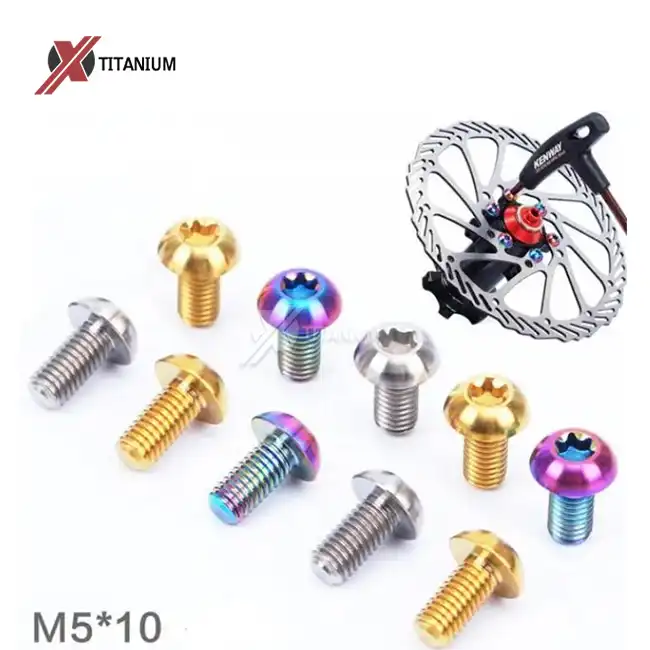
Understanding Titanium's Controversy in Bicycle Screws
The argument over using titanium in bicycle screws shows a bigger problem in the industry: trying to get the best performance while keeping costs low. Even though titanium is known for having better mechanical properties than other materials, it can be hard for procurement professionals to compare its useful benefits to steel or aluminum options.
Industry Misconceptions and Performance Expectations
The bicycle business has spread a number of false ideas about titanium fasteners, which adds to the ongoing debate. Many engineers think that titanium screws can be used with all current bicycle parts. However, the unique thermal growth and galvanic behavior of the material can make interactions with aluminum frames or carbon fiber parts happen in ways that were not expected. People also think that titanium immediately has better durability, but they don't think about important installation and upkeep steps.
When proper fitting steps aren't followed, procurement managers often find that titanium doesn't work as well as promised. The torque values needed for this material are usually 20–30% lower than those for steel, and using threadlock compounds can lead to chemical processes that damage the thread's structure. Some companies don't realize how hard it will be to apply these technical details during the initial evaluation stages.
Cost-Performance Analysis Challenges
The main argument is about how to explain titanium's high cost compared to its measured performance benefits. Even though Titanium Bicycle Screws are about 45% lighter than steel ones, the difference in weight is usually only a few grams per part. It's hard for engineering teams to figure out if these small gains are worth the prices that can be 300–50% more than normal fasteners.
Market study shows that companies have a hard time making decisions about what to buy when they want to standardize titanium screws across whole product lines. When you look at things like inventory management, source approval costs, and the unique tooling needs that come with using titanium, the economic analysis gets trickier.
Technical Breakdown of Titanium Bicycle Screws
To fully understand titanium's technical features, you need to look at its material properties, manufacturing standards, and performance measures that are specific to the application. This technical base lets you make smart choices about purchases and settles arguments by using data-driven evaluation.
Material Properties and Manufacturing Standards
Bicycle screws are mostly made of Grade 5 titanium metal (Ti-6Al-4V), which has the best mix of strength, weight, and workability. The material has a density of 4.43 g/cm³ and a tensile strength of 895–1000 MPa. Its high strength-to-weight ratio makes it a good choice for performance uses. But because of these traits, making them is more difficult, which affects quality control and choosing a source.
The way a product is made has a big effect on its quality. For example, rolled thread production is better at resisting wear than cut threading. When thread quality directly affects user safety, like when mounting a brake caliper or attaching parts to a structure, this difference becomes very important. To keep the purity of the grain structure during threading operations, good providers use strict process controls.
Comparative Analysis with Alternative Materials
Titanium Bicycle Screws exhibit unique benefits and drawbacks. Stainless steel screws are just as resistant to rust as other types, but they are much cheaper and easier to install. You can also get them from a wider range of suppliers. However, titanium's lack of magnetic qualities and longer wear life make it a strong choice in some situations.
This comparison is especially useful in high-stress situations where loads are put on and off many times. Tests done in the lab show that titanium screws made correctly can handle two to three times as many wear cycles as steel parts of the same size. When the cost of replacing a part is higher than the initial material price, this performance edge becomes economically viable.
Application-Specific Performance Considerations
Different uses for bicycles have different needs that affect how well titanium works. Titanium's low heat conductivity and resistance to rust make it a good material for drivetrain parts, especially in places where harsh cleaning chemicals or salt are present. On the other hand, structural uses may value the consistent behavior and lower prices of standard materials.
Environmental factors, maintenance plans, and the logistics of replacement must all be taken into account in the technical review. Titanium's high prices might not be worth it for parts that need to be adjusted or replaced often, but permanently installed screws in toxic environments are a clear example of a good use of titanium.
Key Considerations for B2B Procurement of Titanium Bicycle Screws
To buy titanium successfully, you need to carefully look at the skills, quality processes, and overall cost of ownership of each seller. Because manufacturing titanium is so complicated, suppliers must be carefully chosen and quality must be checked in a lot of different ways.
Supplier Qualification and Certification Requirements
The titanium supply chain has its own problems that need special standards for judging suppliers. Suppliers who are qualified must show that they can consistently track materials, do the right kind of heat treatment, and have quality control systems that are approved. AS9100 certification means that the process controls are up to aircraft standards, and ISO 9001 certification means that the quality is basic for industry uses.
Because titanium is so easily contaminated and processed differently, material standards are even more important. Suppliers must give full material test records (MTRs) that list the chemical make-up, mechanical qualities, and heat treatment factors of the materials they sell. To keep quality consistent, the verification process should include guidelines for receiving inspections and regular checks of suppliers.
Cost Analysis and Budgeting Strategies
Procurement professionals need to make full cost models that take into account all of titanium's total ownership costs. The study should look at the costs of keeping inventory, getting the right tools, and teaching people on how to do the right way to put things.
Here are the most important cost factors that affect choices about what to buy:
• Material Premiums: The price of titanium raw materials changes based on supply conditions around the world and can make up 60 to 70% of the cost of a final part.
• Processing Complexity: Needs for specialized cutting and slower production speeds raise manufacturing costs by 40–60% compared to making steel.
• Quality Verification: More thorough inspections and methods for material certification raise the total cost of purchase by 10 to 15 percent.
• Inventory Management: Lower turnover rates and higher unit values make it more expensive to keep things in stock and mean that buying tactics need to be changed.
These cost factors need to be compared to measurable benefits like fewer repair visits, longer service life, and maybe even better warranties. In situations where a failed part causes a lot of loss or safety worries, the economic case becomes stronger.
Sourcing Channels and Supplier Relationships
Because handling titanium is so specialized, there aren't many suppliers to choose from. This shows how important it is to build long-term partnerships. When making a procurement strategy, it's important to find sellers who have a history of working with similar projects and who have shown they are committed to ongoing improvement.
Because they can offer better technical support and make changes more easily, direct relationships with qualified makers are often a better deal than going through distributors. But having a relationship with a wholesaler can be helpful for managing supplies and finding all the materials you need in one place.
Maintaining and Installing Titanium Bicycle Screws
Installing and maintaining titanium correctly is important to get the most out of its efficiency and avoid common failure modes. Because of how the material is made, different steps need to be taken to install it than when installing regular fasteners.
Installation Procedures and Tool Requirements
Titanium Bicycle Screws must be installed using specific methods. Titanium has different friction and elastic qualities than steel, so its torque specs are usually 20–30% lower than steel's. For stable fitting results, you need high-quality torque wrenches with the right accuracy ranges.
Anti-seize chemicals made especially for titanium uses stop galling and make removal easier in the future. But you should stay away from regular threadlock items because they can cause chemical reactions that damage the thread. The right way to fix something also includes applying pressure slowly and checking that the threads are engaged before tightening them all the way.
Maintenance Protocols and Inspection Schedules
Titanium screws work better when they are checked for signs of wear, rust, or mechanical damage on a regular basis. Visual inspection methods can find early signs of possible problems, and checking the torque on a regular basis makes sure that the clamp loads stay the same over time.
When cleaning titanium, you should not use rough chemicals or tools that could damage the protected metal layer. Mild soaps and soft brushes clean well without affecting the corrosion protection in the long run. The inspection plan should match the general repair times, and it should also take into account how important certain uses are.
Evaluating Brands and Suppliers: Building Trust in Titanium Bicycle Screws
Choosing a supplier is one of the most important parts of buying titanium because it has a direct effect on the quality of the product, the dependability of delivery, and the success of the relationship in the long run. When someone is being evaluated, they need to look at their professional skills, quality methods, and how stable their business is.
Quality Certification and Testing Capabilities
Leading providers set themselves apart with thorough quality processes and the ability to try things in new ways. With in-house material testing labs, the quality of arriving raw materials and produced goods can be checked quickly. Certifications like NADCAP for aircraft uses or FDA licensing for medical parts show that the process can do certain things well.
For uses that need compliance paperwork, the supplier's ability to provide thorough material traceability is very important. Full material history from the source of the raw material to the end processing stage allows for full quality assurance and helps with meeting regulatory requirements.
Technical Support and Customization Services
Better sellers offer tech support services that go beyond just supplying products. A lot of value is added to the supply partnership by technical advice on choosing materials, making changes that work best for certain uses, and improving the process. We can do custom wiring, special finishes, and changes to the dimensions, which are all useful for tough jobs.
When making a new product, responsive technical support is especially helpful because choosing the right materials and making sure the specs are right take a lot of iterative teamwork. Suppliers with specific application engineers can give you information that can help make your products work better and cut down on the time it takes to make them.
Conclusion
The use of titanium in bicycle fasteners, particularly China Gr5 Titanium Bicycle Screws, has sparked considerable debate, highlighting the challenges of introducing advanced materials into price-sensitive markets where performance benefits must be carefully balanced against higher initial costs. Titanium has clear scientific benefits, such as higher strength-to-weight ratios and better corrosion protection. However, for it to be used successfully, application needs, supplier skills, and the total cost of ownership must all be carefully considered.
Professionals in procurement have to make difficult decisions about how to balance the needs of performance and the needs of the budget, all while making sure that the right steps are taken for installation and upkeep. To fix titanium's bad image, we need review methods that are based on data and match material choice with specific application needs and organizational capabilities.
FAQ
Are titanium bicycle screws worth the extra cost?
The value offer changes based on the needs of the program and how it is used. Titanium Bicycle Screws are very useful in places where corrosion is a problem, where weight is important, or where safety is important and a broken part could have serious effects. In professional settings, the longer service life and lower upkeep needs often make the higher prices worth it. However, for recreational users, the cost-benefit may not be as clear.
How do titanium screws compare to stainless steel alternatives?
When compared to stainless steel, titanium is about 45% lighter while still having the same or even better strength properties. In most places, corrosion protection is better than marine-grade stainless steel, and the fact that it is not magnetic can be useful in some situations. However, stainless steel has a wider range of suppliers, lower prices, and easier fitting steps.
What are the main installation challenges with titanium fasteners?
The main problems are lower torque requirements, the chance of thread galling, and not being able to use normal threadlock treatments. For proper fitting, you need torque tools that are measured, the right anti-seize compounds, and different steps than for regular screws. One important thing to think about when implementing these standards is how to train staff on them.
Can titanium screws be used universally across all bicycle components?
Titanium works very well in most situations, but it's not always compatible, so don't think it is. Titanium may experience galvanic corrosion when it comes into touch with some materials, and the higher costs might not be worth it for uses that aren't very important. When evaluating an application, it's important to look at things like the surroundings, the amount of stress, and the economy.
Partner with Chuanglian for Premium Titanium Bicycle Screws
Chuanglian is one of the best companies that makes titanium bicycle pins. They have been cutting and machining aerospace-grade titanium for more than ten years. Our strict quality control systems make sure that all of our product lines have the same material traits and accurate measurements. Plus, our advanced CNC machining lets us make exact changes for tough jobs. We benefit from being in Baoji City, which is known as the "City of Titanium," where we have direct access to high-quality raw materials and specialized processing knowledge.
Our engineering team offers full technical support throughout the whole buying process, from helping you choose the right materials to showing you how to put them. Get in touch with our knowledgeable staff at info@cltifastener.com or djy6580@aliyun.com to talk about your unique needs and get accurate quotes for large orders.
References
1. American Society for Testing and Materials. "Standard Specification for Titanium and Titanium Alloy Bars and Billets." ASTM International Materials Standards.
2. Boyer, Rodney R. "Titanium for Aerospace: Rationale and Applications." Advanced Performance Materials in Aerospace Engineering.
3. International Organization for Standardization. "Mechanical Properties of Fasteners Made of Carbon Steel and Alloy Steel." ISO Technical Standards Documentation.
4. Lutjering, Gerd and James C. Williams. "Titanium: Engineering Properties and Applications in Industry." Materials Science and Engineering Reviews.
5. Society of Automotive Engineers. "Aerospace Material Specifications for Titanium Alloy Fasteners." SAE International Standards.
6. Welsch, Gerhard, Rüdiger Boyer, and E.W. Collings. "Materials Properties Handbook: Titanium Alloys Manufacturing and Applications." ASM International Publications.
Learn about our latest products and discounts through SMS or email