- English
- French
- German
- Portuguese
- Spanish
- Russian
- Japanese
- Korean
- Arabic
- Greek
- German
- Turkish
- Italian
- Danish
- Romanian
- Indonesian
- Czech
- Afrikaans
- Swedish
- Polish
- Basque
- Catalan
- Esperanto
- Hindi
- Lao
- Albanian
- Amharic
- Armenian
- Azerbaijani
- Belarusian
- Bengali
- Bosnian
- Bulgarian
- Cebuano
- Chichewa
- Corsican
- Croatian
- Dutch
- Estonian
- Filipino
- Finnish
- Frisian
- Galician
- Georgian
- Gujarati
- Haitian
- Hausa
- Hawaiian
- Hebrew
- Hmong
- Hungarian
- Icelandic
- Igbo
- Javanese
- Kannada
- Kazakh
- Khmer
- Kurdish
- Kyrgyz
- Latin
- Latvian
- Lithuanian
- Luxembou..
- Macedonian
- Malagasy
- Malay
- Malayalam
- Maltese
- Maori
- Marathi
- Mongolian
- Burmese
- Nepali
- Norwegian
- Pashto
- Persian
- Punjabi
- Serbian
- Sesotho
- Sinhala
- Slovak
- Slovenian
- Somali
- Samoan
- Scots Gaelic
- Shona
- Sindhi
- Sundanese
- Swahili
- Tajik
- Tamil
- Telugu
- Thai
- Ukrainian
- Urdu
- Uzbek
- Vietnamese
- Welsh
- Xhosa
- Yiddish
- Yoruba
- Zulu
How to tighten a flange nut?
Properly tightening a flange nut involves several critical steps that ensure optimal joint integrity and component longevity. When working with a titanium flange nut, the process requires specific attention to torque specifications, anti-seize compounds, and incremental tightening patterns. Begin by selecting an appropriate torque wrench calibrated for precision, apply anti-seize lubricant to prevent galling, and follow manufacturer-specified torque values while using a cross-pattern sequence for multi-nut assemblies. The unique properties of titanium materials demand careful consideration of friction coefficients and proper tool selection to achieve reliable, long-lasting connections without damaging the fastener or mating surfaces.
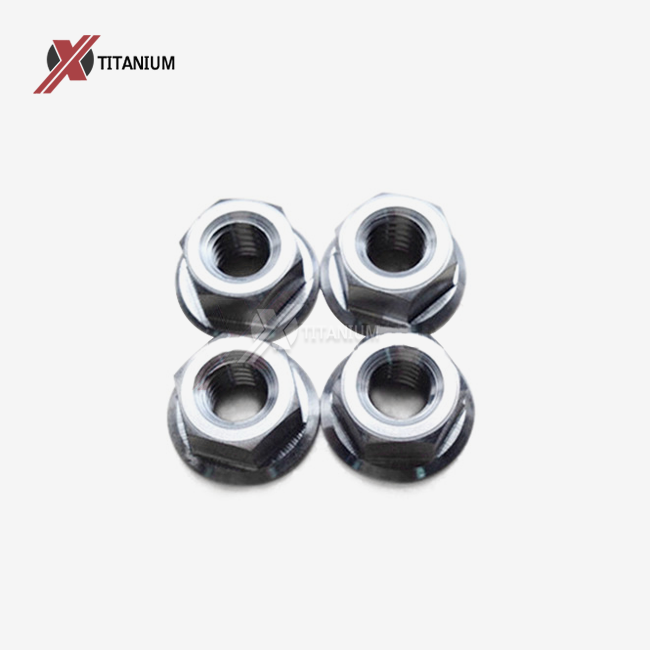
Understanding Titanium Flange Nuts and Their Key Properties
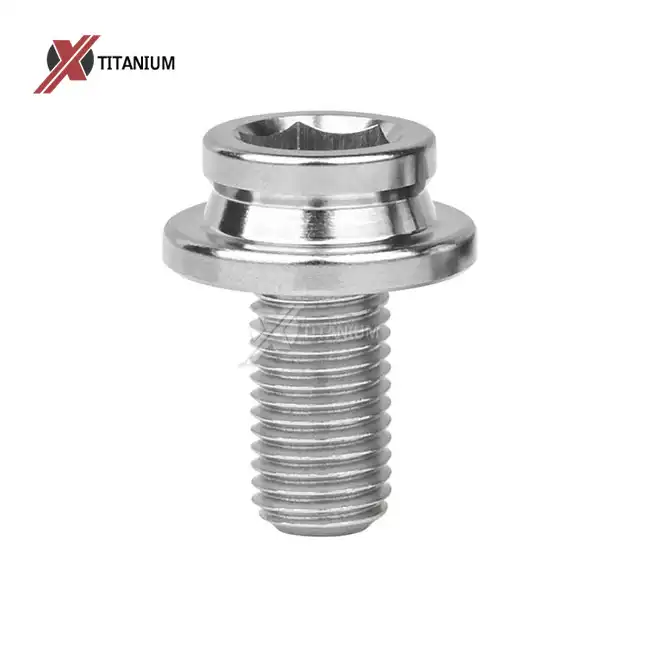
Titanium rib nuts speak to a modern building arrangement that combines a hexagonal nut with an coordinates circular base, killing the require for partitioned washers whereas giving predominant stack conveyance. These specialized latches are fabricated basically from aerospace-grade titanium combinations, counting Ti-6Al-4V Review 5 and commercially immaculate Titanium Review 2, advertising uncommon execution characteristics that outperform customary steel alternatives.
Material Composition and Engineering Specifications
The development of these latches utilizes progressed metallurgy to accomplish exceptional mechanical properties. Ti-6Al-4V Review 5 conveys malleable quality surpassing 895 MPa and abdicate quality more noteworthy than 828 MPa, whereas keeping up a thickness of roughly 4.43 g/cm³. This combination comes about in a 45% weight decrease compared to comparable steel components without compromising auxiliary keenness, making them priceless for weight-sensitive applications over aviation, car dashing, and high-performance marine environments.
Corrosion Resistance and Environmental Performance
The inherent oxide film formation on titanium surfaces provides exceptional resistance to saltwater, chlorides, and oxidizing acids. Unlike plated steel fasteners that rely on surface coatings for protection, titanium flange nuts possess innate immunity to pitting and stress corrosion cracking. This characteristic proves essential in chemical processing plants, offshore platforms, and marine applications where traditional fasteners would experience rapid degradation.
Load Distribution and Surface Protection
The coordinates rib plan disseminates clamping strengths over a bigger surface region, anticipating harm to delicate or delicate mating materials such as aluminum, magnesium, or carbon fiber composites. This include gets to be especially important in aviation applications where component keenness and surface wrap up conservation is vital. The disposal of isolated washers moreover decreases parts tally and minimizes outside protest flotsam and jetsam dangers in basic applications.
Step-by-Step Guide: How to Properly Tighten a Titanium Flange Nut?
Achieving proper installation requires systematic attention to technique, tools, and environmental considerations. The unique tribological properties of titanium demand specific procedures to prevent galling and ensure consistent clamping force across the joint interface.
Essential Tools and Preparation Requirements
Professional establishment starts with selecting calibrated torque torques suitable for the clasp estimate and application prerequisites. Advanced torque torques give prevalent precision compared to beam-type rebellious, especially imperative when working with titanium's particular contact characteristics. Clean work surfaces and appropriate lighting guarantee professionals can distinguish potential issues amid the establishment process.
The arrangement stage incorporates intensive cleaning of both male and female strings utilizing suitable solvents to evacuate fabricating oils, flotsam and jetsam, or erosion items. String review utilizing amplification makes a difference distinguish harm that might lead to establishment issues or joint disappointment. Legitimate security hardware, counting eye security and suitable clothing, ensures professionals from potential risks amid the establishment process.
Anti-Seize Application and Thread Treatment
Titanium flange nut installations require specialized anti-seize compounds to prevent cold welding between titanium surfaces. High-quality compounds containing molybdenum disulfide or nickel-based formulations provide excellent lubrication while maintaining chemical compatibility with titanium alloys. Apply anti-seize sparingly to both male and female threads, ensuring even distribution without excess material that could interfere with proper engagement.
Advanced applications may indicate clasp with factory-applied coatings such as Diamond-Like Carbon or Physical Vapor Statement medications. These specialized surface medicines decrease contact coefficients and kill the require for field-applied oils whereas giving steady execution over numerous get together cycles.
Systematic Tightening Procedures
Begin establishment by hand-threading the clasp until resistance increments, guaranteeing legitimate string engagement without cross-threading. Utilize the torque torque to apply drive in incremental steps, regularly advancing through 25%, 50%, 75%, and 100% of the indicated torque esteem. This graduated approach permits stretch conveyance all through the joint and makes a difference recognize potential issues some time recently full installation. Multi-fastener gatherings require cross-pattern fixing arrangements to guarantee indeed stack conveyance and anticipate distorting of mating surfaces. Archive torque values and establishment arrangement for quality control and support arranging purposes.
Comparing Titanium Flange Nuts with Other Flange Nut Materials
Material selection significantly impacts performance, cost, and service life across diverse industrial applications. Understanding the comparative advantages and limitations of different flange nut materials enables informed procurement decisions that optimize both performance and value.
Titanium versus Stainless Steel Performance
Stainless steel rib nuts, whereas advertising great erosion resistance and direct taken a toll, cannot coordinate titanium's strength-to-weight proportion or chemical resistance. Review 316 stainless steel gives satisfactory execution in gentle destructive situations but endures from chloride push breaking in marine applications where titanium exceeds expectations.
The weight punishment of stainless steel gets to be restrictive in aviation applications where each gram influences fuel productivity and payload capacity. Magnetic properties display another thought, as stainless steel's attractive signature can meddled with touchy rebellious or route hardware. Titanium's non-magnetic nature kills these concerns whereas giving prevalent temperature steadiness over extraordinary working ranges.
Steel and Aluminum Limitations
Standard steel clasp offer moo introductory fetched but require defensive coatings that in the long run come up short in unforgiving situations. The support costs and substitution recurrence regularly surpass the introductory reserve funds, especially in basic applications where disappointment results are extreme. Aluminum spine nuts give weight reserve funds but need the quality required for high-stress applications and endure from galvanic erosion when matched with different metals.
Supplier Certification and Quality Assurance
Reputable suppliers maintain comprehensive certification programs including AS9100 for aerospace applications, ISO 9001 for general industrial use, and specialized medical device certifications where applicable. These quality systems ensure consistent material properties, dimensional accuracy, and traceability throughout the supply chain.
Procurement Insights for Titanium Flange Nuts
Effective acquirement techniques adjust quick venture needs with long-term provider connections and quality confirmation prerequisites. The specialized nature of titanium preparing makes one of a kind contemplations for sourcing, stock administration, and provider evaluation.
Market Landscape and Supplier Selection
The titanium latch showcase comprises of specialized producers with noteworthy specialized capabilities and quality certifications. Driving providers keep up broad testing offices, counting spectrometers for fabric confirmation, arrange measuring machines for dimensional review, and controlled environment heaters for warm treatment forms. These capabilities guarantee steady item quality and administrative compliance over assorted applications. Supplier assessment ought to incorporate evaluation of generation capacity, specialized bolster capabilities, and certification upkeep. Companies serving aviation, restorative, and atomic markets regularly keep up the most elevated quality measures and most comprehensive documentation systems.
Pricing Structures and Order Optimization
Titanium flange nut pricing reflects raw material costs, processing complexity, and certification requirements. Volume discounts typically apply to orders exceeding minimum quantities, though small-batch custom orders remain economically viable due to high per-unit values. Lead times vary based on alloy availability, manufacturing schedules, and inspection requirements, with standard configurations typically shipping within 4-6 weeks and custom specifications requiring 8-12 weeks.
Payment terms regularly incorporate advance installments for huge orders, with last installment upon conveyance and review. Universal exchanges may require letters of credit or other monetary rebellious to oversee cash and credit risks.
Quality Verification and Incoming Inspection
Incoming assessment conventions ought to incorporate dimensional confirmation, fabric certification audit, and visual assessment for surface abandons or harm. Progressed applications may require extra testing such as hardness confirmation, surface unpleasantness estimation, or non-destructive testing for inside defects. Documentation bundles regularly incorporate fabric test certificates, dimensional assessment reports, and certification explanations affirming compliance with appropriate guidelines. Appropriate documentation capacity and traceability frameworks back quality administration and administrative compliance requirements.
Conclusion
Proper tightening of flange nuts, particularly those supplied through titanium flange nut OEM manufacturing, requires systematic attention to technique, tooling, and material-specific considerations. The exceptional properties of titanium flange nut assemblies justify the additional care required during installation while delivering superior performance across demanding applications. Success depends on understanding material characteristics, following established procedures, and maintaining proper documentation throughout the installation process. These practices ensure reliable joint performance while maximizing the significant advantages that titanium fasteners provide in weight-critical and corrosive environments.
FAQ
What torque specifications should I use for titanium flange nuts?
Torque specifications for titanium fasteners differ significantly from steel equivalents due to titanium's unique friction characteristics and elastic modulus. Calculate torque values based on 70-80% of the fastener's proof load, factoring in the specific lubricant or anti-seize compound used. Never apply steel torque specifications directly to titanium fasteners, as this can lead to over-tightening and thread damage.
How do I prevent galling when installing titanium flange nuts?
Galling prevention requires proper lubrication and installation technique. Apply high-quality anti-seize compounds containing molybdenum disulfide or specify fasteners with factory-applied DLC coatings. Install fasteners slowly with consistent pressure, avoiding rapid or jerky motions that can initiate cold welding between titanium surfaces.
Can titanium flange nuts replace stainless steel in existing applications?
Titanium fasteners can generally substitute for stainless steel components, often providing superior performance in corrosive environments. However, consider galvanic compatibility with mating materials and verify that thread specifications match existing hardware. The weight reduction and corrosion resistance typically justify the higher initial cost through extended service life and reduced maintenance requirements.
What quality certifications should I require from suppliers?
Require AS9100 certification for aerospace applications, ISO 9001 for general industrial use, and relevant medical device certifications for biomedical applications. Suppliers should provide material test certificates confirming alloy composition and mechanical properties, along with dimensional inspection reports verifying compliance with specified tolerances.
How do I verify the authenticity of titanium flange nuts?
Authentic titanium fasteners should include proper documentation including material certificates, lot traceability, and supplier identification. Physical verification can include weight comparison with steel equivalents, magnetic testing to confirm non-magnetic properties, and hardness testing to verify material grade. Reputable suppliers welcome verification testing and provide comprehensive documentation supporting product authenticity.
Partner with Chuanglian for Premium Titanium Flange Nut Solutions
Chuanglian stands as your trusted titanium flange nut manufacturer, delivering aerospace-grade fasteners that meet the most demanding industrial specifications. Our comprehensive quality control systems, advanced CNC machining capabilities, and decade of titanium processing expertise ensure consistent product quality and reliable delivery performance. Located in Baoji, the renowned "City of Titanium," we maintain strict adherence to international standards while offering competitive pricing for both prototype and production quantities. Contact our technical specialists at info@cltifastener.com or djy6580@aliyun.com to discuss your specific requirements and receive detailed quotations.
References
1. American Society for Testing and Materials. "Standard Specification for Titanium and Titanium Alloy Bars and Billets." ASTM B348-19, West Conshohocken, PA, 2019.
2. Aerospace Industries Association. "Fastener Quality Assurance Requirements for Aerospace Applications." AIA/NAS Standard 1815, Arlington, VA, 2018.
3. International Organization for Standardization. "Mechanical Properties of Fasteners Made of Carbon Steel and Alloy Steel." ISO 898-2:2012, Geneva, Switzerland, 2012.
4. Society of Automotive Engineers. "Titanium Alloy Fasteners for Aerospace Applications." SAE AMS 4967M, Warrendale, PA, 2020.
5. National Association of Corrosion Engineers. "Galvanic Corrosion Prevention in Industrial Fastener Applications." NACE Publication 3T199, Houston, TX, 2017.
6. Federal Aviation Administration. "Advisory Circular on Aircraft Hardware and Fasteners." AC 43.13-1B Chapter 7, Washington, DC, 2019.
Learn about our latest products and discounts through SMS or email