- English
- French
- German
- Portuguese
- Spanish
- Russian
- Japanese
- Korean
- Arabic
- Greek
- German
- Turkish
- Italian
- Danish
- Romanian
- Indonesian
- Czech
- Afrikaans
- Swedish
- Polish
- Basque
- Catalan
- Esperanto
- Hindi
- Lao
- Albanian
- Amharic
- Armenian
- Azerbaijani
- Belarusian
- Bengali
- Bosnian
- Bulgarian
- Cebuano
- Chichewa
- Corsican
- Croatian
- Dutch
- Estonian
- Filipino
- Finnish
- Frisian
- Galician
- Georgian
- Gujarati
- Haitian
- Hausa
- Hawaiian
- Hebrew
- Hmong
- Hungarian
- Icelandic
- Igbo
- Javanese
- Kannada
- Kazakh
- Khmer
- Kurdish
- Kyrgyz
- Latin
- Latvian
- Lithuanian
- Luxembou..
- Macedonian
- Malagasy
- Malay
- Malayalam
- Maltese
- Maori
- Marathi
- Mongolian
- Burmese
- Nepali
- Norwegian
- Pashto
- Persian
- Punjabi
- Serbian
- Sesotho
- Sinhala
- Slovak
- Slovenian
- Somali
- Samoan
- Scots Gaelic
- Shona
- Sindhi
- Sundanese
- Swahili
- Tajik
- Tamil
- Telugu
- Thai
- Ukrainian
- Urdu
- Uzbek
- Vietnamese
- Welsh
- Xhosa
- Yiddish
- Yoruba
- Zulu
Is it better to get titanium or stainless steel?
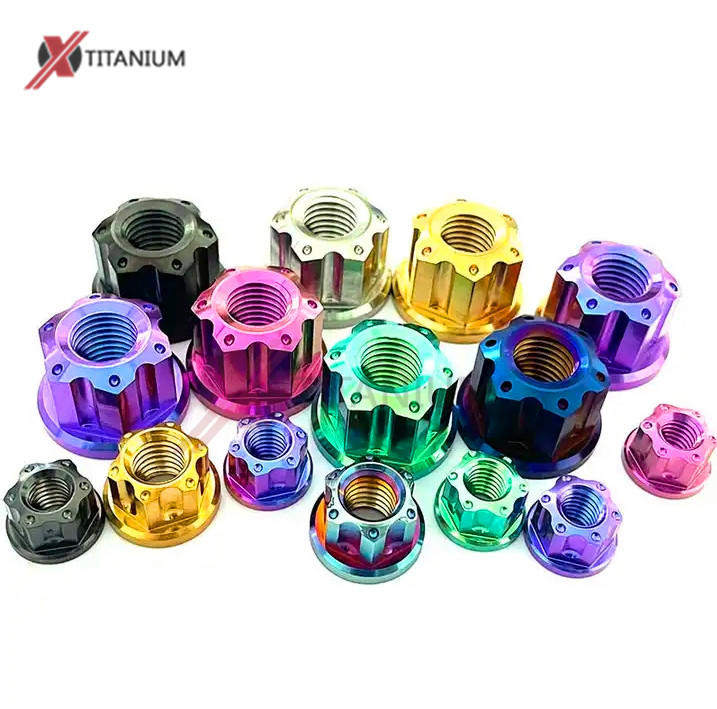
The choice between titanium and stainless steel depends on your specific application requirements, with each material offering distinct advantages. Titanium provides superior strength-to-weight ratios, exceptional corrosion resistance, and biocompatibility, making it ideal for aerospace, medical, and marine applications. When considering fasteners like titanium flange nuts, titanium offers a 45% weight reduction compared to steel equivalents while maintaining structural integrity. Stainless steel, however, provides excellent durability and corrosion protection at a more cost-effective price point, making it suitable for general manufacturing and moderate-corrosion environments. The decision ultimately depends on balancing performance requirements against budget constraints and application-specific demands.
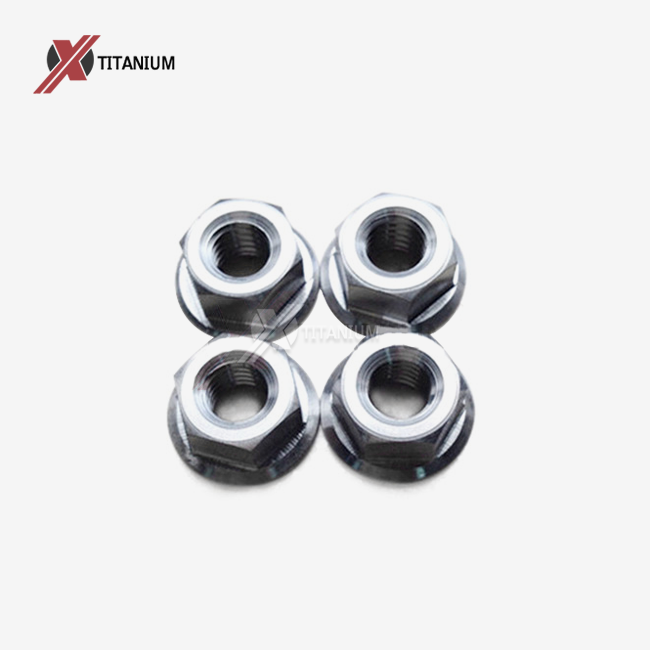
Understanding Titanium and Stainless Steel Flange Nuts
Modern industrial applications demand fastening solutions that can withstand extreme conditions while maintaining reliability and performance. Both titanium and stainless steel flange nuts serve critical roles across multiple industries, yet their fundamental differences significantly impact their suitability for specific applications.
Material Properties and Composition
Metallic types that are good for space are mostly used to make titanium flange nuts. Grade 5 Ti-6Al-4V is the most common type for building purposes. Its tensile strength is over 895 MPa, and its density is only 4.43 g/cm³. Pure Grade 2 titanium is a little better at preventing rust, and its moderate strength makes it good for uses that don't involve building things.
Grades 304 or 316 stainless steel are used to make most flange nuts. There is molybdenum added to Grade 316, which makes it less likely to rust. It takes 515 to 620 MPa of force to pull these metals apart, and they weigh about 8 g/cm³. When there is at least 18% chromium, it forms an inactive oxide layer that usually keeps things from rusting.
Industry Standards and Certifications
To pick the right ingredients and make sure the quality of the final product, manufacturing guidelines are very important. While ASTM B348 sets the standards for the raw materials, ASTM F467 sets the standards for the nuts themselves. These rules make sure that the technical properties, size limits, and ability to be tracked are always the same. This is important because it can be used in important ways in the flight and medicine fields.
The ASTM A193 and ASTM F594 standards are followed when making stainless steel flange nuts. These standards explain in detail how the material should be made, what its mechanical properties should be, and how it should be tested. This set of certificates helps people who work in buying pick the best grades for their jobs and the places where they work.
Titanium vs Stainless Steel Flange Nuts: Performance and Benefits Comparison
Teams that buy things can make better choices when they know how different types of fasteners work in a variety of workplace settings.
Mechanical Strength and Durability
Titanium and stainless steel work very differently when you look at their mechanical properties side by side. Because it is less springy (114 GPa vs. 200 GPa for stainless steel), Grade 5 titanium is better at not wearing out. This is because it lets the load be spread out better across threaded joints. This quality is especially helpful when the load changes, like in cases involving airplanes and cars.
Stainless steel 316 has stable mechanical qualities, and its yield strengths of about 310 MPa make it perfect for most industry uses. The higher density of the material gives it more mass when weight is important, but it is also very good at absorbing shock and keeping its shape even when the temperature changes.
Corrosion Resistance Analysis
Making sure that a material is safe for the environment is very important, especially when it comes to uses that will be in hard conditions or with chemicals that break down metal. Because titanium's natural oxide film is so strong against chlorides, acids, and saltwater, it doesn't need any extra coatings to keep it safe. Stress corrosion cracking is a type of security that is often needed in places where there is a lot of stress and rust.
It is very hard for stainless steel to rust in air and some conditions that are slightly acidic. Because 316 grade has molybdenum in it, it works better in coastal settings. However, pitting and crevice rust can happen in places with a lot of chlorine or under deposits that stop oxygen from flowing.
Weight Considerations and Applications
How much fuel transportation systems use and how much weight they can carry change directly when people lose weight. Titanium flange nuts are about 45% lighter than steel screws that do the same job. This makes them much better for cases where weight is important. This really helps when you have big parts with a lot of screws that make the system heavy.
In the business of racing cars, titanium screws are often used to cut down on unsprung weight. This makes the car handle better and speed up faster. And in the same way, titanium is used for building parts in aircraft because every gram changes how much fuel an airplane uses and how much it costs to run over its lifetime.
Procurement Insights: How to Choose Between Titanium and Stainless Steel Flange Nuts?
When you buy something, you need to balance your professional needs with business concerns like the supplier's skills, wait times, and the chance of a long-term relationship.
Application-Specific Requirements
Before picking a material, you should know exactly what it needs to do its job. For example, you should know how long it should last, how much weight it should hold, and how it should react to different temperatures and conditions. Specialized titanium metals might work best when the temperature is above 400°C. On the other hand, stainless steel choices that are easy on the wallet are often best for general manufacturing jobs that happen in controlled environments.
Rules about biocompatibility say that titanium must be used for the inside of medical equipment. But stainless steel is often used for food handling equipment because it is easy to clean and meets FDA standards. These limits on the types of things that can be used limit what can be used before cost is taken into account.
Supplier Evaluation Criteria
Manufacturers you can trust use full quality control systems, like AS9100 for aircraft, ISO 13485 for medical goods, and ISO 9001 for all other manufacturing needs. With these papers, you can be sure that the stuff will always have the same qualities, measures, and ability to be tracked all the way through the supply chain.
When planning projects, it's very important to keep track of wait times. This is especially true when working with titanium flange nuts, which need special handling skills. Suppliers who have been around for a while usually have standard sizes in stock and can also machine things to fit your needs. If you check the providers' ability, back-up plans, and expert help, you can avoid problems in the supply chain that could cause the project to be delayed.
Cost-Benefit Analysis Framework
The original purchase price is not the only cost of owning. Also included are the costs of installation, fixes, and how often the item needs to be replaced. Titanium costs more at first, but it usually pays for itself in longer use, less maintenance, and practical benefits like less weight in uses that need to save fuel.
When you buy in bulk, you can save money on each unit and make sure that materials are always on hand for projects that are already in progress. A lot of companies offer different prices based on the amount of business they do each year. Big factories can use this to make budgets and figure out the best ways to save money.
Addressing Common Concerns and FAQs About Titanium and Stainless Steel Flange Nuts
Procurement workers often run into specific technical and business questions when they are looking at different ways to fix things for their needs.
Material Compatibility Issues
Galvanic rusting can happen when two different metals touch each other and there are fluids around. As a reactive metal, titanium can be mixed with aluminum and stainless steel without making a lot of rust. But when you connect titanium screws to steel parts, you need to be very aware of what's around you and whether there is an electrolyte present.
Titanium fasteners are great for carbon fiber systems because they stop the electrochemical processes that break down aluminum fasteners in composite structures very quickly. This is because their galvanic potentials are similar. The best way to use titanium for high-performance uses that blend metal and combination materials is in this way.
Processing and Installation Considerations
It is very important to avoid galling when putting on titanium flange nuts. Galling can happen when titanium hits titanium and is torqued very high. Acids that stop seizing or special coatings like DLC (Diamond-Like Carbon) can solve this problem. These also keep the material's ability to fight rust.
Because steel and titanium don't behave the same way when it comes to friction and elasticity, their force specs are very different. Figure out the torque values based on 70–80% of the fastener's proof load, taking into account the effects of the grease and the area. This is the right way to put something.
Conclusion
Choosing between titanium and stainless steel flange nuts comes down to how well they meet the needs of the product, how much they cost, and how well they meet performance goals. Titanium works well in medicinal settings, places where it needs to be light, and places where it will rust. It costs more to start, but its higher strength-to-weight ratio and resistance to rust make up for it. For general workplace uses that are subject to mild weather, stainless steel works well and doesn't cost too much.
For effective procurement, especially when working with titanium flange nut OEM suppliers, it is essential to consider more than just the initial purchase price. Total cost of ownership, supplier expertise, and long-term performance standards all play a critical role in ensuring reliable quality, cost efficiency, and sustained value in demanding industrial applications.
FAQ
What are the main advantages of titanium over stainless steel?
Titanium is stronger than steel, doesn't rust easily, and doesn't harm living things. Even though it's 45% lighter than steel, it still holds its shape. It's great for use in planes and medicine, where the higher prices are worth it because of how well it works.
How do I prevent galling when installing titanium fasteners?
For galling to stop, you need to use good anti-seize products or pick screws that have DLC or MoS2 finishes. For the right force, use the fastener's proof load and lube properties. This way, you won't have to cold weld during installation.
Which material is better for marine applications?
Iron and titanium both work well at sea, but titanium is better at not rusting over time when it comes into contact with saltwater. The cheaper choice is stainless steel 316, which is safe enough for most naval uses. Titanium, on the other hand, is best for important uses that need to last a long time without any maintenance.
What certification standards should I specify for aerospace applications?
Titanium fasteners used in aircraft must meet ASTM F467 standards, and sources must be approved by AS9100 for quality control. These rules make sure that materials can be tracked, that their mechanical features can be checked, and that they can be used in the airplane industry to make parts that are very important for safety.
How do lead times compare between titanium and stainless steel fasteners?
Stainless steel fasteners typically have shorter lead times due to wider supplier availability and standard inventory. People who want to buy titanium flange nuts may have to wait longer, but well-known suppliers keep standard sizes in stock to cut down on shipping times for everyday uses.
Partner with Chuanglian for Premium Titanium Solutions
There is a good company called Baoji Chuanglian New Metal Material Co., Ltd. that can give you titanium flange nuts. For more than ten years, they've been cutting and making things out of titanium. Baoji City is known as the "City of Titanium," and our advanced CNC cutting and strict quality control systems allow us to make aerospace-grade fixed solutions. We make unique titanium flange nuts that meet ASTM standards and come with full material approval and tracking. These are just a few of the many things we sell. The expert team can be reached at info@cltifastener.com or djy6580@aliyun.com. They will be happy to talk to you about your specific needs and show you how our knowledge can help you improve the way you buy things and protect your supply chain.
References
1. Boyer, R.R. "An Overview on the Use of Titanium in the Aerospace Industry." Materials Science and Engineering A, Vol. 213, 1996.
2. Donachie, Matthew J. "Titanium: A Technical Guide, 2nd Edition." ASM International Materials Park, 2000.
3. Schutz, R.W. "Corrosion of Titanium and Titanium Alloys in Industrial Applications." Corrosion Engineering Handbook, 1996.
4. American Society for Testing and Materials. "ASTM F467 - Standard Specification for Nonferrous Nuts for High Temperature or Special Purpose Service." ASTM International, 2018.
5. Peters, M. and Leyens, C. "Titanium and Titanium Alloys: Fundamentals and Applications." Wiley-VCH Verlag, 2003.
6. Davis, J.R. "Stainless Steels: Properties and Selection." ASM International Handbook Committee, 1994.
Learn about our latest products and discounts through SMS or email