- English
- French
- German
- Portuguese
- Spanish
- Russian
- Japanese
- Korean
- Arabic
- Greek
- German
- Turkish
- Italian
- Danish
- Romanian
- Indonesian
- Czech
- Afrikaans
- Swedish
- Polish
- Basque
- Catalan
- Esperanto
- Hindi
- Lao
- Albanian
- Amharic
- Armenian
- Azerbaijani
- Belarusian
- Bengali
- Bosnian
- Bulgarian
- Cebuano
- Chichewa
- Corsican
- Croatian
- Dutch
- Estonian
- Filipino
- Finnish
- Frisian
- Galician
- Georgian
- Gujarati
- Haitian
- Hausa
- Hawaiian
- Hebrew
- Hmong
- Hungarian
- Icelandic
- Igbo
- Javanese
- Kannada
- Kazakh
- Khmer
- Kurdish
- Kyrgyz
- Latin
- Latvian
- Lithuanian
- Luxembou..
- Macedonian
- Malagasy
- Malay
- Malayalam
- Maltese
- Maori
- Marathi
- Mongolian
- Burmese
- Nepali
- Norwegian
- Pashto
- Persian
- Punjabi
- Serbian
- Sesotho
- Sinhala
- Slovak
- Slovenian
- Somali
- Samoan
- Scots Gaelic
- Shona
- Sindhi
- Sundanese
- Swahili
- Tajik
- Tamil
- Telugu
- Thai
- Ukrainian
- Urdu
- Uzbek
- Vietnamese
- Welsh
- Xhosa
- Yiddish
- Yoruba
- Zulu
Which is better, titanium or titanium alloy?
You can pick either titanium or titanium alloy based on what you need to do. Grade 2 pure titanium doesn't rust as easily and can be used with live things, so it's great for use in the ocean and in medicine. But Grade 5 Ti-6Al-4V and other titanium metals are much harder and less likely to break down over time. Because of this, they work better for structural uses like airplane parts and titanium flange nut systems that are stressed a lot.
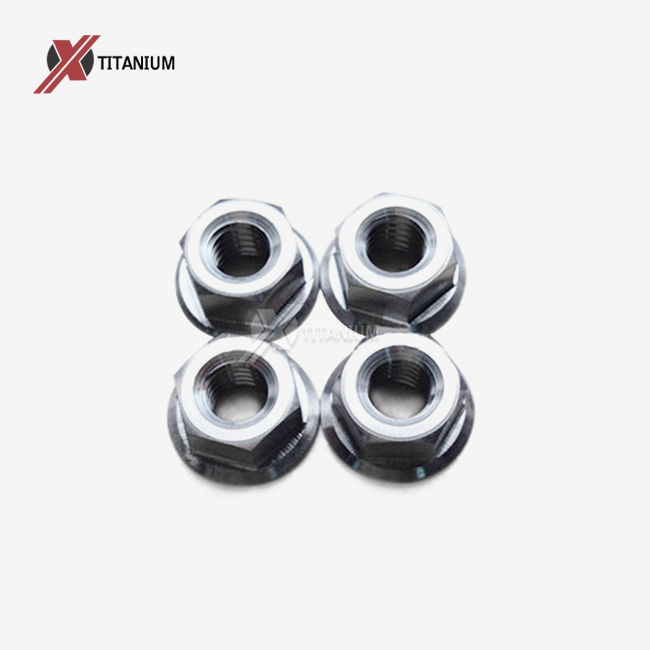
Understanding Titanium and Titanium Alloys: Definitions and Key Differences
For important tasks, the choice of material is based on the difference between pure titanium and titanium alloys. Tech teams can make choices that boost efficiency and keep costs low when they are aware of these differences.
Chemical Composition and Structural Properties
It is made up of 99% titanium and very small amounts of oxygen, nitrogen, and iron. Pure titanium is also known as commercially pure (CP) titanium. Most of the time, grades 1 through 4 are used. Grade 2 is the most common grade for industrial use because it protects against both wear and rust the best. Its structure stays the same at temperatures from very cold to 400°C, and it can handle salt settings very well.
To make titanium alloys better in some ways, extra elements are added to them. There are 6% aluminum and 4% vanadium in Grade 5 Ti-6Al-4V metal. This makes a substance that can hold its shape and has a tensile strength of more than 895 MPa. It also has titanium's natural resistance to rust. There are titanium alloys that are even stronger, such as Ti-15V-3Cr-3Al-3Sn, but they cost more because they are made of more expensive materials.
Mechanical Performance Characteristics
Pure titanium and titanium alloys have very different material properties, which means that they can be used in different ways. Pure titanium Grade 2 has a tensile strength of about 345 MPa and is very flexible, which makes it great for forming into difficult shapes and keeping its shape in places where it will rust. Even though it is not as springy as steel (103 GPa), it can better spread stress when it is loaded and emptied.
Grade 5 titanium metal is much better in terms of how it works mechanically. It can be pulled apart up to 950 MPa and stretched up to 880 MPa. Higher hardness means better performance, but it can make it harder to machine. However, it also means better wear resistance, which is important for uses that load and offload often. Because the metal keeps these properties over a wider temperature range, it can be used for high-performance titanium flange nut applications in the car and airplane industries.
Industry Specifications and Standards Compliance
When picking products, it's important to stick to the rules set by the business. These rules make sure that quality and efficiency stay the same. The ASTM B348 standard covers a lot of different titanium bars and billets. The ASTM F67 standard covers pure titanium that is sold in stores and used in medical procedures. These rules tell manufacturers what chemicals they can use, what their products must have in terms of technical properties, and how they should test their products.
When used in aerospace, it's generally important to follow AMS guidelines. These are AMS 4902 for Grade 2 economically pure titanium and AMS 4928 for Grade 5 titanium alloy bar. Follow the rules set by the FDA and ISO 5832-2 when making medical equipment. These rules say that amounts of impurities must be strictly controlled and biocompatibility tests must be done. Teams that buy things can make sure that sellers follow these specs so that items can be tracked all the way through the supply chain.
Technical Specifications and Performance: Which Material Suits Your Needs?
Performance traits of a material have a direct effect on how well a product works and how stable it is over time. By looking at these specs, engineers can figure out what the material can do and how long it needs to last. They also have to think about things like the environment and how long it needs to last.
Strength and Durability Analysis
When something has to hold weight, the difference in strength between pure titanium and titanium mixes is very important. Titanium that is pure can be formed and joined better than other metals and is strong enough for many uses. The material is very resistant to wear because it can work-harden when loaded and unloaded many times. In well-planned uses, this can actually make things work better over time.
Titanium metals can be made lighter without losing their structure support because they are very strong for their weight. Instead of steel bolts, Grade 5 metal parts can be used in airplanes to cut weight by 45% and improve fuel economy. Since it doesn't expand as much at high temperatures, the alloy is very important for engine parts and high-temperature building parts where pure titanium wouldn't work.
Environmental Resistance and Chemical Compatibility
Titanium doesn't rust, which is one of its best qualities, but pure titanium and mixes don't work the same way. It forms a thick oxide layer that is very strong against acids, chlorides, saltwater, and most organic acids. Seawater doesn't need as much maintenance as steel does because it naturally passesivates. Steel would need expensive covers and refills all the time.
The functional properties of titanium metals are better, and they don't rust. In some cases, though, adding alloying elements can make galvanic cells, which could make rusting less bad. The Ti-6Al-4V metal is great for use in airplanes because it can handle jet fuel, hydraulic fluids, and the very high air pressure.
Installation and Maintenance Considerations
It is very important to use the right fitting methods when working with titanium because of the way it reacts to wear. If there is a lot of force, contact between titanium pieces can lead to galling or cold welding. To avoid this, the right anti-seize chemicals or coats must be used. This problem can be solved with molybdenum disulfide compounds or diamond-like carbon (DLC). These compounds keep the material's rust defense.
Because the thread contact and force specs are very different from steel screws, they need to be put in place in a certain way. Titanium materials are easier to spread stress over because their modulus of elasticity is lower. But the torque numbers need to be changed to get the right force to grip. Teeth made of titanium can't be torqued with steel torque charts, as the screws could break if they are over-torqued.
Titanium Flange Nuts vs Titanium Alloy Flange Nuts: Use Cases and Applications
If you need pure titanium or titanium alloy titanium flange nut sets, you can choose the one that best fits your needs. You can match materials in the best way for a wide range of working conditions if you know what the business needs and what the performance standards are.
Aerospace and Defense Applications
Most titanium fasteners have a hard time being used in the airplane industry because of the need to cut down on weight and reliability. There is no better metal flange nut on the market than titanium. They are strong for their weight and don't break down quickly. Parts like engine supports, structural links, and flight control systems are made of Grade 5 metal because pure titanium wouldn't be strong enough for the stress levels that are present.
Materials used by the military need to be able to work in difficult situations for a long time with little maintenance. Titanium metal screws are strong enough to be used in defense systems and cars, and they don't rust in a lot of different weather. The material's lack of magnetic properties also makes it useful in electronic warfare, where magnetic interference needs to be kept to a minimum.
Marine and Chemical Processing Industries
When used in marine settings, pure titanium is better than mixed titanium because it doesn't rust and is stronger. Pure titanium flange nuts are used on business ships and offshore platforms for devices that deal with water. As long as the material doesn't crack when salt stress rust happens, they won't need to be fixed for decades.
Titanium can stand up to strong chemicals and high temperatures, which makes it useful in places where chemicals are used. Iron that is pure works best where there is chlorine, bromine, and organic acids. But titanium alloys can be used for things like high-pressure tanks and building parts that need more power than pure titanium can offer. To pick the right materials, you need to think about both how well they resist rust and how well they work physically.
Medical Device and Biomedical Applications
Titanium is a very important metal in the medical device business because it doesn't rust and can be used to make implantable devices and surgery tools. This market is led by pure titanium, which sticks to tissues very well and doesn't have any chemicals that are bad for you. Titanium flange nut sets that are used in medical tools have to follow strict FDA rules and keep their properties even after being cleaned many times.
For some medical uses, titanium alloys may be needed to make the materials better while still being safe for living things. An metal called Ti-6Al-4V is often used in medical devices because it can hold more weight. Because of worries about aluminum and vanadium leaks, though, other metals have been made that can be used in some cases.
Procurement Considerations: How to Buy and Select the Right Flange Nut?
When you buy something the right way, you make sure that the materials are good and that the prices and delivery times are as low as they can be. You can make smart purchases for your business that will pay off in the long run if you know what providers can do and how the market works.
Supplier Evaluation and Quality Assurance
Titanium is very valuable and costs a lot, so getting it from a source needs to be carefully thought out. Suppliers who want to be approved must show that they follow the rules set by the business. AS9100 is used in airplanes, ISO 13485 is used for medical goods, and ISO 9001 is used in large businesses in general. Being able to follow things from the beginning to the end is important for quality control and following the rules.
How well a seller makes things has a direct link to the quality of the goods they send and how reliably they supply them. A lot of money needs to be spent on modern CNC machine centers, heat treatment facilities, and non-destructive testing tools so that companies can make fine titanium screws. Suppliers should show that they can use statistical process control and send full test data for all materials with every order.
Cost Analysis and Budget Planning
Titanium goods cost a lot more than other materials, so you need to plan your budget carefully and figure out how much it will cost over its whole life. Most of the time, pure titanium costs 15 to 20 percent less than Grade 5 metal. However, the projected performance and service life must be taken into account when comparing the initial savings. Metals may be better for design because they are stronger, which could mean fewer parts and less money spent putting them together.
Many times, the MOQ for a one-of-a-kind titanium flange nut order is between 100 and 1,000 pieces. However, this can change depending on the seller's abilities and how involved the order is. Standard sizes may come in smaller amounts, but they will cost more. Deals for long-term goods can help keep prices fixed and make sure that the right people get materials first when demand is high or supplies are low.
Lead Time Management and Supply Chain Resilience
Sometimes it takes up to 16 weeks to get a custom order of titanium fasteners. This is because very specific rules apply to the products and the way they are made. Getting enough raw materials can cause deliveries to be late, especially for metals used in aircraft that need a lot of papers and tests. Procurement teams should keep the right amount of stock on hand for key uses and stay away from expensive, high-value items that are hard to store.
To stick to plans for output and keep risk under control, it's important to diversify the supply chain. You can choose from more sellers and get better deals if you have more than one approved. You also won't have to count on just one. By putting providers in different areas, you can lower the risk of problems in different areas while still getting help from experts in those areas.
Making the Decision: Why Choose Titanium or Titanium Alloy Flange Nuts?
You should think about how they will work, how they will affect the world, and how much they cost when deciding between pure titanium and titanium blend materials. This review process makes sure that the best materials are used for each job, which also boosts worth and productivity.
Performance vs. Cost Trade-offs
When picking a material, you need to think about how much it costs at first and how much it will cost to maintain over time. People who work in acidic environments can get a lot of use out of pure titanium because it doesn't need to be treated or changed very often. In chemical and marine environments, the material lasts longer, so higher initial costs are often worth it because the total costs are lower.
Titanium metal is very pricey, but it is lighter and works better in tough scenarios because it has better engineering properties. The 45% weight savings compared to steel versions can be very useful in aircraft and cars, where lighter parts directly mean better performance and gas mileage.
Comparative Analysis with Alternative Materials
Stainless steel is cheaper and can be used for many things, but titanium is stronger against rust and lighter. It is possible for chloride to pit and stress rust crack stainless steel, but titanium goods will never do these things. Titanium metals are much better at what they do than the stronger types of stainless steel, but they are a lot heavier.
Alum metals cost less than titanium but weigh about the same. But they aren't as strong or resistant to rust as titanium, so they can't be used for tough jobs. Many other materials don't work well with aluminum because of galvanic interactions. This means that titanium is a better choice for mixed-metal systems.
Long-term Value and Operational Benefits
The useful life of titanium materials is very long, often longer than the useful life of the tools they hold. This makes it last longer, so you don't have to pay for repairs or other parts that break down. This is very helpful when access is limited or the cost of shutting down is high. The material will last for a long time because it doesn't get worn down or damaged by the weather.
The lower total cost of ownership of titanium flange nut sets is a result of their lower upkeep requirements, despite their higher starting material prices. If you don't have to protect the coverings, check them less often, and replace parts more often, you can save money on tasks that add up over the life of the equipment. With these benefits, it's easier to trust sites that are far away or jobs that are very important to the goal.
Conclusion
The choice between titanium and titanium alloy relies on what you want to achieve and what you need. Pure titanium works great in places that are acidic and in biological settings that need to protect cells from chemicals and be compatible with living things. Titanium alloys work better in high-stress situations in the building, airplane, and car businesses. Both materials are better than standard ones in terms of how much weight they save, how well they prevent rust, and how long they last. To pick the most reliable and long-lasting materials, you should carefully think about how they will be used, the weather, and the cost.
FAQ
What are the main advantages of titanium over stainless steel for flange nuts?
Titanium is better than stainless steel at keeping rust away, especially when salt is present, which can cause stress corrosion in stainless steel to pit or crack. Ti is also 45% lighter than steel, but it still has the same amount of strength. The fact that the material is biocompatible and not magnetic makes it useful in electrical and medical areas where stainless steel might not work.
Which titanium grade should I select for high-temperature applications?
Metal Grade 5 titanium (Ti-6Al-4V) works well at temperatures up to 400°C and keeps its strength. When temperatures are low, pure titanium grades can be used, but when temperatures are high, they might not be strong enough. Beta titanium metals work better at high temperatures, but they cost more. When you pick a material, you should think about how the weather will affect it as well as how it will be moved physically.
How do I prevent galling when installing titanium fasteners?
There are certain oils and ways of fitting that must be used to avoid galling. Good anti-seize items with copper or metal bits work well to keep things safe. As time goes on, things don't wear down because of special layers like molybdenum disulfide (DLC). Because the right torque controls are used and steps are taken slowly, galling risks are also kept to a minimum during installation.
What are typical lead times for custom titanium flange nut orders?
Custom orders can take anywhere from 8 to 16 weeks, but it depends on how difficult they are and how much time the seller has. Custom materials have longer lead times than standard materials. This is because it takes longer to get the raw materials, make them, and check their quality. Standard sizes might be in stock and can be sent out more quickly, but they generally cost more.
Can titanium fasteners be used with other metal components?
Titanium is very good at galvanic compatibility with most metals because it is high on the galvanic range. But you shouldn't touch metal directly when salts are around because they slow down the rusting process. Mixed-metal systems will work well if you pick the right materials and use the right means for separation.
Partner with Chuanglian for Premium Titanium Solutions
Baoji Chuanglian New Metal Material Co., Ltd. plans and makes top-notch titanium flange nut. They've been cutting and making titanium for more than ten years. From checking the raw materials to sending out the finished item, our full quality control system makes sure that everything meets the standards of other countries. In Baoji City, also called the "City of Titanium," we have the most up-to-date CNC cutting tools and strict AS9100 and ISO9001 certifications that help with projects all over the world in the military, in medicine, and in business.
Our skilled engineers will help you choose the best materials and make sure they meet all the needs for your specific uses throughout the whole buying process. Mail our titanium flange nut supplier experts at info@cltifastener.com or djy6580@aliyun.com to talk about your needs and get fair prices.
References
1. American Society for Testing and Materials. "Standard Specification for Titanium and Titanium Alloy Bars and Billets." ASTM International, 2019.
2. Boyer, R.R. "An Overview on the Use of Titanium in the Aerospace Industry." Materials Science and Engineering Journal, Vol. 213, 2018.
3. Schutz, R.W. and Thomas, D.E. "Corrosion of Titanium and Titanium Alloys in Industrial Applications." Industrial Corrosion Prevention Handbook, 2020.
4. Donachie, Matthew J. "Titanium: A Technical Guide for Material Selection and Design." Engineering Materials Research Institute, 2017.
5. Peters, M. and Leyens, C. "Titanium and Titanium Alloys: Fundamentals and Applications in Aerospace Engineering." Manufacturing Technology Review, Vol. 45, 2019.
6. Rack, H.J. and Qazi, J.I. "Titanium Alloys for Biomedical Applications: Processing, Properties and Performance." Biomedical Materials Engineering Engineering Quarterly, Vol. 28, 2018.
Learn about our latest products and discounts through SMS or email