- English
- French
- German
- Portuguese
- Spanish
- Russian
- Japanese
- Korean
- Arabic
- Greek
- German
- Turkish
- Italian
- Danish
- Romanian
- Indonesian
- Czech
- Afrikaans
- Swedish
- Polish
- Basque
- Catalan
- Esperanto
- Hindi
- Lao
- Albanian
- Amharic
- Armenian
- Azerbaijani
- Belarusian
- Bengali
- Bosnian
- Bulgarian
- Cebuano
- Chichewa
- Corsican
- Croatian
- Dutch
- Estonian
- Filipino
- Finnish
- Frisian
- Galician
- Georgian
- Gujarati
- Haitian
- Hausa
- Hawaiian
- Hebrew
- Hmong
- Hungarian
- Icelandic
- Igbo
- Javanese
- Kannada
- Kazakh
- Khmer
- Kurdish
- Kyrgyz
- Latin
- Latvian
- Lithuanian
- Luxembou..
- Macedonian
- Malagasy
- Malay
- Malayalam
- Maltese
- Maori
- Marathi
- Mongolian
- Burmese
- Nepali
- Norwegian
- Pashto
- Persian
- Punjabi
- Serbian
- Sesotho
- Sinhala
- Slovak
- Slovenian
- Somali
- Samoan
- Scots Gaelic
- Shona
- Sindhi
- Sundanese
- Swahili
- Tajik
- Tamil
- Telugu
- Thai
- Ukrainian
- Urdu
- Uzbek
- Vietnamese
- Welsh
- Xhosa
- Yiddish
- Yoruba
- Zulu
Are titanium disc brake plug bolts compatible with all bike models?
Titanium Disc Brake Plug Bolt compatibility isn't the same for all bicycle types; it varies on a number of important factors. Titanium alloy Grade 5 (Ti-6Al-4V) screws are very resistant to corrosion and light, but they may not work with all brake systems depending on the thread specs, caliper design, and torque requirements. Most titanium plugs sold secondhand are made to fit normal M4, M5, or custom-sized bolts used by well-known brands such as Shimano, SRAM, Hope, and Brembo. But checking the dimensions and looking at the manufacturer's specs is still important to make sure that the hydraulic brakes close properly and stay together.
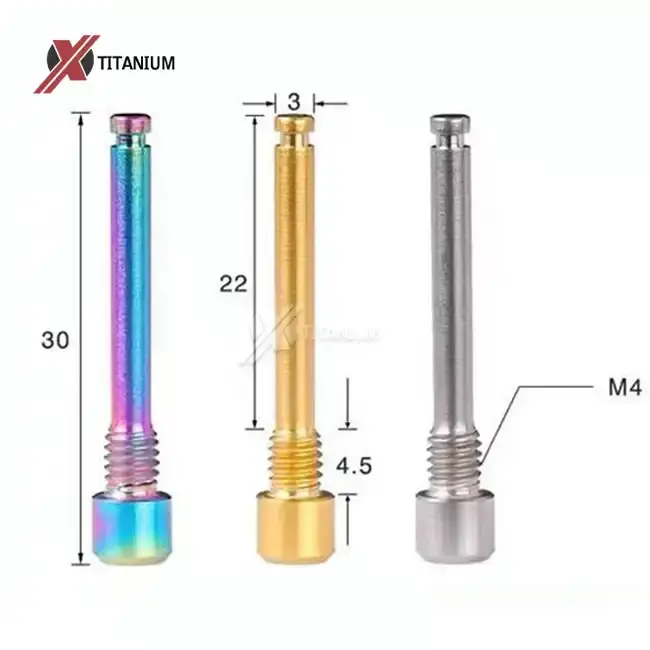
Understanding Titanium Disc Brake Plug Bolts
Material Composition and Performance Characteristics
The standard for high-performance brake fasteners in the business is Ti-6Al-4V material that is made for aircraft applications. This metal is made up of about 90% titanium, 6% aluminum, and 4% vanadium. It has a tensile strength of over 950 MPa and a mass of only 4.43 g/cm³. This combination makes bolts about 40% lighter than regular steel nuts without affecting their mechanical strength. The aluminum part improves the strength-to-weight ratio, and the vanadium helps keep the component stable at temperatures up to 400°C, which is very important for brake systems that go through repeated heat cycles.
In addition to being lighter, the material is very resistant to chemicals. It is normal for titanium surfaces to form a transparent oxide layer that protects them from corrosion caused by saltwater, DOT glycol-based brake fluid, and mineral oil compositions. In wet or seaside riding conditions, galvanic corrosion between steel bolts and aluminum caliper bodies is a problem that keeps coming up in the business. When traditional steel nuts are exposed to road salt and wetness, they often get stuck in the threads of the caliper. To remove them, you have to use destructive methods that hurt expensive brake parts.
Manufacturing Standards and Quality Control
CNC machining methods make sure that the dimensions are exact, which is important for hydraulic sealing uses. Cross-threading is not a problem when putting bolts into soft aluminum caliper housings as long as the thread tolerance meets ISO 965 guidelines. Manufacturing quality control goes beyond checking the sizes; it also includes spectroscopic makeup analysis, which proves that the material is real Grade 5 titanium and not weaker Grade 2 titanium that doesn't have the right strength properties.
The performance qualities are improved even more by surface processes. Anodizing methods make things more resistant to corrosion and let you change the way they look by adding gold, blue, purple, and colorful finishes. A PVD (Physical Vapor Deposition) layer forms molecular bonds that raise the surface hardness to 30-36 HRC and protect it from wear and thread galling. Unlike painted finishes that chip and flake, PVD treatments stay strong throughout the duration of the product. This means that premium brake systems keep working well and looking good.
Compatibility of Titanium Disc Brake Plug Bolts with Various Bike Models
Thread Specifications and Dimensional Requirements
Different makers and model lines make brake caliper designs that are very different from one another, which makes choosing the right fasteners more difficult. Most hydraulic disc brake systems use metric threading in the shapes of M4×0.7, M5×0.8, or M6×1.0, but some performance-oriented systems have their own specific sizes. Accuracy in the thread pitch is very important—a difference of just 0.1 mm can cause problems like poor seating, fluid leaks in plug uses, or not enough clamping force for pad retention bolts.
Head drive configurations also change how well tools work together and how reliable an installation is. Allen (hex socket), Torx, and button head shapes are all common types. Torx drives spread torque forces more widely than Allen designs, which makes it less likely that the head will come off when the drive is being installed or removed. For race uses that need safety wiring, drilled-head versions like the Titanium Disc Brake Plug Bolt can fit lockwire threading while still keeping the structure strong under vibration loads.
Caliper-Specific Considerations
Shimano brake systems use standard bolt sizes across all of their product lines. This makes it easy to add titanium parts that were not made by Shimano. In the same way, SRAM calipers keep measurements the same within model lines. However, some unique designs in their high-end Guide and Code series may need to be checked. Hope Technology and Formula brake systems are famous for mountain biking, but their thread specs are often different, so they need to be matched exactly.
When it comes to speed bikes, Brembo and Nissin brake calipers add more things to think about. When compared to bicycle uses, these systems work with higher hydraulic pressures and thermal loads, so the screws need to meet tighter strength standards. Grade 5 titanium works well enough for most motorbike brake systems, but for extreme racing, special heat-treatment methods or different types of exotic alloys may be better.
Custom Solutions for Proprietary Designs
When standard stock things don't work with custom caliper designs, they need to be made to order. With CNC machining, fasteners can be made that exactly match the specs given by OEM technical models or real samples. Problems that need to be solved with custom solutions include thread pitches that aren't standard, longer shaft lengths for certain caliper depths, or unique head shapes for better looks. Custom production usually has a minimum order quantity of 50 to 500 units, based on how complicated the design is. This means that this method can be used for fleet maintenance programs, OEM partnerships, or small bicycle makers looking for branded parts.
Installation and Maintenance Best Practices
Proper Installation Techniques
The right way to attach something increases safety and extends the life of the part. Before putting the parts together, make sure that all of the threads are clean. Get rid of any brake fluid, old thread-locker, or other contaminants that might affect the accuracy of the force. Even though titanium doesn't rust, thread galling is still a problem when connecting titanium to aluminum. This cold-welding effect happens when crystals with similar structures stick together because of friction and pressure. Using a copper- or nickel-based anti-seize product on threads stops galling and makes it easier to remove in the future.
When using titanium screws, it's important to stick to the torque specs. Because it has a lower amount of elasticity than steel, the material stretches in a different way when it's loaded. Only calibrated torque tools should be used, and the settings for small brake plug bolts should be between 2 and 6 Nm. If you tighten an aluminum caliper too much, the threads could strip and the clamp could bend. If you tighten it too little, fluid could leak out or a part could come loose when it vibrates. Instead of using general rules, you should always check the brake manufacturer's service instructions for torque values that are specific to your model.
Inspection and Maintenance Protocols
Visual inspections done on a regular basis find possible problems before they get so bad that they fail. Check the heads of the bolts for distortion or drive loss that could make future maintenance harder. Check the areas around the caliper for fluid leaks that could mean the seal is broken or there isn't enough pressure. For the Titanium Disc Brake Plug Bolt, titanium doesn't rust, but thread engagement should be checked every so often, especially when off-road riding or mountain biking in places with a lot of shaking.
Maintenance should be done at the same time as brake service, which is usually every 12 to 24 months for pleasure use and more often in professional race situations. When you change the pads or do fluid repair, you should take off the titanium fasteners and look for signs of galling, warping, or strange wear patterns. When reinstalling, use fresh anti-seize powder to keep the threads in good shape. This proactive method increases the useful life of parts and stops major breakdowns that could put riders in danger or damage pricey caliper assemblies.
Procurement Considerations for Titanium Disc Brake Plug Bolt Buyers
Supplier Evaluation and Quality Assurance
To choose a good titanium brake bolt provider, you need to look at them from a lot of different angles. Manufacturing certifications give basic security. For example, ISO 9001 quality management standards show that processes are controlled in an organized way, and AS9100 aerospace certification shows that parts can be made that meet strict performance requirements. Medical device certifications (ISO 13485) show that the company knows how to work with safe titanium, but these qualifications cover more than just brake fastener needs.
Material tracking is very important when a broken part could cause a safety issue. Reliable providers give mill test results that list the chemical makeup, mechanical properties, and heat treatment history for each batch of production. In business settings, this documentation helps end users keep complete quality records that meet liability worries and governmental requirements. You should be able to do tests like spectroscopy, tensile testing, and physical checking either in-house or through approved third-party labs.
Technical help is what sets high-quality providers apart from average ones. Engineering teams that can help with choosing materials, making special specs, and dealing with issues that are unique to an application add a lot of value to the product itself. This knowledge is especially useful when changing titanium bolts to non-standard uses or figuring out why certain brake designs don't work with others.
Cost Analysis and Procurement Strategy
The price of titanium brake nuts is higher than the price of steel ones—usually 300–500% higher per unit. The higher cost is because the raw materials are more expensive, they need to be machined in a special way, and they can't be made in large quantities like mass-produced steel bolts. But a full cost analysis should look at things other than the original buy price that happen over the course of the product's life. Titanium doesn't rust, so you don't have to pay to repair steel bolts that get stuck. It also makes things lighter, which helps speed in ways that are hard to measure financially but important in a competitive setting.
Volume savings can make buying in bulk a very good way to cut down on costs per unit. Titanium is a cheap material that can be used for fleet maintenance or OEM integration programs because prices often drop by 15 to 25 percent for orders of 500 to 1,000 units or more. Suppliers can make the best use of production schedules by signing annual purchase agreements with future promises. This can help them save money and make sure that products are always available. Custom production agreements have strategic benefits that go beyond lowering the cost of buying. Co-development agreements let buyers choose exact sizes, finishes on the surface, and marking elements, which makes goods that are unique for end users. These kinds of partnerships usually have minimum yearly volumes, but they offer exclusive designs that protect a business's position in crowded market niches.
Case Studies and Industry Insights
Performance Validation in Real-World Applications
When a European motorbike race team switched all of their competition bikes from steel brake plug bolts to titanium ones, they noticed big benefits. During the whole race season, they saw no cases of fastener corrosion or seizure, even though the cars were in rain, mud, and harsh cleaning chemicals. The Titanium Disc Brake Plug Bolt contributed to a 40% weight reduction, improving unsprung mass estimates and suspension response on technical circuit parts. Mechanics said that upkeep was easier because titanium bolts could be removed easily even after months of use, without the need for penetrating oils or heat.
A North American mountain bike company made special titanium brake gear for their high-end models to attract customers who care about weight and are willing to pay extra for better performance. Surveys of customers showed that they were very happy with the way anodized titanium finishes looked with branded color schemes. Warranty claim data showed that problems with brake fasteners were 73% less common than in earlier model years that used normal steel parts. This shows that the cars are actually more reliable than the marketing claims say.
Marine application case studies highlight titanium's value in corrosive environments. A company that made boats for coastal patrol had a problem with steel brake bolts rusting in just a few months, even though they were coated to protect them. By switching to Grade 5 titanium, early failures were stopped, service intervals were increased from three times a year to once a year, and upkeep labor costs were cut by about 60%. This example shows how the choice of materials has a direct effect on the total cost of ownership in tough operating situations.
Emerging Industry Trends
A study of the market shows that titanium fasteners are becoming more popular in the speed bike and motorbike markets. People are more aware of material benefits thanks to technical sites and social media groups where upgraders share their experiences. This teaching at the local level works with the marketing efforts of manufacturers to create demand pressure that encourages OEMs to use titanium parts in factory-spec configurations instead of just selling them through aftermarket channels.
New discoveries in material science keep finding new uses for titanium. New developments in additive manufacturing (3D printing) make it possible to make complicated shapes that can't be made with traditional machining. This could change the way unique fastener designs are made. Researchers are looking into beta-titanium metals that have better strength qualities that could make parts even smaller while still meeting structural needs. Based on these technical trends, titanium's use in brake systems is likely to grow rather than stay the same as the cost of production goes down due to more efficient production.
Sustainability factors are becoming more important in buying decisions, especially for European makers that have to follow environmental rules. Titanium's high sturdiness means that it doesn't need to be replaced as often as steel screws do, which means that less material is used over the course of their life. Concerns about how to properly dispose of titanium waste have been a barrier to growth in environmentally aware markets, but recycling infrastructure is still being built.
Conclusion
Titanium Disc Brake Plug Bolts offer big performance benefits by resisting rust, reducing weight, and making the parts last longer. However, compatibility needs to be carefully checked before it can be assumed to fit all systems. To make sure they work right and keep people safe, thread specs, torque requirements, and caliper-specific measurements must all line up perfectly. The higher price compared to steel alternatives is supported by a lifetime cost study that shows that corrosion-related replacements are avoided and upkeep is made easier. Buyers should give more weight to suppliers who can show they have manufacturing certifications, can track materials, and can offer expert help. As material prices go down and customer knowledge grows, new industry trends show that titanium is being used more and more in performance applications. This makes titanium an important part of the evolution of high-performance brake systems.
FAQ
Q1: Does titanium require special installation procedures compared to steel bolts?
A: Even though titanium is resistant to corrosion, anti-seize must be used when threading it into metal brakes to keep it from galling. For brake plug jobs, use torque wrenches that are measured and set to the manufacturer's specs, which are usually between 2 and 6 Nm. Because the material has a lower stiffness than steel, it reacts to torque differently. This makes accuracy very important to avoid over-tightening or not having enough binding force.
Q2: Can titanium fasteners withstand hydraulic brake fluid exposure?
A: Titanium doesn't react chemically with either glycol-based (DOT 3/4/5.1) or mineral oil brake fluids that are used in hydraulic systems. Titanium is technically and legally better for fluid-contact uses in safety-critical brake systems because the natural oxide layer stops the wear and tear that happens to coated steel fasteners over time.
Q3: What weight savings can be expected from titanium brake hardware?
A: Titanium has a density of 4.43 g/cm³, which is lower than steel's 7.85 g/cm³. This means that Grade 5 titanium nails usually weigh 40–45% less than steel parts of the same size. When multiple fasteners in a brake system are upgraded, the total weight loss is reduced, which is a valuable factor in optimizing car weight for speed uses.
Q4: Are anodized color finishes on titanium permanent?
A: PVD and anodized coats join molecules at the molecular level instead of painting layers on top. This makes them very resistant to wear and tear, chemical cleaners, and UV fading. These finishes last a lot longer than anodized metal treatments. They keep their look throughout the lifecycle of the product, even in harsh settings.
Partner with Chuanglian for Premium Titanium Disc Brake Plug Bolt Solutions
Baoji Chuanglian New Metal Material Co., Ltd. makes aerospace-grade Ti-6Al-4V material that is used in advanced CNC cutting to make precision-engineered Titanium Disc Brake Plug Bolts. Our factory in Baoji City, which is known around the world as the "City of Titanium," blends over ten years of experience handling titanium with strict quality control measures that make sure every fastener meets the highest standards. We keep our ISO 9001 certification up to date and provide full material tracking paperwork to meet your quality assurance needs.
Our engineering team provides in-depth technical advice that includes checking for compatibility, creating unique dimensions, and making suggestions based on the specific needs of the application. Whether you need catalog items with anodized color finishes or custom solutions for unique brake designs, Chuanglian can help you reach your performance goals through a trusted supply chain relationship. Contact our technical sales team at info@cltifastener.com or djy6580@aliyun.com to discuss your Titanium Disc Brake Plug Bolt supply needs and get specific information that fits your needs.
References
1. American Society for Testing and Materials. (2021). Standard Specification for Titanium and Titanium Alloy Bars and Billets (ASTM B348). West Conshohocken, PA: ASTM International.
2. Boyer, R., Welsch, G., & Collings, E.W. (2019). Materials Properties Handbook: Titanium Alloys. Materials Park, OH: ASM International.
3. International Organization for Standardization. (2020). ISO 965-1:2013 - ISO General Purpose Metric Screw Threads - Tolerances - Part 1: Principles and Basic Data. Geneva, Switzerland: ISO Publications.
4. Leyens, C., & Peters, M. (2018). Titanium and Titanium Alloys: Fundamentals and Applications. Weinheim, Germany: Wiley-VCH Verlag GmbH.
5. SAE International. (2022). AMS 4928: Titanium Alloy, Bars, Wire, Forgings, Rings, and Drawn Shapes 6Al-4V Annealed. Warrendale, PA: SAE Technical Standards.
6. Schutz, R.W., & Watkins, H.B. (2020). "Recent Developments in Titanium Alloy Application in the Automotive Industry." Advanced Materials & Processes, 178(4), 22-28.
Learn about our latest products and discounts through SMS or email