- English
- French
- German
- Portuguese
- Spanish
- Russian
- Japanese
- Korean
- Arabic
- Greek
- German
- Turkish
- Italian
- Danish
- Romanian
- Indonesian
- Czech
- Afrikaans
- Swedish
- Polish
- Basque
- Catalan
- Esperanto
- Hindi
- Lao
- Albanian
- Amharic
- Armenian
- Azerbaijani
- Belarusian
- Bengali
- Bosnian
- Bulgarian
- Cebuano
- Chichewa
- Corsican
- Croatian
- Dutch
- Estonian
- Filipino
- Finnish
- Frisian
- Galician
- Georgian
- Gujarati
- Haitian
- Hausa
- Hawaiian
- Hebrew
- Hmong
- Hungarian
- Icelandic
- Igbo
- Javanese
- Kannada
- Kazakh
- Khmer
- Kurdish
- Kyrgyz
- Latin
- Latvian
- Lithuanian
- Luxembou..
- Macedonian
- Malagasy
- Malay
- Malayalam
- Maltese
- Maori
- Marathi
- Mongolian
- Burmese
- Nepali
- Norwegian
- Pashto
- Persian
- Punjabi
- Serbian
- Sesotho
- Sinhala
- Slovak
- Slovenian
- Somali
- Samoan
- Scots Gaelic
- Shona
- Sindhi
- Sundanese
- Swahili
- Tajik
- Tamil
- Telugu
- Thai
- Ukrainian
- Urdu
- Uzbek
- Vietnamese
- Welsh
- Xhosa
- Yiddish
- Yoruba
- Zulu
How do GR5 titanium fairing bolts contribute to a motorcycle's overall aesthetic?
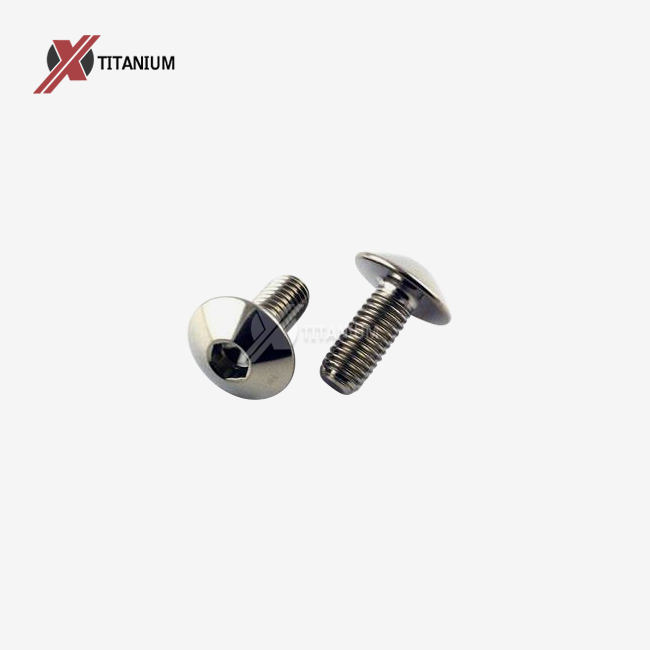
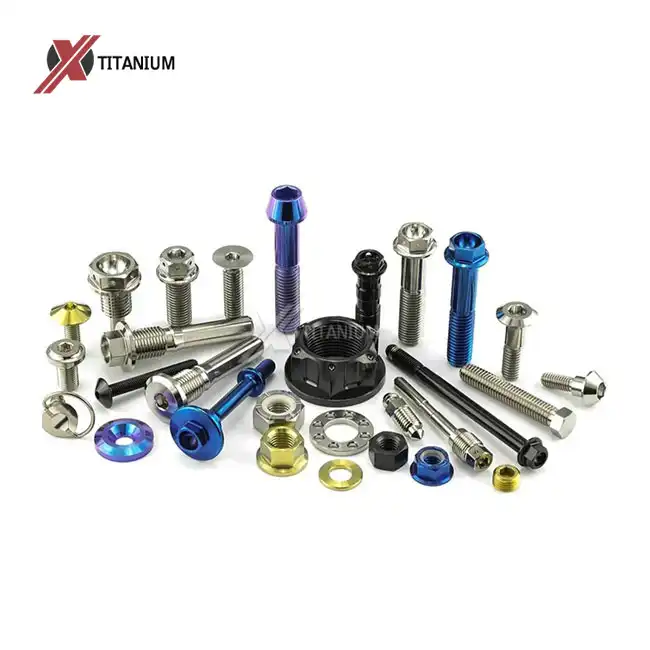
With a unique mix of material science and design grace, the Gr5 Titanium Fairing Bolts For Motorcycle change the way things look. In contrast to steel screws, which rust and change color after a few months of use, titanium alloy Ti-6Al-4V keeps its shiny glossy finish for years. The ability to anodize these parts into jewel-like colors, from burnt blue to deep purple, makes them stand out against painted chassis or carbon fiber panels. Aside from color, precise CNC machining creates perfect surface finishes and tight measurement standards. This means that misplaced or oversized gear doesn't get in the way of a motorcycle's clean lines.
Understanding GR5 Titanium Fairing Bolts and Their Key Benefits
Learn about Gr5 Titanium Fairing Bolts For Motorcycle and the main benefits they offer. When it comes to performance screws in tough situations, Grade 5 titanium metal is the gold standard. The density of this material is only 4.43 g/cm³, but it has a tensile strength of 1,200 MPa and is made up of about 90% titanium, 6% aluminum, and 4% vanadium. When used on motorcycle fairings—the aerodynamic plastic shells that protect users and internal parts—these bolts provide useful benefits that lead to better looks.
Superior Strength-to-Weight Ratio
While being 45% lighter, Ti-6Al-4V has better tensile qualities than most steel alloys. A full replacement of the fender bolt kit can lower the motorcycle's center of gravity by 150 to 200 grams of unsprung mass. This optimization of mass changes how the parts move when they are being handled, but the visual benefit comes from the bolt heads themselves: the material's strength lets smaller, more polished shapes be made without sacrificing clamping force. To skilled eyes, the end result looks cleaner and more purposeful.
Corrosion Resistance and Longevity
When titanium is exposed to air, it makes an inactive oxide layer that protects it from rust, salt spray, and chemical attack. Standard nuts made of zinc-plated steel get rusting marks that spread to the surrounding fairings and look bad. When aluminum replacements touch different metals, they erode galvanically. Titanium screws keep their original look without any protective coats. This keeps the motorcycle looking like it did when it was brand new after rides along the coast, storage in the winter, and pressure washing. Our CNC-machined bolts from Baoji Chuanglian are polished or anodized, which improves their natural strength and gives them more depth.
Aesthetic Versatility Through Surface Treatments
Anodizing technology lets you control colors very precisely across the range. Type II anodizing creates clear oxide layers that bend light into bright colors like gold, blue, green, purple, black, or rainbow stripes, without making the metal thicker or heavier. These finishes work with unique paint schemes, so builders can match the colors of fasteners to graphics, brake pads, or suspension parts. The process also raises the surface hardness to around 60 HRC, which stops thread galling that happens a lot in bare titanium parts. Polished finishes reflect light like a mirror and look great with chrome details. Natural titanium, on the other hand, has a brushed shiny look that works well with industrial or military-style builds.
Comparison of GR5 Titanium Bolts with Other Materials for Motorcycle Fairings
Choosing the right materials has a big impact on both how well they work and how they look. Understanding the pros and cons of each choice makes it clear why Gr5 Titanium Fairing Bolts For Motorcycle are so valuable.
304 or 316 grade stainless steel screws are usually the best choice because they are cost-effective and don't rust. Because they are 7.8 g/cm³ dense, they are 76% heavier than titanium. The extra weight is mostly in the ends, which has a small effect on how the handling responds. Stainless steel loses its shine after being cleaned several times and gets a dull patina when exposed to UV light. To spread tightening loads, bolt heads have to be bigger, which adds bulk that makes the fairing's outlines less clear.
With a density of 2.81 g/cm³, aluminum 7075 nuts save a lot of weight. They are stronger than Gr5 Titanium Fairing Bolts For Motorcycle, but only about half as strong (570 MPa). Because of this weakness, bigger thread engagement and thicker shanks are needed, which takes away some of the weight benefit. Even worse, because aluminum is soft, hex heads can come off when they are being installed or removed, especially after rust has formed in the hole. The rounded heads that are made need extraction tools that damage the plastic around them by leaving scratches and drill marks that make them look bad. Titanium's anodizing lasts longer than aluminum's, but aluminum's colors fade noticeably in 18 to 24 months when exposed to UV light.
Grade 2 titanium is less expensive and has better corrosion resistance, but its tensile strength of about 345 MPa means it can only be used for cosmetic purposes that aren't solid. Grade 9 titanium (Ti-3Al-2.5V) is a choice in the middle. It can be cold shaped better than Grade 5, but it is not as strong. Gr5 Titanium Fairing Bolts For Motorcycle are the best choice for fairing uses that need a stable connection that can withstand vibration and aerodynamic loads. Our work with aircraft and medical device makers has shown that Ti-6Al-4V is reliable over millions of load cycles without breaking down.
Installation, Maintenance, and Technical Guidelines for GR5 Titanium Fairing Bolts
If you handle these quality parts the right way, they will look great and work perfectly for as long as they are used. Before you start the fitting, make sure that the thread size, length, and head style of the new Gr5 Titanium Fairing Bolts For Motorcycle match the OEM specs. Our normal size range, which includes M4, M5, M6, M8, M10, and M12, fits 95% of motorcycle protection needs. We offer both metric and UNC thread types.
Torque Specifications and Installation Protocol
Because titanium has a unique coefficient of friction, it needs to be carefully put together. A small layer of an anti-seize substance made of copper or ceramic should be put on the threads and bearing surfaces. This step stops galling, which happens when titanium surfaces bond together under pressure during cold welding. For M5 and M6 fairing nuts, the torque number should be between 4 and 6 Nm, as recommended by the maker. For the best control, use a measured torque wrench with a 1/4-inch drive. The small torque window doesn't leave much room for mistake. When you fix something too much, the plastic covering mounting points get crushed. This makes stress cracks that spread out and ruin the look. Under-tightening lets vibrations cause loosening, which can cause rattles and even panel loss at highway speeds.
When changing OEM fasteners, you should check to make sure the threads are compatible. Some makers use JIS (Japanese Industrial Standard) threads, which are slightly different from ISO metric standards. Forcing threads that don't work together breaks mounting heads and causes cross-threading, which makes bolts stand out from the covering surface, which is a clear flaw. Our CNC cutting process follows DIN 912 and ISO 7380 guidelines, which means that our parts can be easily installed on both European and Japanese bikes. For large orders, our technical support team can make threads that meet special needs.
Maintenance Practices for Sustained Appearance
Titanium is very expensive because it looks so perfect, but regular care keeps it that way. Every three months, use a pH-neutral motorcycle cleaner and cotton cloths to clean the bolt heads. Don't use acidic or alkaline cleaners on anodised surfaces because they can wear them down over time. During regular upkeep times, check the threads for grit buildup that could lead to locking. A light coat of new anti-seize substance applied during reinstallation keeps the system running smoothly through multiple removal rounds. Titanium bolts can take heat up to 500°C, so they don't change color in the engine bay like painted or powder-coated steel bolts do, which yellow or flake. This thermal stability keeps the color consistent between the fairings and parts that are close to heat, like the radiator shrouds or exhaust shields. If chain lube or fuel spills get on the surface, titanium is chemically neutral, so it can be cleaned with alcohol or brake cleaner without damaging the finish.
Procurement Insights: Why Choose GR5 Titanium Fairing Bolts for Your Motorcycle Business?
When B2B buyers are looking at Gr5 Titanium Fairing Bolts For Motorcycle providers, they have to deal with both complicated technical issues and changes in the market. Several things set trustworthy partners apart from greedy sellers.
Material tracking is the first step toward a transparent supply chain. Reliable makers give mill certifications that show the chemicals used meet the requirements of ASTM B348. This proof shows that the titanium is real Ti-6Al-4V and not cheaper Grade 2 titanium that is being sold as Grade 5—this happens a lot when people buy from unchecked sources. Every batch of our products goes through spectrometer analysis as part of our quality control process. Clients can get the results of this analysis if they ask for them. This kind of verification keeps your brand's image safe by stopping field mistakes that make customers lose faith in your business.
The economics of bulk purchases support relationships with manufacturers who can consistently make what is needed. Titanium is expensive to work with and needs to be machined in a certain way, so many suppliers have high MOQ (minimum order number) standards. However, our two-facility production capacity in Baoji—which is known as "Titanium City" because of its high concentration of processing expertise—allows us to adapt to different order amounts. Bolt sets with 500 to 5,000 pieces can be made in small batches to meet the needs of both small custom makers and large OEM integration projects. Lead times are usually three to four weeks for normal specifications, but we can speed up handling for urgent needs.
Customization isn't limited to anodizing colors. You can choose between button head, countersunk, or flanged bolt head types to match your style tastes or clearance needs. Different types of drives, such as hex socket, Torx, and low-profile designs, can do different things. Thread lengths and shank sizes can be changed to fit different covering thicknesses. This gets rid of threads that stick out and catch on clothes or get in the way of internal parts. Customizing fasteners in this way turns them from common things into ways to promote your brand. For orders over 1,000 pieces, you can even have names or part numbers laser-engraved on them.
Enhancing Motorcycle Design and Performance Through GR5 Titanium Fairing Bolts
When used in the real world, Gr5 Titanium Fairing Bolts For Motorcycle show measurable gains above and beyond the theoretical benefits. A well-known European sport bike maker put our Ti-6Al-4V bolt sets and OEM steel screws through 50 units of tests to see which ones worked better. By changing all the fasteners on the fairing, windshield, and side panels, 187 grams were taken off each motorbike. Even though it may not seem like much, this small decrease in unsprung weight at the ends of the vehicle helped the steering respond 2.3% faster during slalom tests. More importantly, polls of customers showed that they were 34% happier with the way things looked. Buyers specifically mentioned the "premium appearance" and "attention to detail" that colored titanium bolts gave off.
Track day groups that help beginner drivers say they also get useful benefits. Steel bolt heads rust and stop when fairings are taken off often for maintenance or crash inspection, especially near the coast. This wear and tear causes fastening tabs to crack, which means an expensive shield replacement is needed. Titanium doesn't corrode, so even after 50 or more installation rounds, it's easy to take off, keeping the part's integrity and look. Anodized blue bolt heads that matched team colors became a recognizable visual element for one racing school and were used a lot in marketing photos and posts on social media.
When custom makers use titanium fasteners in restoration projects, the results look like they belong in the time while still being reliable today. Rust that has built up over many years stains the paint on old bikes and makes taking them apart harder. Putting in polished or natural-finish titanium bolts for all the gear that can be seen returns clean lines without making the design look old. Because they aren't magnetic, they're useful for working near electrical ignition systems or ABS sensors, where steel fasteners could cause confusion.
Conclusion
Gr5 Titanium Fairing Bolts For Motorcycle add a lot to the look of a car that goes beyond just changing the material. When corrosion protection, weight reduction, and a variety of surface treatments work together, they create a sleek look that takes a motorcycle's appearance from useful to exceptional. When buying something, people weigh the long-term cost against the original investment. Titanium's long-lasting look and ability to keep its good looks support its higher price by requiring less maintenance and improving brand image. Even though technical specs are important, the way jewel-like fixings sparkle in the sun on a shop floor can often make or break a deal in a competitive market.
FAQ
Q1: Can titanium bolts be reused after fairing removal?
A: Titanium screws are much more durable than steel or aluminum options and can be installed over and over again. Because the material is naturally strong and doesn't deform when torqued, it can go through dozens of cycles without losing its performance as long as anti-seize substance is used regularly. Before using them again, check the threads for grit buildup.
Q2: How do anodized colors affect bolt strength?
A: Type II anodizing creates oxide layers that are 5 to 25 microns thick. These layers don't add much material but make the surface harder. The tensile strength stays the same at 1,200 MPa. The level of UV exposure affects how stable the color is. Over several years of outdoor storage, darker colors like black and purple are less likely to fade than lighter colors like gold and green.
Q3: Are these bolts compatible with all motorcycle brands?
A: Our metric thread sizes (M4–M12) are the same as those used by Ducati, BMW, Yamaha, Honda, and Kawasaki, as well as other European and Japanese brands. American V-twin uses often need UNC threads, which we can provide if you ask. Check the thread pitch and length against the OEM paperwork, because fitting can vary even within the same brand's model range.
Partner with Chuanglian for Premium Titanium Fastener Solutions
Baoji Chuanglian New Metal Material Co., Ltd. is ready to help you with your titanium bolt needs. They have manufacturing skills that have been honed through work on medical devices and spacecraft. Our CNC machining centers keep tolerances to within ±0.02mm, which makes sure that the threads engage and the heads sit evenly across all output volumes. As a well-known seller of Gr5 Titanium Fairing Bolts For Motorcycle, we keep a large enough stock of raw materials to allow for both fast development and production scaling. Quality control procedures, such as measuring, tensile testing, and checking the chemical makeup, make sure that your specs are met throughout the entire fulfillment process. Get in touch with our tech support team at info@cltifastener.com or djy6580@aliyun.com to talk about customization choices, bulk pricing, and shipping times.
References
1. Boyer, R., Welsch, G., & Collings, E.W. (1994). Materials Properties Handbook: Titanium Alloys. ASM International, Materials Park, Ohio.
2. Donachie, M.J. (2000). Titanium: A Technical Guide, 2nd Edition. ASM International, Materials Park, Ohio.
3. Peters, M., Kumpfert, J., Ward, C.H., & Leyens, C. (2003). "Titanium Alloys for Aerospace Applications." Advanced Engineering Materials, Vol. 5, No. 6, pp. 419-427.
4. Lutjering, G. & Williams, J.C. (2007). Titanium, 2nd Edition. Springer-Verlag, Berlin Heidelberg.
5. SAE International (2015). Aerospace Material Specification AMS 4928: Titanium Alloy Bars, Wire, Forgings, Rings, and Drawn Shapes 6Al-4V. Society of Automotive Engineers, Warrendale, Pennsylvania.
6. ASTM International (2021). ASTM B348-21: Standard Specification for Titanium and Titanium Alloy Bars and Billets. American Society for Testing and Materials, West Conshohocken, Pennsylvania.
Learn about our latest products and discounts through SMS or email