- English
- French
- German
- Portuguese
- Spanish
- Russian
- Japanese
- Korean
- Arabic
- Greek
- German
- Turkish
- Italian
- Danish
- Romanian
- Indonesian
- Czech
- Afrikaans
- Swedish
- Polish
- Basque
- Catalan
- Esperanto
- Hindi
- Lao
- Albanian
- Amharic
- Armenian
- Azerbaijani
- Belarusian
- Bengali
- Bosnian
- Bulgarian
- Cebuano
- Chichewa
- Corsican
- Croatian
- Dutch
- Estonian
- Filipino
- Finnish
- Frisian
- Galician
- Georgian
- Gujarati
- Haitian
- Hausa
- Hawaiian
- Hebrew
- Hmong
- Hungarian
- Icelandic
- Igbo
- Javanese
- Kannada
- Kazakh
- Khmer
- Kurdish
- Kyrgyz
- Latin
- Latvian
- Lithuanian
- Luxembou..
- Macedonian
- Malagasy
- Malay
- Malayalam
- Maltese
- Maori
- Marathi
- Mongolian
- Burmese
- Nepali
- Norwegian
- Pashto
- Persian
- Punjabi
- Serbian
- Sesotho
- Sinhala
- Slovak
- Slovenian
- Somali
- Samoan
- Scots Gaelic
- Shona
- Sindhi
- Sundanese
- Swahili
- Tajik
- Tamil
- Telugu
- Thai
- Ukrainian
- Urdu
- Uzbek
- Vietnamese
- Welsh
- Xhosa
- Yiddish
- Yoruba
- Zulu
MMO Coated Titanium Anodes: Long-Term Guardians of Metal Structures
Electrochemical methods that have been used before are used by engineers and buying teams in industrial sites where corrosion is a constant problem that threatens important infrastructure. MMO coated titanium anodes are a high-tech way to protect metal structures because they combine the natural power of titanium surfaces with advanced Mixed Metal Oxide coatings. These anodes are trustworthy guards in cathodic protection systems, water treatment plants, and electroplating operations that depend on consistent materials and long-term performance. Through controlled electrochemical reactions, these parts protect for decades, which is what quality-conscious industrial buyers who value steadiness over one-time cost saves really care about.
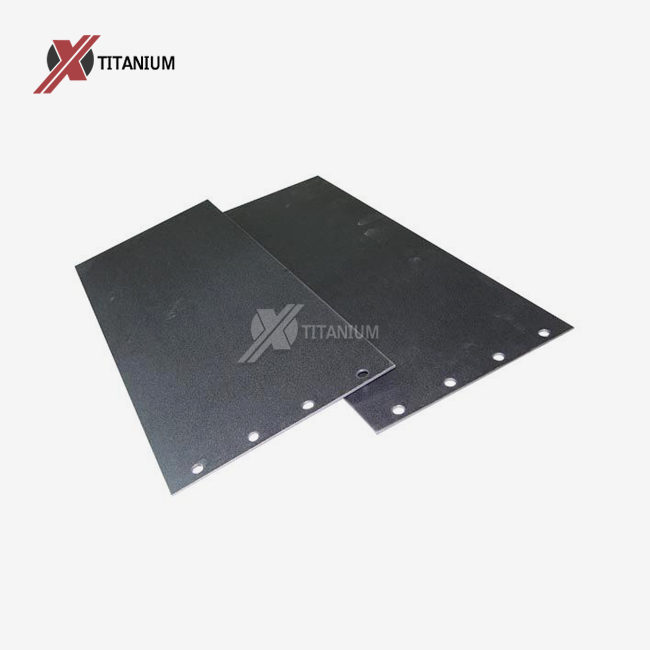
Understanding MMO Coated Titanium Anodes: Composition and Functionality
Core Material Composition
High-purity titanium plates, usually Grade 1 or Grade 2, are the building blocks of these anodes. They were chosen for their excellent resistance to rust and mechanical qualities. At Baoji Chuanglian, we have strict steps in the preparation process that include cold rolling, hot rolling, heating, and pickling to get the best base conditions. The titanium base is cleaned with acid and given different surface treatments, such as bright polishing and grinding, to make sure that the next covering layer sticks perfectly.
The Mixed Metal Oxide coating is put on in layers of 5 to 50 microns thick and is made up of carefully measured valuable metal oxides, such as iridium and ruthenium compounds. This layer of coating turns the titanium base into a good electrochemical interface, which lets current levels that normal materials can't handle happen. The mix makes an anode that is dimensionally solid and keeps its shape over long periods of time, unlike edible options that break down and pollute electrolyte baths.
Electrochemical Principles and Operational Mechanics
These anodes work by making it easier for controlled electrons to move between the metal and the liquid. In cathodic protection uses, when electricity flows through the anode, the MMO coating speeds up processes that release oxygen instead of breaking down the material. This process explains how these anodes can keep their structural integrity while achieving current values of over 90%.
Because the layer is catalytic, it can work at very low overpotentials, which means that large-scale security devices use less energy. For coastal buildings that are in high-chloride environments, this means that they will keep working well without breaking down quickly like graphite anodes do. The MMO layer is thermally stable, so it can work continuously at temperatures up to 200°C. This makes it useful for hard industrial processes where changes in temperature would damage less durable materials. Engineers who choose these anodes should know about these basic electrochemical concepts because they directly affect the coating formulation and substrate thickness specs based on application-specific needs like current density demands and liquid chemistry.
Industrial Applications Across Critical Sectors
Marine Engineering and Offshore Infrastructure
Offshore platforms, ship hulls, and underwater pipelines are constantly exposed to aggressive seawater. Implementing impressed current cathodic protection systems with mmo coated titanium anodes has transformed corrosion management for these assets. These mmo coated titanium anodes provide 20-30 years of protection with minimal maintenance, compared to zinc or aluminum anodes requiring frequent replacement.
The devices that clean the ballast water on industrial ships use electrochlorination, in which anodes turn seawater into active chlorine species. The dimensional stability stops changes in coating thickness that would lower the effectiveness of cleaning over time and across journey rounds. Naval builders and marine engineers like how light titanium is—its low density makes it less likely that structures will break than standard lead-silver anodes while still providing better protection.
Water and Wastewater Treatment Facilities
These anodes are used in electrocoagulation, electroflotation, and cleaning systems by cities that treat water. The anodes' ability to fight biological fouling makes sure that chlorine production rates stay the same in drinking water plants, where changes in performance could threaten public health. Anodes are useful for wastewater treatment plants that deal with high-salinity industry waste because they can work in harsh chemical conditions without releasing heavy metals into the discharge streams.
Seawater desalination plants are very hard to work on because the anodes have to keep working in hypersaline brines all the time while still giving off the right amount of electricity. Plants say that these systems last more than 15 years, while rival methods only last 3 to 5 years. This durability directly addresses the worries of buying teams about the security of the supply chain and the timing of replacements in remote sites.
Electroplating and Metal Finishing Operations
Anodes that keep accurate dimensional tolerances throughout production runs are needed for precision electroplating of aircraft bolts and medical device parts. Because MMO titanium anodes are dimensionally stable, they make sure that the current flows evenly across coating baths. This gets rid of the differences in thickness that would make high-value parts not meet standards. In acid copper plating for printed circuit boards, these anodes have taken the place of soluble copper anodes in tasks that need precise process control because they get rid of copper contamination that weakens the solution chemistry.
Anodes that can handle high current levels without breaking down are good for hard chrome plating on hydraulic pistons and industrial tools. As part of their AS9100 certification, shops that work on aircraft parts must keep records of consistent coating thicknesses that can be linked to stable anode performance. This meets both technical standards and quality audit trails.
Comparing MMO Coated Titanium Anodes with Alternative Technologies
Performance Benchmarking Against Traditional Materials
Graphite anodes have been used for a long time in cathodic protection, but they are very expensive and need to be replaced every few years. They are also hard to get rid of. The alternative MMO titanium has usage rates below 0.01 mg per amp-year, which is almost nothing over a normal 20-year design lifespan. This speed gap means that repair downtime is much shorter, which means that less work gets done.
Even though lead-silver anodes work pretty well for electrochemistry, they are harder to clean up and comply with environmental rules that are getting stricter. Classifying dangerous materials makes it harder to get permission to buy them and get rid of them when they're no longer useful. Titanium-based anodes are a natural fit for facilities that use ISO 14001 environmental management systems because they get rid of toxic waste streams and lower carbon footprints by requiring longer repair periods.
Platinized titanium anodes work very well, but they cost more than other options, which is usually not worth it for big setups. The MMO coating technology offers similar electrochemical efficiency at much lower material costs. This makes the project economics good for protecting big marine buildings or pipeline networks that stretch for a long way. When looking at operating horizons of 15 to 20 years, procurement studies always show that MMO systems have lower total costs of ownership.
Environmental and Regulatory Considerations
Increasingly strict rules control how heavy metals can be in industrial wastewater, which makes lead-based anode products difficult to use. Titanium is harmless, and stable MMO coats make sure that strict environmental standards are met without the need for special handling procedures. When compared to other options, anode material safety data sheets have fewer danger ratings, which makes it easier for chemical processing plants to follow the rules.
Because mmo coated titanium anodes last so long, they help companies achieve waste reduction targets that form a key component of sustainability initiatives. Eliminating frequent anode replacement reduces material transport requirements and associated emissions. Environmental officers evaluating suppliers find that ISO 14001 certification—held by quality manufacturers like Baoji Chuanglian—provides assurance that environmental management is systematically addressed throughout production.
Selecting and Maintaining MMO Coated Titanium Anodes for Optimal Performance
Application-Specific Selection Criteria
When engineers choose anodes for cathodic protection systems, they have to think about how much current they need to produce, how conductive the solution is, and how they will be installed. Anode surface area is directly related to current supply capacity. Customized measurements make sure that the best use is made without over-specification, which drives up costs needlessly. Marine uses in low-resistivity saltwater can have smaller anode arrays than sites buried in dirt, which need more surface area because of the higher resistivity.
Different coating formulations are used for different operating chemicals. In places with a lot of chlorine, ruthenium-iridium oxide mixtures work best in reactions that release chlorine, but process waters that are high in sulfate might do better with different precious metal ratios. Working with makers who offer expert support makes sure that coating specs are based on real-world service conditions instead of general suggestions.
Temperature affects both the choice of base metal and the amount of the layer. Continuous use above 70°C may require higher types of titanium that are less likely to creep, and the thickness of the coating should be adjusted to account for faster wear in high-temperature settings. Our engineering team at Chuanglian does thorough reviews of each application to suggest the best setups. They do this by using a lot of performance data from different installations in the field.
Maintenance Protocols and Service Life Extension
Even though they are strong, setting up regular checking procedures extends the service life of anodes. Visual checks every 6 to 12 months find delamination in the covering or mechanical damage before the security stops working as well. Electrical continuity testing makes sure that all the connections in the safety circuit are tight, because loose connections cause localized heating that damages both the anode modules and the cables.
Cleaning anode surfaces on a regular basis gets rid of mineral scale buildup that can protect them and lower the current flow. Simple mechanical brushing or light acid washing can bring back surface action without hurting the MMO coating, depending on the chemistry of the water. High-fouling areas may need to be cleaned every three months, but clean process waters usually only need to be cleaned once a year. Setting up cleaning procedures that are proportional to the real fouling rates cuts down on unnecessary upkeep work and ensures uniform performance.
Monitoring readings of output current and defensive potential lets you know right away when the system is breaking down. If the voltage input stays the same but the current output goes down, it could mean that the coating is almost worn out and needs to be replaced before it stops protecting the device. This planned maintenance method stops expensive emergency fixes and schedules anode replacements for times when the plant is shut down, so there is less disruption to operations.
Sourcing from Trusted Manufacturers with Proven Capabilities
Quality Systems and Certification Requirements
When industrial buyers are evaluating mmo coated titanium anodes suppliers, they prioritize companies with robust quality management systems. ISO 9001:2015 certification provides baseline assurance of systematic process control for mmo coated titanium anodes. Additional certifications including AS9100 for aerospace applications or medical device registrations demonstrate capability for more stringent mmo coated titanium anodes requirements. Traceability is essential for project documentation and regulatory submissions, and material test reports confirming compliance with ASTM B265 standards for titanium substrates are mandatory for mmo coated titanium anodes.
The skills of the manufacturing center have a big effect on how consistent the product is. CNC machining centers allow for exact control of dimensions across custom anode shapes, and high-tech coating application equipment makes sure that the MMO layer thickness is the same all over. We at Baoji Chuanglian are committed to meeting the high standards of our aircraft, petrochemical, and medical device users, which is why we have invested in cutting-edge production technology and measurement tools.
Protocols for testing that include checking for strength, bending, and hydraulic pressure make sure that the structure is sound before it is shipped. Coating adhesion tests and accelerated life tests under realistic service conditions back up performance claims. This gives buying teams objective performance data instead of marketing claims. When manufacturers give full test paperwork, they show that they are honest, which builds trust for long-term supply relationships.
Technical Support and Application Engineering
Because designing a cathodic protection system and improving an electrochemical process is so complicated, the technical skills of the seller are just as important as the quality of the product. Having access to skilled application workers who know how to deal with problems that are unique to the site speeds up the success of a project. These experts help with figuring out the right size anode, making fitting suggestions, and fixing problems that come up during testing.
Customization makes the difference between makers who can meet the specific needs of a project and commodity sellers who only sell standard list items. Customer and seller engineering teams need to work together to make complex geometries for tight installation areas, special electrical connections for harsh locations, or hybrid designs that include tracking equipment. With more than ten years of experience in a wide range of businesses, Chuanglian can make a real difference in project engineering instead of just following through on buy orders.
Support after delivery, such as installation instructions, commissioning help, and performance tracking advice, adds a lot of value on top of the actual product. Suppliers with prompt technical teams that can be reached through multiple lines of communication, such as email at info@cltifastener.com or direct engineering contacts, lower project risk by solving problems quickly. This part of the service is especially helpful for foreign projects that are hard to coordinate because of things like time zones and transportation.
Conclusion
For high-reliability businesses to meet their operational needs, they need corrosion protection systems that work the same way for decades. MMO coated titanium anodes meet these needs by using tried-and-true electrochemical principles, better material properties, and production methods that guarantee stability from batch to batch. When procurement teams work with certified manufacturers as suppliers, they gain access to technical knowledge, the ability to customize products, and quality systems that turn buying anodes from a one-time thing into long-term partnerships that help them meet operational and infrastructure protection goals.
FAQ
What factors determine MMO coated titanium anode lifespan in cathodic protection systems?
The working current density, electrolyte chemistry, and coating thickness specs determine how long an anode will last. Installations that work below 1000 A/m² in seawater usually last 20 to 30 years. However, installations that are exposed to higher current levels or harsh chemicals may only last 10 to 15 years. Proper fitting keeps the machine from breaking, and regular upkeep keeps the surface from getting dirty. Extreme temperature changes and current density peaks during system startup can also affect how fast coatings are used up.
How do these anodes compare cost-effectively against traditional alternatives?
Even though MMO titanium anodes cost more to buy at first than graphite or sacrificial anode systems, they always come out ahead in terms of total cost of ownership after 15 to 20 years of use. Cutting down on substitute work, system downtime, and disposal costs saves money that more than makes up for the higher initial investment. The lower working voltages make protection systems more energy efficient, which boosts the economic returns across big protection systems.
Can MMO anodes accommodate various wastewater treatment chemistries?
These anodes work very well with a wide range of pH levels (2–12) and chemical makeups, such as wastewaters that are high in salt, sulfate, and organic matter. Coating formulations can be made to work better with certain chemicals. To get the best results, talk to the makers about your unique water analysis. The anodes' ability to handle changes in makeup without lowering performance is helpful for municipal treatment plants that deal with changing influent streams.
Partner with Chuanglian for Premium MMO Coated Titanium Anode Solutions
Baoji Chuanglian New Metal Material Co., Ltd. is based in China's "City of Titanium," which is a smart move. The company has over ten years of experience making rust protection systems for tough industrial uses. Advanced surface treatment technologies, strict quality testing according to ASTM B265 standards, and ISO 9001:2015 approved processes are all used in the production of our MMO coated titanium anodes. This makes sure that the material consistency that aircraft, marine, and chemical processing users need. We offer fully customized sizes, coating requirements that are based on your electrochemical environment, and expert support to help you create the best system. Get in touch with our engineering team at info@cltifastener.com or djy6580@aliyun.com to talk about your cathodic protection needs with a reliable MMO coated titanium anodes provider that will provide performance, dependability, and quick support throughout the lifecycle of your project.
References
1. Baeckmann, W., Schwenk, W., and Prinz, W. (2017). Handbook of Cathodic Corrosion Protection: Theory and Practice of Electrochemical Protection Processes. Gulf Professional Publishing.
2. Chen, G. (2020). Electrochemical Technologies in Wastewater Treatment: Fundamentals and Applications. Springer Nature.
3. Comninellis, C. and Chen, G. (2010). Electrochemistry for the Environment. New York: Springer Science & Business Media.
4. Morgan, J. (2019). Cathodic Protection: Industrial Solutions for Protecting Against Corrosion. NACE International.
5. Schlesinger, M. and Paunovic, M. (2014). Modern Electroplating: Fifth Edition. John Wiley & Sons.
6. Trasatti, S. (2018). Electrocatalysis: Understanding the Success of DSA®. Electrochimica Acta Journal Publications.
Learn about our latest products and discounts through SMS or email