- English
- French
- German
- Portuguese
- Spanish
- Russian
- Japanese
- Korean
- Arabic
- Greek
- German
- Turkish
- Italian
- Danish
- Romanian
- Indonesian
- Czech
- Afrikaans
- Swedish
- Polish
- Basque
- Catalan
- Esperanto
- Hindi
- Lao
- Albanian
- Amharic
- Armenian
- Azerbaijani
- Belarusian
- Bengali
- Bosnian
- Bulgarian
- Cebuano
- Chichewa
- Corsican
- Croatian
- Dutch
- Estonian
- Filipino
- Finnish
- Frisian
- Galician
- Georgian
- Gujarati
- Haitian
- Hausa
- Hawaiian
- Hebrew
- Hmong
- Hungarian
- Icelandic
- Igbo
- Javanese
- Kannada
- Kazakh
- Khmer
- Kurdish
- Kyrgyz
- Latin
- Latvian
- Lithuanian
- Luxembou..
- Macedonian
- Malagasy
- Malay
- Malayalam
- Maltese
- Maori
- Marathi
- Mongolian
- Burmese
- Nepali
- Norwegian
- Pashto
- Persian
- Punjabi
- Serbian
- Sesotho
- Sinhala
- Slovak
- Slovenian
- Somali
- Samoan
- Scots Gaelic
- Shona
- Sindhi
- Sundanese
- Swahili
- Tajik
- Tamil
- Telugu
- Thai
- Ukrainian
- Urdu
- Uzbek
- Vietnamese
- Welsh
- Xhosa
- Yiddish
- Yoruba
- Zulu
Installation guide for titanium anode rods in water heaters
Putting in a titanium anode rod in your water heater is a smart way to protect it from rust and make it last longer. These high-tech parts use Grade 2 titanium bases with Mixed Metal Oxide coverings to protect against cathodic damage using impressed current technology. Unlike regular sacrificial anodes, which break down over time, titanium versions provide constant electrochemical protection, getting rid of sulfide smells and making equipment last longer than usual. The steps in this guide will help you install your system correctly so that it works at its best right from the start.
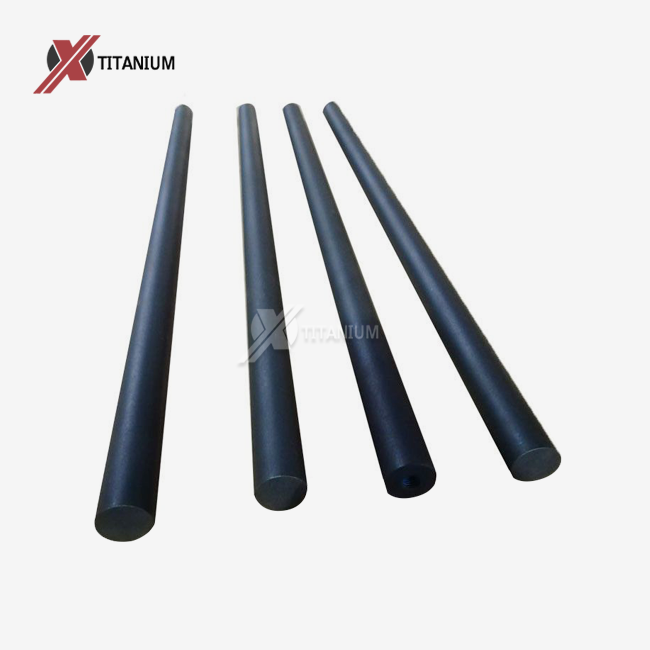
Understanding Titanium Anode Rods and Their Role in Water Heaters
Corrosion is a constant problem for modern industrial water heating systems, especially in places where the water chemistry is harsh. Titanium anode rods solve these problems with complex electrochemical systems that are very different from usual ways of protecting things.
Material Composition and Electrochemical Properties
ASTM-approved Grade 2 titanium is used for the core base. It is made by cold rolling or hot rolling the titanium and then heating and pickling it. This base material is very special because it has a tensile strength of 480 MPa, a density of 4.43 g/cm³, and a melting point of 1668°C. Depending on the needs of the product, the surface is finished with bright shining, acid cleaning, or sandblasting.
The thing that makes these rods unique is their Mixed Metal Oxide covering, which is usually made of iridium or ruthenium compounds and makes it easier for electrons to move without using up any material. Low-voltage electricity is actively sent into the water by this impressed current cathodic protection system. This creates a protective field that stops steel tank rust at the molecular level.
Advantages Over Conventional Anode Technologies
Usually, magnesium or aluminum anodes work by sacrificing a charge and slowly breaking down to protect the walls of the tank. This process has some problems: sediment builds up from metals that have been dissolved, hydrogen sulfide gas is released, which smells bad, and refill rounds last an average of 24 to 48 months. Titanium options get rid of all of these worries. The dimensionally stable anode keeps the same shape throughout its service life, which in normal conditions is usually more than 15 to 20 years.
The water quality stays perfect because the metals don't dissolve. The system changes the current flow automatically based on the resistivity of the water. This gives the best safety in a range of situations, from soft freshwater to industrial environments with a lot of chlorine. Customers in the industrial and marine engineering industries like this flexibility because it helps them deal with complicated water chemicals that would quickly wear out sacrificial anodes.
Suitability for Diverse Industrial Applications
Chemical processing plants need tools that can work in harsh, acidic conditions without adding any outside contaminants. For marine engineering work, you need materials that don't rust in sea and keep their shape when temperatures change. Titanium is very good at withstanding high temperatures, so it can be used in high-temperature industrial hot water systems without losing its protective properties.
The low density of 4.43 g/cm³ lowers the structural load in big setups, and the high electrical conductivity makes sure that the current flows smoothly across the protected surface. Titanium anodes are great for situations where downtime costs are higher than the original cost of the materials. This is an estimate that procurement professionals who look at lifecycle economics are used to doing.
Step-by-Step Installation Guide for Titanium Anode Rods
By following the right steps during installation, you can make sure that your investment provides the best protection possible and avoids common mistakes that weaken systems.
Pre-Installation Preparation and Safety Protocols
Before you start working, make sure the water heater is turned off and give it enough time to cool down—at least four hours for systems that are above 60°C. Drain about 10 to 15 percent of the tank's volume to lower the pressure inside and stop water from leaking out when the rod is taken out. Check the installation site against the manufacturer's instructions to make sure the threads will work. Standard configurations can fit NPT 3/4" or 1" fittings, but there are ways to make them fit unique needs.
Get the tools you'll need, like an adjustable wrench, a socket set, thread sealant tape that is approved for use in drinkable water systems, a torque wrench that is adjusted according to the manufacturer's instructions, and safety gear like gloves and eye protection. If you are changing an older unit, check the state of the current anode. If there are a lot of corrosion patterns, it could mean that there are problems with the water chemistry that need to be fixed before you can add premium titanium components.
Removal of Existing Anode and Installation Procedures
Find the anode entry port, which is usually on top of the tank or along the pipe that lets hot water out. If rust is clear on old parts, apply penetrating oil and wait 15 to 20 minutes for it to soak in. To loosen the old rod, use the right tool or wrench and turn counterclockwise. Older systems often have resistance. To protect the tank threads, use steady pressure instead of impact force. Once it's off, check the port threads for damage or buildup of dirt; if necessary, clean them well with a wire brush.
Wrap two or three times around the threaded link of the new titanium anode rod in PTFE tape going clockwise to get it ready. Carefully insert the rod, hand-tightening at first to make sure the threads connect properly. Apply the manufacturer's recommended torque using a torque tool. For normal domestic units, this is usually 30 to 40 ft-lbs, but different specs may be needed for commercial use. Do not tighten too much because it can damage the threads or cause stress cracks in the mounting boss.
Post-Installation Testing and System Verification
Once the anode rod is in place, fill the tank all the way up before turning the power back on. During the first full cycle, check all connections for wetness. Even small seepage can mean that the torque isn't strong enough or the threads aren't properly prepared. For systems that use impressed current, connect the power source according to the wiring diagrams provided by the maker, making sure that the control unit has the right polarity. Make sure the power indicator works properly; most systems have LED state signs that show if the system is working.
Use a multimeter to check the output voltage. For most home setups, the results should be between 1.5V and 3.0V. After letting the system work for 24 hours, do a second check to look for leaks, strange sounds, or error codes on the electronic controls. Write down the date of installation, the model details, and the initial working settings. This basic information is very helpful for planning future upkeep and making guarantee claims.
Maintenance, Troubleshooting, and Lifespan of Titanium Anode Rods
To get the most out of your titanium anode rod purchase, you need to know how often to do maintenance and how to spot early signs of problems with the system.
Inspection Schedules Based on Water Quality
The chemical of the water directly affects how often it needs to be inspected. Municipal water sources with a neutral pH (6.5–8.5) and mild hardness usually need to be inspected visually once a year. When water in an industrial setting has a pH below 6.0, chloride levels above 250 ppm, or sulfate levels that are too high, it needs to be checked every six months. During checks, make sure that the electrical links are still tight and free of corrosion. Look for error codes or strange power readings in the control unit. Use a flashlight and mirror assembly to check the rod's physical state through the entry hole. The coating should stay the same color and texture and not flake or change color. Titanium versions focus on coating stability and electrical continuity, while sacrificial anodes need measures of their sizes.
Common Issues and Troubleshooting Approaches
The most common operating problem is a failed control unit, which can be seen by LED displays that aren't working or output power that isn't present. Before thinking a component is broken, make sure the power source is still working and check the state of the circuit breaker. Electrical connections that are too loose lead to security that doesn't work all the time and can cause corrosion at the end points.
To keep wetness out, tighten all the joints and use dielectric grease. Degradation of the coating, which doesn't happen very often during regular service life, shows up on the rod surface as dark spots or rough spots. This usually means that the system is being used outside of its intended limits, such as when the power is too high, the temperature is too low, or the water chemistry is not compatible.
When a water heater smells bad again after titanium installation, it's usually because bacteria settled in before the rods were activated. To get rid of any remaining bacteria, flush the tank with a hydrogen peroxide solution (one pint for every 40 gallons). If the problems don't go away after troubleshooting, talk to your supplier's technical support team. Writing down information about the working settings and water quality speeds up the diagnostic process.
Expected Service Life and Replacement Indicators
If used correctly, high-quality titanium anodes can protect for 15 to 25 years, which is a lot longer than the normal number of times an anode needs to be replaced. The actual lifespan depends on the type of water, the temperature at which it is used, and the job cycle strength. Applications that go above 70°C or use harsh water chemicals may shorten the service life to 10 to 15 years, but they are still cheaper than other options.
When the coating's consistency breaks, as shown by a visible titanium base or a loss of electrical continuity, the coating needs to be replaced. If an electronic control unit fails, a component may need to be replaced regardless of the state of the rods. To reduce downtime, many makers make controllers as field-replaceable modules. Recording the results of yearly inspections creates trend data that shows how performance changes over time. This lets replacements be planned ahead of time, before safety fails.
Comparing Titanium Anode Rods with Other Types for B2B Procurement Decisions
When purchasing officials are looking at different anode technologies, it's helpful to know how the different ones compare in terms of performance. This is especially true when they need to explain to financial partners why they should spend more on certain materials.
Performance Metrics Across Anode Technologies
Magnesium anodes have a high working voltage, which makes them useful in low-resistance water settings. However, they wear out quickly and need to be replaced every 18 to 36 months. Different types of aluminum-zinc alloys can last up to 36 to 48 months longer and produce less hydrogen gas, but they still need to be replaced every so often and cause sediment to build up. In high-chloride settings like those found in seaside industrial sites, both types of sacrificial materials wear out faster.
Titanium anode rods with impressed current systems don't need to be replaced at all, so they can run for 15 years or more with only occasional computer component repair. The level of corrosion protection stays the same over the service life because geometric stability stops the loss of protection that comes with using up a substitute anode. In direct cost comparisons, titanium systems show 40–60% lower lifecycle costs in industry uses, even though they cost more to buy at first. This is mostly because they don't need as much replacement work and can be protected for longer periods of time.
Application-Specific Selection Criteria
Facilities that are in charge of multiple water heater setups can benefit from uniformity by using titanium. This reduces the need for spare parts and makes maintenance training easier. Chemical processing businesses that need clean water sources get rid of the risks that come with adding a sacrifice anode metal. Titanium is very resistant to corrosion in saltwater, which is useful in marine engineering. This is a trait that has been used for a long time in offshore platform buildings and desalination equipment.
Systems with persistent smell problems can get rid of the problem for good with impressed modern technology, which cuts off the bacteria's food source. However, impressed current systems may not work well in places with very low water conductivity (below 1000 ohm-cm resistivity); you should talk to an expert about these specific cases before making any purchases.
Procurement Considerations and Supplier Evaluation
To choose skilled providers, you need to make sure they have a number of important skills. Check that the titanium plates have ASTM B265 and B348 material certifications to make sure they meet quality standards. Systematic quality management is shown by ISO 9001 certification, and improved process control for high-reliability uses is shown by AS9100 or medical device certifications. Ask for material test results that show the tensile strength, hardness, and composition analysis. Reliable makers will give you full paperwork for tracking your order.
Check to see if the product can be customized, especially for non-standard sizes. For example, commercial uses often need longer lengths than what is required for homes or different hanging arrangements. Lead time dependability affects project schedule, especially for works that need to be shut down. Established makers who keep a deep inventory have an edge over fabricators who only make things to order. Suppliers who care about their customers' success are different from transactional sellers because they offer technical help during the installation and operational phases.
Procurement Guide: How to Buy Titanium Anode Rods for Industrial Water Heaters
To easily go through the procurement process, you need to know how the market works, how prices are set, and what suppliers can do in the specialized titanium anode rod industry.
Identifying Qualified Manufacturers and Suppliers
The titanium handling business is mostly concentrated in specialized manufacturing areas that have a history of metalworking knowledge and good infrastructure. Look at a possible supplier's production skills. Facilities with CNC machining, controlled atmosphere ovens for annealing, and chemical processes for surface treatments show that they can make a wide range of products. Check the testing options, such as hardness testing, bend testing, and hydraulic pressure testing. Checking the quality in-house cuts down on wait times and makes sure that standards are always met.
Companies that make things for the aircraft, medical device, or chemical processing industries usually have strict process controls that can be used for making anodes. Ask for customer references from companies that work in similar fields and use similar products. Having long-term relationships with suppliers in difficult areas shows that you are reliable and know what you're doing. Logistics prices and wait times are affected by where something is located, but established exporters can handle international shipping well with the help of experienced freight partnerships.
Pricing Structures and Negotiation Strategies
Titanium anode prices are based on a number of factors, including the cost of the raw materials, the difficulty of the finishing application, the level of customization needed, and the size of the order. Standard sizes (20–30 mm diameter, 1000–2000 mm length) usually have better prices than unique sizes that need special tools. Price breaks are possible when you commit to buying in bulk. For example, yearly supply deals for facilities that manage multiple installations can save 15–25% on costs compared to buying on the spot.
Ask for full quotes that list the material grade, coating specs, hardware parts, and control electronics one by one. This makes it easier to compare prices from different sources and finds ways to cut costs. Payment terms affect how much operating capital you need. For example, established suppliers may offer net-30 or net-60 terms to approved accounts, while smaller vendors usually need deposits or letters of credit. Shipping costs vary a lot depending on the size of the order and how quickly it needs to be sent. Combining packages lowers the cost of operations per unit.
Quality Assurance and Delivery Management
In buy deals, include clear quality requirements that refer to relevant ASTM standards and any customer-specific needs. Ask for pre-shipment inspection records that include measures of the dimensions, the thickness of the coating, and the electrical properties. If the application is very important, you might want to look into third-party review services that offer independent confirmation before the package is released. The delivery schedule should take into account planning for installation and possible delays at customs for international exports.
Experienced exporters give accurate lead time estimates based on current production schedules and transport conditions. The quality of the packaging affects the state of the product when it arrives. Titanium doesn't corrode, so it can be shipped in normal industrial packing. However, the coating should be individually wrapped to protect the surface from damage during handling. Check the guarantee terms to make sure they cover both material defects and problems with the workmanship. Components from reputable manufacturers usually come with 12- to 24-month warranties, and premium goods can get longer coverage.
Conclusion
The introduction of titanium anode rods is a strategic upgrade to the equipment that will protect against corrosion for decades while removing the upkeep problems that come with older technologies. For industrial facilities to successfully install these advanced safety systems, this guide has included detailed instructions on how to do so, as well as upkeep guidelines and buying tips. When combined with impressed current technology, Grade 2 titanium's excellent rust resistance, heat stability, and electrical conductivity make it a reliable material for use in a wide range of conditions. Your water heating systems will work reliably and meet the high standards of industrial uses if you choose the right provider, install them carefully according to the manufacturer's instructions, and schedule maintenance at the right time.
FAQ
How often should titanium anode rods be inspected in industrial settings?
How often inspections are done is mostly based on how clean the water is. Systems that use public water with a neutral pH level need to have their electrical connections and coatings inspected visually once a year. Chemically aggressive industrial settings, like those with a lot of chloride, an acidic pH, or high working temperatures, need to be checked every six months to find problems before they get worse.
Are titanium anodes compatible with all water heater types and brands?
With NPT threaded connections, most titanium impressed current anodes can work with normal home and business water heater setups. But there are differences between tanks in where the ports are located, the size of the threads, and the measurements of the space. Checking the compatibility specs before buying keeps installation problems from happening. Reliable suppliers offer thorough compatibility data and customization choices for applications that aren't standard.
What quality certifications should I verify when sourcing titanium anodes?
Some of the most important approvals are ASTM B265 and B348 for titanium materials, which prove the right grade and mechanical qualities. Getting ISO 9001 certification shows that you handle quality in an organized way. Applications in the aerospace, medical, or high-reliability industries benefit from providers who hold AS9100 or other industry-specific licenses that show they have the advanced process control and traceability skills needed for mission-critical tasks.
Partner with Chuanglian for Premium Titanium Anode Solutions
Baoji Chuanglian New Metal Material Co., Ltd. has been making titanium products for more than ten years and can help you with your rust protection needs. Being in Baoji City, which is known around the world as the "City of Titanium," gives us a wide range of production options, such as CNC cutting, heat treatment, and surface finishing. Our titanium anode rods are made from approved Grade 2 titanium substrates that are made by carefully cold rolling, annealing, and treating the surface with precision tools. This makes sure that the material's qualities stay the same and that it will last for a long time.
We offer dimensions that can be changed from standard ones, so we can fit specialized industrial applications that need specifics. Before being shipped, every part has to pass strict quality control procedures that include hardness testing, bend testing, and hydraulic proof. We have long-term partnerships with customers in the petrochemical, marine engineering, and industrial sectors. These relationships show that we are committed to technical excellence and supply stability. Get in touch with our technical team at info@cltifastener.com or djy6580@aliyun.com to talk about your unique needs with titanium anode rod makers who know how important it is to protect against corrosion in harsh industrial settings.
References
1. ASTM International. (2021). "Standard Specification for Titanium and Titanium Alloy Strip, Sheet, and Plate." ASTM B265-20a, West Conshohocken, PA.
2. National Association of Corrosion Engineers. (2019). "Cathodic Protection Systems for Water Heaters: Comparative Analysis of Impressed Current and Sacrificial Anode Technologies." NACE International Publication 35119.
3. American Water Works Association. (2020). "Materials Selection for Corrosion Control in Potable Water Systems." AWWA Manual M58, Denver, CO.
4. International Titanium Association. (2022). "Titanium in Electrochemical Applications: Technical Guidelines for Industrial Implementation." ITA Technical Reference Manual.
5. Schweitzer, P.A. (2018). "Fundamentals of Metallic Corrosion in Fresh Water: Chapters on Cathodic Protection." CRC Press, Boca Raton, FL.
6. ASM International. (2020). "Corrosion Resistance of Titanium Alloys: Properties and Selection Handbook." ASM Handbook Volume 13B: Corrosion Materials.
Learn about our latest products and discounts through SMS or email