- English
- French
- German
- Portuguese
- Spanish
- Russian
- Japanese
- Korean
- Arabic
- Greek
- German
- Turkish
- Italian
- Danish
- Romanian
- Indonesian
- Czech
- Afrikaans
- Swedish
- Polish
- Basque
- Catalan
- Esperanto
- Hindi
- Lao
- Albanian
- Amharic
- Armenian
- Azerbaijani
- Belarusian
- Bengali
- Bosnian
- Bulgarian
- Cebuano
- Chichewa
- Corsican
- Croatian
- Dutch
- Estonian
- Filipino
- Finnish
- Frisian
- Galician
- Georgian
- Gujarati
- Haitian
- Hausa
- Hawaiian
- Hebrew
- Hmong
- Hungarian
- Icelandic
- Igbo
- Javanese
- Kannada
- Kazakh
- Khmer
- Kurdish
- Kyrgyz
- Latin
- Latvian
- Lithuanian
- Luxembou..
- Macedonian
- Malagasy
- Malay
- Malayalam
- Maltese
- Maori
- Marathi
- Mongolian
- Burmese
- Nepali
- Norwegian
- Pashto
- Persian
- Punjabi
- Serbian
- Sesotho
- Sinhala
- Slovak
- Slovenian
- Somali
- Samoan
- Scots Gaelic
- Shona
- Sindhi
- Sundanese
- Swahili
- Tajik
- Tamil
- Telugu
- Thai
- Ukrainian
- Urdu
- Uzbek
- Vietnamese
- Welsh
- Xhosa
- Yiddish
- Yoruba
- Zulu
Benefits of titanium anode rods for water heaters
Titanium anode rods are a huge step forward in water heater safety technology. They solve important operating problems that industrial and business buildings have. These advanced electrochemical devices are different from standard sacrificial anodes because they use Grade 2 titanium plates with Mixed Metal Oxide layers to provide impressed current cathodic protection (ICCP). This process actively stops tank rust without breaking down the rod itself. It also gets rid of hydrogen sulfide smells, stops dirt from building up, and makes the system last 10–20 years instead of the 2–4 years that regular materials need to be replaced. Our experience at Chuanglian making precise titanium parts has shown that choosing the right anode technology has a direct effect on the total cost of ownership and the stability of the system.
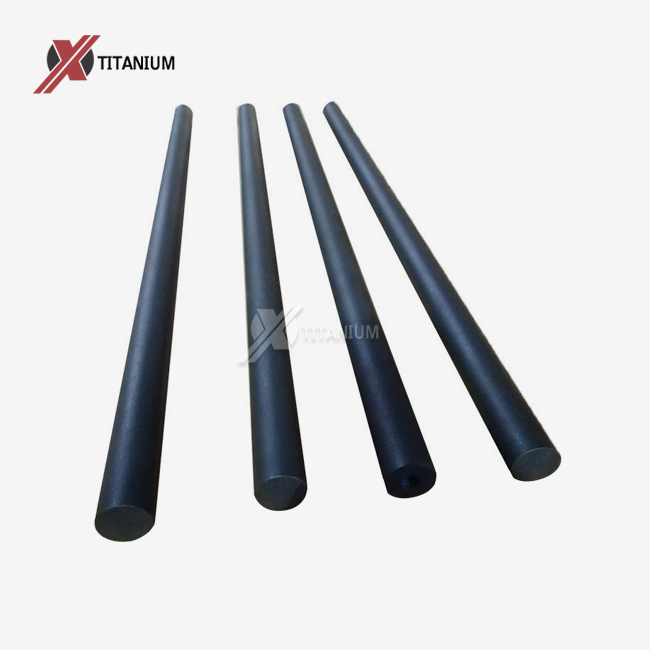
Understanding Titanium Anode Rods and Their Advantages
Titanium-based systems are different from inactive ones because they have an electrical safety device. The anode creates a controlled electrical current that runs through the water to the steel surface of the tank when it is linked to a low-voltage power source. This current stops the electrochemical reactions that cause rust and degradation, which in turn stops the natural rusting process. The whole tank wall becomes cathodic.
Material Composition and Technical Specifications
The base material is made of Grade 2 titanium that meets ASTM B265 and B348 standards. This grade of titanium was chosen because it is very strong and conducts electricity well. The rod's surface has a solid Mixed Metal Oxide covering that is usually made up of iridium oxide and tantalum oxide (IrO₂-Ta₂O₅). The coating is between 2μm and 10μm thick. This layer of catalysts allows oxygen evolution processes to happen while keeping the dimensions stable over the service life. The low density of 4.43 g/cm³ helps make the shape light, and the high melting point of 1668°C makes sure that the material stays stable even in high-temperature industrial settings.
Performance Characteristics in Demanding Environments
It is amazing how resilient titanium anodes are in a wide range of water chemicals. The material's built-in passivation layer stops chloride from causing pitting, which quickly breaks down other metals in salty conditions that are popular in naval engineering. Titanium is also stable in acidic environments like chemical processing plants because the oxide film stays intact over a wide pH range. Based on what our clients have told us, sites that work in areas with high-hardness water have constant performance without the corrosion problems that happen with regular magnesium rods.
Pay close attention to the electrical conductivity qualities of the titanium anode rod. In-home devices, the operating voltage stays below 3V, and the current flow changes automatically based on the resistance of the water. This self-regulating behavior provides the best safety while using very little power—often less than 2 kWh per year. Grade 2 titanium has a tensile strength of 480 MPa, which is high enough to handle and install without worrying about it deforming.
Advantages for Industrial Water Heating Systems
A lot of practical perks are important to commercial and industry users. Because they aren't replaceable, there is no planned pause for anode check and replacement, which is a big plus for places where having hot water all the time is essential. Hotels, hospitals, and factories have said that maintenance checks were done anywhere from twice a year to once a year, and the only things that were done were to make sure the electrical connections were correct and clean any material buildup off the rods.
Another useful benefit is that tank guarantee compliance. A lot of manufacturer's guarantees say that the anode protection has to work, but regular rods often lose their effectiveness between checks. Titanium anode power sources have LED warning lights that show right away if the system is working. This lets facility managers fix problems before they cause damage to the tank. This ability to watch things before they break is in line with current methods for predictive repair.
Titanium Anode Rods vs Traditional Anode Rod Materials
When looking at material choices, it's important to know how sparing and applied current systems work differently. Usually, magnesium, aluminum, and zinc anodes work through galvanic reactions, corroding on purpose to move electrons that keep the steel tank safe. This process wears down the anode material, so it needs to be replaced every so often. It also adds metal ions to the water, which can lower its quality and cause sediment to build up.
Comparative Performance Analysis
Because they have a high working potential and work well in high-resistance water, magnesium anodes are still the most popular material used as a sacrifice. A common magnesium rod should last between 2 and 5 years under regular use, but this depends on the pH of the water, the temperature, and how often the tank is used. The results of rust fall to the bottom of the tank as white or gray sludge, slowly lowering its efficiency and volume. Facilities that use softened water or water with a lot of dissolved solids may experience faster consumption, which means that replacements may be needed every 18 to 24 months instead of every 36 months.
Anodes made of aluminum-zinc metal have become options for places that have problems with the smell of hydrogen sulfide because they make less hydrogen gas during the galvanic reaction. The useful life is a little longer than pure magnesium—on average 3 to 6 years—but performance changes a lot depending on the pH of the water. The starting cost is usually 30–40% higher than magnesium counterparts, which makes them more of a niche option than a normal requirement.
Titanium impressed current anodes work in a completely different way. The Mixed Metal Oxide-coated surface doesn't dissolve; instead, it speeds up electrochemical processes that send a defensive current to the tank. Service lives that have been documented run from 10 to 20 years, which is pretty much the same amount of time that the water heater itself will work. Electrochemical weathering wears away at the covering over time, but anodes that were made correctly keep their defensive ability for the full length of their estimated service life. At Chuanglian, we put our goods through strict coating adhesion tests and rapid life tests to make sure they meet performance standards before they hit purchase specs.
Cost-Effectiveness and Total Ownership Considerations
When buying something, the original cost of a titanium anode system is usually three to five times the cost of a magnesium rod. This can cause budget-conscious buyers to be wary. When repair regularity and work costs are taken into account, the total cost breakdown changes a lot. If a facility needs to change magnesium rods every three years, it will have to put 5–6 anodes over the course of 15 years. Each one will require draining the tank, sending out a worker, and shutting down the system. The single titanium anode fix gets rid of these ongoing costs and gives better security all the time.
Most of the time, the most expensive parts of maintenance plans for a titanium anode rod are the labor and downtime that they cause. In big industrial systems, draining the tank to change the anode can take 4 to 6 hours, plus time for the water to heat back up. When business rates for building operations are used, these breaks often cost more than the anode itself. Titanium systems have longer repair gaps, which lowers these soft costs to almost nothing.
Application-Specific Material Selection Guidance
When choosing anode materials, people who work in procurement should think about water chemistry research. High-sulfate water conditions are good for titanium systems because magnesium anodes tend to help sulfate-reducing bacteria grow faster, which makes hydrogen sulfide, which smells like bad eggs. The insoluble titanium rod gets rid of the food source these bacteria need, getting rid of smell problems for good without changing the water treatment system.
Titanium's wide working window is helpful for places where the water chemistry changes, like places where public water sources change with the seasons. Traditional protective anodes might work well in some situations but stop working quickly when the chemical changes. The imposed current method keeps protecting no matter how much salt is in the water, how much total dissolved solids is in the water, or how the pH changes.
Lifecycle and Maintenance of Titanium Anode Rods
Knowing how long an item is expected to last in different situations helps buying teams correctly predict when it will need to be replaced and set the right budget. Oxygen evolution processes that happen during regular security function are the main way that the Mixed Metal Oxide covering wears away over time. The rate of decline is affected by the working temperature, the thickness of the coating, and the current density.
Longevity Benchmarks Across Industrial Environments
Standard home systems that work at normal temperatures (120–140°F) and offer cathodic protection at current levels of 1-3 mA usually last between 15 and 20 years. In commercial settings that need to work at higher temperatures (150–180°F) and with more power, the lifespan may be between 10 and 15 years. Even with low figures, these lengths of time are a lot longer than the standard 2–5 years for regular anodes.
A 1,000-gallon industrial water heater serves an office complex from a city building we worked with. After having to change the magnesium anode every year because it kept running out, they put in a titanium impressed current system in 2008. The anode stayed fully functional until 2023, protecting the system for 15 years with only yearly eye checks. The facility found that their total security costs were 67% lower than they were with their old repair plan, taking into account the cost of materials, labor, and not having to replace tanks.
Maintenance Best Practices and Inspection Protocols
When maintained properly, the defensive ability is maximized and the service life is extended to the upper end of what is rated. Most systems only need to be inspected once a year, and the inspections should focus on three main points. The power source warning light should stay lit up in green all the time. This means that the circuit is still connected and the safety is working. Any difference, like red, orange, or blinking lights, means that the problem needs to be looked into right away.
In order to check the titanium anode rod physically, the tank must be opened, but it does not have to be completely drained. Mineral growth or scale on the rod surface can make it harder for current to flow and safety to work as well. During the yearly service, these deposits are usually removed with a soft brush or cloth. If there is a lot of hardening, light acidic cleaners may be needed, but care must be taken not to damage the Mixed Metal Oxide coating. At Chuanglian, our technical paperwork gives full cleaning instructions for different types of water chemistry.
The third important step is the stability of the electrical link. Corrosion at the point where the anode rod connects to the power source can make the resistance higher and the safety current lower. Using dielectric grease during installation keeps wetness out, and checking the connections once a year to make sure they are safe and clean keeps the system reliable. Facilities that work in high-humidity areas or have air problems should have their inspections done every other year instead of every six months.
Replacement Indicators and Efficient Changeover Procedures
Titanium anode rods last a lot longer than other materials, but they will still need to be replaced eventually as the layer wears away. Key signs include red or error lights staying on the power source even though the connections have been checked, coating loss that shows the titanium base below, or drops in protection current below levels needed for the tank size. The technical specs for water heaters usually list the minimum current needs based on the size and shape of the tank.
The steps for replacement are the same as the steps for installation. The tank only needs to be drained to a level below the anode port, which cuts down on downtime by a large amount compared to full system cleaning. Verifying thread compatibility is important for making sure the seal works right. Most systems use 3/4-inch NPT threads, but checking against tank specs stops problems with threads not working with tanks. Leak-free operation is guaranteed by using thread glue that is approved for contact with drinkable water. The whole replacement process, including refilling and restarting the system, usually takes one to two hours.
Procurement Considerations for Titanium Anode Rods
When looking for suitable providers, you need to look at their professional skills, quality control methods, and facilities for after-sales support. The titanium processing business has a lot of barriers to entry, and suppliers' reputations, licenses, and track records of trust often matter more than price when buying things.
Supplier Evaluation Criteria and Quality Verification
Certifications for materials are the basis for quality security. The ASTM B265 and B348 approvals show that the base material meets the standards for Grade 2 titanium that are used in the business. ISO 9001 approval shows that quality control systems have been recorded. However, aircraft and medical-grade sources often have extra certifications like AS9100 or ISO 13485. At Chuanglian, we have detailed systems for tracking materials that keep track of each production batch from the time we receive the raw materials to the time we do the final check. This gives buying teams written proof that we've met all the requirements.
The Mixed Metal Oxide coating is the most complex part in terms of technology, and the quality of the coating has a direct effect on how long it lasts. Suppliers you can trust will give you information on covering thickness, bonding test results, and increased life test data. Multiple sintering steps at controlled temperatures are needed for the finishing process, and production skill has a big impact on the quality of the finished product. When evaluating a provider, asking for finishing specification sheets and details on quality control methods can help you tell the difference between high-quality goods and cheaper ones.
A supplier's ability to test shows how committed they are to quality assurance. Testing for hardness makes sure that the material was processed and heated correctly. Bend testing confirms that the material is flexible and that it hasn't become less flexible during preparation. Hydrostatic testing of threaded parts makes sure they don't leak when they're under pressure. Suppliers who have their own testing tools have more control over the quality of their products than those who only rely on third-party proof.
Custom Specifications and Bulk Purchasing Strategies
The standard sizes are 20mm, 25mm, and 30mm in diameter, and 1000mm and 2000mm in length. However, special sizes can be made to fit specific needs. Larger business tanks may need longer rods to make sure that the current flows evenly throughout the tank, while setups with limited room profit from small designs. Custom specs have allowed us to make everything from 15mm diameter rods for home retrofits to 40mm diameter units for commercial storage tanks holding more than 5,000 gallons.
Distributors, original equipment makers, and big facility owners who are in charge of multiple sites can save money by buying in bulk. When providers make volume promises, they can better plan their production schedules and lower the cost per unit. You can plan your budget and make sure the supply chain works reliably by negotiating yearly supply deals with clear price levels and promised wait times. Leaving room for reviewing the specifications and making changes to the design can help keep things flexible as the needs of the application change.
Choices of surface finish affect both how well it works and how well it fits with other parts. Bright and shiny surfaces look nice for projects that people will see, but they don't work any better than pickled or acid-cleaned finishes in terms of functionality. Sandblasting makes surfaces rough, which may help coatings stick better in some manufacturing processes. However, this is more useful for specific industry uses than for regular water heater safety. Instead of automatically choosing high-end choices that don't help with functionality, procurement specs should make sure that the surface finish requirements match the real functional needs.
Logistics, Storage, and Delivery Considerations
Shipping titanium goods is different from shipping common materials because of their value density and the way they need to be handled. The right packing keeps the surface from getting damaged during shipping. This is especially important for Mixed Metal Oxide-coated anodes, since the stability of the coating directly affects performance. Our standard packing includes protected bags and padded crates that keep the state of the goods while they are being shipped internationally.
Best methods for storage keep the quality of the product until it is installed. Titanium anode rods should be kept in dry places where they won't get damaged by mechanical forces. The titanium base is not affected by water, but the Mixed Metal Oxide layer can pick up dirt on the surface that needs to be cleaned before it can be installed. The best way to protect rods until they are used is to keep them in their original package. Facilities that keep stock for more than one place should use first-in, first-out rotation, even though the goods don't really have a shelf life when they are kept properly.
Lead time planning takes into account how things are made and how they are shipped internationally. Standard sizes usually ship in two to four weeks, but special sizes may take six to eight weeks, based on when they are made. Setting up plans for expected demand lets sellers keep a store of regularly ordered items, which cuts down on lead times for repeat orders. Strategic buyers place yearly orders with arrival dates that are spread out. This way, they can be sure that materials will be available for planned repair windows and avoid the costs of keeping too much inventory on hand.
Real-World Applications and Case Studies
The benefits of titanium anode technology in many different industries have been proven by data from real-world applications. Performance reviews from sites that work in tough conditions show that the material is reliable and cost-effective when it is put and designed correctly.
Commercial Facility Performance Documentation
Between 2015 and 2018, a regional hospital system with seventeen locations in the southwestern US switched from magnesium sacrificial anodes to titanium impressed current systems to protect their water heaters. The choice to buy came after a test installation at their biggest site, where the support team kept track of results over 18 months. The test system got rid of complaints about sulfur smells in patient care areas near mechanical rooms. It also cut the number of calls to emergency services for hot water problems by 73% and ran nonstop without any help during the trial period.
After being fully implemented across all of their facilities, the system showed measurable cost saves during their 2022 operations review. The number of maintenance hours spent on fixing water heaters dropped by 61%, which freed up expert staff to work on more important building projects. The uptime for the hot water system went from 94.3% to 99.7%, which meant that there were no interruptions in patient care. The total cost of ownership study showed that the investment would pay for itself in 4.2 years, and it would save $127,000 over 15 years compared to standard anode upkeep.
Industrial Application Insights
Titanium anode rods are used in a Louisiana chemical processing plant's process water heating system to provide 180°F water to reactor jacketing systems. The water chemistry has high amounts of chlorine from their source water, which has traditionally caused both tank internals and standard magnesium anodes to rust quickly. According to old maintenance records, the anode had to be replaced every 14 to 18 months, and the tank had to be replaced twice in 12 years because of rust damage.
During their 2016 system improvement, the building put in titanium impressed current anodes. After seven years of use, there have been no corrosion-related failures, no silt buildup that needed to be flushed out every year, and constant safety performance even though the source water's pH changes with the seasons. The engineering team said that the system's ability to handle the harsh water conditions was its main selling point, since other materials didn't work well enough in their system's surroundings.
Emerging Technology Developments
New developments in the formulas for Mixed Metal Oxide coatings have made them more useful in uses that are getting more difficult. Modern mixes of iridium and tantalum oxide that are made to work well at high temperatures keep their catalytic activity at temperatures close to 200°F. This means that they can be used in more industrial steam systems and solar thermal uses. More research into coating design, such as layered structures with tiered ratios, could lead to longer service lives. Tests in the lab have shown that coatings could be used for 25 to 30 years.
Another direction for growth is the integration with smart building control systems. Next-generation power sources have wifi connection and cloud-based tracking, which lets facilities management teams check on the state of security systems from afar. Predictive maintenance programs look at how much work is being done now to guess how long the coating will last and plan when to change it. These features are in line with the trend in the industry toward predictive asset management and data-driven maintenance efficiency.
Conclusion
Concerns about industrial and business water heating systems are addressed by the practical and financial benefits of titanium anode rods. The higher original investment is worth it because the protection lasts longer, hydrogen sulfide smell problems go away, upkeep tasks are cut down, and the security always works. When procurement pros look at the total cost of ownership instead of just the purchase price, they find that the reduced labor costs, no system downtime, and longer tank operating life add up to a lot of long-term value. To make sure the best standard, when choosing materials, you should think about the water pH, working temperatures, and the facility's ability to be maintained. Titanium impressed current devices keep getting better at what they do and being able to be used in more situations as manufacturing methods and covering technologies change.
FAQ
How often should titanium anode rods be inspected?
Most business and industrial setups can be monitored well with inspections once a year. During the checkup, the state of the power source sign should be checked, the electrical connections should be looked at for rust or looseness, and the rod surface should be looked at visually for too many mineral deposits. If the water is very acidic or the application is at high temperatures, it may need to be inspected every six months for the first two years to set a standard of performance.
Are titanium anodes suitable for saltwater or highly acidic environments?
When it comes to a wide range of tough situations, Grade 2 titanium has great rust protection. Titanium's natural passivation layer protects against chloride-induced cracking, which is useful in saltwater uses. Acidic settings with a pH level between 3 and 11 are well within the material's useful range. Titanium anodes are great for seaside sites, marine uses, and chemical processes because the Mixed Metal Oxide layer keeps the catalytic activity and structural integrity even when these conditions happen.
What warranties do manufacturers typically provide?
Suppliers with a good reputation back up their titanium anode systems with guarantees that last between 5 and 10 years. The warranty usually covers flaws in the coating, fails in the base material, and problems with power supply parts. Damage caused by poor installation, use outside of stated working limits, or not doing suggested upkeep is not covered. When evaluating a seller, going over the guarantee terms helps you figure out how confident the maker is in their goods and lowers the risk of making a purchase decision.
Partner with Chuanglian for Premium Titanium Anode Rod Solutions
Baoji Chuanglian New Metal Material Co., Ltd. has been handling titanium for more than ten years and can provide designed anode options for tough industrial uses. Our factory in Baoji, which is known around the world as the "City of Titanium," has strict quality control methods in place for every production batch. These include hardness testing, bend testing, and hydraulic proof. We can make specs that are exactly what you need. Our normal and special sizes range from 15mm to 40mm, and our lengths go up to 3000mm. All of our products are made from approved Grade 2 titanium and have quality Mixed Metal Oxide finishes.
During the whole buying process, our engineering team gives expert advice and helps with writing specifications, choosing materials, and making suggestions based on the unique needs of the application. As a straight producer of titanium anode rods, we don't have to pay markups to middlemen and can keep track of everything from the raw materials to the finished product. Whether you're looking for parts for an upgrade at a single plant or setting up supply deals for launches at multiple sites, our team can help you quickly and is backed by quality standards like ISO 9001 and ASTM compliance. Get in touch with our expert sales team at info@cltifastener.com or djy6580@aliyun.com to talk about your needs and get full product specs.
References
1. ASTM International. (2021). "Standard Specification for Titanium and Titanium Alloy Strip, Sheet, and Plate." ASTM B265-20a.
2. National Association of Corrosion Engineers. (2019). "Cathodic Protection Systems for Industrial Water Heating Equipment: Design and Performance Standards."
3. Journal of Applied Electrochemistry. (2020). "Long-term Performance Evaluation of Mixed Metal Oxide Coated Titanium Anodes in Cathodic Protection Applications." Volume 50, Issue 7.
4. American Water Works Association. (2018). "Water Quality and Corrosion Control in Commercial Building Systems."
5. Materials Performance Institute. (2022). "Total Cost of Ownership Analysis for Water Heater Corrosion Protection Technologies."
6. Industrial Heating Systems Quarterly. (2021). "Comparative Lifecycle Assessment of Sacrificial versus Impressed Current Anode Systems in Commercial Applications."
Learn about our latest products and discounts through SMS or email