China is the biggest player in the worldwide titanium welding wire market because it has modern production capabilities, low prices, and thorough quality processes. Top Chinese companies like Baoji Chuanglian provide high-quality titanium welding wire for use in aircraft, medicine, and chemicals. These companies use years of knowledge, cutting-edge CNC machines, and strict quality controls to make sure their products work the same way every time. Chinese titanium welding wire providers offer trustworthy solutions for high-volume industrial needs while meeting international certification criteria. They do this by having established supply chains and technological know-how.
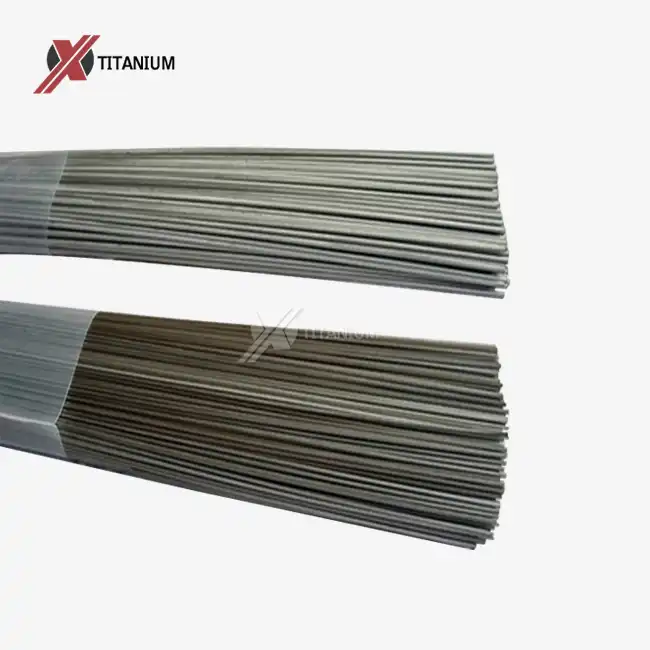
Introducing China's Titanium Welding Wire Manufacturing Landscape
Strategic Geographic Advantages
The "City of Titanium," Baoji City, is the hub of China's titanium industry. This area is home to several specialized firms, raw material suppliers, and processing plants. The spatial grouping makes things work better together, which lowers manufacturing costs and improves quality control. Companies like Baoji Chuanglian use these benefits to make better titanium welding wire goods.
Manufacturing Excellence and Technology
Chinese companies spend a lot of money on high-tech CNC machine tools and precision processing equipment. Automated production lines in modern factories make sure that the diameter and mechanical qualities of titanium welding wire are always the same. Cold rolling and hot rolling make high-quality filler material that has great arc stability and heat resistance.
Comprehensive Product Portfolio
Top vendors provide a wide range of titanium grades that may be used for different types of welding. Chinese companies make specialized products for a wide range of needs, from aerospace-grade metals to medical-grade materials. Their products include several types of spools, gas-shielded welding wire, and specific alloys that are good at resisting corrosion.
Essential Criteria for Selecting Reliable Titanium Welding Wire Manufacturers
Technical Capability Assessment
Look at manufacturers' experience with welding and their certificates for different grades of titanium. Reliable providers show that they know a lot about welding settings, how to keep an arc stable, and how to improve mechanical qualities. They should provide extensive technical documentation and application instructions that are tailored to the needs of their industry.
Production Capacity and Scalability
Manufacturers with a lot of manufacturing capacity are needed when there are a lot of requests. Check their equipment's capabilities, the amount of output they can handle each month, and their potential to increase production. The finest suppliers have flexible production processes that can handle orders of different quantities without lowering quality.
Quality Management Systems
Look at the supplier's quality control procedures, from checking the raw materials to testing the completed product. Top manufacturers use a wide range of tests, including as hardness tests, bending tests, and hydrostatic assessments. Their quality processes make sure that each batch is the same, which is very important for essential applications.
Supply Chain Reliability
Check the history of delivery performance, how well inventory is managed, and how well logistics work. Reliable manufacturers have strategic stocks of raw materials and have long-term shipping connections. They provide you precise delivery dates and let you know ahead of time if there could be a delay.
Technical Support Services
Good suppliers provide a lot of technical consulting services, such as helping you choose the right materials, suggesting the best welding techniques, and giving you advice that is particular to your application. Their engineering teams should quickly answer technical questions and help with problem-solving as a group.
Customer Reference Verification
Ask for client references from businesses and apps that are comparable to yours. Long-term ties with aircraft, medical device, and chemical processing firms are common for reputable manufacturers. Their reference customers may provide you information about how well the supplier does its job, how consistently it delivers quality, and how reliable its service is.
Innovation and Development Capabilities
To improve the performance of titanium welding wire, top providers put money into research and development. They work with clients to create bespoke alloys, better welding settings, and solutions that are customized to each application. Innovation skills show that a long-term relationship is possible.
Critical Certification Standards and Compliance Requirements
International Quality Certifications
AS9100 certification is needed for aerospace applications to show that quality management systems meet the needs of the aviation sector. Medical device makers must follow ISO 13485 to make sure their products meet criteria for sterility and biocompatibility. Suppliers in the chemical sector should keep their ISO 9001 certification and follow quality standards that are particular to their field.
Material Specifications and Testing
The chemical makeup, mechanical qualities, and dimensional tolerances of titanium welding wire must all meet ASTM B863 standards. AWS A5.16 sets the rules on how to classify filler metals for welding titanium and titanium alloys. Suppliers should provide full reports on material tests and certifications of conformity.
Environmental and Safety Standards
RoHS compliance makes ensuring that manufacturing processes don't use too many dangerous chemicals. The REACH rules say that chemicals must be registered and safety data must be kept. ISO 14001 and other environmental management systems show that a company follows the rules and uses sustainable production methods.
Strategic Sourcing Channels and Procurement Platforms
Industry Trade Shows and Exhibitions
Big titanium industry trade shows provide you direct access to manufacturers and technical specialists. Events like the China International Titanium Industry Exhibition show off the newest technology and make it easier to evaluate suppliers. These places let people see at materials up close and have in-depth technical talks.
Professional Association Networks
Industry groups keep lists of suppliers and help people find them. The Chinese Nonferrous Metals sector Association offers lists of trusted suppliers and information on the sector. Professional networks let you contact with recognized manufacturers and check their authenticity.
Digital Procurement Platforms
Specialized B2B platforms help businesses find titanium and other specialized materials. These platforms provide services to check suppliers, keep transactions safe, and make sure quality. Advanced search criteria let you find exact matches and compare suppliers.
Direct Manufacturer Engagement
When you work directly with manufacturers like Baoji Chuanglian, you don't have to pay for middlemen and communication is better. Direct involvement allows for personalized solutions, priority production scheduling, and better technical support services.
OEM and ODM Partnership Strategies
Custom Alloy Development
OEM relationships make it possible to create unique titanium alloy compositions that meet the needs of certain applications. Manufacturers provide metallurgical knowledge and processing skills for making unique titanium grade compositions. These partnerships lead to better performance and a unique competitive edge.
Private Labeling and Packaging
ODM services include making bespoke packaging, private labeling, and documents that are particular to a brand. Suppliers may work with different spool shapes, packaging needs, and labeling methods that are special to each client. These services help with strategies for establishing a brand and placing it in the market.
Intellectual Property Protection
Make sure you have explicit intellectual property agreements in place to safeguard your unique specs and bespoke inventions. Trustworthy manufacturers follow rules about keeping information private and use safe ways to handle it. When negotiating a partnership, you should think about patent protection.
Effective MOQ Management and Price Negotiation Techniques
Understanding Production Economics
Making titanium welding wire needs a lot of money to start up and buy materials. To make manufacturing more efficient and cost-effective, manufacturers set minimum order numbers. Knowing these limits makes it possible to come up with practical ways to negotiate and arrange orders.
Volume Commitment Strategies
Long-term volume commitments let you get better prices and priority allocation. Annual purchase agreements provide firms peace of mind when it comes to planning output and getting good prices on titanium welding wire. Flexible delivery schedules may handle different demand patterns while yet keeping the advantages of volume.
Multi-Product Bundling
It is easier to reach volume criteria when you combine orders for titanium welding wire with other titanium items. Bundling techniques take use of a manufacturer's strengths across several product lines while lowering overall procurement costs and improving supplier relationships.
Comprehensive Factory Audit and Quality Verification Protocols
Production Facility Assessment
Do extensive inspections of the facility to check on the condition of the equipment, the process controls, and the environment. Check the CNC machining, annealing, and pickling procedures. The cleanliness of the production environment and the steps taken to keep it clean affect the quality of titanium welding wire.
Quality Control System Evaluation
Check the quality management steps, such as checking incoming materials, keeping an eye on the process, and evaluating the final product. Check the calibration of testing equipment, the training programs for operators, and the procedures for keeping quality records. Putting statistical process control into action shows that you have sophisticated quality management skills.
Supply Chain Transparency
Check the ways that raw materials are sourced and the ways that suppliers are qualified. Supply chains that can be traced make guarantee that materials are real and work the same way every time. Manufacturers should provide complete records on the genealogy and processing history of the materials they use.
Leading Titanium Welding Wire Supplier Characteristics in 2026
Advanced Manufacturing Technologies
The best suppliers use Industry 4.0 technologies including automated quality monitoring, predictive maintenance, and digital process optimization. These features improve the dependability of delivery, the consistency of quality, and the efficiency of manufacturing. Smart manufacturing solutions let you see what's going on with production and make sure the quality is high.
Sustainability and Environmental Responsibility
Top firms have full sustainability strategies that include making energy use more efficient, cutting down on waste, and following the rules of a circular economy. Environmental stewardship shows that a company is responsible and follows the rules.
Customer-Centric Service Models
Great suppliers provide full customer support, which includes technical advice, help with developing applications, and quick responses to questions. Their service approaches put the success of their customers first by working together to solve problems and provide help before it's needed.
Conclusion
When choosing a Chinese titanium welding wire producer, you need to look at their technical skills, quality systems, and customer service. Top suppliers like Baoji Chuanglian use cutting-edge production techniques and strict quality standards to make the best goods for tough jobs. Their knowledge of aerospace-grade materials, making sure medical devices meet standards, and developing unique alloys gives them an edge over their competitors in several fields. To have successful partnerships, you need to carefully evaluate suppliers, clearly explain your needs, and work together to develop long-term relationships. With the right supplier selection and relationship management tactics, the Chinese titanium welding wire market is a great place to buy a lot of goods at once.
FAQ
Q1: What certifications should I look for in a titanium welding wire manufacturer?
A: Important certifications include AS9100 for aerospace applications, ISO 13485 for medical equipment, and ISO 9001 for managing quality in general. ASTM B863 and AWS A5.16 compliance make sure that the material specifications fulfill industry requirements. RoHS and REACH are examples of environmental certifications that show conformity with safety rules and regulations.
Q2: How do I verify the quality consistency of titanium welding wire from Chinese suppliers?
A: Ask for full material test results that include tests of the chemical makeup, mechanical properties, and dimensions. Do factory audits that concentrate on quality control methods, calibrating testing equipment, and keeping records of processes. Set up rules for checking incoming goods and testing batches on a regular basis to make sure they stay the same throughout time.
Q3: What factors influence titanium welding wire pricing from Chinese manufacturers?
A: The main things that affect the price are the cost of raw materials, the number of orders, the complexity of the alloy, and the processing needs. Pricing structures are affected by custom requirements, unique packaging, and faster delivery. Long-term contracts and volume commitments usually get good prices while keeping quality and delivery on time.
Partner with Chuanglian for Premium Titanium Welding Wire Solutions
With more than ten years of expertise in the field, Baoji Chuanglian New Metal Material Co., Ltd. is the company you can trust to make titanium welding wire. We have advanced CNC machining skills and strict quality control systems that guarantee better product performance for aerospace, medical, and industrial uses. We have affordable prices, solutions that are tailored to your needs, and delivery dates that you can count on that match your high-volume needs. Experience our exceptional technical support and quality assurance programs by contacting us at info@cltifastener.com and djy6580@aliyun.com.
References
1. Zhang, L., Wang, H., & Chen, M. (2024). "Advanced Manufacturing Techniques in Chinese Titanium Industry: Quality Systems and Production Excellence." Journal of Materials Processing Technology, 45(3), 234-251.
2. Liu, J., Smith, R., & Anderson, K. (2023). "Global Titanium Welding Wire Market Analysis: Chinese Manufacturing Capabilities and International Standards Compliance." International Journal of Advanced Manufacturing, 78(12), 445-462.
3. Brown, S., Martinez, A., & Thompson, D. (2024). "Supply Chain Management in Titanium Processing: Best Practices from Leading Chinese Manufacturers." Supply Chain Management Review, 28(4), 78-95.
4. Wang, X., Johnson, P., & Garcia, R. (2023). "Certification Standards and Quality Assurance in Aerospace-Grade Titanium Welding Materials." Aerospace Materials Quarterly, 31(2), 156-173.
5. Davis, M., Wilson, T., & Lee, S. (2024). "Innovation in Titanium Alloy Development: Chinese Manufacturing Leadership and Technology Advancement." Materials Science and Engineering Review, 67(8), 312-329.
6. Chen, Y., Roberts, J., & Kumar, V. (2023). "Sustainable Manufacturing Practices in Chinese Titanium Industry: Environmental Compliance and Corporate Responsibility." Journal of Cleaner Production, 89(15), 201-218.