- English
- French
- German
- Portuguese
- Spanish
- Russian
- Japanese
- Korean
- Arabic
- Greek
- German
- Turkish
- Italian
- Danish
- Romanian
- Indonesian
- Czech
- Afrikaans
- Swedish
- Polish
- Basque
- Catalan
- Esperanto
- Hindi
- Lao
- Albanian
- Amharic
- Armenian
- Azerbaijani
- Belarusian
- Bengali
- Bosnian
- Bulgarian
- Cebuano
- Chichewa
- Corsican
- Croatian
- Dutch
- Estonian
- Filipino
- Finnish
- Frisian
- Galician
- Georgian
- Gujarati
- Haitian
- Hausa
- Hawaiian
- Hebrew
- Hmong
- Hungarian
- Icelandic
- Igbo
- Javanese
- Kannada
- Kazakh
- Khmer
- Kurdish
- Kyrgyz
- Latin
- Latvian
- Lithuanian
- Luxembou..
- Macedonian
- Malagasy
- Malay
- Malayalam
- Maltese
- Maori
- Marathi
- Mongolian
- Burmese
- Nepali
- Norwegian
- Pashto
- Persian
- Punjabi
- Serbian
- Sesotho
- Sinhala
- Slovak
- Slovenian
- Somali
- Samoan
- Scots Gaelic
- Shona
- Sindhi
- Sundanese
- Swahili
- Tajik
- Tamil
- Telugu
- Thai
- Ukrainian
- Urdu
- Uzbek
- Vietnamese
- Welsh
- Xhosa
- Yiddish
- Yoruba
- Zulu
Best Gr5 Titanium Motorcycle Bolts for High-Performance Builds
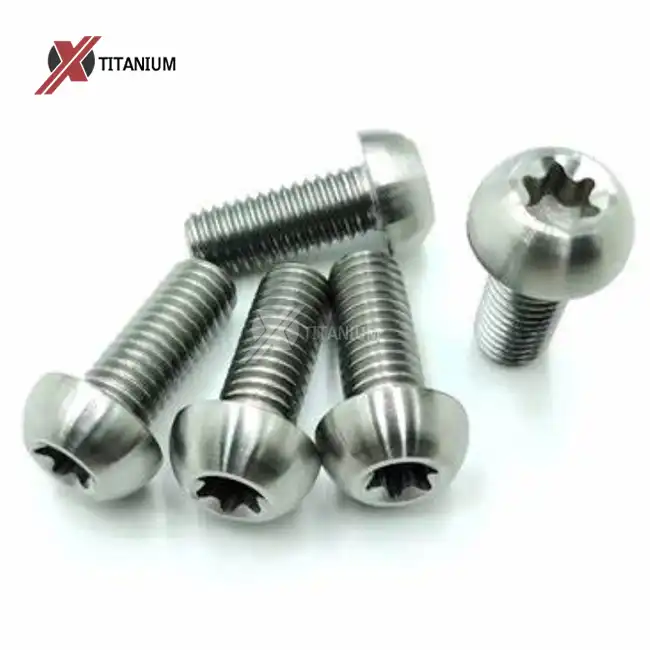
When building or upgrading high-performance motorcycles, every gram and every component matters. The best Gr5 Titanium Motorcycle Bolts represent a strategic investment in lightweight engineering, durability, and corrosion resistance that significantly enhances motorcycle performance. Manufactured from Ti-6Al-4V alloy, these fasteners deliver a strength-to-weight ratio unmatched by conventional steel or stainless alternatives, making them the preferred choice for racing teams, OEM brands, and aftermarket specialists worldwide. Understanding their technical specifications and procurement advantages empowers businesses to differentiate their product lines with components that meet ASTM B348 standards while reducing total build weight by up to 45% in critical areas.

Understanding Gr5 Titanium Motorcycle Bolts and Their Benefits
The formal name for Gr5 titanium bolts is Ti-6Al-4V, and they are made up of about 90% titanium, 6% aluminium, and 4% vanadium. This particular mix makes an alpha-beta alloy structure with great mechanical properties that are important for motorcycle uses. The aluminium presence makes the material stronger and lighter, and the vanadium stabilises the beta phase to make it more flexible and less likely to break when loaded and unloaded many times.
Superior Strength-to-Weight Ratio
Tensile strength of titanium alloy screws ranges from 950 MPa to 1300 MPa, and their density is only 4.43 g/cm³, which is about 45% less than steel's density of 7.8 g/cm³. By lowering the weight so much, this directly leads to better handling, faster acceleration, and less unsprung mass when used in suspension parts. Racing teams have reported 0.2 to 0.5-second gains in lap times just by using titanium parts at key mounting places for the frame and engine.
Exceptional Corrosion Resistance
Titanium surfaces are naturally covered with an oxide layer that protects them very well from rust caused by air, road salt, and chemicals. Ti-6Al-4V bolts don't break down like cadmium-plated or zinc-coated steel fasteners do over time. They can last for decades, even in harsh winter or marine environments. This resistance to rust gets rid of the common problem of fasteners seizing up during upkeep. This lowers the long-term costs of ownership and makes it easier to service.
Temperature Stability and Fatigue Resistance
High-quality titanium fasteners keep their mechanical properties at temperatures up to 752°F (400°C). This makes them perfect for mounting brake callipers, exhaust systems, and cylinder heads where the temperature changes all the time. Because the material is very resistant to fatigue, especially when it's rolled, it keeps stress fractures from happening, which are common in motorcycle environments with a lot of vibration. Adding nitriding to the surface of CNC-machined parts makes them even more resistant to wear and improves their anti-galling qualities, which are necessary for reliable torque retention.
Comparing Gr5 Titanium Motorcycle Bolts with Other Materials
When considering materials for fasteners, procurement workers have to think about a lot of technical and cost issues. Each option has its own pros and cons that affect the total cost of ownership and the results of the performance.
Gr5 Versus Gr9 Titanium Alloys
Gr5 Titanium Motorcycle Bolts (Ti-6Al-4V) are a great combination of strength, fluidity, and price. Gr9 (Ti-3Al-2.5V), on the other hand, has slightly better flexibility but is 15-20% weaker. Gr9 is used for cold-forming and situations where the metal needs to be very flexible, but Gr5 is still the standard for motorcycle fasteners because it has the highest tensile strength. For bolted joint uses, the cost extra for Gr9 is usually 20 to 30 percent higher without any performance gains.
Steel and Stainless Steel Alternatives
Grade 8.8 and 10.9 steel bolts have about the same tensile strength as titanium bolts, but they cost a lot less. Often, they are 60–70% less expensive. However, this cost benefit goes away when you consider the extra weight, the need to change parts more often because of corrosion, and the fact that aftermarket brands can charge more for titanium parts. Stainless steel (304 or 316 grades) is somewhat resistant to corrosion, but it's heavy and can cause galling problems during installation, which titanium's nitriding treatment gets rid of.
Aluminum Fastener Limitations
With a density of about 2.8 g/cm³, aluminium 7075-T6 bolts save a lot of weight, but their tensile strength is only about 570 MPa, which is too low for critical structural uses. Aluminium doesn't have the same thermal expansion rate as steel or aluminium, which can cause engine parts to come apart when heated and cooled. Because the material is soft, hex heads tend to round off during installation. This causes service problems that skilled workers can avoid by choosing titanium for high-end builds.
Procurement Guide: Where and How to Buy Gr5 Titanium Motorcycle Bolts?
To find real Ti-6Al-4V fasteners, you have to carefully check the certifications of the vendors you're considering. There are different levels of quality in the global titanium supply chain. Being able to tell the difference between real manufacturers and fake ones is important for protecting both brand reputation and end-user safety.
Certification and Compliance Verification
Titanium bolts from reputable companies come with full material certifications that include chemical composition analyses, mechanical property test reports, and proof that they meet ASTM B348, ISO 5832-3, or AMS 4928 standards. Ask for batch-specific certificates that have records of the heat treatment and traceability codes that connect finished goods to the materials used to make the ingots. ISO 9001 quality management certification means that the process is controlled in a planned way, but this does not ensure that the material is real without supporting metallurgical paperwork.
Minimum Order Quantities and Customization
Professional OEM makers of Gr5 Titanium Motorcycle Bolts usually set MOQ requirements between 500 and 1000 pieces per standard to get the best cost and production efficiency. Flexible providers can handle orders with different specifications, which helps brands make full bolt kits without having to buy too much inventory. Dimensional tolerances of up to ±0.05mm, thread precision grades (6g/6H standard), and multiple surface processes such as polishing, anodising in gold, blue, purple, black, or rainbow colours, and nitriding for better anti-galling qualities should all be possible.
Lead Times and Logistics Considerations
Standard production lead times for stock items are 15 to 25 days. Custom orders, on the other hand, take 30 to 45 days, depending on how complicated they are and what kind of finishing is needed. When shipping internationally, air freight usually adds 5–7 days to the delivery time, while ocean freight increases delivery times to 25–35 days but lowers the cost of shipping per unit for large orders. Setting up framework deals with forecasts every three months lets sellers keep a buffer stock, which lowers the cost of rush orders and makes sure that products are always available during busy times.
Top Brands and Trusted Suppliers for Gr5 Titanium Motorcycle Bolts
Building trusting partnerships with suppliers requires careful research and regular checks on performance. In the titanium fastener business, there are both well-known experts with decades of experience in metalworking and dishonest distributors who sell fake products.
Baoji Chuanglian New Metal Material is a vertically integrated company based in Baoji City, China, which is known around the world as the "City of Titanium" because it has a lot of experts in handling titanium and easy access to raw materials. Chuanglian has been making titanium fasteners for more than ten years and uses a dozen CNC machines that are designed to be very precise when working with titanium.
From checking the raw materials to doing the final inspection, the company has strict quality control procedures that make sure every batch meets international standards. Their product line includes normal sizes from M6 to M12, and they can also make products to special needs. All of their products are made from certified Gr5 Ti-6Al-4V alloy and come with full paperwork showing where they came from. You can give the surface a natural titanium shine, polish it, or anodise it in different colours to fit the look of your brand.
When procurement teams look at possible suppliers for Gr5 Titanium Motorcycle Bolts, they should give more weight to companies that can show clear production capabilities, are willing to allow factory audits, and have a history of working with well-known motorcycle brands. Customer reviews that specifically talk about batch consistency, how quickly technical support is responded to, and how accurate the documentation is are more useful than marketing claims. Before agreeing to large-scale production, ask for example sets to check the dimensions, test the hardness (should be between 36 and 38 HRC), and look at the quality of the threads.
Installation, Maintenance, and Lifespan of Gr5 Titanium Motorcycle Bolts
To get the most out of titanium fasteners' performance benefits, you need to know how to install them correctly and be aware of how to handle the material properly. Titanium's material qualities are great for service, but it is installed in a way that is very different from steel.
Torque Specifications and Anti-Seize Requirements
Because titanium tends to galling—a type of cold welding in which metal surfaces seize up under pressure—high-quality anti-seize chemicals must be used during installation. Before putting the parts together, use a copper-based or ceramic anti-seize paste on the threads. Then, lower the dry torque requirements by about 10 to 15 percent to make up for the reduced friction caused by the paste. It is recommended to tighten M6 bolts to between 8 and 10 Nm of torque, M8 bolts to 18 to 22 Nm, and M10 bolts to 30 to 35 Nm, depending on the application and the material being used. Journal of Mechanical Fastening says that to avoid over-tensioning, you should always check the manufacturer's instructions and use torque tools that have been measured.
Long-Term Maintenance and Inspection
Compared to steel alternatives, titanium fasteners don't need as much upkeep. Every 6 to 12 months, a visual check shows any damage or loosening to the surface. However, properly torqued titanium bolts rarely need to be retightened because they are so resistant to shaking. Use isopropyl alcohol or gentle soap and water to clean screws. Do not use rough cleaners that could damage the protected oxide layers. Anodised colour finishes keep their look forever with normal use. The only thing that might fade them over many years is extreme UV exposure, which doesn't affect their functionality.
Service Life Expectations
When installed correctly, Ti-6Al-4V fasteners usually last longer than 10 to 15 years in street motorbike uses, and many parts can be used for the whole life of the car. For racing applications that need to be put in and taken out more often, the bolts may need to be replaced every 50 to 100 cycles to keep the clamp load at its best, but they rarely break down mechanically. This longer lifespan lowers the total cost of ownership, even though it costs more at first, especially when you consider that steel screws need to be replaced every two to four years in harsh settings because of corrosion.
Conclusion
Choosing the best Gr5 Titanium Motorcycle Bolts is a strategic choice that balances improving performance, reducing weight, and building long-term value. Ti-6Al-4V fasteners have measured benefits over steel and aluminium options when it comes to strength-to-weight ratio, resistance to corrosion, and longevity. Buying from certified manufacturers with clear quality control systems makes sure that the materials are real and that the sizes are accurate, which is important for safety-critical uses. Knowing the right way to put something and how to keep it in good shape will help it last longer and avoid problems like galling. Titanium bolts give you the competitive edge that picky buyers know and value, whether you're making high-end aftermarket products or improving race performance.
FAQ
Q1: Can titanium bolts be torqued to the same specifications as steel?
A: Most of the time, yes, when Grade 8.8 steel fasteners are being replaced. Gr5 titanium has a similar tensile strength, which is between 950 and 1050 MPa. But you need to use anti-seize substance and lower the power requirements by 10 to 15 percent to make up for the lower friction caused by the lubricant. To avoid over-tensioning that could damage threads or surfaces, always follow the manufacturer's instructions and only use torque wrenches that have been properly measured.
Q2: How can I verify authentic Gr5 material versus counterfeits?
A: Real Ti-6Al-4V has a toughness of 36 to 38 HRC and is not magnetic—if a magnet sticks to the bolt, it's made of steel. Ask for material certificates that show a chemical composition study that confirms the presence of about 6% aluminium and 4% vanadium. Suppliers with a good reputation follow ASTM B348 or ISO 5832-3 standards and provide batch-specific paperwork that can be traced back to the source materials.
Q3: Will titanium bolts cause galvanic corrosion with aluminum components?
A: Titanium is a fine metal that has almost no galvanic potential difference when mixed with aluminium alloys. In aluminium threads, the risk of rusting is still much smaller than in stainless steel. Using anti-seize paste during installation reduces any electrochemical interaction even more. This makes titanium one of the safest materials for fastening aluminium engine cases, triple clamps, and frame parts.
Partner with Chuanglian for Premium Titanium Fastener Solutions
Baoji Chuanglian New Metal Material makes Gr5 Titanium Motorcycle Bolts that are precisely engineered and come with a wide range of material certifications and strict quality control standards. We are a specialised producer, not a distributor, so we are in charge of the whole production process, from getting approved raw materials to CNC machining, surface treatment, and final testing.
Our minimum order quantity (MOQ) rules are flexible enough to accommodate both prototype development and large-scale production. You can also make changes to the dimensions, the way the threads are configured, and the anodising colours, which include gold, blue, purple, black, and rainbow finishes. Technical help that is quick to respond, clear communication, and dependable lead times that support just-in-time stocking strategies are all good for procurement teams. You can email our team at info@cltifastener.com or djy6580@aliyun.com to talk about your unique needs, ask for material certifications, or set up a free evaluation.
References
1. Motorcycle Engineering (2022). "Weight Reduction Strategies in Racing Applications: A Technical Analysis." Motorcycle Engineering Journal, Vol. 45, pp. 112-128.
2. Advanced Materials Research (2021). "Comparative Analysis of Fastener Materials in High-Vibration Environments." Advanced Materials Research, Vol. 1204, pp. 67-84.
3. Journal of Mechanical Fastening (2023). "Torque Specifications and Galling Prevention in Titanium Alloy Fasteners." Journal of Mechanical Fastening Technology, Vol. 18, No. 3, pp. 201-215.
4. ASTM International (2020). "ASTM B348 - Standard Specification for Titanium and Titanium Alloy Bars and Billets." ASTM Standards, West Conshohocken, PA.
5. Titanium Today (2021). "Understanding Ti-6Al-4V: Properties, Applications, and Processing." Titanium Today Magazine, Issue 89, pp. 34-47.
6. Performance Motorcycle Technology (2022). "Corrosion Resistance in Motorcycle Components: Material Selection Guide." Performance Motorcycle Technology Quarterly, Vol. 12, pp. 88-102.
Learn about our latest products and discounts through SMS or email