- English
- French
- German
- Portuguese
- Spanish
- Russian
- Japanese
- Korean
- Arabic
- Greek
- German
- Turkish
- Italian
- Danish
- Romanian
- Indonesian
- Czech
- Afrikaans
- Swedish
- Polish
- Basque
- Catalan
- Esperanto
- Hindi
- Lao
- Albanian
- Amharic
- Armenian
- Azerbaijani
- Belarusian
- Bengali
- Bosnian
- Bulgarian
- Cebuano
- Chichewa
- Corsican
- Croatian
- Dutch
- Estonian
- Filipino
- Finnish
- Frisian
- Galician
- Georgian
- Gujarati
- Haitian
- Hausa
- Hawaiian
- Hebrew
- Hmong
- Hungarian
- Icelandic
- Igbo
- Javanese
- Kannada
- Kazakh
- Khmer
- Kurdish
- Kyrgyz
- Latin
- Latvian
- Lithuanian
- Luxembou..
- Macedonian
- Malagasy
- Malay
- Malayalam
- Maltese
- Maori
- Marathi
- Mongolian
- Burmese
- Nepali
- Norwegian
- Pashto
- Persian
- Punjabi
- Serbian
- Sesotho
- Sinhala
- Slovak
- Slovenian
- Somali
- Samoan
- Scots Gaelic
- Shona
- Sindhi
- Sundanese
- Swahili
- Tajik
- Tamil
- Telugu
- Thai
- Ukrainian
- Urdu
- Uzbek
- Vietnamese
- Welsh
- Xhosa
- Yiddish
- Yoruba
- Zulu
Titanium Bike Bottle Cage Bolt: A B2B Buyer's Complete Guide
When you're running a bike parts e-commerce store or managing procurement for a bicycle brand, finding the right component supplier can make or break your margins. Titanium bike bottle cage bolts represent an ideal entry point into the premium fastener market—lightweight, visually striking, and surprisingly profitable. These precision-machined Grade 5 Ti-6Al-4V bolts solve real problems for bike shops and online sellers: they resist corrosion from sports drinks and sweat, eliminate the risk of seized hardware on carbon frames, and offer customers an affordable aesthetic upgrade. With retail prices ranging from $3 to $8 per bolt and wholesale costs around $0.50 to $1.00, the profit margins speak for themselves. This guide walks you through everything you need to know to source, evaluate, and stock titanium bottle cage bolts that keep customers coming back.

Understanding Titanium Bike Bottle Cage Bolts – Properties and Benefits
All of the difference is in the material that these fasteners are made of. Because of its unique physical properties, Ti-6Al-4V alloy, which is also known as Grade 5 titanium, rules the market for bicycle parts. It weighs about 45% less than stainless steel and has a tensile strength of 950 MPa. Its density is only 4.43 g/cm³. When people are very concerned about every gram on their race bikes, this strength-to-weight ratio is very important. Titanium forms a passive oxide layer that self-heals and never corrodes in the air, unlike aluminium alternatives that round out under stress or rust when exposed to electrolyte-rich fluids.
Why Titanium Outperforms Steel and Aluminum?
Bolts made of steel rust. Strip of aluminium nuts. Titanium is the only material that can solve both problems. Because Grade 5 titanium is fatigue resistant, these fasteners won't come loose even when riding on rough roads or trails. This is a big plus for gravel and bikepacking setups where bottle cages carry heavy loads. Salt spray can damage regular steel gear in just a few months, but titanium doesn't get damaged by it. Coastal bike shops especially like this feature. The resistance to corrosion makes the product last a lot longer. Independent tests show that titanium bolts keep their shape after being exposed to salt spray for more than 5,000 hours, while stainless steel starts to show damage after just 500 hours. This means that fewer warranty claims are made and retailers get higher customer satisfaction scores.
The Business Case for Stocking Titanium Fasteners
The real magic for online sales is the anodised colour choices. Conversion rates go up when customers see a line of gold, blue, purple and rainbow bolts along with the standard silver ones. Customisation is big in bicycle groups, so people buy things over and over again. For example, riders match the colour of their bolts to their bar tape, saddles or frame accents. Most bikes need between two and four nuts, and buyers rarely stop at just one set. Because it can be used to sell other products, titanium gear is a great way to get people to buy higher-margin parts.
Selection Criteria for Titanium Bike Bottle Cage Bolts – A B2B Decision Support Approach
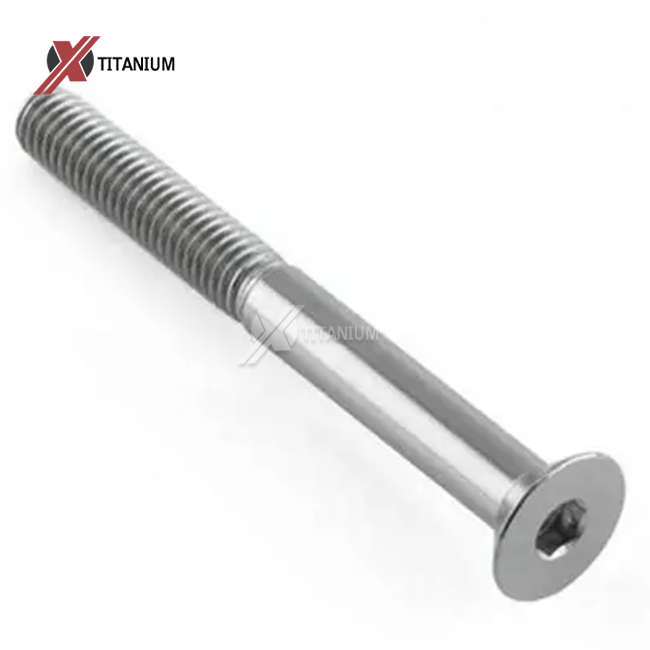
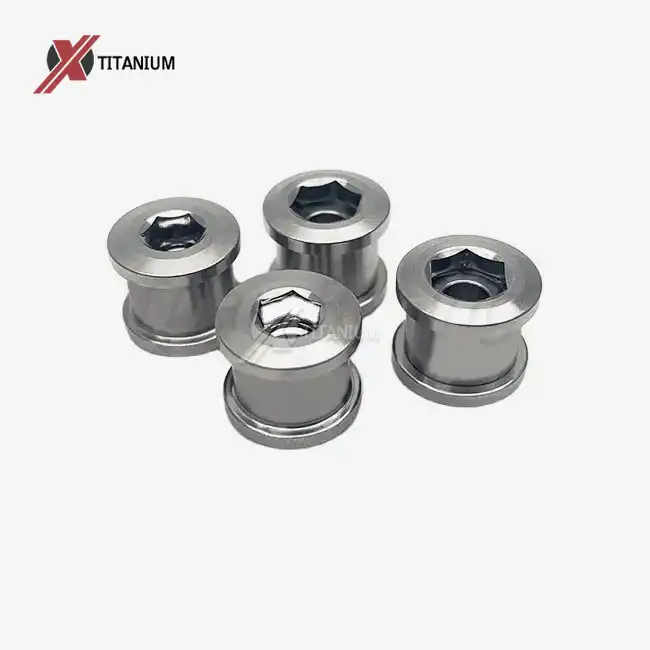
To make smart purchases of Titanium Bike Bottle Cage Bolt, you must first know what features are important. Standard mounting for bottle cages uses M5 x 0.8mm threads, and lengths are usually between 12mm and 16mm, depending on how deep the frame rivnut is. There are different types of heads, such as hex socket (3mm or 4mm), Torx, and button heads. Each one looks different and works with different tools in different ways.
Critical Specifications for Quality Assurance
Thread accuracy determines whether your inventory gets five-star reviews or returns that cost a lot of money. ISO metric thread tolerances of 6g class make sure that the fitting goes smoothly and that delicate carbon frame parts don't get cross-threaded. Reputable manufacturers test every production batch with a Go/No-Go gauge to make sure the dimensions are correct. To keep the fit the same across a range of frame shapes, length error should stay within ±0.1mm and head width should stay within ±0.05mm.
Ratings for torque ability are also very important. Titanium bolts can handle a lot of force, but the suggested fitting torque is only 4 to 5 Nm. This is because the frame rivnuts and bottle cage materials set this limit, not the bolts themselves. When suppliers give torque-to-yield test results, it shows that they care about engineering standards, not just making material claims.
Evaluating Supplier Reliability and Certifications
Minimum order numbers show where a seller stands. MOQs of less than 500 pieces and a range of colours show that the seller can work with small stores and test situations. Larger businesses may need runs of 5,000 or more items to get large savings, but suppliers who are flexible can meet the needs of both markets. When it comes to holiday cycling sales, lead times are very important. Suppliers with ready-to-ship items can ship within 7 to 10 days, but special anodising batches could take 3 to 4 weeks.
XRF spectrometry confirms that the titanium you're getting is real Grade 5 titanium and not a softer commercially pure version that doesn't work as well. Ask for proof of materials that meet ASTM B348 standards. Manufacturers who care about quality also give surface finish inspection reports that show there are no machining burrs that could damage carbon parts or trap moisture.
Installation and Maintenance of Titanium Bike Bottle Cage Bolts – Enhancing Product Reliability
Your customers need help to get the most out of these Titanium Bike Bottle Cage Bolt parts' lifespan. Because titanium tends to galle—a cold-welding process in which surfaces stick together under pressure—it needs to be handled in a certain way. Applying copper-based or titanium-specific anti-seize compound to threads before installation stops problems with removal in the future. This easy step gets rid of the main reason why people are unhappy with titanium gear.
Proper Installation Techniques
Torque wrenches take away the need to guess and keep you from overtightening. Setting the wrench to 4.5 Nm gives the best gripping force without putting too much stress on the frame parts. Customers should not use impact drivers or power tools. Tightening by hand with good hex keys gives better physical feedback and stops quick overtorque that damages carbon fibre or strips heads.
Routine Maintenance and Troubleshooting
Titanium doesn't rust, but that doesn't mean it doesn't need any maintenance. Inspections done on a regular basis find mechanical wear before it breaks. Every 500 miles, especially on bikes that are constantly vibrating, look for signs of weakening. Replacement of bolts that show wear marks on the hex socket walls stops fails in the middle of a ride. Titanium, unlike steel, doesn't show signs of rust before it breaks in a big way. This makes inspection schedules even more important.
Market Overview and Procurement Strategies for Titanium Bike Bottle Cage Bolts
According to an industry report, the global market for bicycle parts is still growing. High-end accessories will grow at an annual rate of 8.2% until 2025. As carbon frames become more popular in markets other than professional racing, riders who want to lose weight drive the demand for titanium improvements. Online stores like Amazon consistently see a rise in the number of searches for "titanium bottle cage bolts" in the spring and summer.
Cost Optimization Through Strategic Sourcing
To get bulk savings for Titanium Bike Bottle Cage Bolt, you need to know how production economics really work. The main things that drive up costs are CNC cutting and anodising. Because PVD finishing processes are so complicated, suppliers who offer rainbow or oil-slick finishes get 20–30% more money than those who only offer single-color runs. Ordering mixed colour mixes—for example, 40% natural finish, 30% black, and 30% mixed colors—balances the look of your inventory with the cost of it.
For total cost of ownership estimates, transportation must be taken into account. Titanium is lighter than steel options, which lowers shipping costs. However, small fasteners get lost in big containers. From Asia-Pacific sources, air freight for orders of 2,000 pieces might cost $150 to $200. However, sea freight saves money on orders of 10,000 pieces or more, even though it takes longer to deliver.
Navigating Global Supply Chains
Many of the world's titanium processing facilities are in Baoji City, which is why it's called "Titanium City." Manufacturers there benefit from being close to sources of raw materials and having specialised machining skills that have been built up over decades. Direct relationships with makers like Chuanglian get rid of the markups that distributors add on and give you access to unique specifications that generic sellers can't match. Instead, you can buy from North American or European manufacturers, which usually costs 40 to 60 percent more per unit but has faster lead times and easier import operations. The choice depends on who you're trying to sell to: high-end domestic brands can afford to pay more, while high-volume e-commerce sellers want to find the best prices.
Choosing the Best Titanium Bike Bottle Cage Bolts for Your Business
Differentiating a product is more than just its basic features. High-end brands put money into precise tech that makes a real difference in performance. Look for suppliers that offer more than just standard hex heads. For example, Torx interfaces spread torque more evenly and are less likely to cam out than regular hex sockets. People who are interested in design and are making show bikes like button head designs because they look sleek.
Customization Options That Drive Sales
With private labelling, generic fasteners can be turned into branded accessories. If a supplier offers laser etching or custom anodising, you can make your own lines of products that other companies can't copy. Even small changes to the packaging, like using branded header cards instead of plain poly bags, can make a product seem more valuable, which is enough to justify a 15-20% price increase. In the future, security features will be built in. Some companies now make bolt heads that can only be used with their own special tools. They do this to target urban areas with a lot of theft. Anti-theft bottle cage bolts are still a niche product, but early adopters get loyal customers who are willing to pay twice as much to keep thieves away.
Technological Advances Shaping the Market
Additive manufacturing could change the economics of traditional CNC production. Metal 3D printing makes it possible to make complicated shapes that can't be made with subtractive cutting, like aerodynamic head profiles or internal weight-reduction pockets. Costs keep 3D-printed titanium bolts in the custom or prototype realm for now, but production technologies are quickly getting better. When suppliers invest in hybrid manufacturing, they set themselves up to offer next-generation designs as prices drop.
New ideas for surface cleaning keep coming out. Nitriding processes make very hard layers on the surface that fight wear better than regular anodising. This makes the process appealing to riders who put their gear through tough circumstances. Right now, these special treatments add $0.30 to $0.50 per bolt to the cost of making the product, but they make it possible to sell higher-end products with better margins.
Conclusion
Smart buying and teaching customers how to use Titanium Bike Bottle Cage Bolt together are keys to success in this market. The technical benefits, such as resistance to corrosion, reduced weight, and better wear resistance, make the product more valuable and support its higher price. Instead of looking for the cheapest price per unit, strategic procurement looks at suppliers who can show they can control quality by certifying materials and testing their sizes. There is still a good chance to make money: retail margins of 70–85% reward sellers who present these products as performance upgrades rather than generic replacements. As the bicycle market grows older and customers care more about the quality of the parts they buy, titanium fasteners make high-end items more affordable, which keeps customers coming back for more.
FAQ
Q1: What maintenance do titanium bottle cage bolts require?
A: Titanium naturally doesn't rust, so these bolts don't need as much maintenance as steel ones. Apply anti-seize powder during fitting to stop galling, and then check for loosening visually every couple of months. Titanium bolts need to be checked for force on a regular basis to catch mechanical loosening early, while steel bolts rust before they break.
Q2: What is the correct installation torque?
A: The usual fitting torque in the business world is between 4 and 5 Nm. Even though the titanium bolt can handle much more force, this standard keeps frame rivnuts and bottle cage connection points from getting broken. If you use a calibrated torque wrench, you won't overtighten, which could damage threads or carbon fibre.
Q3: How does titanium compare to stainless steel for cost and performance?
A: Titanium bolts are usually three to four times more expensive than stainless steel bolts of the same size, but they are lighter by 45% and resist corrosion better. It doesn't rust and is better at keeping things from galling than stainless steel. Lifecycle costs favour titanium for high-end builds where weight and durability are important, while stainless steel's trade-offs might be acceptable for uses on a budget.
Partner with Chuanglian for Premium Titanium Bike Bottle Cage Bolt Supply
Baoji Chuanglian New Metal Material Co., Ltd. makes Grade 5 titanium fasteners that are precisely machined and made to work with bicycles. E-commerce sellers and original equipment makers (OEM) of bikes depend on our CNC manufacturing skills to meet their needs for tight tolerances and uniform quality. We keep natural, gold, blue, purple, black, and rainbow finishes, as well as other famous anodised colours, in stock. Our minimum order quantity (MOQ) is as low as 500 pieces, so we can handle both tests and large orders.
As a Titanium Bike Bottle Cage Bolt manufacturer in China's "Titanium City," we have access to a wide range of materials and have been making fasteners for ten years. Every batch goes through our quality control system, which checks the thread sharpness, the torque-to-yield, and the material with XRF. Our engineering team works directly with your needs, whether you need normal M5x12mm bolts or ones that are made to your exact specs and come with your own label.
To talk about your buying needs, email our sales team at info@cltifastener.com or djy6580@aliyun.com.
References
1. ASM International. (2015). "Titanium Alloys: Physical Metallurgy and Applications." Materials Park, OH: ASM International.
2. Chen, Y., & Kent, D. (2019). "Corrosion Behavior of Titanium Alloys in Marine Environments." Corrosion Science Journal, 161, 108-194.
3. Grand View Research. (2023). "Bicycle Components Market Size, Share & Trends Analysis Report 2023-2030." Market Research Reports.
4. Shipping and Freight Resource. (2024). "Air vs. Sea Freight Cost Comparison for Small Parts." Freightos Insights.
5. Wohlers Associates. (2023). "Additive Manufacturing with Titanium: Industry Trends and Forecasts." Wohlers Report 2023.
Learn about our latest products and discounts through SMS or email