- English
- French
- German
- Portuguese
- Spanish
- Russian
- Japanese
- Korean
- Arabic
- Greek
- German
- Turkish
- Italian
- Danish
- Romanian
- Indonesian
- Czech
- Afrikaans
- Swedish
- Polish
- Basque
- Catalan
- Esperanto
- Hindi
- Lao
- Albanian
- Amharic
- Armenian
- Azerbaijani
- Belarusian
- Bengali
- Bosnian
- Bulgarian
- Cebuano
- Chichewa
- Corsican
- Croatian
- Dutch
- Estonian
- Filipino
- Finnish
- Frisian
- Galician
- Georgian
- Gujarati
- Haitian
- Hausa
- Hawaiian
- Hebrew
- Hmong
- Hungarian
- Icelandic
- Igbo
- Javanese
- Kannada
- Kazakh
- Khmer
- Kurdish
- Kyrgyz
- Latin
- Latvian
- Lithuanian
- Luxembou..
- Macedonian
- Malagasy
- Malay
- Malayalam
- Maltese
- Maori
- Marathi
- Mongolian
- Burmese
- Nepali
- Norwegian
- Pashto
- Persian
- Punjabi
- Serbian
- Sesotho
- Sinhala
- Slovak
- Slovenian
- Somali
- Samoan
- Scots Gaelic
- Shona
- Sindhi
- Sundanese
- Swahili
- Tajik
- Tamil
- Telugu
- Thai
- Ukrainian
- Urdu
- Uzbek
- Vietnamese
- Welsh
- Xhosa
- Yiddish
- Yoruba
- Zulu
Best ruthenium iridium titanium anodes for industrial electrolysis
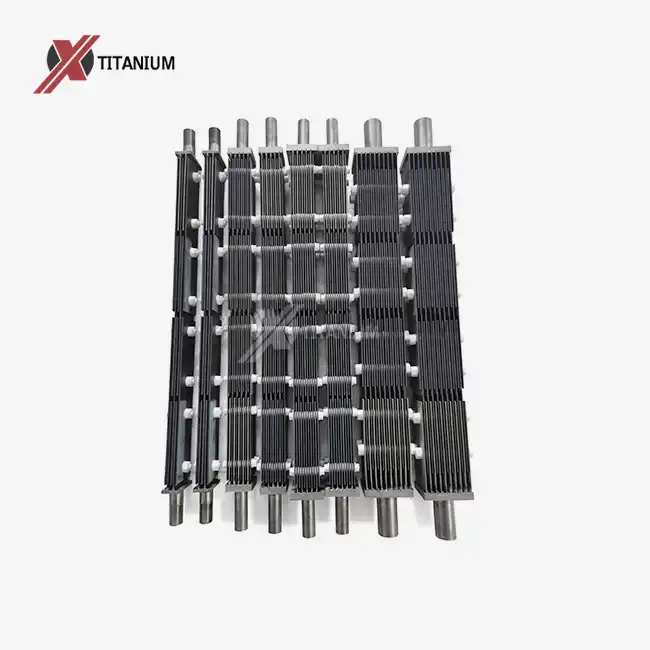
When looking for electrodes for important electrolysis tasks, the anode technology you choose affects not only how well they work, but also how reliable they are over time and how much they will cost. In industrial electrolysis uses where size stability, resistance to rust, and catalytic performance are essential, the ruthenium iridium titanium anode has become the best choice. These mixed metal oxide (MMO) anodes have a high-purity titanium base and a catalytic cover of ruthenium dioxide and iridium dioxide. They provide excellent chlorine evolution performance while keeping their shape over years of constant use. Unlike older graphite or lead anodes that break down randomly and pollute electrolytes, these dimensionally stable anodes give process engineers the consistency they need to meet regulations and ensure quality in systems that make chlor-alkali, plate metal, and electrolyze seawater.
Understanding Ruthenium Iridium Titanium Anodes
For industrial electrolysis to work, the electrode materials need to be able to survive strong chemical attacks while still having consistent electrical properties. The structure of these specialty anodes is the result of many years of electrochemical study that was turned into useful production methods.
Composition and Structure of MMO Anodes
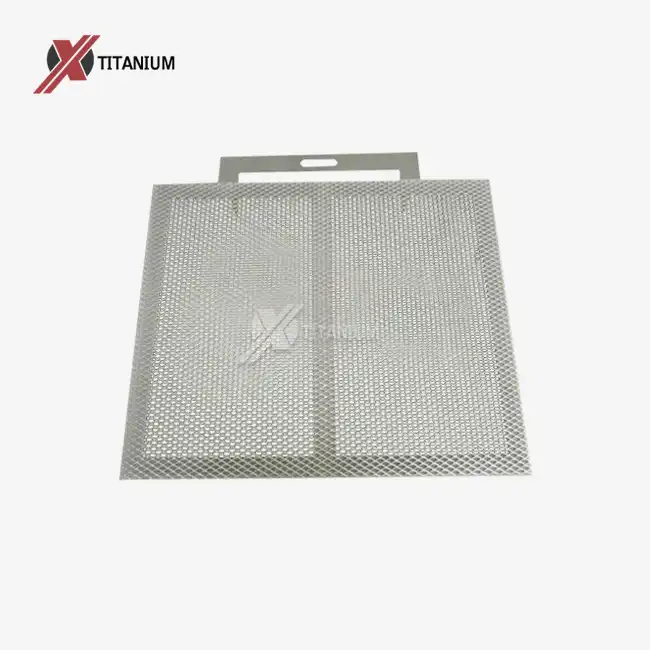
A ruthenium iridium titanium anode is made up of an ASTM B265 Grade 1 or Grade 2 titanium base that has a thin catalytic layer put on top of it. This is done because the titanium is very resistant to rust and is very stable mechanically. This covering is usually between 2 and 10 microns thick and is mostly made up of carefully measured amounts of ruthenium oxide (RuO₂) and iridium oxide (IrO₂).
The titanium base gives the structure strength and electrical conductivity, and the precious metal oxide layer makes it easier for chlorine to react with oxygen while minimizing overpotential. This stacked design solves a major problem in the industry: regular anodes change shape while they're working, which leads to changes in cell voltage and current distribution that lower the quality of the product and raise the cost of energy.
Electrochemical Principles Behind Performance
The unique chemistry on the surface of these electrodes is what makes them work so well. Ruthenium oxide is a very good catalyst for chlorine evolution. It lowers the voltage needed to cause the electrochemical process, which means less energy is used. Iridium oxide makes things more stable in acidic settings and makes them last longer when there is a lot of current flowing through them. These metal oxides work together to make an electrocatalytic surface that keeps the chlorine generation overpotential much lower than options like platinum or graphite.
At Baoji Chuanglian, we use advanced electroplating methods to make sure that the coating is spread out evenly. This is followed by a heat treatment that gives the oxide layer a very strong bond with the titanium base. This method of precise manufacturing makes sure that all production batches perform the same, which is very important for process engineers who are in charge of approval standards and supply chain validation.
Manufacturing Techniques and Quality Assurance
Making MMO anodes that work well needs careful process control at many steps of the manufacturing process. The titanium base is either cold rolled or hot rolled, depending on the size needs. It is then annealed to improve its mechanical qualities and pickled to get the surface ready for coating adhesion. For the mixed metal oxide use, valuable metal intermediates are carefully deposited, and then the compounds are heated to a high temperature, which changes them into their catalytically active oxide forms.
Different surface finishes, such as bright, polished, pickled, acid-cleaned, or sanded, let you make the parts work with different electrolytes and conditions. To make sure the dimensions are correct and the coating stays on, each finished anode goes through a series of strict tests, such as hardness tests, bending tests, and hydraulic pressure checks. These quality control steps give purchasing managers the proof they need to qualify suppliers and make sure they follow the rules, especially in fields that need AS9100 or ISO9001 approval.
Advantages and Applications of Ruthenium Iridium Titanium Anodes in Industry
Moving from standard anode materials to MMO technology based on titanium is a big step forward in improving the dependability and cost-effectiveness of the electrochemical process. By knowing about these benefits, you can make smart purchasing choices that take into account the total cost of ownership instead of just the purchase price.
Operational Benefits Over Traditional Materials
Even though graphite anodes have been used in electrochemical uses for a long time, they wear out over time and need to be replaced often. They also pollute the solution with carbon dioxide. Lead-based anodes are bad for the environment and can't handle high current flows without warping. When you switch to ruthenium iridium titanium anode wires, these problems go away because they have a number of measured benefits. Dimensional stability makes sure that the distance between electrodes stays the same over the service life, which keeps the current distribution even and the cell voltage stable.
In practice, this geometric uniformity directly leads to lower energy use—about 15–20% less electricity is used than with graphite systems running at the same output rates. The longer service life—often 8–10 years in well-kept installations—reduces the need for replacements and the downtime that comes with anode maintenance shutdowns by a huge amount. Environmental benefits include getting rid of carbon pollution and making less trash, which makes backing sustainability efforts more important to business buying policies.
Industrial Application Environments
These specific anodes are most often used in chlorine-alkali production, where they make it easy to make chlorine gas, caustic soda, and hydrogen through salt electrolysis. In the chemical processing business, they are used in electrochemical synthesis to make both organic and inorganic products in hard pH conditions. These electrodes are used in electrochlorination systems at seawater desalination plants to make disinfectants on-site. This keeps reverse osmosis membranes from getting biofouling.
Electroplating baths that put artistic and useful coatings on parts for cars, gadgets, and consumer goods depend on them for metal finishing operations. More and more wastewater treatment plants are using electrochemical oxidation systems with these anodes to break down persistent organic pollution and viruses. Cathodic protection systems for offshore platforms and ship hulls are used in marine engineering. The titanium substrate's resistance to saltwater rust makes upkeep easier. All of these different uses show how flexible MMO anode technology is across businesses with very different rules and standards for how they work.
Performance Data and Case Studies
The potential benefits of this electrode technology are backed up by performance data from industrial sites. After switching from graphite to titanium-based MMO anodes, a chlor-alkali plant on the Gulf Coast saved 18% on energy costs, which equals $2.3 million a year saved on power costs. Even though the initial capital cost was higher, the system paid for itself in 14 months. A company that electroplates aerospace parts saw a 40% drop in coating rejection rates after moving to dimensionally stable anodes.
They think this is because the new anodes got rid of the carbon particles that were being made by graphite electrode degradation. A city wastewater treatment plant using an electrochemical oxidation system said it met regulatory release standards for pharmaceutical substances, which was an achievement that wasn't possible with traditional oxidation technologies. These real-world results show why procurement groups in a wide range of businesses are choosing MMO titanium anodes more and more, even though they cost more than older materials.
How to Choose the Best Ruthenium Iridium Titanium Anode for Your Needs?
To choose the best ruthenium iridium titanium anode design, you need to carefully look at the factors that are specific to the application and the supplier's abilities. This method for making decisions helps procurement teams deal with the technical difficulties that come with getting electrochemical tools.
Technical Specification Evaluation
Current density needs are the main factor used to choose the size of an anode. Standard MMO coatings can handle current levels of up to 1000 A/m², and special versions can handle 2000 A/m² in tough situations. Coating makeup is based on the chemistry of the electrolyte. For pure chlorine evolution applications, recipes high in ruthenium work best, while higher iridium content is better for mixed chlorine-oxygen evolution applications or acidic environments.
The operating temperature affects the stability of the coating and the mechanical qualities of the substrate. For uses above 60°C, better thermal control and special coating formulas are needed. Manufacturers like Chuanglian offer customized sizes to improve electrode spacing and current distribution in certain reactor designs. This is possible because of the physical limitations of existing electrochemical cells.
Evaluating Coating Quality and Durability
The operating lifetime is directly related to the thickness of the coating. Thick layers provide longer service life but require longer production times and higher material costs. The way the coating is applied affects how well it sticks and how evenly it sticks. In general, thermal breakdown methods work better for bonding than electrodeposition techniques.
Accelerated life testing (ALT) data tells us how long something is likely to last under certain working conditions. This lets us figure out the lifetime cost, which includes how often it needs to be replaced and how much it costs to have it down for repairs. Surface finishing affects both electrical performance and mechanical longevity. Roughened surfaces have a larger effective surface area, but they may be more likely to break when they are being handled or installed.
Supplier Qualification Criteria
Verification of manufacturing potential should look at both professional know-how and the maturity of the quality system. Manufacturers who are certified show that they follow international standards like AS9100 for aircraft supply chains or ISO9001 for general quality management. Testing options like hardness tests, bending tests, and hydraulic proof show that the quality control system is very advanced. Production wait times depend on how well the supply chain is managed and how much the factory can make.
Experienced suppliers usually give 4-6 weeks for standard configurations and 8–12 weeks for highly customized designs. Technical support services, such as application engineering advice and help with optimizing after installation, offer value beyond the actual product, especially for businesses that are using MMO technology for the first time. The fact that Baoji Chuanglian is in China's "City of Titanium" gives them direct access to supply lines for raw materials and specialized production equipment. This lets them offer competitive lead times without lowering quality standards.
Procurement Insights: Pricing, Sourcing, and Logistics
Understanding how markets work and the best ways to buy things helps buying managers get the best deals on things while also keeping an eye on the risks that come with getting unique materials.
Price Structures and Cost Drivers
The ruthenium iridium titanium anode prices are based on a number of different cost factors. The prices of raw materials change along with the prices of valuable metals. For example, ruthenium and iridium are traded as specialty goods, and their prices are affected by changes in supply and demand in the electronics and car catalyst markets. Manufacturing complexity raises processing costs in a way that depends on the finishing requirements and the size needs. Customization fees are usually 15 to 30 percent more than normal designs.
These fees cover the cost of engineering time and setting up the production line. Pricing based on volume rewards customers who commit to bigger orders. There are often number breaks at 50-unit, 100-unit, and 500-unit levels. When procurement managers compare providers, they shouldn't just look at the initial purchase price. They should also look at the total cost of ownership, which includes things like expected service life, energy consumption effects, and how often the parts need to be replaced.
Identifying Reliable Suppliers and Manufacturers
Because MMO anode production is so specialized, there are only a few approved sources around the world who can make them. Manufacturers who have been around for a while usually keep certifications that show their quality system is mature and their technical skills. References from current customers who use similar products are a great way to confirm that a source is reliable and that the product works well. Auditing a manufacturing plant takes a lot of time and money, but it gives you a clear view of the production processes and quality control systems.
This is especially helpful for large purchases or situations where strict rules need to be followed. Chuanglian is a producer and supplier with more than ten years of experience in researching and making titanium products. They have full CNC machining capabilities and strict quality control systems that make sure accuracy from choosing the raw materials to testing the finished product. Well-known businesses around the world have tried our products in the field and found them to work well. We have a reputation for great customer service and quick lead times.
International Sourcing and Logistics Considerations
When you buy custom electrodes across borders, you need to think about a few useful things. Shipping wait times for ocean freight from Asian manufacturing hubs to North American destinations are usually between 4 and 6 weeks, so you need to plan ahead to make sure that production doesn't stop. The travel time is cut down to 5–7 days, but the cost of shipping is much higher. This makes air freight only useful for pressing replacements and not for regular purchases.
Different countries have different rules about how to classify goods and how much tax to charge. Sometimes, trade deals allow specialty electrochemical equipment to get special treatment. Clearing customs is easier when you have the right paperwork, like material certifications, country of origin reports, and compliance statements. Oxide coatings are very fragile, and they need to be protected during handling and transport. Reliable providers will provide protective crates and moisture barriers that are right for foreign shipping.
Maintenance and Lifespan Optimization of Ruthenium Iridium Titanium Anodes
To get the best return on electrode expenses, you need to set up maintenance procedures that keep performance standards during the operating time and extend the service life.
Factors Affecting Operational Lifespan
How long MMO anodes work well before they need to be replaced depends on a number of working factors. Current density is directly related to coating wear rates. When operating at the highest level of maximum capacity, deterioration happens faster than when loading is more moderate. Heavy metal ions in the electrolyte can contaminate the catalytic surface and make it work less well. Temperature changes that are higher or lower than what was planned put stress on both the oxide covering and the titanium coating contact, which could lead to delamination.
Interruptions in the flow of current and changes in polarity cause reactive stress, which wears down coatings faster than constant operation. When anodes are activated and exposed to air, process changes happen that cause localized overheating that hurts the oxide layer. By understanding these ways that things break down, workers can take precautions that make things last much longer than the bare requirements.
Practical Maintenance Protocols
A eye check for coating discoloration or delamination should be part of regular inspection plans. This lets you know about problems early on, before they get really bad. Electrical resistance tests show how strong a coating is; higher resistance means the oxide layer is breaking down. Scale layers that can cover parts of the anode surface and make the flow of current uneven can be removed by cleaning it on a regular basis.
Chemical cleaning with the right chemicals keeps the surface active without hurting the oxide covering. Aggressive mechanical cleaning, on the other hand, should be avoided because it can wear away the catalytic layer. The coating can't be damaged mechanically when it's taken off and put back on properly. Standard operating procedures stress careful lifting methods and safe keeping between service times.
Optimizing Operating Parameters for Extended Service
Running cells at current levels 10-15% below their highest rated capacity greatly increases the life of the anode while having little effect on the rate of production. By filtering and analyzing electrolytes on a regular basis, you can keep them pure and stop contaminants from building up that can damage catalytic sites. Keeping the temperature within certain ranges improves both the electrical efficiency and the security of the coating.
Thermal shock during startup can be lessened by using soft-start methods that slowly raise the current to working levels. Shutdowns that are planned should include the right depolarization steps to stop oxidant damage. When these operating best practices are paired with high-quality electrodes from well-known makers, service lives regularly reach close to 10 years in well-managed installations. This shows the long-term value of premium ruthenium iridium titanium anode technology.
Conclusion
The switch to ruthenium iridium titanium anode is a smart move that will improve the stability of the process and the efficiency of industrial electrolysis operations. Compared to standard anode materials, these electrodes that don't change shape much use less energy, make sure the quality of the product stays the same, and cost less to maintain. Pay close attention to how well the specifications fit, how qualified the suppliers are, and the best ways to run the business so that the system lasts as long as possible and works well. As regulations get stricter and energy prices stay unstable, the business case for high-end electrode technology gets stronger. This is a great time for procurement teams to look at their electrochemical equipment strategies and think about upgrading to cutting-edge MMO anode systems that will provide value for a longer time.
FAQ
Q1: What industries benefit most from ruthenium iridium titanium anodes?
A: Because they have to work nonstop and in harsh chemical environments, chlor-alkali production plants have the most to gain. Getting rid of contamination is good for electroplating businesses that work with the aircraft, automobile, and electronics industries. Desalination plants for seawater and marine engineering use the ruthenium iridium titanium anode resistance to rust in saltwater. Better process control is achieved in chemical processing plants that make specific products in harsh pH circumstances.
Q2: How do I verify anode quality before large-scale procurement?
A: Ask for rapid life testing data that shows how well the product works in situations that match the requirements of your application. Use microscopy or X-ray fluorescence research to measure the thickness of the layer. Check for certificates from outside testing labs that prove the material's electrochemical and compositional requirements. Before buying in bulk, you should do pilot installations with small amounts to make sure they work well in your unique working setting.
Q3: What determines replacement timing for MMO anodes?
A: Watch how the voltage of the cell changes over time. A rise of 200 to 300 mV above the original working voltage usually means the cell is getting close to its end of life. Keep an eye on the looks of the coating by inspecting it on a regular basis and looking for discoloration or base exposure. Check the electrical resistance on a regular basis to see if the layer is wearing down. Set replacement plans based on the number of hours the equipment has been used in certain current density conditions, taking into account both the manufacturer's instructions and your own operating experience.
Partner with Chuanglian for Reliable Ruthenium Iridium Titanium Anode Solutions
It has been making high-performance titanium electrodes for difficult industrial uses for more than ten years at Baoji Chuanglian New Metal Material Co., Ltd. Our ruthenium iridium titanium anode source can handle the whole production chain, from choosing the raw materials to making sure the finished product is of high quality. This makes sure that your supply relationship is consistent and easy to track. Being in Baoji City, which is known around the world as the "City of Titanium," gives us direct access to high-quality raw materials and specialized production facilities. Our CNC machine centers and wide range of testing tools allow us to customize products to your exact needs.
We also keep wait times low by planning production efficiently and putting quality first in everything we do. Get in touch with our technical team at info@cltifastener.com or djy6580@aliyun.com to talk about your specific electrode needs and get full technical advice that fits your unique operational conditions. Visit cl-titanium.com to see all of our products and learn more about how our dedication to quality and customer service has won the trust of top companies around the world in the petroleum, electrolysis, desalination, and marine engineering fields.
References
1. Trasatti, S. (2000). "Electrocatalysis: Understanding the Success of DSA." Electrochimica Acta, Vol. 45, pp. 2377-2385.
2. Chen, G. (2004). "Electrochemical Technologies in Wastewater Treatment." Separation and Purification Technology, Vol. 38, Issue 1, pp. 11-41.
3. Schmittinger, P., et al. (2012). "Chlorine: Principles and Industrial Practice." Wiley-VCH, Weinheim, Germany.
4. Karlsson, R. K. B., and Cornell, A. (2016). "Selectivity Between Oxygen and Chlorine Evolution in the Chlor-Alkali and Chlorate Processes." Chemical Reviews, Vol. 116, pp. 2982-3028.
5. Comninellis, C., and Chen, G. (2010). "Electrochemistry for the Environment." Springer Science & Business Media, New York.
6. Hayfield, P. C. S. (2001). "Development of a New Material - Monolithic Ti4O7 Ebonex Ceramic." Royal Society of Chemistry, Cambridge, UK.
Learn about our latest products and discounts through SMS or email